Here are the briefs:
Oral argument video here.
For more information see the “Save The Date.”
Sharpen your trial advocacy skills when appearing in Tribal Court at a three-day training featuring interactive, hands-on workshops and practice of opening statements, witness preparation and examination, evidence introduction, jury selection, closing arguments and more. Benefit from the knowledge and insights of seasoned litigators and tribal court judges who will help you better prosecute, defend and represent your clients in Tribal Court.
Job vacancies are posted on Fridays. Any posts received prior to 12pm EST on Friday will appear in that Friday’s announcements. If you would like to submit a post for an open Indian law or leadership job, please send a brief description of the position (which includes position title and location) as well as a PDF job announcement to indigenous@law.msu.edu.
National Indian Gaming Commission
Legal Staff Assistant, Washington, DC. Major duties include, but are not limited to: Assists the attorneys, prepares administrative and appeal records and indexes, case files and other records or documents in support of enforcement actions, appellate review and other similar actions. Maintains and organizes files, databases, and office reports; prepares travel vouchers; maintains office calendar and time sheets. For more information please see the job description or visit this link. Application closes December 31, 2018.
Colville Tribal Legal Office
(2) Staff Attorney, Nespelem, WA. Provide representation to minors in tribal dependencies, delinquencies, school discipline, and special education cases and to Colville tribal members in Social Security/SSI disability matters (pre- and post-eligibility); draft wills and other instruments for Colville tribal members; and provide unbundled assistance in civil matters to our membership. People with caring hearts, adventurous spirits and strong minds are encouraged to apply. Please click here to apply and see the job description for more information.
Mescalero Apache Tribe
Economic Development Coordinator, Mescalero, NM. The Economic Development (“ED”) Coordinator oversees the ED Office and works closely with the President, Vice-President, Council, Chief of Staff, Administrator, and the ED Committee. The ED Coordinator develops and implements ED initiatives, as directed; identifies opportunities for regional ED and the development of small businesses; works to secure funding for ED activities; promotes the Tribe in order to expand ED opportunities; and performs other related duties as directed. For more information please see the job description.
Associate Judge Lay, Mescalero, NM. The Associate Judge is responsible for fairly and impartially hearing and deciding judicial matters within the jurisdiction of the Mescalero Apache Tribal Court. A full position description is available upon request. This position is open until filled.
Associate Judge Licensed, Mescalero, NM. The Associate Judge is responsible for fairly and impartially hearing and deciding judicial matters within the jurisdiction of the Mescalero Apache Tribal Court. A full position description is available upon request. This position is open until filled.
Fond du Lac Band of Lake Superior Chippewa
Right of Way Specialist, Cloquet, MN. The Right-of-Way Specialist, located at the Band’s Natural Resource/Tribal Court building, performs all tasks relating to trust and fee right-of-way activities for the Fond du Lac Band of Lake Superior Chippewa. This includes the subjects of deeds, leases, acquisitions, easements, mapping, surveying, legal descriptions, data management, document recording, planning, National Environmental Policy Act (NEP A), land use, zoning, and project management. Please see the job description for more information.
Michigan Indian Legal Services, Inc (MILS)
Staff Attorney, Southwest Michigan. MILS, is a statewide provider of free legal services to low income Indians and Indian tribes. MILS represents Indian individuals, families, tribes and organizations in cases that span a range of tribal and federal Indian law cases. The ideal applicant will be licensed to practice law in Michigan or eligible to be admitted by waiver and have three to five years relevant experience. Applicants must possess both written and oral advocacy skills as well as a demonstrated commitment to protecting the rights of American Indians. Please see the job description for more information.
Staff Attorney, Traverse City, MI. MILS represents individuals, families, tribes and organizations in cases that span a range of tribal and federal Indian law cases. This position will focus on tribal and state law legal issues; with an emphasis on tribal court child welfare and criminal defense matters. This position will require overnight travel in the Upper Peninsula. Please see the job description for more information.
Department of the Interior – Office of the Solicitor – Division of Indian Affairs
Attorney-Advisor, Washington DC. This position will serve in a critical role as a legal adviser within the Dept of the Interior. This position also serves as a liaison among the Bureau of Indian Affairs (BIA), the Office of the Special Trustee for American Indians (OST), the Office of Hearings and Appeals (OHA), and other Offices as necessary, regarding implementation and interpretation of both general probate and AIPRA issues. Please visit the link for more information.
Attorney-Advisor, Branch of Environment and Lands, Washington DC. Provide legal advice and guidance to the Assistant Secretary – Indian Affairs and the Bureau of Indian Affairs on fee-to-trust and environmental issues. Application closes January 11, 2019. Please visit the link for more information.
The National Council of Juvenile and Family Court Judges (NCJFCJ)
Program Director, Program Development and Judicial Engagement, Reno, NV, with an east coast office in Pittsburgh, PA. As a leader in continuing education opportunities, research, publication development, technical assistance, and policy development in the field of juvenile and family justice, the NCJFCJ is unique in providing practice-based resources to jurisdictions and communities nationwide. For an overview of NCJFCJ’s major initiatives, please go to www.ncjfcj.org/about. Application deadline is January 18, 2019. Visit the link or see the job description for more information.
U.S. Attorney’s Office – District of Montana
Tribal Special Assistant United States Attorney (SAUSA), MT. The Tribal SAUSA will be responsible for day-to-day project-related activities to ensure that all activities are performed on time and within budget. She/he will also be responsible for communicating with the United States Attorney’s Office, Law Enforcement, Tribal Court Administrator, Tribal Judges, communicating with witnesses, communicating with victims, and more. For More information please see the job description.
Nevada Legal Services
Staff Attorney, Reno, NV. Provide a wide range of services to both tribal members and tribal governments based upon the needs expressed by each community. In that capacity, act as public defender in a number of tribal jurisdictions and also serve as counsel to the Inter-Tribal Council of Nevada. Frequent travel to rural Nevada, including overnight stays is required. For more information please see job description.
Navajo Nation
Associate Attorney, Supreme Court of the Navajo Nation, Window Rock, AZ. This position provides a variety of legal advice, research and related legal services in support of the overall operation of the Navajo Nation Judicial Branch; assists with judicial administrative functions, such as researching and recommending policy changes and improvements for overall Judicial Branch. For more information, please see the position description or to apply, visit http://www.navajocourts.org. This position is open until filled.
Court Solicitor, Supreme Court of the Navajo Nation, Window Rock, AZ. This position provides a variety of legal advice, counseling, research and related legal services in support of the overall operation of the Navajo Nation Judicial Branch; assists with judicial administrative functions, such as recommending policy changes and improvements for overall Judicial Branch; shall supervise and oversee all licensed attorneys, law clerk, hearing officers, supreme court clerk, and law clerk interns of the Judicial Branch. For more information, please see the position description or to apply, visit http://www.navajocourts.org. This position is open until filled.
District Court Judge, Judicial District Court, Navajo Nation Wide. The District Court Judge is responsible in presiding over civil, criminal and family court cases; provides policy direction and guidance in the operation of the Judicial District. For more information, please see the position description or to apply, visit http://www.navajocourts.org. This position is open until filled.
Associate Justice, Supreme Court of the Navajo Nation, Window Rock, AZ. This position shall perform work of unusual difficulty, hear arguments, read briefs and conduct research necessary to pass judgment and issue rulings on cases brought before the Navajo Nation Supreme Court. For more information, please see the position description or to apply, visit http://www.navajocourts.org. This position is open until filled.
Posts from December 14, 2018.
Yesterday Minnesota Governor Elect, Tim Walz, appointed Dennis Olson, Jr. as the Commissioner of Minnesota Office of Higher Education. Dennis is a citizen of the Fond du Lac Band of Lake Superior Chippewa and currently serves as the Executive Director of the Minnesota Indian Affairs Council. This appointment is part of Governor Elect Walz’s effort to increase access to education for people of color and address the disparities in prison populations.
Minnesota Lt. Governor-Elect, Peggy Flanagan, is the first ever Native American woman to be elected to state wide executive office.
Both Olson and Flanagan are graduates of the University of Minnesota American Indian Studies program.
https://minnesota.cbslocal.com/2018/12/20/walz-set-to-name-3-more-cabinet-appointees/amp/
Here:
The National Indian Law Library added new content to the Indian Law Bulletins on 12/20/18.
U.S. Supreme Court Bulletin
http://www.narf.org/nill/bulletins/sct/2018-2019update.html
Read the latest Tribal Supreme Court Project update published on 12/12/18.
Law Review & Bar Journal Bulletin (contact us if you need help finding a copy of an article)
https://www.narf.org/nill/bulletins/lawreviews/2018.html
Human rights, Indigenous peoples, and the global climate crisis.
Federal Courts Bulletin
https://www.narf.org/nill/bulletins/federal/2018.html
Comanche Nation of Oklahoma v. Zinke (Land into Trust)
Alexander v. Nolan (Arrest – Reasonable Force)
Cayuga Indian Nation of New York v. Seneca County, New York (Ad Valorem Property Taxes)
State Courts Bulletin
https://www.narf.org/nill/bulletins/state/2018.html
Interest of A.M. (Indian Child Welfare Act – Termination of Parental Rights)
Matter of Guardianship I.L.J.E. (Indian Child Welfare Act – Guardianship)
Tribal Courts Bulletin
http://www.narf.org/nill/bulletins/tribal/2018.html
Gallaher v. Colville Confederated Tribes (Right to Counsel)
News Bulletin
https://www.narf.org/nill/bulletins/news/currentnews.html
In the Health & Welfare section, we feature an article about the Indigenous Food and Agriculture Initiative’s launch of their model tribal food and agriculture code.
U.S. Legislation Bulletin
https://www.narf.org/nill/bulletins/legislation/115_uslegislation.html
The following were added:
Here are the materials in Menominee Indian Tribe v. EPA (E.D. Wis.):
35 Tribe Motion to Amend Complaint
38 Aquila Opposition to Motion to Amend
39 EPA Opposition to Motion to Amend
Here are the materials in HCI Distribution Inc. v. Peterson (D. Neb.):
Congratulations to Lydia Locklear (Lumbee), a 2017 graduate of Michigan State University College of Law and recipient of the Indigenous Law Certificate. Lydia recently accepted a judicial clerkship position with the Honorable Anita Earls. Justice Earls was elected to the North Carolina Supreme Court and has an extensive background in civil rights and social justice work. Congratulations Lydia!
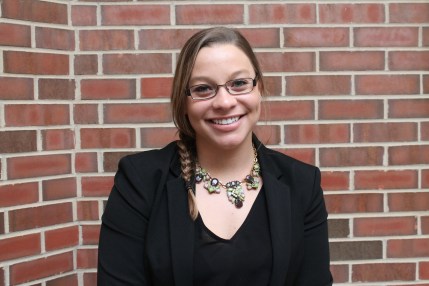
Photo: Lydia Locklear, ’17
ILPC alumni, please connect with us (indigenous@law.msu.edu) and share your important news! We would love to hear from you.
Here.
Here is the December 2018 issue of NW Lawyer.
 Turtle Talk
You must be logged in to post a comment.