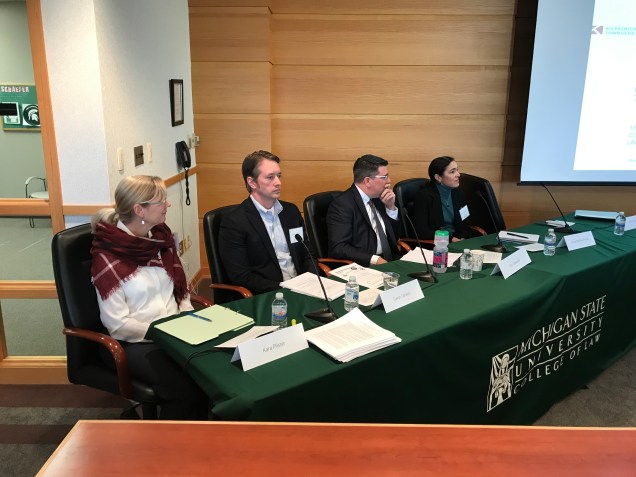

A truly outstanding panel
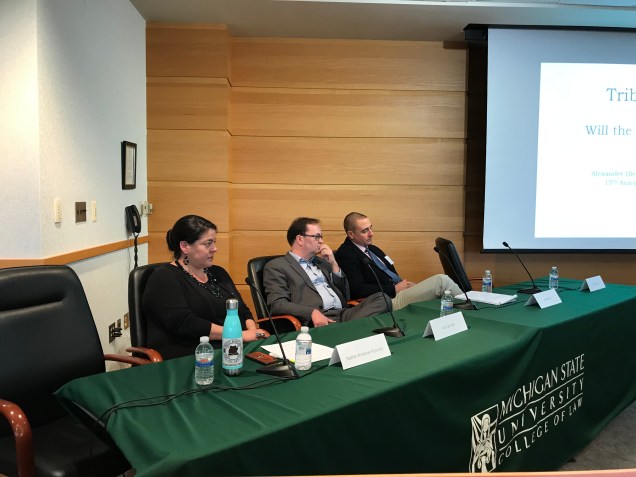
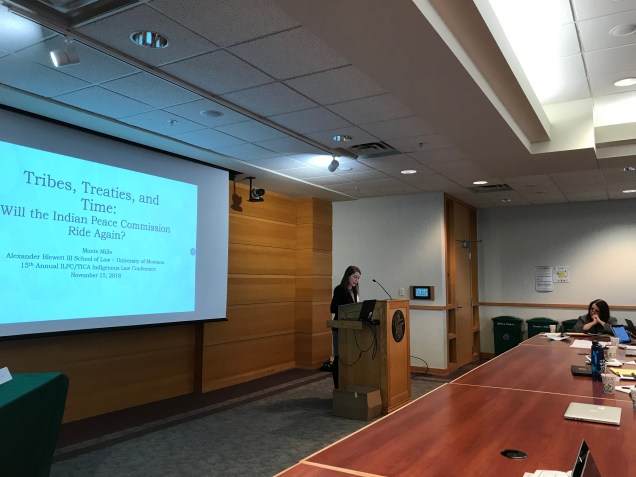
From the Urban Indian Health Institute:
We released a report today on the crisis of Missing and Murdered Indigenous Women and Girls in urban areas. This first-of-its-kind report aims to provide a comprehensive snapshot of the MMIWG crisis in urban American Indian and Alaska Native communities and the institutional practices that allow them to disappear not once, but three times—in life, in the media, and in the data.
Read the report, listen to the stories, and help us end the violence. #MMIWG#DecolonizeData #NotInvisible #NoMoreStolenSisters #urbanMMIWG
Read the full report here
*This report contains strong language about violence against Native women and girls.
Here are the materials in Goss v. United States (D. Ariz.):
We absolutely could not make this conference happen without support from those who donated to the travel cost for speakers!

To register for the conference or view the agenda, click here.
The eighth and final panel at the ILPC/TICA Conference, Professional Responsibility and Ethical Obligations, fulfills ethics CLE credits. We are excited to have you here tomorrow!
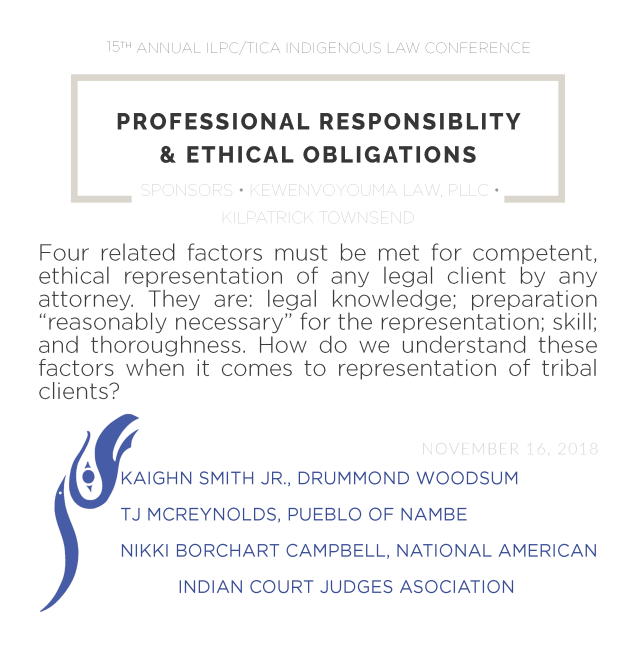
Fulfill CLE credits including 10 standard, 1.5 ethics, 1 elimination of bias.
This panel is sponsored by:
Join us this week, November 15-16, 2018 at the ILPC/TICA Conference for an expert discussion on Litigating Difficult ICWA Cases. Register and come visit us on the banks of the Red Cedar!

Fulfill CLE credits including 10 standard, 1.5 ethics, 1 elimination of bias.
This panel is sponsored by:



Seth W. R. Brickey has published “Rent-A-Tribe: Using Tribal Immunity to Shield Patents from Administrative Review” in the Washington Law Review.
Here is the abstract:
In 2017, Allergan Pharmaceuticals entered into an agreement with the Saint Regis Mohawk Tribe (SRMT). Allergan agreed to assign several patents to SRMT and to pay an initial sum of $13.75 million and annual royalties of approximately $15 million. SRMT, in exchange, licensed the rights to use the patents back to Allergan and agreed not to waive its tribal immunity in any administrative proceeding challenging the patents. Two outcomes were expected as a result of this Allergan-Mohawk agreement. First, Allergan would retain the rights to manufacture and market a highly profitable drug while insulating the underlying patents from an unforgiving administrative inter partes review (IPR). Second, SRMT would embark on a new business venture of collecting and relicensing patents from third parties, effectively “renting out” its sovereign immunity. The response from lawmakers, the judiciary, the executive branch, and the public at large was acrimonious. The agreement was branded in public forums as a “sham” and the Patent Trial and Appeal Board held the patents assigned to SRMT were not shielded by tribal immunity. This Comment argues the Allergan-Mohawk agreement is a legally effective means of avoiding IPR. Absent an express waiver of tribal immunity by Congress or the tribe itself, a tribe may not be subject to a private claim. This rule extends to IPR proceedings which closely parallel private suits. Therefore, contracts like the Allergan-Mohawk agreement effectively shield patents from IPR.
Here are the materials in Thompson v. United States (D. Nev.):
 Turtle Talk

You must be logged in to post a comment.