
Attorney_PositionDescription_BMIC
Here:
Cert petition here.



Here.
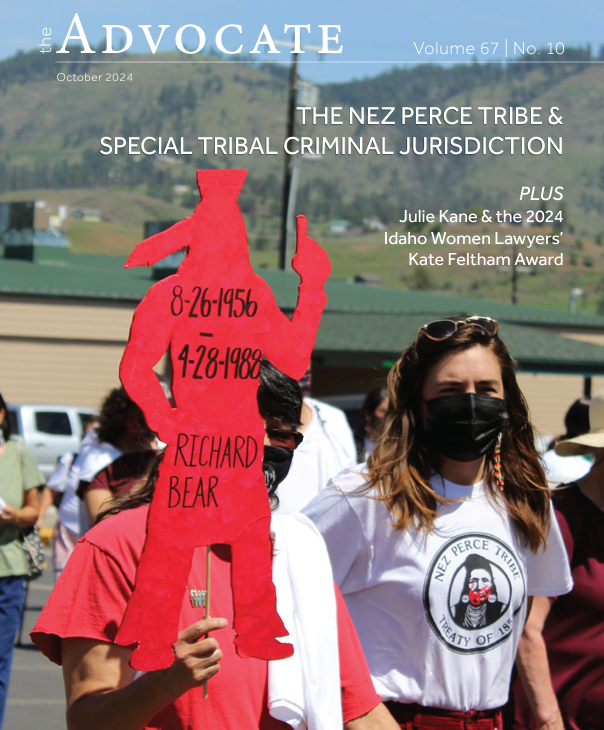
Michael Doran has published “Exceptionalism and Assimilationism in Federal Indian Law” in the Stanford Journal of Civil Rights and Civil Liberties. PDF

Abstract:
This article argues that federal Indian law is located at the intersection of two competing paradigms: exceptionalism, under which Indian law is considered fundamentally different from the rest of U.S. public law; and assimilationism, under which differences between Indian law and the rest of U.S. public law are minimized or denied. The Supreme Court’s failure to resolve the conflict between these two paradigms produces doctrinal inconsistencies (although not, as some prominent scholars maintain, doctrinal incoherence). This article further argues that the conflict of these paradigms ultimately derives from two rival conceptions of Native sovereignty. First is the idea of autochthonous Native sovereignty – that is, an inherent sovereignty that predates contact and colonization, that does not depend on the U.S. Constitution, and that persists unless and until voluntarily surrendered or involuntarily extinguished. Second is the idea of heterochthonous Native sovereignty – that is, a sovereignty that derives primarily from the federal government and that generally remains subordinate to the demands of ordinary federalism under the U.S. Constitution. Finally, this article argues that the assimilationism paradigm should be rejected in favor of unambiguous commitments to autochthonous Native sovereignty and Indian law exceptionalism.

 Turtle Talk
You must be logged in to post a comment.