Press release here:
NNALSA Honors Prof. Rice Moot Court Award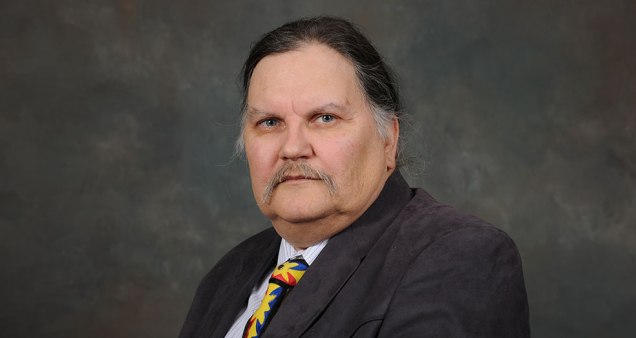
April Youpee-Roll has published “Just making it up — On Justice Scalia, Indian law and the Supreme Court’s future” in the Missoula Independent (2/16/16, at A11). Great stuff.
An excerpt:
Justice Scalia, who died last weekend, was kind, funny and met the audience’s questions with patience and enthusiasm. (Most of them were about raising his nine children, but a couple touched on his trademark constitutional originalism.) At the end, the organizers of the event sold copies of his book and Justice Scalia graciously signed them. I bought one as a gift for my mother and took a moment to gather myself while I waited in line, wondering what exactly one says to a Supreme Court justice.
As I handed over my book, I decided to go with, “I just wanted to thank you. When I was 10, I came to watch oral arguments in my family’s case, and you joined the majority in our favor.”
Justice Scalia looked up at me and smiled, “What was the case?”
“Babbitt v. Youpee. It was in 1997.”
He paused and I prepared to be ushered along in line. “That was a takings case, right?”
I nodded, more than a little surprised at his memory.
He signed my book, and as he handed it back to me, he said something I’ll never forget: “You know, when it comes to Indian law, most of the time we’re just making it up.”

| The National Indian Law Library added new content to the Indian Law Bulletins on 2/12/16.
U.S. Federal Trial Courts Bulletin State Courts Bulletin News Bulletin U.S. Regulatory Bulletin U.S. Legislation Bulletin Law Review & Bar Journal Bulletin |
Here are the materials in United States v. Washington (W.D. Wash.) (subproceeding 89-3-10):
20 Squaxin Petn for Order to Show Cause
Earlier proceedings in this matter are here.
Via NICWA
Children’s Bureau to Host Tribal Consultations
Title IV-E Conference Calls Scheduled for March 8th and 10th
On February 12, 2016, the Children’s Bureau of the U.S. Department of Health and Human Services announced two tribal consultation calls regarding a new round of Title IV-E Foster Care program development grants. Title IV-E funds placement activities related to foster care, relative guardianship, adoption, and independent living services.
This consultation opportunity comes after a 2015 General Accountability Office study of tribes’ experiences in developing a Title IV-E Foster Care program. NICWA strongly encourages any tribe that has an interest in the program to participate in the consultation or submit written comments. Tribal members are encouraged to forward this announcement on to their tribal leaders to help publicize this opportunity.
See the GAO report here.
There have been fewer than expected tribes participating in the program to date. The consultations will provide interested tribes with information on the Title IV-E program and a chance to share their concerns or questions regarding Title IV-E and the development grants.
The bureau will hold tribal consultation calls to discuss this opportunity on two dates:
The call-in number for both consultation calls is: 1-888-220-3087, Passcode: 8699239
Jeanette Wolfley has published “Reclaiming A Presence in Ancestral Lands: The Return of Native Peoples to the National Parks” in the Natural Resources Journal.
Here is the abstract:
For Native peoples, sacred sites and other traditional cultural properties are of critical importance to the preservation of their culture, society, and overall tribal sovereignty. Often these traditional cultural resources are part of present day national park landscapes. Today, tribes have unprecedented opportunities to reclaim a presence on their aboriginal lands, and in turn the National Park Service has an opportunity to ensure that parks remain a sanctuary for the practice of native traditions by accommodating and prioritizing native interests in the implementation of Indian policies and government-to-government obligations. This Article provides an overview of the tribal-NPS relationship, a discussion of the National Park Service Indian policies, and the application of trust obligations to accommodate tribal interests in the national parks. This Article advocates that the National Park Service should prioritize tribal interests to enable tribal peoples to access aboriginal lands where timehonored traditions and practices are celebrated and life is renewed.
I hope the project described in this NPR story doesn’t lead to more intrusions into Native burial sites and sacred sites. http://www.npr.org/sections/alltechconsidered/2016/02/17/467104127/space-archaeologist-wants-your-help-to-find-ancient-sites
TRIBAL COUNCIL SEEKS LETTERS OF INTEREST TO SERVE ON THE BOARD OF DIRECTORS OF WASÉYABEK DEVELOPMENT COMPANY, LLC.
The Tribal Council is soliciting letters of interest and statements of qualifications from NHBP Tribal Members and other qualified persons interested in being appointed to fill a vacant position on the Board of Directors of Waséyabek Development Company.
Waséyabek Development Company was created in May 2011 as a limited liability company, wholly-owned by the Nottawaseppi Huron Band, which is organized under the NHBP Limited Liability Code. Waséyabek Development Company will serve as the vehicle through which business diversification strategies by the Tribal government will be planned and managed.
There are two (2) positions on the Board with approximate four (4) year terms of office commencing July 1, 2016 and ending June 30, 2020.
MISSION AND PURPOSE OF WASEYABEK DEVELOPMENT COMPANY/ROLE OF BOARD OF DIRECTORS
As stated in its Articles of Organization and Operating Agreement, the mission and purpose of Waséyabek Development Company is to:
The day-to-day business activities of Waséyabek Development Company will be managed by a Chief Executive Officer hired by Waséyabek and by the individual business managers hired for specific businesses authorized. During FY 2016, the Board of Directors will be continuing work to develop key strategic and organizational documents for the Company, including business development and investment criteria, financial management and reporting structures/procedures, compensation plans and personnel policies for enterprise employees, and other organizational documents.
The Board will oversee the hiring of a Chief Executive Officer and other business/financial consultants to be retained by Waséyabek to develop overall business plans, investment criteria and strategies for the Nottawaseppi Huron Band to further the mission and purposes of the Company. Funding for the activities of Waséyabek Development Company will come from appropriations approved by the Tribal Council, the amount of which will be guided by Revenue Allocation Plan.
The Waséyabek Board of Directors will be responsible for maintaining regular reporting and accountability to both the Tribal Council and the Membership at large through the development of appropriate financial reporting and other communication procedures.
REQUIRED QUALIFICATIONS FOR APPOINTMENT
In accordance with the Operating Agreement for Waséyabek Development Company, at least one of the vacant Board position must be filled by a person who is an enrolled member of NHBP or other person entitled to preference (spouses/parents of NHBP Members or other Native Americans) under the NHBP Indian Preference in Employment Code. It is the Tribal Council’s desire to fill this position with a qualified person who is an enrolled member of NHBP.
All persons appointed to Board must possess the following qualifications (as verified by an extensive background investigation and interview) to be considered for appointment.
provided, however, that not less than one (1) Board members shall be a financial professional (i.e. Certified Public Accountant, Financial Analyst or Management Accountant) or experience as business operations (i.e. CEO, COO, General Manager); and
Persons who are proven subject matter experts in business who have understanding and demonstrated high-level (management) understanding and experience managing business operations and/or the financial or marketing initiatives associated with growing businesses are preferred. Persons with such experience in technology (including hospitality support), energy, manufacturing and/or construction industries are especially encouraged to apply.
TERM OF OFFICE/COMPENSATION
Term: The individuals appointed with serve a four (4) year term of office (July 1, 2016-June 30, 2020).
Compensation: Members of the Board of Directors will receive a monthly stipend of $2,000 for attendance at meetings and participation in conference calls/planning activities to be undertaken by the Board. Board Members will also be eligible for reimbursement of travel and other expenses incurred in furtherance of Company activities in accordance with a Budget to be developed for Waséyabek Development Company.
STATEMENTS OF INTEREST/RESUMES SHOULD BE SENT TO THE FOLLOWING ADDRESS NO LATER THAN MARCH 31, 2016:
NHBP TRIBAL COUNCIL
ATTN: WASÉYABEK DEVELOPMENT COMPANY BOARD OF DIRECTORS
1485 MNO-BMADZEWEN WAY
FULTON, MI 49052
Update to Justice Scalia post….
We now have a link to the Charlie Rose show where Justice Scalia made a statement about his vote in the Holyfield matter — it starts at about 34:20 into the show, or at about 19:20 remaining. NYTs coverage here. Yes, he absolutely got the facts wrong….
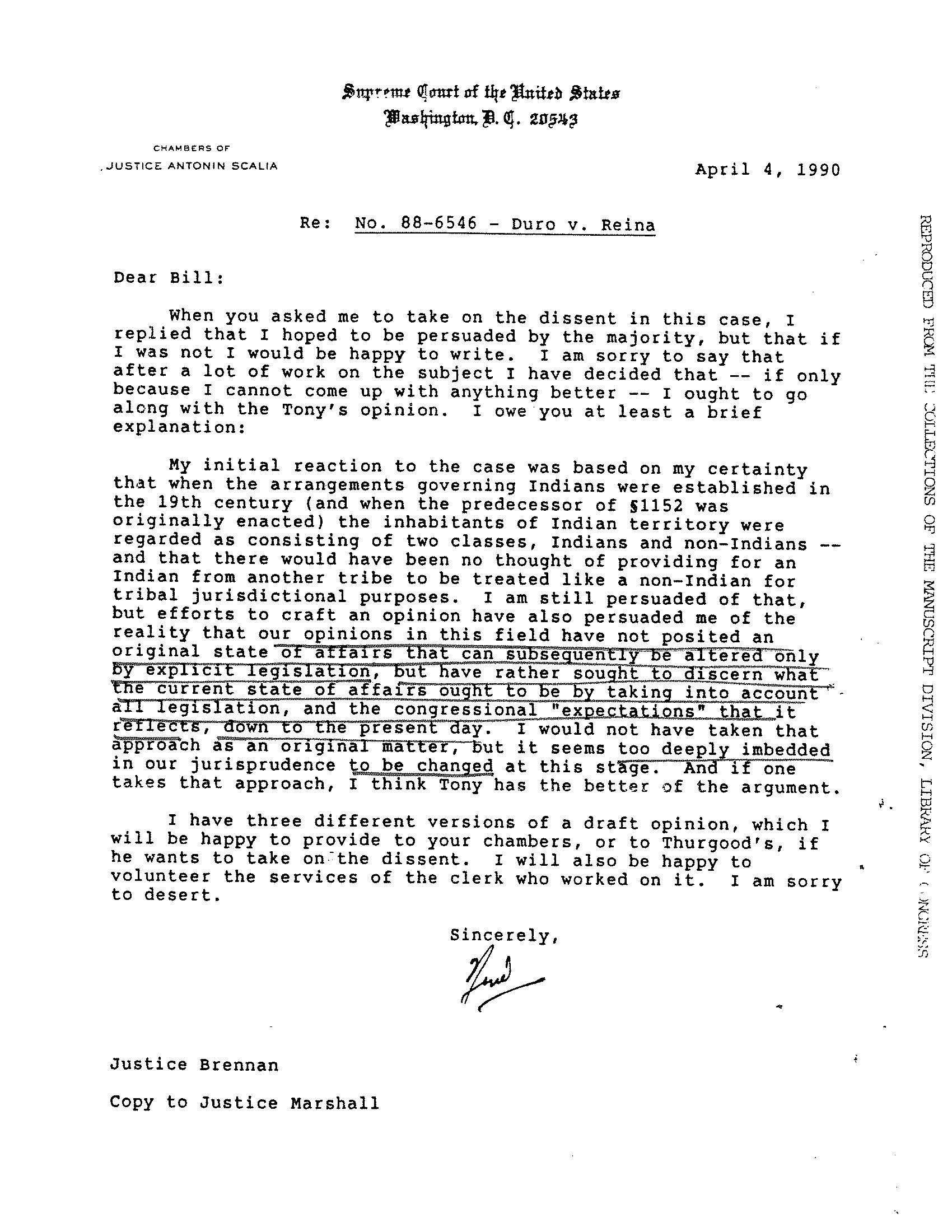
Also, and I regret forgetting this, see below Justice Scalia’s internal memorandum to Justice Brennan in the Duro v. Reina deliberations, uncovered by David Getches in Justice Marshall’s papers (if I recall correctly):
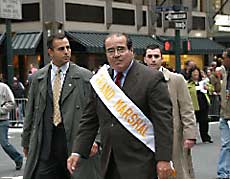
And we conclude with a pic of the Justice as Grand Marshal of the Columbus Day parade in NYC about 10 years ago — the title of the NYTs article was “Who’s That Guy? Without Robes, Grand Marshal Is Mystery“:
:
Justice Scalia’s death allows us to reflect on his Indian law record. If you were an Indian person or an Indian tribe as a party in a Supreme Court matter, it was very unlikely you would have his vote, although he did on occasion surprise.
Overall, during Justice Scalia’s tenure on the Supreme Court (his first case was Iowa Mutual), tribal interests prevailed in 21.4 percent — 12 wins, 44 losses, and 8 split decisions or no decisions. Justice Scalia voted in favor of tribal interests 16.2 percent of the time — I count 8 1/2 votes in favor, and 52 1/2 votes against.
Justice Scalia authored five majority opinions — all of them defeats for tribal interests — and he wrote three dissenting opinions — two of them favoring tribal interests.
Majority Opinions
Justice Scalia’s most important purely Indian law opinion was the opinion for the Court in Nevada v. Hicks. There, the Court held that tribal courts cannot entertain federal civil rights suits against state officials. Scalia’s opinion also purported to extend the Montana analysis onto tribal trust lands, and recognized the authority of state officers to investigate violations of state law on tribal trust lands, neither of which, in my view was necessary to deciding the question.
Justice Scalia’s most important opinion with an Indian law element was the opinion for the Court in Employment Division v. Smith. There, the Court held that a nondiscriminatory state law that burdened religious exercise was constitutional under the First Amendment, abrogating precedents that applied a strict scrutiny analysis to such burdens in favor of a rational basis standard. Congress would attempt to undo that decision in the Religious Freedom Restoration Act.
The next most critical opinion authored by Justice Scalia was Blatchford v. Native Village of Venetie. There, the Court held that the Eleventh Amendment barred Indian tribes from suing states. The case was antecedent to the Court’s earth-shattering Eleventh Amendment decision in Seminole Tribe in 1996.
Justice Scalia wrote the majority opinion in County of Yakima v. Yakima Indian Nation, a case holding that the General Allotment Act effectively authorized states to tax allotted fee lands. Finally, Justice Scalia wrote the majority opinion in United States v. Navajo Nation II, where the Court again rejected a trust breach claim by the tribe arising from the Peaboady Coal-Interior Secretary Hodel ex parte communication.
Dissenting Opinions
Justice Scalia also wrote three short dissenting opinions, at least one of which was a vote in favor of tribal interests that may have surprised observers.. In South Florida Water Management Dist. v. Miccosukee Tribe of Indians, a Clean Water Act case with minimal Indian law questions, he filed a brief dissent objecting to the majority’s analysis, and would have affirmed the lower court. In Adoptive Couple v. Baby Girl, he dissented separately to state he would have recognized the birth father’s rights. In Michigan v. Bay Mills, he joined the primary dissent and wrote separately to acknowledge that he had changed his position supporting tribal sovereign immunity in Kiowa Tribe.
Other Comments
We’ve heard many times over the years that Justice Scalia spoke about Miss. Band of Choctaw Indians v. Holyfield as a vote he most regretted (he voted for the tribe) but felt forced to because of the clarity of the statute. If anyone has video of his comments, please send it along.
For those of you wondering, Justice Scalia voted for tribal interests in Holyfield, Potawatomi (presumably on the immunity issue alone), Sac and Fox (Bill Rice’s case), Kiowa, Arizona v. California (2000), S. Fla. Water Management Dist., Cherokee Nation v. Leavitt, Salazar v. Ramah, and Adoptive Couple.
 Turtle Talk
You must be logged in to post a comment.