A flurry of motions has come in. Here is the motion to dismiss a criminal complaint on the Cherokee reservation in State of Oklahoma v. Nichols (Tulsa County Dist. Ct.):
Here is the motion to dismiss in a case involving a Creek reservation crime where the defendant marked “I” on the racial identity box, State of Oklahoma v. Williams (Tulsa County Dist. Ct.):
And here is the motion to dismiss in State of Oklahoma v. Shaffer (Tulsa County Dist. Ct.), where the defendant was unenrolled at the time of the crime and is now seeking enrollment at Cherokee:
Whether a generally applicable state ad valorem tax, as assessed against personal property owned by a non-Indian, out-of-state corporate entity and leased to a tribe for use in its casino operations, is preempted by the Indian Gaming Regulatory Act and the Court’s “particularized inquiry” balancing test, see White Mountain Apache Tribe v. Bracker, 448 U.S. 136 (1980), where the tax does not infringe on any federal regulatory purpose contained in the IGRA, the tax does not interfere with any tribal sovereignty interests, and the tax supports relevant and important government interests, such as law enforcement, schools and health services.
The first legal history of the first tribal court upends long-held misconceptions about the origins of Westernized tribal jurisprudence. This book demonstrates how the Cherokee people—prior to their removal on the Trail of Tears—used their judicial system as an external exemplar of American legal values, while simultaneously deploying it as a bulwark for tribal culture and tradition in the face of massive societal pressure and change. Extensive case studies document the Cherokee Nation’s exercise of both criminal and civil jurisdiction over American citizens, the roles of women and language in the Supreme Court, and how the courts were used to regulate the slave trade among the Cherokees. Although long-known for its historical value, the legal significance of the Cherokee Supreme Court has not been explored until now
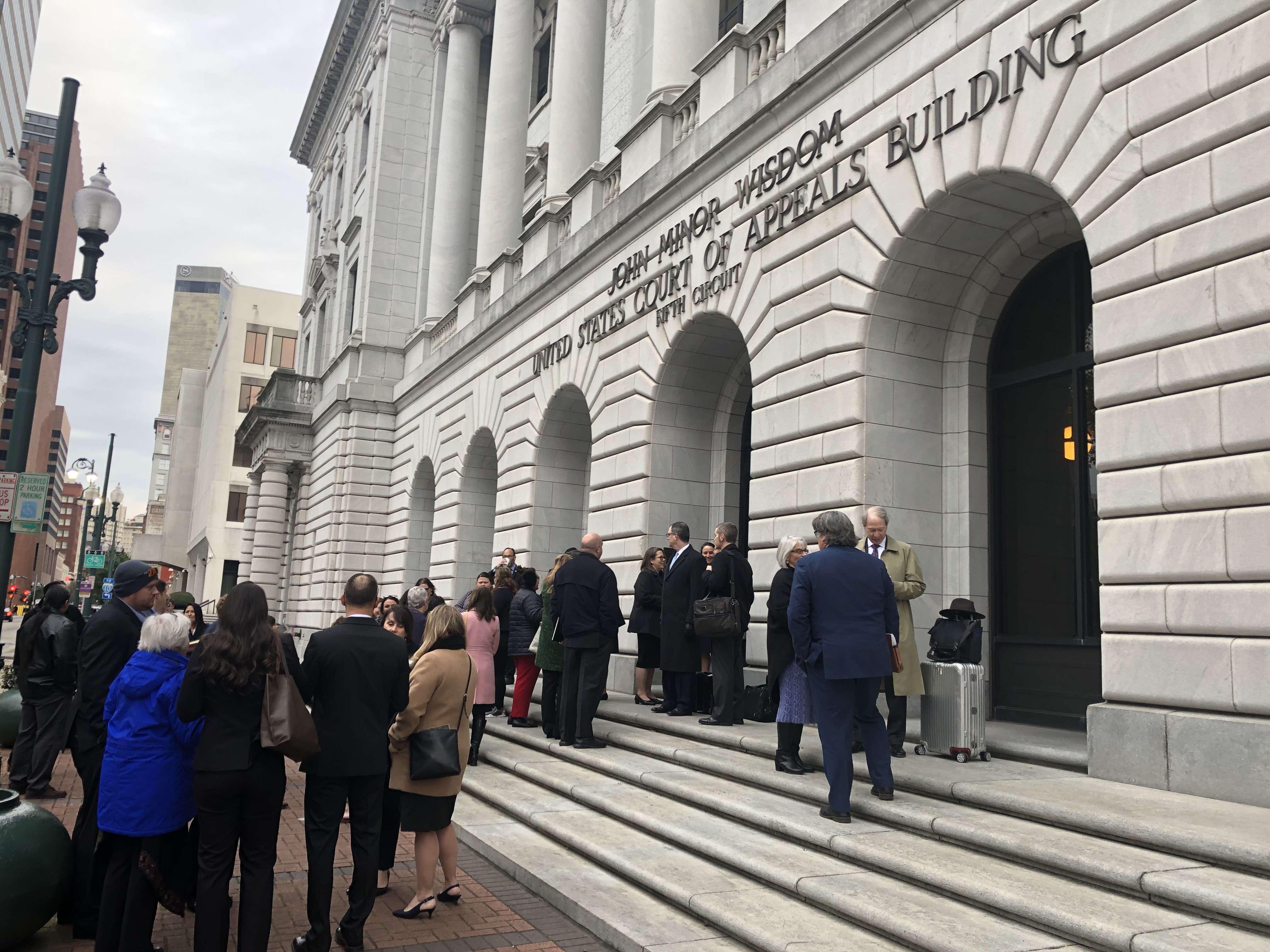
On Wednesday, an en banc panel of 16 judges in the Fifth Circuit heard oral arguments in Brackeen v. Bernhardt. Judges Davis and Ho were not a part of the panel. The other judges, from the left side of the bench around to the right were:
Oldham
Duncan
Willett
Higginson
Haynes
Elrod
Stewart
Smith
Owen
Jones
Wiener
Dennis
Southwick
Graves Jr.
Costa
Englehart
The rest of the information is from my notes during the hearing, and I’m sure contain some mistakes that we will see when a transcript is released.
Of the 16 judges, 5 of them asked a vast majority of the questions–more than 5 questions each. Duncan asked 19, Dennis and Jones asked 11, Smith asked 7 and Costa asked 5. The federal government received 11 questions, Navajo Nation 7, and the Four Intervening Tribes 7. Texas received 19, and the Individual Plaintiffs 16. The Four Intervening Tribes received 4 additional questions on rebuttal (totals are 25 for the pro-ICWA side before rebuttal and 36 for the anti-ICWA side).
If you are trying to follow along to the audio recording, Duncan was most concerned with commandeering and recent Supreme Court commandeering questions. He also pressed Navajo Nation closely on blood quantum. Smith was the one particularly trying to understand the “exclusive” part of plenary power, and later expressed the belief that Texas dedicates scores of social workers to each child in care. And Jones asked the questions on rebuttal that has led to the most number of texts from attorneys asking me “what the [heck]?!” (which I personally thought Adam Charnes handled admirably, given all the oxygen was completely sucked out of the courtroom in that minute by a collective intake of breath).
Dennis, the judge who wrote the lower panel opinion, was the one the plaintiffs had most difficulty hearing, and was the most supportive of the law. Costa also asked skeptical questions of the plaintiffs, and wanted to know more about redressability.
Given the silence or relative silence of so many judges, it is impossible to make any predictions about the eventual opinion. We heard very little from judges who voted against en banc review in Dollar General (the pro-tribe vote), except Dennis. Elrod and Higginson both asked one question each.
Finally, in a very unscientific scroll through Westlaw, the Fifth Circuit has taken anywhere from 3 months (Moore v. Quarterman) from the granting of en banc review to the opinion to 10 months (Alvarez v. Brownsville). The granting of en banc review of Brackeen was in 11/19, so feel free to speculate amongst yourselves when you think the opinion will come out.
“I think it means a lot to our foster kids that we’re Cherokee,” said Carney Duncan, a gentle, soft-spoken man whose hair falls below his shoulders. “My mom and dad always helped people and took them in. I have an ‘Uncle Joe’ who is no kin but we took him in. And a ‘brother’ who lived with us who is no blood kin. We help our own. It’s a Cherokee value.”

 Turtle Talk
You must be logged in to post a comment.