Washington Supreme Court Opinion on Active Efforts

Catching up on posting the summer’s reported ICWA cases, so I’m starting with this Washington Supreme Court opinion on active efforts for the initial or shelter care hear.

JMWOpinion 

We took discretionary interlocutory review of this case primarily to decide whether WICWA required the State to take active efforts to prevent the breakup of J.M.W.’s family before taking him into emergency foster care. Consistent with the plain text and purpose of WICWA, we conclude that it did. We also conclude that the trial court was required to make a finding on the record at the interim shelter care hearing that J.M.W.’s out of home placement was necessary to prevent imminent physical damage or harm. We remand to the trial court for further proceedings consistent with this opinion.

This opinion is trying to find some clarity in what ICWA standards apply when. Here are the two questions the Court sought to answer:

First, whether the department is required to make active efforts to keep an Indian child with their family under such circumstances as presented here. Second, whether the trial court was required to make a formal finding at the interim shelter care hearing that continued placement out of the home was necessary to prevent imminent physical damage or harm to the child.

The section question is essentially asking if the emergency standard of 1922 should apply whenever a child is placed out of the home and there is no 1912 (active efforts, QEW) findings. Interim shelter care hearings often happen before a jurisdictional/adjudication hearing, and can sometimes (often) extend the time before  adjudication hearing happens. In many states the 1912 findings happen either at adjudication or even after that, at the disposition hearing.

Amicus Briefs in Haaland v. Brackeen

We have a total of 21 pro-ICWA Amicus Briefs. Here they are in some rough categories and some VERY rough summaries. In writing this post, I became overwhelmed at this stunning array of briefs and support for ICWA.

Government Briefs

NARF’s Tribal Government and Organizations Brief : this brief has the sign on of nearly 500 tribes and over 60 tribal organizations. It discusses ICWA as an exercise of the trust responsibility, and the political relationship of tribes.

Congressional Brief : 87 Members of Congress signed this brief defending ICWA in the four principle arguments in the case

State AG Brief : 23 states and the District of Columbia signed on to this brief, which highlights how ICWA allows and encourages tribal-state relations in the area of child welfare.

LA County Brief : from the county counsel at the largest child welfare system in the country, it discusses the importance of ICWA to LA County practice with a focus on relocation in particular

Semi-Party Brief

Bradshaw Brief : This brief is unique in that it primarily tells the story of Robyn Bradshaw, the grandmother who adopted her granddaughter who was the subject of the claims of the Cliffords, one of the three foster family plaintiffs in the case. Because the procedural posture of the case below, the Cliffords’ narrative of facts was allowed to go unchecked throughout the life of the case until now.

How Child Welfare Works Briefs

Family Defenders : a brief from parent attorneys/family defenders in more than 8 states, this brief discusses the constitutional rights afforded to parents and families, how those intersect with the child welfare system, and the importance of ICWA in that structure. It directly addresses the arguments made by the other side regarding the child welfare system.

American Bar Association : This brief directly takes on the contention that child welfare is the sole province of the states as well as discussing the legal complexity of the child welfare system.

Casey Family Programs and 26 Other Child Welfare and Adoption Organizations : A continuation of the original, wildly successful, “gold standard” brief from Baby Girl, this brief focuses on child welfare best practices and how ICWA creates, promotes, and supports them.

National Association of Counsel for Children and 30 Other Children’s Rights Organizations : In addition to discussion the Constitutional rights of families, this brief directly addresses how ICWA supports the best interests of children in state proceedings.

Former Foster Children : One of the briefs with a particular place in my heart, this brief allowed Native youth to tell their lived experience to the Court.

How Adoption Works Brief

Non-Native Adoptive Parents : while the plaintiffs in this case were not adoptive parents, this brief directly addresses how ICWA actually works in voluntary adoptions.

Law Professor Briefs

Ablavsky Brief : The originalism brief

Administrative and Constitutional Law Professors : this brief addresses three main issues–federal power, anti-commandeering, and delegation

Indian Law Professors : this brief focuses on the exclusive power of Congress to legislate on behalf of Indians as a political class

American Historical Association : this brief provides historical context, especially around the early efforts (or lack thereof) of state child welfare systems and Native children

Medical Organizations

American Academy of Pediatrics and the American Medical Association : ICWA works directly to address the attendant physical and emotional trauma of federal and state policies designed to destroy tribal families and extended tribal networks

American Psychological Association (specifically including the associations of Texas, Louisiana, and Indianan) and the Society of Indian Psychologists : The benefits for children of being parented by Indian adults

Interest Groups

ACLU : ICWA is not a race based law

Constitutional Accountability Center : Originalism and anti-commandeering

National Indigenous Women’s Resource Center : The ramifications, specifically to VAWA, if “Indian” is a racial classification

Sen. Abourezk/Lakota People’s Law Project : Passage of ICWA and issues in South Dakota
Tribal Defendants/Intervenors Brief in Haaland v. Brackeen

Merits brief on behalf of the intervening tribes–Cherokee Nation, Oneida Nation, Quinault Indian Nation, Morongo Band of Mission Indians, Navajo Nation–in the Haaland v. Brackeen Supreme Court case.

IntervenorTribeBrief

Pace yourself–she’s a long one.

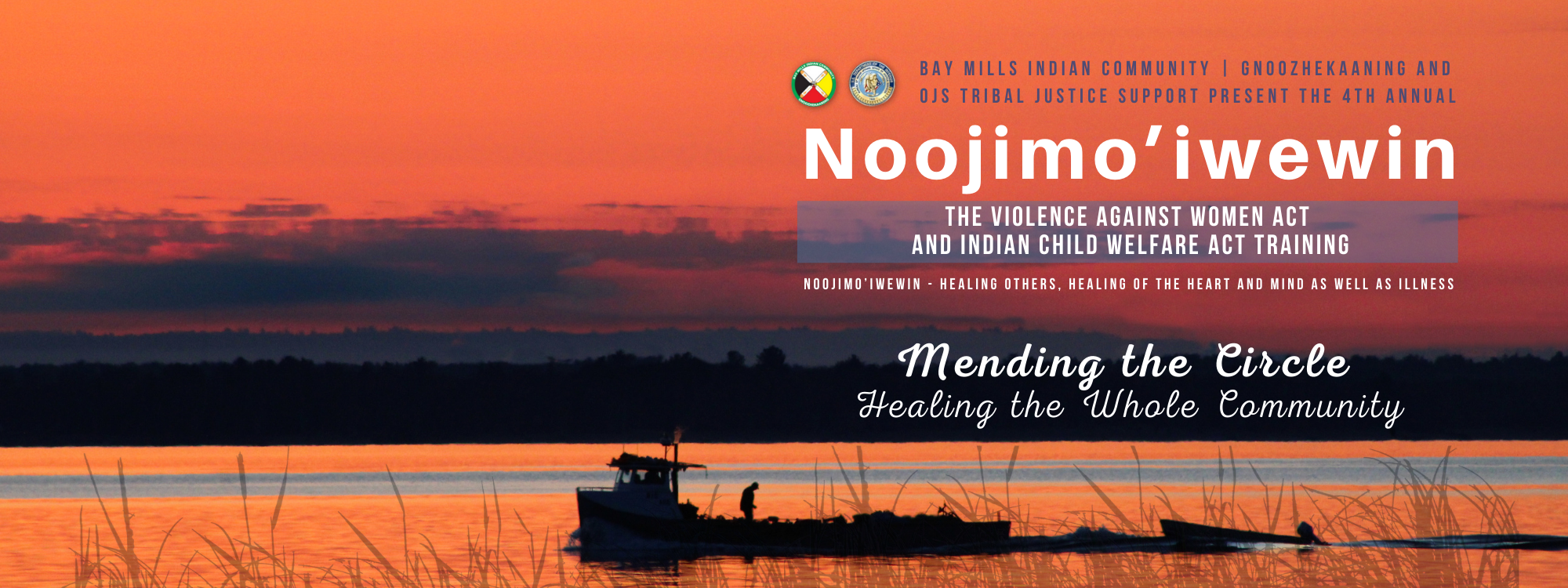
Bay Mills to host 4th Annual Noojimo’iwewin: The VAWA & ICWA Training


The 2022 Noojimo’iwewin features a series of hands-on training units. Each unit focuses on a topic related to violence and provides tools to support community healing. Engaging, expert faculty facilitate each unit which has been designed to help advocates, providers, and legal professionals implement effective service strategies. The training is hosted both in-person at the Bay Mills Resort & Casino and virtually via Whova. CLE and Social CEU credits pending.

Top Side Briefing in Haaland v. Brackeen

This case is a little complicated regarding the name and who is filing when. The Court is keeping all of the documents under case number 21-376, which is Haaland v. Brackeen. But in its order granting cert, the Court stated that Texas and the foster families would file first, or be “top side” in the briefing schedule. The federal government and the tribes will file on August 5, and the subsequent amicus briefs on August 12.

If you are thinking about a pro-ICWA amicus brief and have not yet talked to Dan Lewerenz (lewerenz@narf.org) at NARF now is the time to reach out. If you are a tribe looking to sign on to the tribal amicus brief, please reach out to Erin Dougherty Lynch (dougherty@narf.org), also at NARF.

Top Side Principle Briefs

Brackeen_Haaland v. Brackeen — Opening Brief

Texas_Haaland v. Brackeen – Opening Br. for Texas

Top Side Amicus Briefs

CatoGoldwaterFosterParents_Amicus Brief

CJJr_PLF Amicus Brief – BRACKEEN – 2022.06.01 – FINAL

OklahomaOhio_Brackeen Amicus

ProjectforFairRep_21-376 -377 -378 -380 ICWA Amicus Brief

NewCivilLiberties_21-378 Amicus NCLA Supp. Pet.

CERA_CERF Amicus Brief in Support of No Party -Final-6-2-22

ChristianICWA_21-376 -377 -378 and -380 Brief

AAAA_21-376 Amicus AAAA and NCFA

Notable additions to the anti-ICWA amicus briefs include Oklahoma and parties of ICWA cases past.

Minnesota Court of Appeals on Reason to Know: How to Write an Opinion On This [ICWA]

OPa220311-051622

All the Courts of Appeals facing the question of reason to know should just go read this one (I’m looking at you, Colorado).

In this case the court ordered another investigation to ensure the children were not Indian children, and this bothered the state So Much that it asked for a writ of prohibition to avoid the order. The Court is pretty clear that the lower court has the power to order an investigation and dismisses the state’s argument that the lower court didn’t have “reason to know” in one succinct paragraph.

Finally, we reject the county’s assertion that the district court erroneously replaced the reasontoknow standard with a lower standard: that the children “might” be Indian children. [R]eason to know” is “[i]nformation from which a person of ordinary intelligence . . . would infer that the fact in question exists or that there is a substantial enough chance of its existence that, if the person exercises reasonable care, the person can assume the fact exists. Black’s Law Dictionary 1520 (11th ed. 2019). The word might” means “to express possibility.” Random House Dictionary of the English Language Unabridged 1219 (2d ed. 1987). There is significant overlap between when a court “has reason to know” that a child is an Indian child and when there is a “possibility” that a child is an Indian child. On this record, we cannot say that the district court applied an incorrect standard. Moreover, as noted, even if a court has something less than a reason to know that a child is an Indian child, the court may nevertheless “choose to require additional investigation into whether there is a reason to know the child is an Indian child. ICWA Guidelines, supra, at 11

Iowa Supreme Court Decision on Notice and Indian Child [ICWA]

Opinion here:

210324_D8AD4E4B97EB1

Court page with oral arguments here.

I have delayed in posting this one mostly because I found this one particularly difficult, but I’ve referenced it in multiple presentations, so here it is. In essence, the child is a Lakota child, but due to COVID and tribal citizenship requirements and enrollment delays, ICWA did not apply to their case.

Red Cloud [Oglala Sioux ICWA Director] testified that he first met Mother the day before the hearing. He testified that he had consulted with his supervisor and that it was absolutely the intention of the tribe to intervene in the proceeding. When the State pointed out that the motion to intervene contained a reference to a stranger who was not a party to the proceedings, Red Cloud apologized for the error.

Red Cloud testified that because of staff difficulties and COVID-19, there were two years’ worth of cases that were not followed up on by the Oglala Sioux Tribe. He testified that the Bureau of Indian Affairs (BIA), which ordinarily signed off on tribal enrollments, had not done enrollments since March of 2020. When asked, however, whether Z.K. was “eligible for enrollment” in the Oglala Sioux Tribe, Red Cloud responded “Yes.”

On cross-examination, Red Cloud stated that it was hard to get enrollment certified because of the health issues of a BIA employee responsible for certification. Yet, Red Cloud testified that the tribe could determine whether somebody is a member or eligible for membership without certification by the BIA.

***

Red Cloud further stated that the Mother is at least half Native American regardless of whether she is a member of the Standing Rock Sioux or Oglala Sioux Tribe, and as a result, “there was no way that [the Court] can determine that [Z.K.] is not an Indian.” Red Cloud added, “[W]e need the time to figure this out.”

Obviously, that time didn’t happen and the Court found ICWA did not apply because the mother was not a citizen of Oglala. This is especially frustrating coming out of Iowa, which has an ICWA statute that attempted to define an “Indian child” as one that was recognized as such by her community. However, in 2007, the Iowa Supreme Court found that portion of the statute unconstitutional.

Kate Fort in Harvard Law’s Bill of Health

Here.

This post is part of a larger symposium on adoption, family separation & preservation, and reproductive justice. Other posts on Native children and Native experiences by Lauren van Schilfgaarde and Susan Harness. Pretty honored to be included with them.

Colorado’s Recent Struggles with Notice Standard [ICWA]

21ca0381-pd

21CA0659-PD

21CA0764-PD

Colorado has long had a very low bar to trigger the reason to know provision of ICWA. The B.H. case from 2006 has long been a model for other states that involve the question of what information does a court need to trigger the “reason to know” requirement of 25 U.S.C. 1912(a). And here, in a recent CO Court of Appeals case, is what the current debate over how the regulations have changed the standards boils down to:

But an assertion of possible Indian heritage alone does not fall within a “reason to know” factor that would permit a participant or the court to assume the child is an “Indian child” under section 19-1-126(1)(a)(II). Thus, this type of an assertion does not require formal notice to a tribe or tribes to determine whether the child is an “Indian child.”

In re A-J.A.B., 2022 COA 31, P58

The state law referenced is the Colorado adoption of 25 C.F.R. 23.107(c), the regulations that are supposed to guide courts regarding the “reason to know” standard. However, this is a fundamentally different standard than that articulated by B.H.:

Because membership is peculiarly within the province of each Indian tribe, sufficiently reliable information of virtually any criteria upon which membership might be based must be considered adequate to trigger the notice provisions of the Act.

138 P.3d 299, 304

The court of appeals states that state law has changed enough that B.H.’s reasoning was done under a different standard than the one in effect today (ICWA, of course, has not changed).

Much like the discussion in the In re Z.J.G. case, we are again debating the points of the six factors the regulations articulate as giving a court reason to know, and how they (according to the CO Courts of Appeals) narrow the reason to know standard, rather than guide it.

We agree with the E.M. division that information about the child’s heritage does not constitute “reason to know” that the child is an Indian child under section 19-1-126(1)(a)(II)(A). Information about a possible affiliation with two tribal ancestral groups does not satisfy one of the six reason to know factors

2022 COA 31 at P71

It is honestly stunning to me (though it should not be), that the passage of federal regulations means we are all now re-litigating notice issues that had long been settled. Last week, the Colorado Court of Appeals held

We conclude that a parent’s assertion of Indian heritage, standing alone, is insufficient to trigger ICWA’s notice requirements but, rather, it invokes the petitioning party’s obligation to exercise
due diligence under section 19-1-126(3). We further conclude that the exercise of due diligence under this provision is flexible and depends on the circumstances of, and the information presented to the court in, each case. Nonetheless, the record needs to show that the petitioning party earnestly endeavored to gather additional information that would assist the court in determining whether there is reason to know that the child is an Indian child.

People in re J.L., 2022 COA 43, P3

And now, “due diligence” is an “earnest endeavor” on the part of the state when a parent tells the Court they have tribal relations. However, in both cases the court of appeals sent the case back due to the lack of “due diligence” to follow up on these statements by the parents. The Court in A-J.A.B. gives a very detailed remand instruction regarding due diligence, and what the Court will need by date certain.

To lower my blood pressure and end this post, I will remember what the Washington Supreme Court held, when faced with very similar facts and laws:

We hold that a court has a “reason to know” that a child is an Indian child when any participant in the proceeding indicates that the child has tribal heritage. We adopt this interpretation of the “reason to know” standard because it respects a tribe’s exclusive role in determining membership, comports with the canon of construction for interpreting statutes that deal with issues affecting Native people and tribes, is supported by the statutory language and implementing regulations, and serves the underlying purposes of ICWA and WICWA. Further, tribal membership eligibility varies widely from tribe to tribe, and tribes can, and do, change those requirements frequently. State courts cannot and should not attempt to determine tribal membership or eligibility. This is the province of each tribe, and we respect it.

In re Z.J.G., 471 P.3d 853, 865.