Fletcher (again) on ICWA in Cato Unbound

Here is “A Civics Lesson.”

An excerpt:

In legal analysis, facts matter, and so it is time to return to the war on facts in this series. Mr. Sandefur still tries to attack ICWA in the Alexandria P. matter, even though California law that applies to all children would have Lexi back with her relatives, an outcome all parties excepting the foster parents wanted and prepared for. Along the way, Mr. Sandefur incorrectly states that the Mississippi Band of Choctaw Indians was involved when in fact it was the Choctaw Nation of Oklahoma. Mr. Olson incorrectly assumes that the Shoalwater Bay Tribe had interfered in In re T.A.W. when in fact the non-Indian parent filed the appeal asserting ICWA claims; the tribe is not a party to the case and opposes the non-Indian parent, who served time in prison for robbery and whom the tribal court found to have engaged in domestic violence. One could read the courts’ opinions to find these facts, except in one case, Baby Girl. Here, Mr. Sandefur forgets that the Cherokee dad was an active duty serviceman served with adoption papers immediately before his deployment to an active war zone without the advice of counsel. These are facts the Supreme Court majority also chose to ignore. Conversely, the South Carolina Supreme Court’s opinion addressed all these facts in reaching the opposite outcome. Facts, in law, matter.

All of the cases discussed in this series are complicated cases with difficult fact patterns, and perhaps no one case can vindicate or condemn the ICWA. Consider Mr. Olson’s reference to In re M.K.T. He seems to argue that the case is about a Cherokee father who tried to relinquish his tribal membership in order to avoid ICWA’s application, but the Cherokee Nation stubbornly refused to yield. The facts are more complicated and actually highlight how ICWA could have been useful if the parties had complied initially. The Cherokee father signed the tribal membership relinquishment form without the advice of counsel. The foster parent brought him the form while he was in prison (recall here the incarcerated parent that Mr. Olson accidentally champions by attacking the tribe in T.A.W.), bringing a notary along to cement the deal. The father later testified that he did not understand the legal ramifications of his relinquishment under tribal law, and that no one informed him that there was an Indian family available or anything else about the state of his child. All ICWA requires is the basic procedural right for Indian parents to seek the advice of counsel and to give knowing consent before a judge before their parental rights are terminated. The coercion of an imprisoned father into signing away his rights is a strange fact pattern on which to rest any conclusions about ICWA. Had the Cherokee father access to legal advice in the first instance like the public policy grounding ICWA supports, the case likely would never have been litigated, let alone reached the Oklahoma Supreme Court. The same was true for Baby Girl, where counsel for the adoptive couple failed to properly notify the tribe at the inception of the adoption process, and Alexandria P., where the foster couple fought against the wishes of all other parties to the case and against the best interests of Lexi.

In conclusion, ICWA stands up to scrutiny. Because of the treaty tradition, federal statutes like ICWA, and modern tribal governance, 21st century American Indian people know who they are and where they come from. Modern tribal governance is a triumph of the rule of law over years and years of American greed and bigotry. Indian tribes exist to preserve their homelands, includingAnishinaabeki, allowing contemporary Indian people to access sacred sites and to know where their ancestors are buried. Indian tribes encourage their people to learn their languages, includingAnishinaabemowin, and cultures. Indian children are learning their histories and languages, rather than being delivered to assimilationist boarding schools or shipped out to non-Indian families. Anishinaabe children are learning mino-bimaadiwin, the principle holding that all beings are connected and that actions of people have consequences on all. And because tribes are working to protect children, rather than treat them as cogs in a state bureaucratic hell or chattel to be bartered through the private adoption market, Indian children have a place to turn for help. Tribal law – inaakonigewin – speaks for itself.

My previous entry in this series is here.

Kristen Carpenter’s entry is here.

Fletcher on ICWA at Cato Unbound

Here is “Limit Government Intrusion in Indian Families’ Lives.” This essay is part of a series of online essays at Cato Unbound on the Indian Child Welfare Act.

Excerpts:

The Indian Child Welfare Act (ICWA) restricts government intervention in Indian families’ lives, imposes important obligations on the government that benefit both children and parents when it does interfere, and limits the ease by which private entities profit from government action.

And:

Alexandria P. is a story of how foster parents created an adversarial relationship with a child’s family, disregarding the goal of reunification, and then created a perfect storm of anti-Indian media sentiment when they lost. Some facts should be made clear, in case they are not: Lexi knew and regularly visited her Utah family – her sisters and her aunt and uncle – and she always knew she was a foster child. From the beginning, the California foster couple was the only party to contest Lexi’s placement with her relatives. The state of California, the Choctaw Nation, her relatives, her father, and Lexi’s own counsel all agreed that the placement with her relatives was absolutely in her best interest. Not once did any court disagree.

Finally:

Casual racism against American Indians is alive and well. In this hostile racial climate, it shouldn’t be surprising that Indian parents in South Dakota argue that “there’s this collective belief that Native people can’t take care of their own children.” The critique that ICWA improperly routes Indian children to their relatives’ homes instead of non-Indian homes is a critique that takes advantage of racial animus against Indian people and comes dangerously close to an allegation that Indian parents and tribal communities are inherently inferior (others have outright denounced the Goldwater Institute’s goals for this reason). Indian people love their children the same as everyone else. ICWA, the gold standard in child welfare, is there to support Indian families against governments that too often devalue them.

Donald Trump and Federal Indian Policy: “They don’t look like Indians to me.”

In 1993, Donald Trump appeared before the United States House of Representatives Committee on Natural Resources to offer testimony on Indian gaming. 1993 Donald Trump bears a striking resemblance to Presidential Candidate Donald Trump, in terms of demeanor and language – Trump’s oral testimony is consistent with the language he has used throughout his campaign for President.

Most of Trump’s testimony focused on Indian gaming itself, and his perception that the Indian Gaming Regulatory Act granted tribes an unfair advantage over his own gaming enterprises.

But, it was another part of Trump’s testimony that caught my attention. He questioned the legitimacy of Indian tribes based upon the physical appearance of their members. Here is an exchange he had with Rep. Miller of California:

Mr. Miller. Is this you discussing Indian blood: “We are going to judge people by whether they have Indian blood,” whether they are qualified to run a gaming casino or not?

Mr. Trump. That probably is me, absolutely, because I’ll tell you what, if you look—if you look at some of the reservations that you have approved—you, sir, in your great wisdom, have approved— will tell you right now, they don’t look like Indians to me, and they don’t look like Indians. Now maybe we say politically correct or not politically correct. They don’t look like Indians to me, and they don’t look like Indians to Indians, and a lot of people are laughing at it, and you are telling how tough it is, how rough it is, to get approved. Well, you go up to Connecticut, and you look. Now, they don’t look like Indians to me, sir.

The written hearing records also include a transcript from his appearance on the Don Imus show earlier that same year:

Don Imus Show (June 18, 1993)

TRUMP: Well, I think I might have more Indian blood than a lot of the so-called Indians that are trying to open up the reservations.

I looked at one of them – well, I won’t go into the whole story, but I can tell you, I said to him, “I think I have more Indian blood in me than you have in you.” And he laughed at me and he sort of acknowledged that I was right. But it’s a joke. It’s really a joke.

IMUS: A couple of these Indians up in Connecticut look like Michael Jordan, frankly.

TRUMP: I think if you’ve ever been up there, you would truly say that these are not Indians. One of them was telling me his name is Chief Running Water Sitting Bull, and I said, “That’s a long name.” He said, “Well, just call me Ricky Sanders.” So this is one of the Indians.


You can see a video of Trump’s appearance before the Committee here.  The transcript and hearing record is available here: 1993 Trump Nat Res Testimony PDF. (Trump’s testimony begins around Page 175). I recommend reading the entire portion of the record involving Trump, as it sheds light on his views on Indian gaming, tribal sovereignty, and the tax status of Indian tribes.

It is tempting to heap these comments onto the pile of other racist comments that Trump has made and be done with it.

But, Trump’s 1993 comments to the Natural Resources Committee highlight a problem that has plagued federal Indian law from the Indian Reorganization Act until today: the tension between the racial and political identity of Indian people.

Trump’s comments shed light on how a Trump Administration may implement its Indian policy, posing a real risk that the federal government will subordinate the sovereign status of Indian tribes to the racial identity of individual Indians. Such a policy would rely on a subjective evaluation of who is “Indian enough” in Trump’s estimation.

In the past, when the Federal government has focused on the racial identity of Indians (rather than our political identity), it has almost always been done to limit the Federal government’s trust obligations to Indians.

The Indian Reorganization Act and “Half-Blood” Indians

For nearly 160 years – from 1776 until 1934 – federal Indian policy could be fairly summarized this way: get rid of the Indians (through war or assimilation) and take their land.

In 1934, Congress enacted the Indian Reorganization Act, or the “IRA”. The IRA marked the beginning of modern federal Indian law, and at least recognized the right of Indian people to govern themselves into the future. Congress also understood that this would put the federal government on the hook for a continuing relationship with Indian tribes, and was forced to confront how to decide who were the “real Indians” and who were not.

On May 17, 1934, the United States Senate Committee on Indian Affairs debated the terms of the IRA. At issue in that debate was which Indians would be eligible to organize under the IRA and which Indians would be left out. Here is an exchange between Committee Chairman Burton Wheeler and Indian Affairs Commissioner John Collier during that debate:

The CHAIRMAN. There is a later provision in here I think covering that, and defining what an Indian is.

Commissioner COLLIER. This is more than one-fourth Indian blood.

The CHAIRMAN. That is just what I was coming to. As a matter of fact, you have got one-fourth in there. I think you should have more than one-fourth. I think it should be one-half. In other words, I do not think the Government of the United States should go out here and take a lot of Indians in that are quarter bloods and take them in under the provisions of this act. If they are Indians of the half-blood then the Government should perhaps take them in, but not unless they are. If you pass it to where they are quarter-blood Indians you are going to have all kinds of people coming in and claiming they are quarter-blood Indians and want to be put upon the Government rolls, and in my judgment it should not be done. What we are trying to do is get rid of the Indian problem rather than to add to it.

Senator Wheeler expressed concern that the IRA would be used by “white people” (his words) claiming to be Indian.

When the IRA was enacted into law one month later, it defined “Indian” as:

…all persons of Indian descent who are members of a recognized Indian tribe now under Federal jurisdiction, and all persons who are descendants of such members who were, on June 1, 1934, residing within the present boundaries of any Indian reservation, and shall further include all other persons of one-half or more Indian blood.

The Bureau of Indian Affairs and Indian tribes are still wrestling with this definition today – as seen in the Carcieri decision and the recent Mashpee litigation. The logical definition of “Indian” should have been simply, “all members of a recognized Indian tribe;” but, by adding time, residence and blood quantum limitations, Congress was seeking to evade its financial obligations and to constrain of the sovereign status of tribes.

Political Identity v. Racial Identity and Historic Tribes v. Created Tribes

In the 1970’s, the BIA implemented a policy of “Indian preference” in employment – this applied to new employment, and opportunities for promotion within the BIA. Non-Indian employees of the BIA filed a class-action lawsuit alleging that this preference in employment was unconstitutional racial discrimination. The case – Morton v. Mancari – reached the U.S. Supreme Court in 1974. The Court upheld the BIA’s preference program, explaining that it was not racial discrimination. Instead, the Court stated that the preference was aimed at Indians as members of a political entity – similar to state-laws allowing state governments to grant employment preference to state residents:

Contrary to the characterization made by appellees, this preference does not constitute “racial discrimination.” Indeed, it is not even a “racial” preference. Rather, it is an employment criterion reasonably designed to further the cause of Indian self-government and to make the BIA more responsive to the needs of its constituent groups. It is directed to participation by the governed in the governing agency. The preference is similar in kind to the constitutional requirement that a United States Senator, when elected, be “an Inhabitant of that State for which he shall be chosen,” Art. I, § 3, cl. 3, or that a member of a city council reside within the city governed by the council. Congress has sought only to enable the BIA to draw more heavily from among the constituent group in staffing its projects, all of which, either directly or indirectly, affect the lives of tribal Indians.

At the same time as Morton v. Mancari, the Department of the Interior was drawing distinctions between Indian tribes based upon when and how they were recognized by the federal government. Attorneys within the Department’s Office of the Solicitor advanced the theory that some Indian tribes were “historic tribes,” because they have always maintained a relationship with the United States, while other tribes were “created” by the federal government. According to those attorneys, only “historic tribes” could exercise the full sovereign powers of Indian tribes, while “created tribes” had lesser sovereign powers.

Not surprisingly, the “historic tribes” included many of the Indian tribes that fit the romanticized ideal of Indians – tribes in the Great Plains and the Southwest (i.e. those tribes whose members “looked” like Indians). “Created” tribes were often those tribes whose members did not look like the Indians people saw in Hollywood westerns – people with lighter hair and eyes, or people with mixed Black or Mexican ancestry. This standard of “Indianness” ─ a Federal race-based standard ─ was again used to limit tribal sovereignty and contain the “Indian problem.”

The Department’s disparate treatment of “historic” and “created” tribes got so bad that Congress intervened, and enacted amendments to the IRA in 1994 to prevent the BIA from discriminating among tribes on this basis.

Trump and Indian Policy Today

Indian law today rests in large part upon the distinction between Indians as members of a racial/ethnic group, and Indians as citizens (a more accurate term than “members”) of sovereign political entities.  This principle is foundational.

There are 568 federally recognized Indian tribes today, from southeast Florida to the north slope of Alaska. Some tribes’ citizens look like the idealized Indians from George Catlin paintings, while other tribes’ citizens would not “appear” to be Indian to a passerby on the streets of Washington, D.C. Despite the vast differences in their racial purity, every tribe maintains the right to determine its own rules for citizenship, to be governed according to its own laws, and to engage with the United States on a government-to-government basis.

But, there continue to be people who either don’t understand the distinction between the ethnic and political identities of Indian people, or who want to eliminate that distinction altogether.

In its recent decision in Adoptive Couple v. Baby Girl, the Supreme Court carved a hole in the Indian Child Welfare Act (which was enacted in 1978 to stop the epidemic of Indian children being taken from their families in Indian communities). In writing for the Court, Justice Alito left little doubt that the decision was premised on the Indianness of Baby Girl. Here is the first line of his opinion: “This case is about a little girl (Baby Girl) who is classified as an Indian because she is 1.2% (3/256) Cherokee.”

Last year, the Goldwater Institute in Arizona filed a lawsuit against the Department of the Interior seeking to overturn the entire Indian Child Welfare Act, arguing that the act unlawfully discriminates against Indian children on the basis of race. (The opening page of its complaint alleges, “Children with Indian ancestry, however, are still living in the era of Plessy v. Ferguson”).

The continuation of Indian tribes as sovereign governments in the United States depends, in large part, upon the distinction between Indians as a race of people, and Indians as citizens of Indian tribes. To blur or eliminate that distinction is to take an axe to the trunk of the tree of federal Indian law – federal laws applicable to Indians would be subject to the U.S. Constitution’s prohibition against racial discrimination.

Donald Trump’s most notable comments about Indian tribes – made before the Committee on Natural Resources – reveal that he does not draw the distinction between the racial and political identities of Indian people. His view of the legitimacy of Indian tribes depends on the physical appearance of their members. As he told Don Imus, “it’s just one of those things that we have to straighten out.”

A Trump Administration that acts upon that impulse will dramatically alter federal Indian policy as we know it.
Wisconsin Disretionary Transfer Rule to be Indefinitely Extended

According to Larry Nesper:

The Supreme Court of Wisconsin today, June 21, in an administrative hearing, voted to indefinitely extend the Discretionary Transfer Rule permitting state court judges to transfer cases to tribal court on their own authority.  It had been scheduled for review after five years. The rule has been most extensively used by the Oneida Nation which has transferred 1400 child support cases in the last several years out of county courts and into tribal court.  The order will be out by the end of the term this summer.

Comments on this rule going back to 2007 are here.

Fletcher & Singel on the Historical Basis for the Trust Relationship between the US and Indian Children

Fletcher & Singel have posted “Indian Children and the Federal Tribal Trust Relationship” on SSRN.

Here is the abstract:

This article develops the history of the role of Indian children in the formation of the federal-tribal trust relationship and comes as constitutional challenges to the Indian Child Welfare Act (ICWA) are now pending. We conclude the historical record demonstrates the core of the federal-tribal trust relationship is the welfare of Indian children and their relationship to Indian nations. The challenges to ICWA are based on legally and historically false assumptions about federal and state powers in relation to Indian children and the federal government’s trust relationship with Indian children.

Indian children have been a focus of federal Indian affairs at least since the Framing of the Constitution. The Founding Generation initially used Indian children as military and diplomatic pawns, and later undertook a duty of protection to Indian nations and, especially, Indian children. Dozens of Indian treaties memorialize and implement the federal government’s duty to Indian children. Sadly, the United States then catastrophically distorted that duty of protection by deviating from its constitution-based obligations well into the 20th century. It was during this Coercive Period that federal Indian law and policy largely became unmoored from the constitution.

The modern duty of protection, now characterized as a federal general trust relationship, is manifested in federal statutes such as ICWA and various self-determination acts that return self-governance to tribes and acknowledge the United States’ duty of protection to Indian children. The federal duty of protection of internal tribal sovereignty, which has been strongly linked to the welfare of Indian children since the Founding, is now as closely realized as it ever has been throughout American history. In the Self-Determination Era, modern federal laws, including ICWA, constitute a return of federal Indian law and policy to constitutional fidelity.

Wall Street Journal Publishes “Why Indian Child Welfare Act was Needed”

Why Indian Child Welfare Act Was Needed – WSJ

Matter Involving Removal Jurisdiction under ICWA in Child Custody Dispute involving “Pembina Nation Little Shell Band of North America” Member

Here are the materials so far in Disanto v. Thomas (S.D. Ga.):

12-1 Motion to Remand

22 Opposition

23 Reply

32 Magistrate Report


California Court of Appeals Holds ICWA Doesn’t Apply Where Pala Band Member Child is Disenrolled During Adoption Proceedings

Here is the unpublished opinion in In re K.P.:

In re K.P.

An excerpt:

Michelle T., a member of the Pala Band of Mission Indians, contends that the juvenile court violated the Indian Child Welfare Act (ICWA), title 25 United States Code section 1901 et seq. and Welfare and Institutions Code section 224 et seq. by terminating her parental rights to her children, K.P. and Kristopher P., under section 366.26.
Throughout most of their dependency cases, K.P. and Kristopher were eligible for membership, or were enrolled, in the Pala Band of Mission Indians (Pala Band). At the children’s first section 366.26 hearing, the Pala Band did not consent to the children’s adoption and the juvenile court ordered a plan of guardianship. Several years later, when the children’s cases proceeded to a second section 366.26 hearing, the juvenile court learned that the Pala Band of Mission Indians had disenrolled K.P. and Kristopher, and others, on the ground that they lacked the blood quantum necessary for membership.
Michelle argues that in view of a pending appeal in the United States Court of Appeals for the Ninth Circuit challenging the validity of the Pala Band’s enrollment ordinance that resulted in the disenrollment of K.P. and Kristopher and the others, the juvenile court erred when it found that K.P. and Kristopher were not Indian children within the meaning of the ICWA and declined to apply ICWA’s substantive and procedural protections at the children’s second section 366.26 hearings. Michelle also argues that enrollment in a tribe is not required to be considered an Indian child, and that the Pala Band did not provide written confirmation that enrollment is a prerequisite for Pala Band membership.
We conclude that the juvenile court correctly ruled that the Indian tribe has the sole authority to determine its own membership and that the juvenile court must defer to the membership decisions of an Indian tribe. Under federal and state law, the Indian tribe’s membership determination is conclusive. The record shows that enrollment is a prerequisite for Pala Band membership, and that the Pala Band determined that K.P. and Kristopher are not members of its tribe. Therefore, the juvenile court did not err when it determined that K.P. and Kristopher are not Indian children within the meaning of the ICWA and terminated parental rights without applying ICWA’s heightened substantive and procedural protections. We affirm.

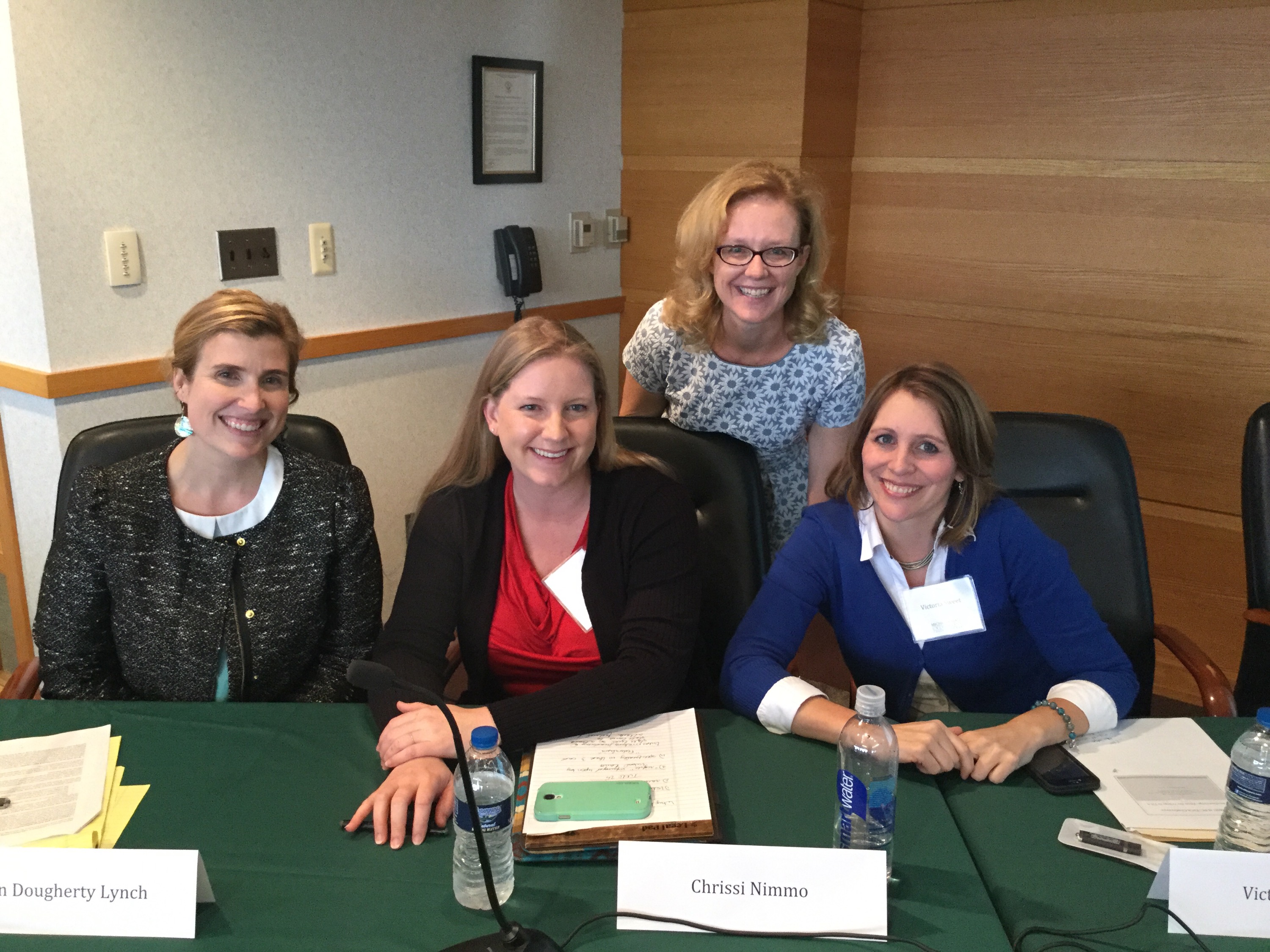
MSU/TICA ICWA Panel

Erin Dougherty Lynch, Chrissi Nimmo, Kate Fort, Victoria Sweet


Monique Vondall-Rieke on the Indian Child Welfare Act

COMMENTS ON THE GOLDWATER INSTITUTE CHALLENGE TO ICWA

(or “More one-sided arguments that we get used to in Indian Country”)


By Monique Vondall-Rieke, J.D.,

Director, Association of Village Council Presidents Tribal Justice Center


BETHEL, AK – The announcement of A.D., et al. v. Washburn by the conservative group known as the Goldwater Institute comes with a bitter deja vu of “haven’t we heard this before?”  I’ve got a few things that I can say are wrong with the pleadings filed by Goldwater on behalf of minor American Indian children, “next friend,” and potential adoptive parents. Mostly, however, I’ve got even more to say on the one-sided EPIC report they have produced to coincide with their summation that ICWA should be declared unconstitutional.

First of all, the report does its purpose for Goldwater regardless of the medical and psychological research that exists and documents the loss of cultural identity and historical trauma that American Indian children have been victims of for centuries. The report also fails to point any blame at even the beginnings of Indian to federal government (i.e. “founding fathers”) relationships and what they are based upon. The truth of the harms of the Doctrine of Discovery is avoided again and the convoluted desire to have an American Indian child at the center of arguments of white conservatives is the Hail Mary of what Justice Scalia coined as “jiggery-pokery” in the recent SCOTUS decision on same-sex marriage. (Not that I would support his use of the term or dissenting opinion, of course.) It just doesn’t surprise me that the Goldwater Institute has invested time and money into a campaign to smear a federal law that undoes what historical trauma to American Indians has done for centuries in one fell swoop of a few isolated wins against ICWA.

The report begins with unmistakably sad stories of failures within American Indian communities across America where ICWA, they allege, did not protect the child. What Goldwater Institute fails to do, however, is focus on why some children are not connected to their tribal affiliation more than when they reach an ICWA stage. What they fail to point out is the overwhelming questions like: what were the incidences that led to those people being isolated from their cultural communities? The answer in most cases is because, somewhere in their lineage, someone was removed from their cultural communities and placed either in a non-Indian home, or in a boarding school. Both situations are damaging for a number of historically traumatic reasons told in stories over and over by our ancestors.

There are two reasons I support ICWA: my oldest son and my youngest son. First, my oldest son was born at a time in my life when I was a precarious young woman who was unsettled and seeking self-identity. I went from being a Catholic to a bible-banging Christian to a Buddhist and it was not until 1999, twelve years after my oldest son was born and adopted by his biological grandparents that I was able to find my spirituality and return to a circle that had been broken by cycles of Catholic influence of my ancestors. My son was nearly adopted by a white family but, thanks to ICWA, the adoption met the family exception and he was adopted by his father’s grandparents, who agreed to keep the adoption open and allowed me to see him. Today, we have a wonderful relationship and he and his beautiful girlfriend are about to give me my third grandson. As an adult, my son sought out his American Indian heritage and came to live with me, my other two children and my husband. I thank ICWA to this day for allowing me to open my eyes to allowing his grandparents to adopt him because they raised him to be a respectful young man.

The second reason I support ICWA is because my youngest son was adopted by my husband and I in 2005. He came to us through an ICWA relative placement and is the light of our life daily. My husband is a kind, caring, loving father and I would have never been able to see that side of him without ICWA giving us the gift of my son through the relative placement requirements of ICWA. In fact, his brother and sister were adopted by my sister, so ICWA has touched many of my family’s lives and has allowed these three children to be raised in our cultural family nucleus. If it were not for ICWA, the relative would not have approached us for early placement of the children, and, without going into detail, my young son could possibly not even be alive today. So, I defend ICWA against its attack and always will. My husband, in fact, wrote a song in gratitude of ICWA. He is a non-Indian (Hungarian) and our son knows his heritage. He knows he is American Indian and can be Hungarian when he wants to be, or Irish, or French, but most of all, he knows that he is safe and loved in his home by his mother and father.

Incidentally, the report by the Goldwater Institute fails to mention that keeping American Indian children in foster care is a multi-billion dollar business for state human service agencies. The Children’s Bureau, U.S. Department of Health & Human Services, AFCARS Report of 2013 reveals that American Indian children make up .9% of the population of U.S. children but represent 2% of the population of children in foster care in the U.S. Some states with high numbers of American Indian populations, like South Dakota, statistics reveal that up to 50% of the children in foster care placement in that state are American Indian.

The Association of Village Council Presidents in Alaska represents 56 tribes and villages in the Yukon-Kuskokwim Delta Region (“Y-K Delta”). The newly-developed South West Region of Alaska shows, in the University of Alaska Anchorage Institute of Social and Economic Research’s report titled “Trends in Age, Gender, and Ethnicity Among Children in Foster Care in Alaska,” that for every 1000 of children in general population, 20 Alaska Native children will end up in foster care, which is more than double the rate of any other region in Alaska. The Y-K Delta has several remote villages and the Office of Children Services for Alaska is deeply involved in the placement of children out of their communities due to the lack of (1) American Indian foster homes in the region and (2) lack of kinship foster care funding for family placements, unlike other states. Although other reasons exist, the quick judgment of removal of a child takes place far more often than in other areas of the United States versus the cost of making a “good faith effort” to place the child in an American Indian home as required by ICWA. These statistics and the removal from communities only exacerbate the loss of cultural identity and increase the stigma of historical trauma on the children.

These are the reasons that ICWA is so important to American Indian children. There are some sad casualties, but in any foster care system, whether the children are American Indian or not, there are casualties and all agencies need to strive for a no-casualty goal to preserve the health and welfare of children, regardless of race or ethnicity, or, yes, even political status. The fix to those problems, however, is not to abolish the Indian Child Welfare Act and not to exploit the misfortunes of failed systems and failure stories. These facts and statistics, Goldwater Institute, is not “pure applesauce.”


Here are the lyrics to the song written by my husband, Stuart Rieke:


Listen to Native Peoples First

Call this a protest or a culture song

There’s no changing the laws of diversity

Jesus himself battled the Romans who were wrong

Cause Rome wanted only one set of eyes to see.


Children interpret their daydreams

Through a culture they inherit.

Do you want them to be held away?

Or do you hope they share it?


You want to help write their songs?

But first understand, first sing along.

We gotta learn to listen to Native Peoples first

Before we all try to fix this broken Universe.


Call this a plea to reason

Or a personal narrative.

My son sees the seasons

Through eyes of the cultures where he lives.


Every generation is like a wave

You’ve got to give them room to feel the shore

How can you think they’re yours to save?

They need their own center, their cultural core!


You want to help write their songs?

But first understand, first sing along.

We gotta learn to listen to Native Peoples first

Before we all try to fix this broken Universe