Harvard Law Review Comment on Michigan v. Bay Mills

Here is Leading Case: Michigan v. Bay Mills Indian Community, 134 S. Ct. 2024 (2014).

An excerpt:

While the Court’s decision is a victory for those who feared the abrogation of tribal immunity, its suggestion that states seek remedies in state law signals approval of leaving the resolution of legal questions central to state-tribe disputes to the states, even when the question concerns the extent of Indian land. Such a view would be inconsistent with recent trends generally favoring greater federal control and congressional support for tribal self-determination, and could result in actions that are detrimental to tribes.

Tenth Circuit Reverses Oklahoma v. Hobia Relying on Bay Mills

Here is the opinion:

CA10 Opinion

Lower court supplemental briefs here.

Briefs are here.

Lower court materials here.

Updated Materials in Michigan v. Sault Tribe — State Seeks to Sue Tribal Officials

Here are the materials in State of Michigan v. Sault Ste. Marie Tribe of Chippewa Indians (W.D. Mich.):

49 Renewed Motion to Dismiss

53-1 State Motion for Relief

55 State Response to Motion to Dismiss

57 Soo Tribe Reply

58 Soo Tribe Response to Motion for Relief

60 State Reply

63 DCT Order to Adjourn and Reschedule Oral Argument

Sixth Circuit materials are here.


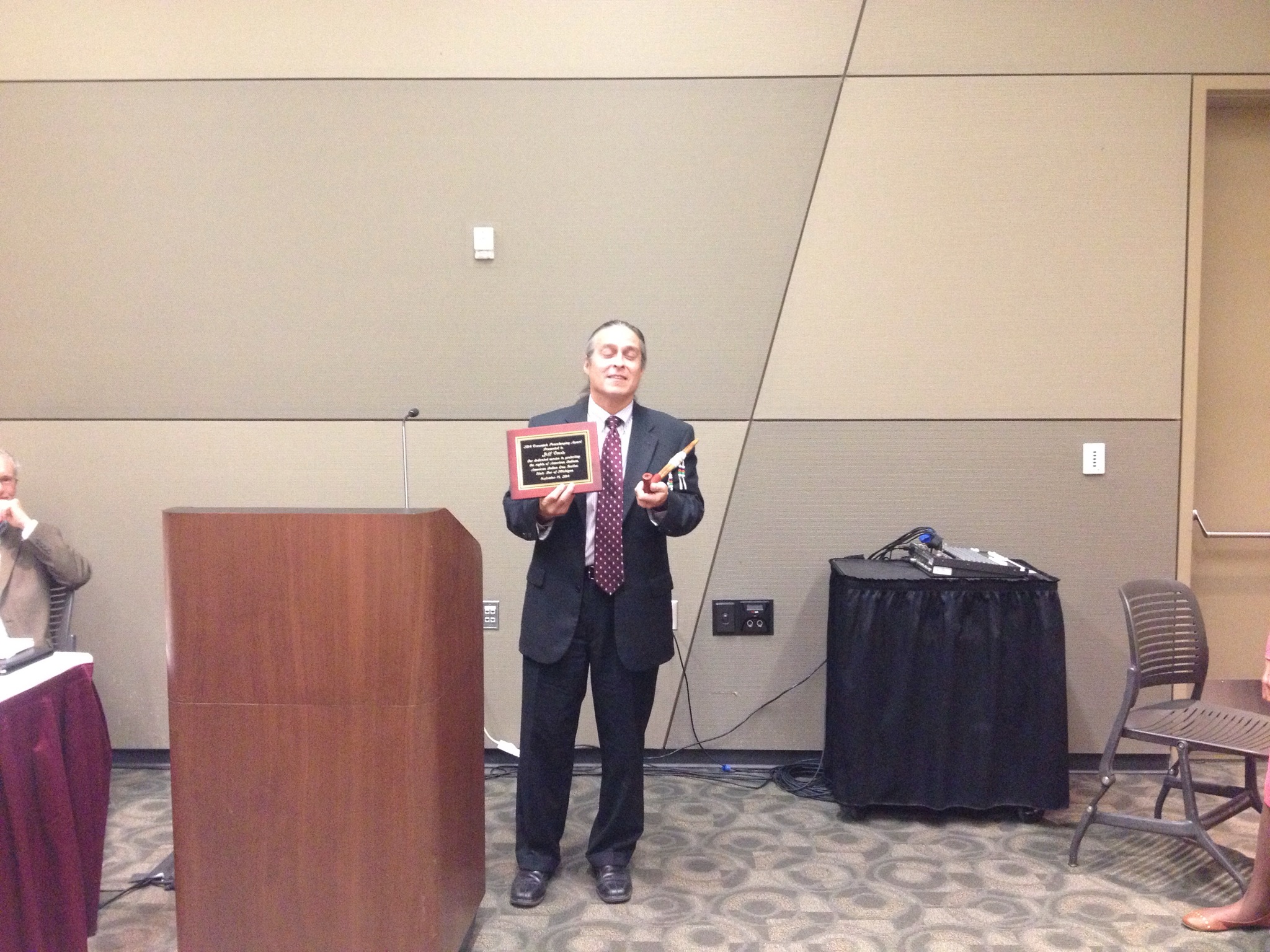
Jeff Davis Accepting Tecumseh Award from Michigan State Bar Indian Law Section

Jeff Davis, Lynn Marie Johnson, and Bill Gregory

IMG_0844.JPG

The ever-humble Jeff Davis

IMG_0843.JPG

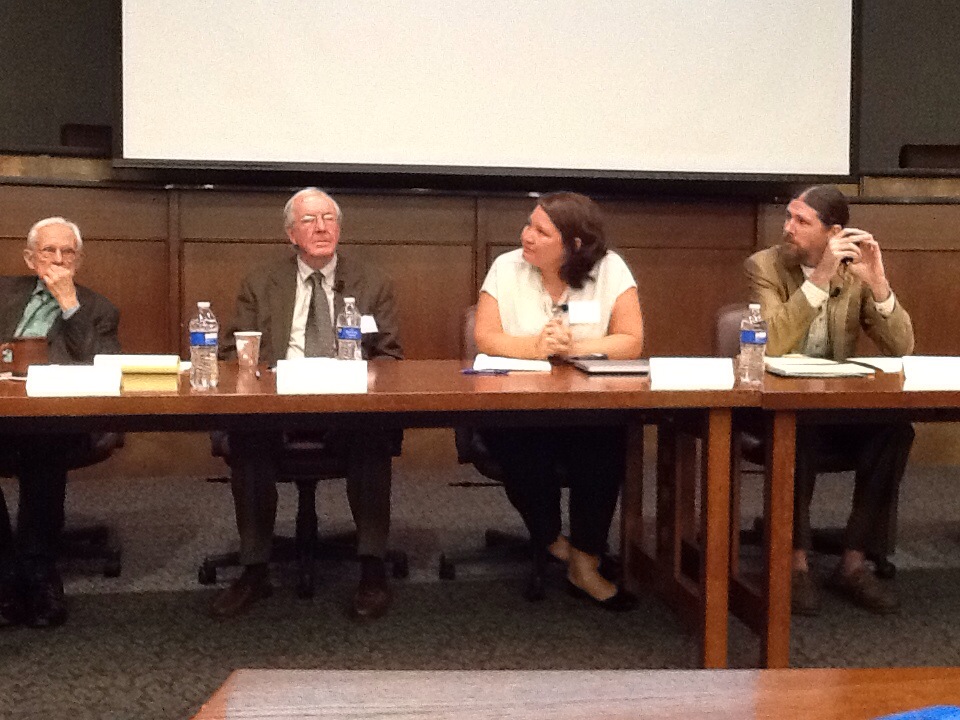
And the accompanying program on Michigan v. Bay Mills, featuring Riyaz Kanji, Kathryn Tierney, Louis Reinwasser, and Doug McIntyre

IMG_0828.JPG

Eleventh Circuit Briefs in Alabama v. PCI Gaming

Here:

Alabama Opening Brief

State of Michigan et al. Amicus Brief

PCI Gaming Brief

US Amicus Brief

USET Amicus Brief

Alabama Reply

Lower court materials here.

CU NALSA Presentation and Third Panel

CU NALSA

IMG_0799.JPG

Jenn Weddle, Padraic McCoy, Tom Shipps, Conly Shulte, and Lynn Slade

IMG_0800.JPG

Second Panel at CU

Rick Collins, Harold Bruff, Wenona Singel, Bill Wood

IMG_2188.JPG

Kristen Carpenter

IMG_2187.JPG

Introductory Remarks and Opening Panel at CU

Carla Fredericks and Rick Collins

IMG_2177.JPG

Kathryn (Candy) Tierney

IMG_2181.JPG

Fletcher

IMG_2182.JPG

Colorado Law Symposium on Bay Mills Decision

Wenona Singel and I are delighted and honored to speak at Colorado’s symposium on Michigan v. Bay Mills Indian Community. Thanks to Rick Collins, Sarah Krakoff, Carla Fredericks, Kristen Carpenter, and the rest of the great people at CU.

In honor of the Michigan-centric character if this symposium, it snowed in Boulder.

IMG_2175.JPG

I am honored to share the stage with Kathryn Tierney, the general counsel for the Bay Mills Indian Community. She is a legend, going back to her work on the LCO treaty rights cases in Wisconsin, the LeBlanc matter in Michigan, and United States v. Michigan. Wenona and I know her from the more calmer days of negotiating the Michigan tax agreements a decade ago.

I’ll be patching together a short talk about lessons we can learn from the decision from the successful strategic moves made by Bay Mills.

Continue reading

New Papers on Tribal Federalism, Native Voting Rights, and Bay Mills

Please take a look:

Tribal Disruption and Federalism
This paper is prepared for the 2014 Honorable James R. Browning Symposium hosted by the Montana Law Review (2015 Forthcoming)
Matthew L. M. Fletcher
Michigan State University College of Law
Abstract:

The very presence of Indian nations within the borders of the United States and its territories has always been, from the Founding, disruptive. Indian nations are disruptive, but as I will argue, they are disruptive in the best possible manner. This paper will describe several ongoing tribal-state disputes throughout the nation, acknowledging that the tribal claims are disruptive, but that tribal disruption is not inherently harmful.

Native Voting Rights
This short paper is prepared for the University of Texas/Mexican Electoral Tribunal Workshop (September 5-6, 2014).
Matthew L. M. Fletcher
Michigan State University College of Law
Abstract:

American Indians’ status as citizens of federal, state, and tribal nations has been riddled with ambiguity since the Founding of the American Republic. This short paper surveys the history and law of Native political rights in the American constitutional structure before concluding with a discussion about special problems in tribal elections.

Rights Without Remedies
Matthew L. M. Fletcher
Michigan State University College of Law
Abstract:

In Michigan v. Bay Mills Indian Community, the Supreme Court issued a critically important decision on tribal sovereign immunity denying Michigan a forum to enforce its alleged rights under the Indian Gaming Regulatory Act and under state law. The decision reminds me of Oklahoma Tax Commission v. Citizen Potawatomi Nation, where the Court held that Oklahoma could tax tribal smokeshops, but could not sue the tribe to force remittance of the tax revenue. And so for the second time in recent decades, the Court issued a decision that a state had a right under federal Indian law that was unenforceable against an Indian tribe due to sovereign immunity – in other words, a right without a remedy.

The Supreme Court’s primary reasoning in the Bay Mills matter directly focuses the resolution of these kinds of disputes on Congress. Bay Mills did not simply reaffirm tribal immunity – the Court strongly reaffirmed something known as the clear statement rule. The reaffirmation of the clear statement rule could impact many areas of tribal governance beyond tribal sovereign immunity, including labor relations, treaty rights, tribal court jurisdiction, and of course Indian taxation. This paper parses out where the clear statement rule can by utilized by tribal interests for maximum effect, and where reliance upon the rule could generate signals to Congress.

I conclude by identifying the logical outcome of reliance upon the clear statement rule – Congressional reconsideration of tribal immunities. Indian country’s focus on litigation may be forced to give way to the legislative arena. There, tribal interests may be confronted with the rhetoric of rights without remedies.