Here.
Wonder if we’ll have some litigation. The Yellowstone bison herd has been the subject of suits in the Ninth Circuit and the Montana Supreme Court.
Here.
Wonder if we’ll have some litigation. The Yellowstone bison herd has been the subject of suits in the Ninth Circuit and the Montana Supreme Court.
Emily S. Bremer & Jonathan R. Siegel have published Clearing the Path to Justice: The Need to Reform 28 U.S.C. § 1500, in the Alabama Law Review.
An excerpt:
Plaintiffs suing the United States face a little-known obstacle to justice: 28 U.S.C. § 1500. This statute prohibits the United States Court of Federal Claims from exercising jurisdiction over a claim if the plaintiff has the same claim pending in another court. This apparently sensible rule causes considerable trouble because a “claim” is understood to include all claims based on the same operative facts, and Congress has required that certain types of claims against the United States must go to different courts. Therefore, a plaintiff with multiple claims against the United States may neither be able to bring the claims together in one case nor split them into separate cases. Section 1500 may effectively compel such a plaintiff to pursue only one claim and abandon the others. This unjust result is contrary to fundamental principles of modern civil procedure, which allow a plaintiff to pursue multiple claims against a defendant. Worse, it serves no good purpose. This Article argues that Congress should repeal § 1500 to provide justice to plaintiffs with multiple claims against the United States.
This article is based on a report they co-authored for the United States Administrative Conference.
Here is the opinion in State v. Wolfe:
An excerpt:
The district court recognized the possible merit of Wolfe’s contentions that the state courts lacked subject matter jurisdiction over the charged offense. The court ordered further briefing from the State and the tribe. The tribe did not provide any briefing.
When denying the initial Rule 35 motion and later dismissing the second successive post-conviction petition (alleging ineffective assistance of counsel based on the failure to raise the issue of lack of subject matter jurisdiction), the district court addressed only the procedural issues of whether the pleadings were timely. Although the district court concluded “there is a genuine issue of whether the court had had jurisdiction because there is credible admissible evidence that [the victim] was in fact a Native American,” it weighed the policies of fundamental justice with the need for finality of judgments and decided, in this case, that the need for finality of judgments outweighed other considerations. In doing so, it noted the issue of lack of subject matter jurisdiction in Wolfe’s underlying criminal case was long-ripe for consideration and Wolfe had had prior opportunities to assert the claim. Thus, the court applied the limitations of the post-conviction procedures as written. Accordingly, the court concluded Wolfe was time-barred from asserting his claim for relief in a post-conviction petition.
The trial court noted:
There appears to be little doubt that the federal courts had exclusive jurisdiction over Mr. Wolfe’s offense. “Crime in which the victim, but not the perpetrator, is Indian are subject to (a) federal jurisdiction under § 1152, as well as pursuant to federal criminal law of general applicability, and (b) state jurisdiction where authorized by Congress.” United States v. Bruce, 394 F.3d 1215, 1222 (9th Cir.2005); United States v. Johnson, 637 F.2d 1224, 1232 n. 11 [ (1980) ]; see, Duro v. Reina, 495 U.S. 676, 698, 699 (1990). Unlike some states, where jurisdiction over all offenses involving Indians was either granted or assumed, Pub.L. No. 280, § 7, Idaho limited its jurisdiction to the offenses itemized in I.C. § 67–5101. Murder is not included.
Here.
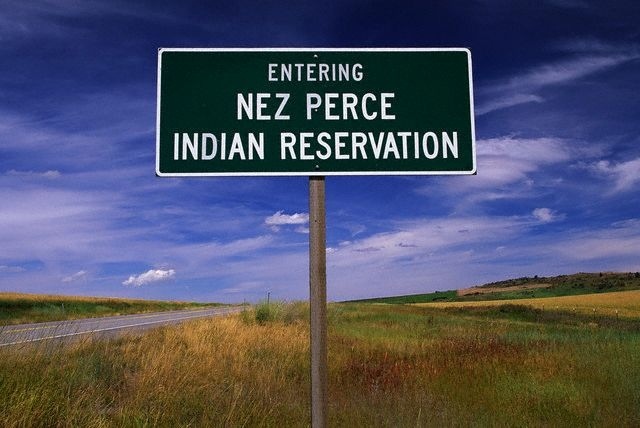
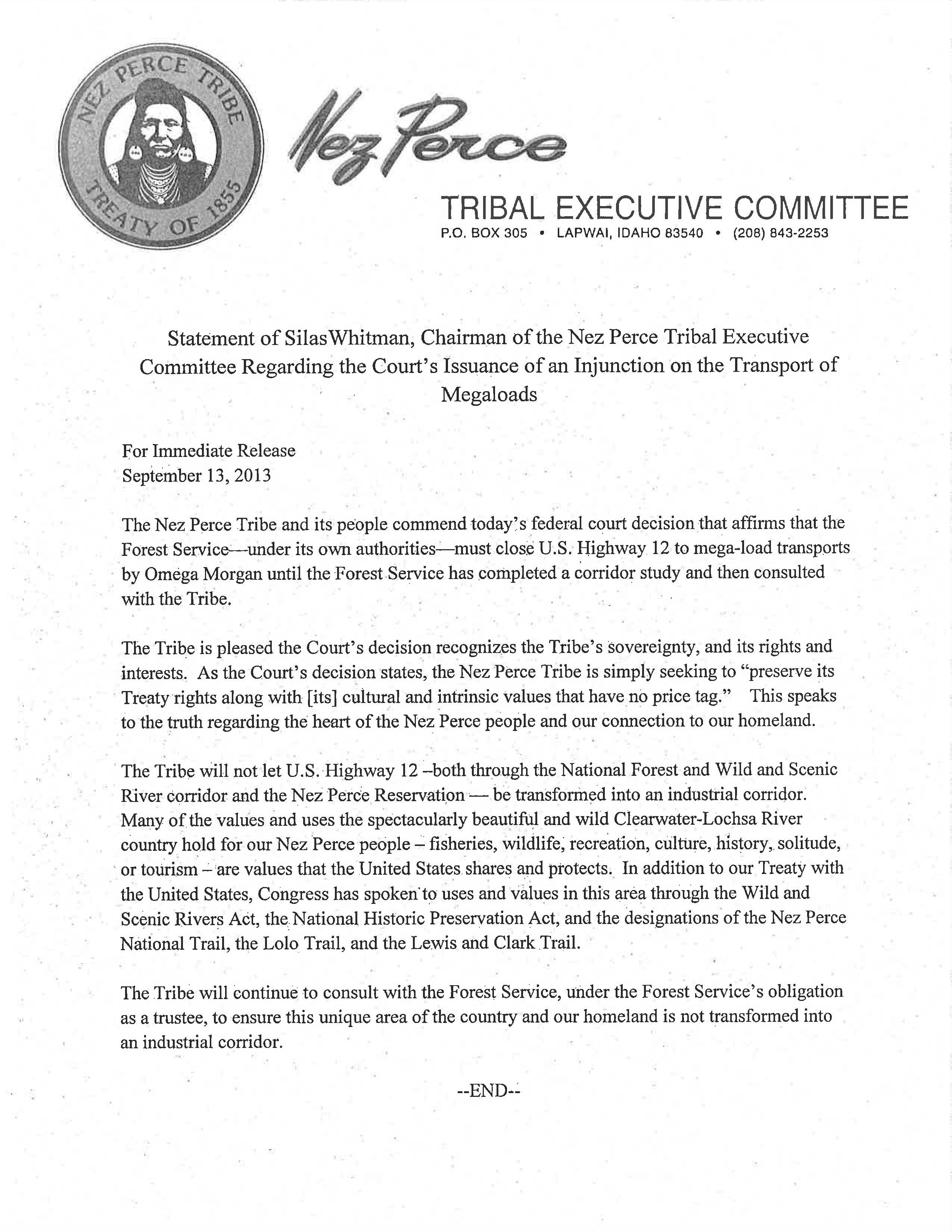
Here are the materials in Nez Perce Tribe v. United States Forest Service (D. Idaho):
Nez Perce (Mega-load) Consultation decision (Sept 2013)
Here is the complaint in Nez Perce Tribe v. United States Forest Service (D. Idaho). Also here.
Motion for TR here.
Prior post here.
Here are background materials.
Department of Justice opposes, which is unfortunate, given that the Department specifically asked for tribal comments on the proposal to repeal or reform the statute.
 Turtle Talk
You must be logged in to post a comment.