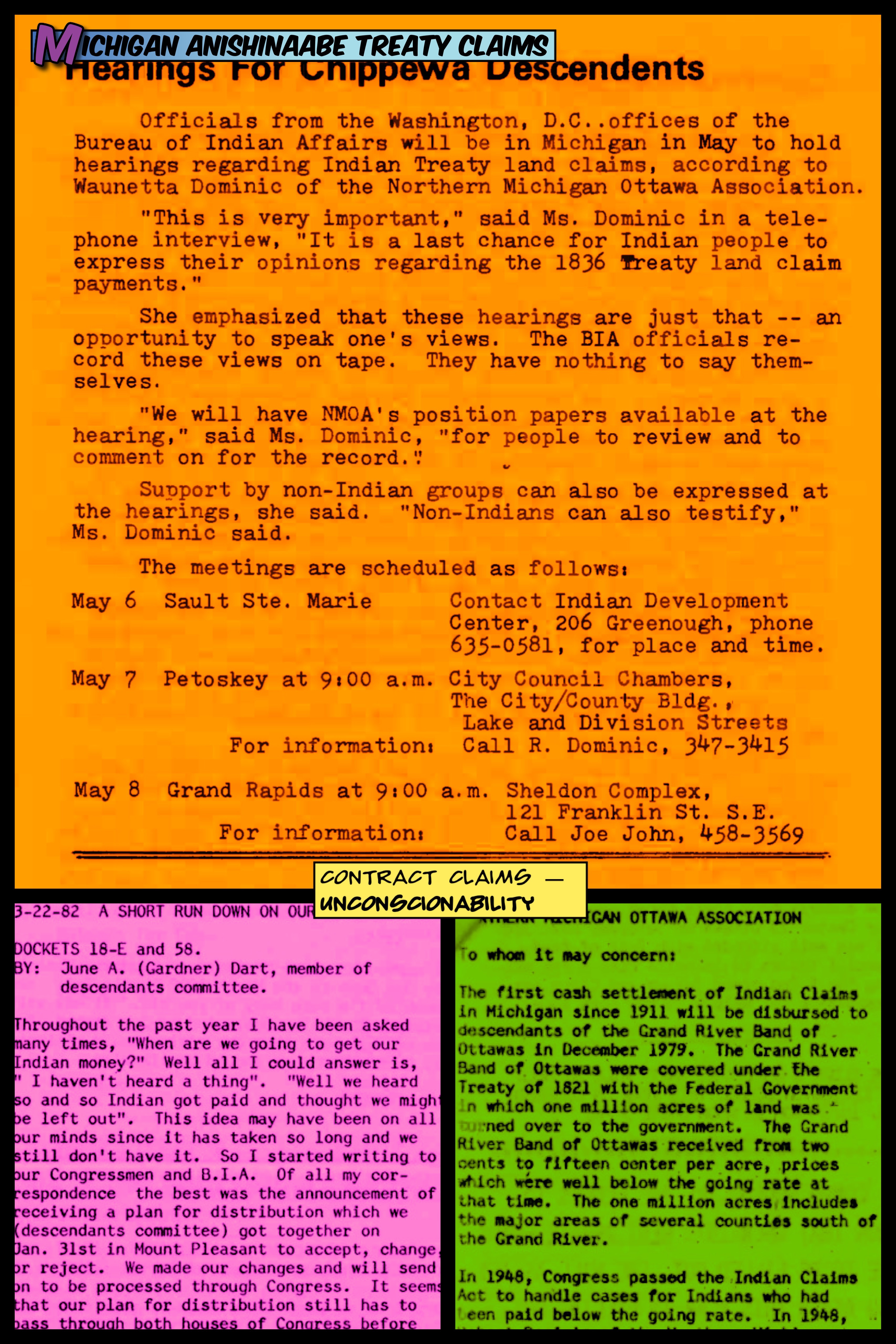
Yes, it’s gonna be at least partially about equal protection matters post-Brackeen, so perhaps it should be called “Shitting On Our Parade.” [comic book here]

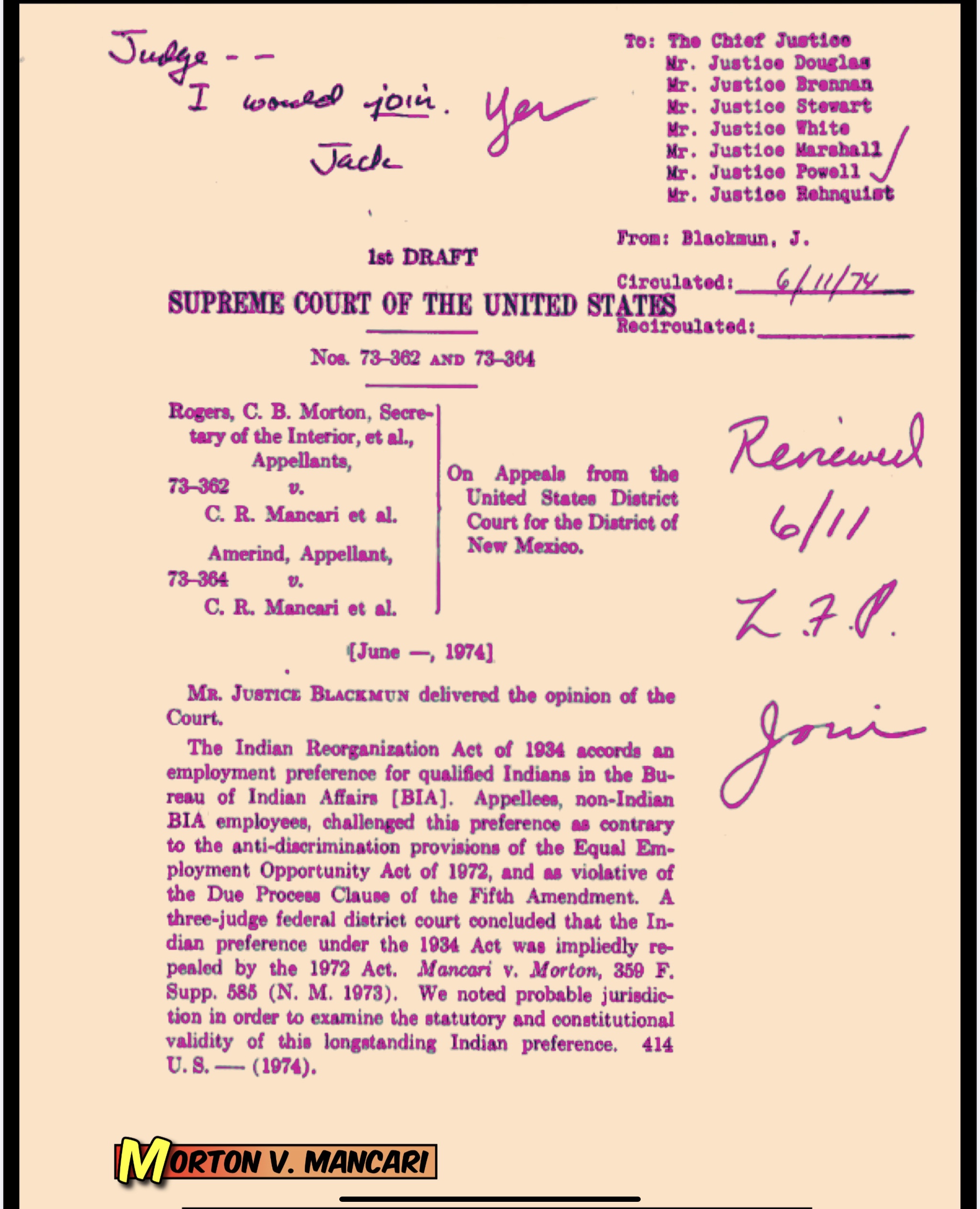

Yes, it’s gonna be at least partially about equal protection matters post-Brackeen, so perhaps it should be called “Shitting On Our Parade.” [comic book here]

Here.
The National Native American Law Student Association (NNALSA), in partnership with the University of Montana, Alexander Blewett III School of Law NALSA Chapter, are excited to host the 32nd Annual NNALSA Moot Court Competition.
Here are the materials in Merit Energy Operations I LLC v. Eastern Shoshone and Northern Arapaho Tribes (D. Wyo.):
1 Petition to Confirm Arbitration Award

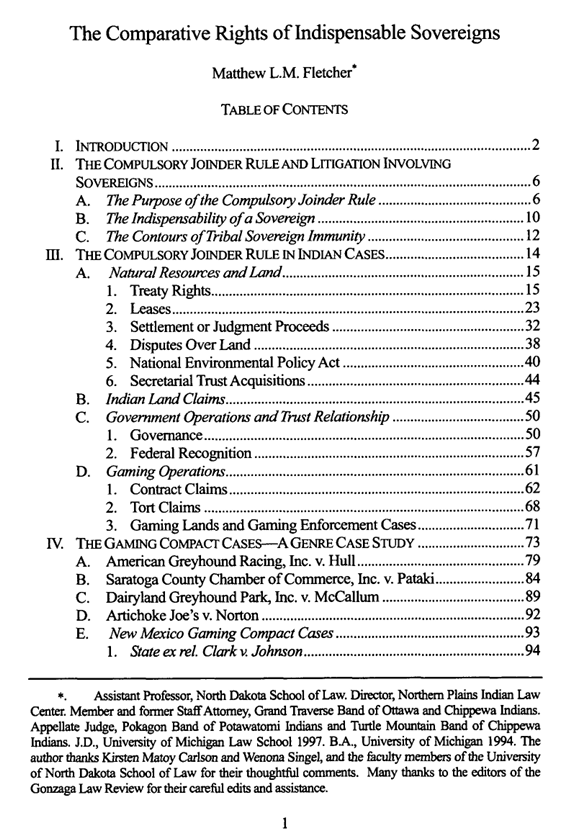
Alexis Studler has posted “Reviving Indian Country: Expanding Alaska Native Villages’ Tribal Land Bases Through Fee-to-Trust Acquisitions,” forthcoming in the Michigan Journal of Race & Law, on SSRN. Here is the abstract:
For the last fifty years, the possibility of fee-to-trust acquisitions in Alaska has been precarious at best. This is largely due to the Alaska Native Claims Settlement Act of 1971 (ANCSA), which eschewed the traditional reservation system in favor of corporate land ownership and management. Despite its silence on trust acquisitions, ANCSA was and still is cited as the primary prohibition to trust acquisitions in Alaska. Essentially, ANCSA both reduced Indian Country in Alaska and prohibited any opportunities to create it, leaving Alaska Native Villages without the significant territorial jurisdiction afforded to Lower 48 tribes. However, recent policy changes from the Department of Interior reaffirmed the eligibility of trust acquisitions post-ANCSA and a proposed rule from the Bureau of Indian Affairs signals a favorable presumption of approval for Alaska Native fee-to-trust applications. This Note reviews the history and controversy of trust acquisitions in Alaska, and more importantly, it demonstrates the methods in which Alaska Native Villages may still acquire fee land for trust acquisitions after ANCSA.
Here are the materials in Historical Eastern Pequot Tribe v. Office of Acknowledgment (D.D.C.):

Here is Monday’s order list.
The petition was Klamath Irrigation District v. Bureau of Reclamation: petition and opposition briefs.
Here. Description:
A non-Native woman in Alaska refuses to abide by a tribal court order to turn an Alaska Native foster child over to the girl’s family members. It’s a blatant disregard of tribal sovereignty even after a notable re-affirmation of the Indian Child Welfare Act by the U.S. Supreme Court. The woman took custody of the child, named Chanel, at the request of the girl’s father, right before he was convicted of murdering Chanel’s mother during a domestic dispute. We’ll look at that case, as well as efforts to bolster ICWA compliance elsewhere.
Case materials here.


 Turtle Talk
You must be logged in to post a comment.