Here is the complaint in Sauk-Suiattle Indian Tribe v. Ryser (W.D. Wash.):

Here.
From the notice:
The Department of the Interior (Department) invites Tribal Leaders to consult on the Notice of Proposed Rulemaking (NPRM) for the Department’s Land Acquisition regulations, 25 CFR Part 151, and the NPRM for the Department’s Class III Tribal State Gaming Compact Process, 25 CFR Part 293.
25 CFR Part 151, Land Acquisition
Since the Department first promulgated these regulations in 1980, it has developed extensive experience in the fee-to-trust acquisition process. Relying on that experience and input from Tribes, this proposed rule seeks to make the fee-to-trust process more efficient, simpler, and less expensive to support restoration of Tribal homelands.
25 CFR Part 293, Class III Tribal State Gaming Compact Process
The Department is developing proposed updates to Part 293 to provide clear guidance regarding the Secretary’s review and evaluation process for Tribal-State class III gaming compacts. The current regulations do not identify the factors the Department considers; rather, those factors are contained in a series of decision letters issued by the Department since the enactment of the Indian Gaming Regulatory Act in 1988. Recent and ongoing litigation highlights the need for the Department to clarify how it will review or analyze gaming compacts to determine whether they comply with federal law.
Tribal Consultation
The Department will conduct two virtual consultation sessions and one in-person consultation to obtain further Tribal input on the Part 151 NPRM and the Part 293 NPRM. The consultation sessions will be open to Tribal leadership and representatives of federally recognized Indian Tribes and Alaska Native Corporations. Please join us at one or more of the following consultations sessions.
If you would like to provide written comments, please email them to consultation@bia.gov by 11:59 p.m. EST on Wednesday, March 1, 2023.
This was Part II, Part I was here.
Here are newish materials in Pakootas v. Teck Caminco Metals (E.D. Wash.):
Here is the complaint in Seminole Tribe of Florida v. AT&T (Del. Chancery Ct.):
Here:
TRANSCRIPTS
97 N.D. L. Rev. 297
It Is More Than Just A Calculation: Reframing Child Support In Indian Country
– Sharon Thompson
97 N.D. L. Rev. 307
Tribal Jurisdiction Under The Second Montana Exception: Implications Of United States v. Cooley
– Timothy Q. Purdon
97 N.D. L. Rev. 319
Indian Law: Criminal Law Panel
– Panelists: Breanna Delorme, Marjorie Kohls, Joseph Vetsch
– Moderator: Michelle Rivard Parks
97 N.D. L. Rev. 331
Creating Space For Indigenous People In Law
– Erica Thunder
ARTICLES
97 N.D. L. Rev. 343
New Federal Initiatives For Indian Country Environmental Management
– James M. Grijalva
97 N.D. L. Rev. 355
The Extradition Clause and Indian Country
– Grant Christensen

Angela R. Riley has published “The Ascension of Indigenous Cultural Property Law” in the Michigan Law Review.

Here is the abstract:
Indigenous Peoples across the world are calling on nation-states to “decolonize” laws, structures, and institutions that negatively impact them. Though the claims are broad based, there is a growing global emphasis on issues pertaining to Indigenous Peoples’ cultural property and the harms of cultural appropriation, with calls for redress increasingly framed in the language of human rights. Over the last decade, Native people have actively fought to defend their cultural property. The Navajo Nation sued Urban Outfitters to stop the sale of “Navajo panties,” the Quileute Tribe sought to enjoin Nordstrom’s marketing of “Quileute Chokers,” and the descendants of Tasunke Witko battled to end production of “Crazy Horse Malt Liquor.” And today, Indigenous Peoples are fighting to preserve sacred ceremonies and religious practices at places like Standing Rock, Oak Flat, and Bear’s Ears. Though the claims range from “lands to brands,” these conflicts are connected by a common thread: they are all contemporary examples of Indigenous Peoples’ efforts to protect their cultural property. As issues surrounding cultural property play out on the global stage, there is a parallel movement underway within Indigenous communities themselves. More than fifteen years ago, in 2005, I conducted a comprehensive study of tribal law to understand what American Indian tribes were doing to protect their own cultural property within tribal legal systems. Since my original study, the ground around issues of cultural preservation and Indigenous rights—including the 2007 adoption of the United Nations Declaration on the Rights of Indigenous Peoples, among others— have reignited interest in Indigenous Peoples’ own laws. Inspired by a convergence of global events impacting cultural rights, in 2020 and 2021, I set out to update my survey results and analyze the tribal cultural preservation systems and tribal laws of all 574 federally recognized American Indian tribes and Alaskan Native Villages in the United States. This Article reports those findings, situating the results in a human rights framework and leading to a core, central thesis: the data reveal a striking increase in the development of tribal cultural property laws, as Indian tribes seek to advance human and cultural rights in innovative and inspired ways. Indeed, in this Article, I contend we are witnessing a new jurisgenerative moment today in the cultural property arena, with tribal law already influencing decisionmakers at multiple ‘sites’—international, national, and subnational—in real time, with great potential for the future. To further demonstrate this phenomenon, I highlight the case study of the recent agreement to repatriate the Maaso Kova, a ceremonial deer head, from Sweden to the Yaqui peoples, and I also introduce several other examples where the seeds have been planted for the growth of the next jurisgenerative moment in Indigenous cultural property rights.
HIGHLY RECOMMENDED!!!!
Here are the new materials in Sault Ste. Marie Tribe of Chippewa Indians v. Haaland (formerly Bernhardt, Zinke, etc.) (D.D.C.):

This case is on remand from the D.C. Circuit.
Here are the materials in Skeet v. New Mexico Taxation and Revenue Department:

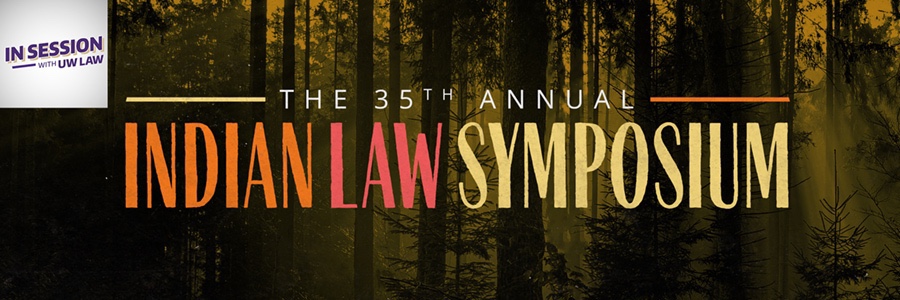
UW Law will host the 35th annual Indian Law Symposium on Friday, Dec. 9, 2022, featuring a full set of topics from panelists across the country. Programming includes updates on litigation and federal legislation, an ethics session about cultural considerations for competent tribal legal representation, and sessions on tribes, mining and opportunities for reform; the Indian Child Welfare Act; and the Supreme Court.
The program will be held in a virtual format on Zoom. It is co-sponsored by the Washington Law Review and Native American Law Center.
 Turtle Talk
You must be logged in to post a comment.