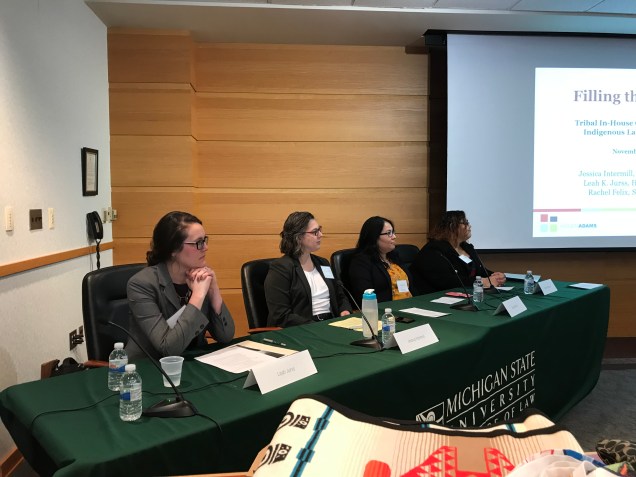
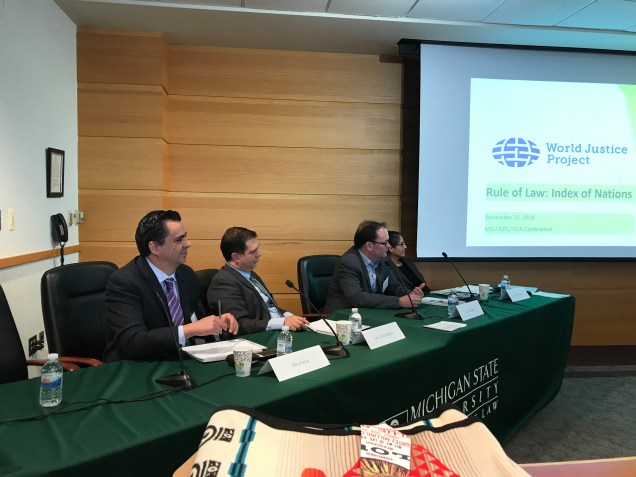

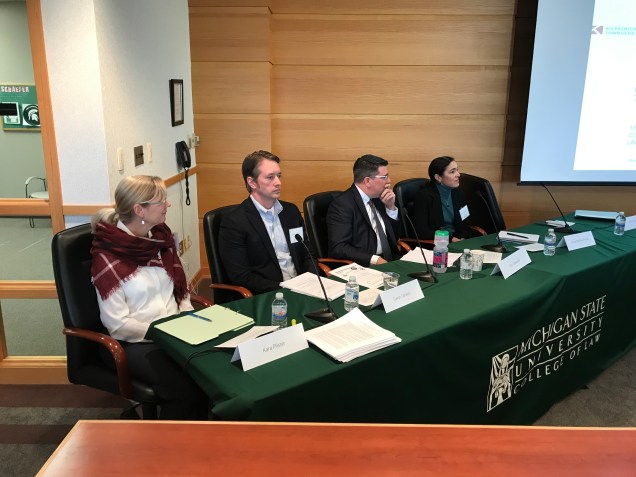

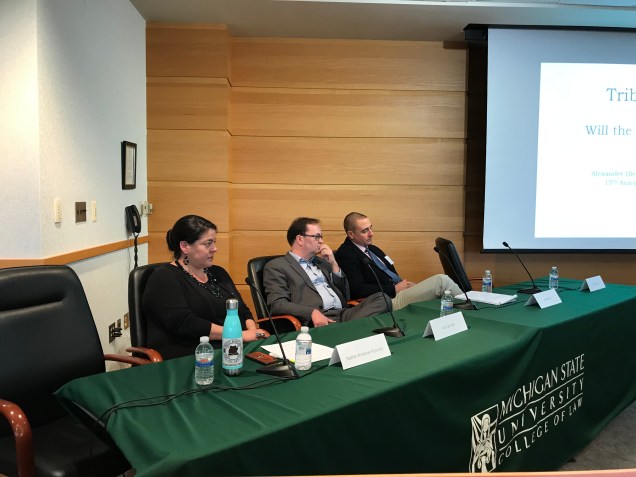
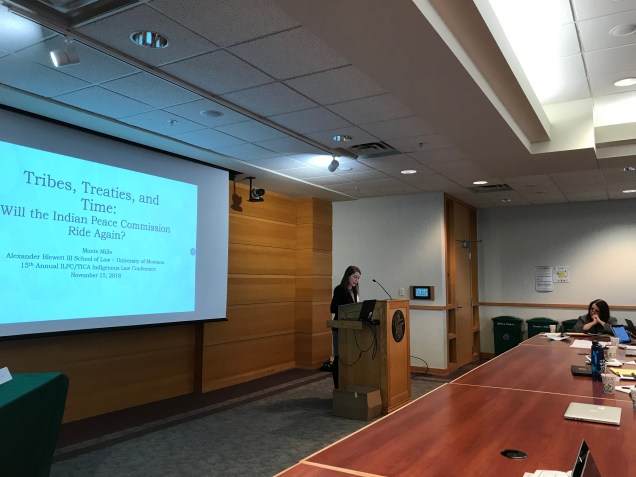
A truly outstanding panel
Here are the materials in Goss v. United States (D. Ariz.):
Seth W. R. Brickey has published “Rent-A-Tribe: Using Tribal Immunity to Shield Patents from Administrative Review” in the Washington Law Review.
Here is the abstract:
In 2017, Allergan Pharmaceuticals entered into an agreement with the Saint Regis Mohawk Tribe (SRMT). Allergan agreed to assign several patents to SRMT and to pay an initial sum of $13.75 million and annual royalties of approximately $15 million. SRMT, in exchange, licensed the rights to use the patents back to Allergan and agreed not to waive its tribal immunity in any administrative proceeding challenging the patents. Two outcomes were expected as a result of this Allergan-Mohawk agreement. First, Allergan would retain the rights to manufacture and market a highly profitable drug while insulating the underlying patents from an unforgiving administrative inter partes review (IPR). Second, SRMT would embark on a new business venture of collecting and relicensing patents from third parties, effectively “renting out” its sovereign immunity. The response from lawmakers, the judiciary, the executive branch, and the public at large was acrimonious. The agreement was branded in public forums as a “sham” and the Patent Trial and Appeal Board held the patents assigned to SRMT were not shielded by tribal immunity. This Comment argues the Allergan-Mohawk agreement is a legally effective means of avoiding IPR. Absent an express waiver of tribal immunity by Congress or the tribe itself, a tribe may not be subject to a private claim. This rule extends to IPR proceedings which closely parallel private suits. Therefore, contracts like the Allergan-Mohawk agreement effectively shield patents from IPR.
Here are the materials in Thompson v. United States (D. Nev.):
Here:
Lower court materials in Begay v. Office of Navajo and Hopi Relocation (D. Ariz.) here:
Robert T. Anderson has published Indigenous Rights to Water & Environmental Protection in the Harvard Civil rights-Civil Liberties Law Journal.
an excerpt:
This article examines the rights of Indian nations in the United States to adequate water supplies and environmental protection for their land and associated resources. Part I of this article provides a brief background on the history of federal-tribal relations and the source and scope of federal obligations to protect tribal resources. Part II reviews the source and nature of the federal government’s moral and legal obligations to Indian tribes, which are generally referred to as the trust responsibility. Indian reserved water rights and the difficulty tribes experience in protecting habitat needed for healthy treaty resources is discussed in Part III. Part IV reviews the Dakota Access Pipeline controversy and the shortcomings of federal law in protecting tribal reservations and resources. Part V concludes with recommendations for enhanced and improved access to justice as well as substantive changes in the law to advance environmental protection for Indian tribes in the United States.
 Turtle Talk
You must be logged in to post a comment.