
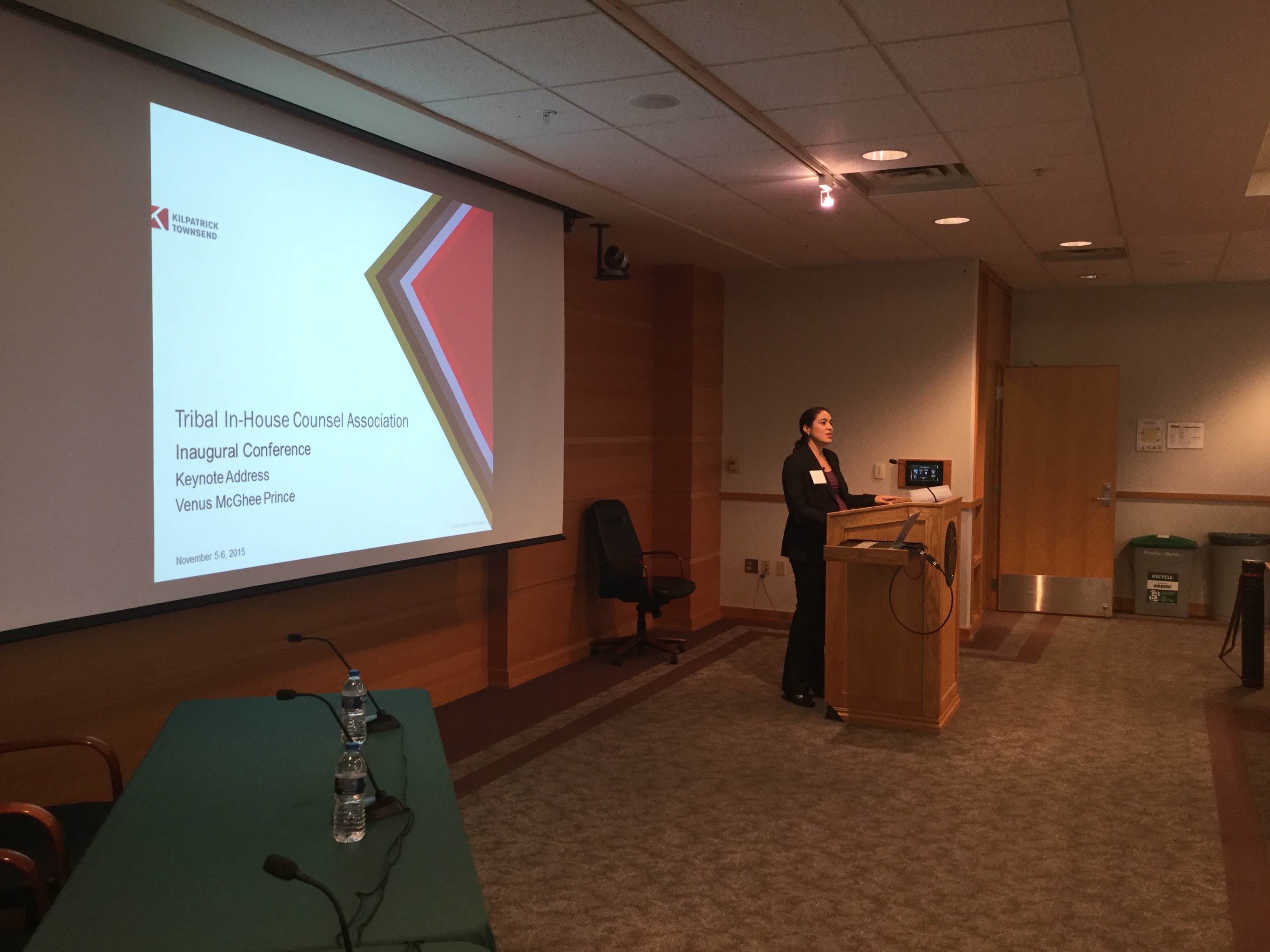
MSU/TICA Keynote Speaker Venus McGhee Prince
Doreen McPaul, TICA Chair
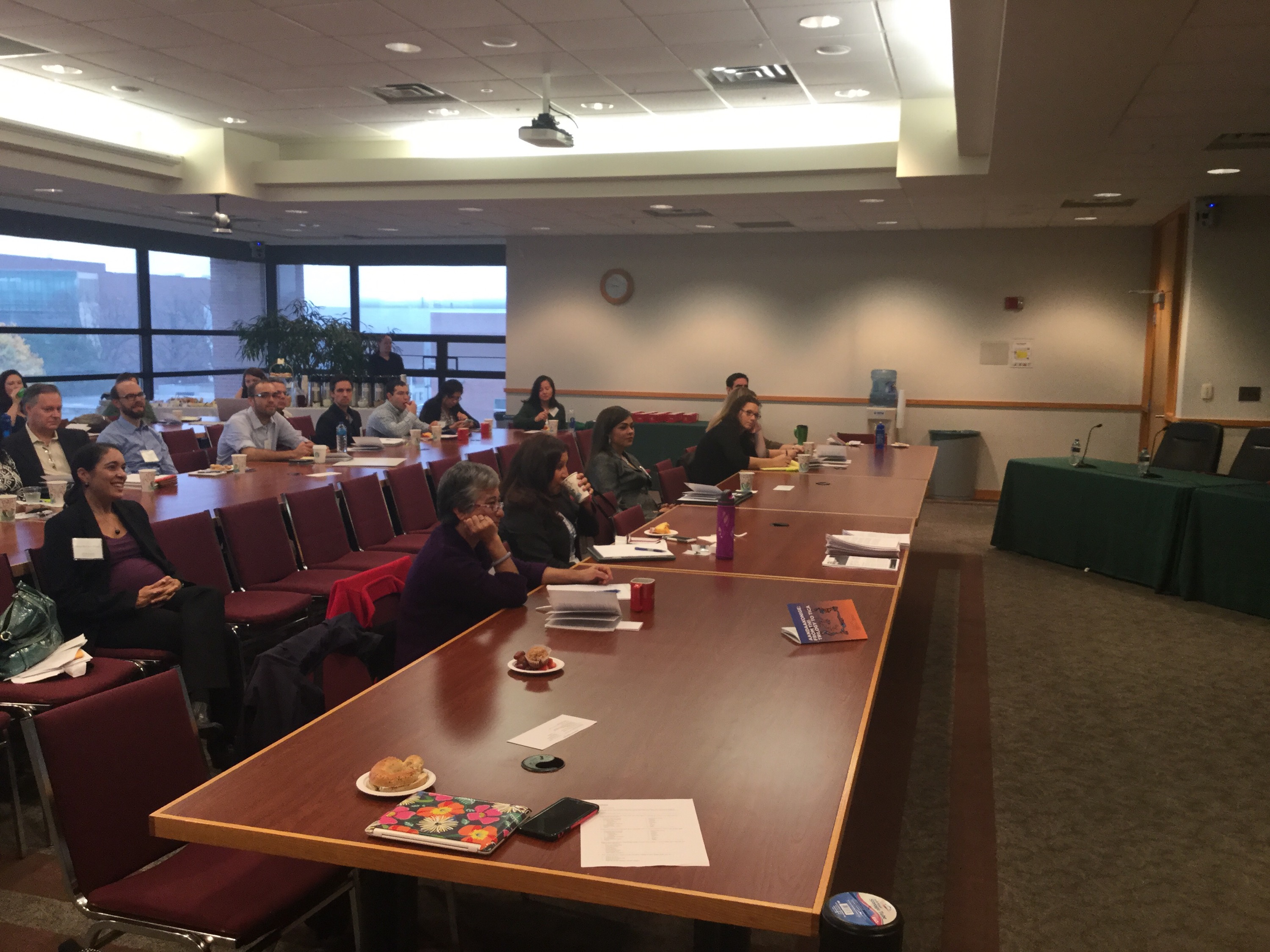
Conference attendees


Stephen Greetham and Kate Fort
Here is the complaint in Coyote Valley Band of Pomo Indians of California v. United States Dept. of Transportation (N.D. Cal.):
An excerpt:
Defendants in this case must not be allowed to destroy historic properties, cultural resources, and sacred sites to build the Willits Bypass Project. This case challenges Defendants’ ongoing failure to properly identify and protect Plaintiffs’ ancestral, sacred, cultural, and archaeological sites and resources in the construction of the Willits Bypass Project. As a result of Defendants’ ground-disturbing activity both along the route and in the mitigation lands of the Willits Bypass Project, Defendants have destroyed the ancestral Native American sacred and cultural sites of Plaintiffs the Coyote Valley Band of Pomo Indians and the Round Valley Indian Tribes of California and failed to protect such places in the area of the Project, including the mitigation lands.
Here.
Here is John’s new blog. And the MSU Press site.
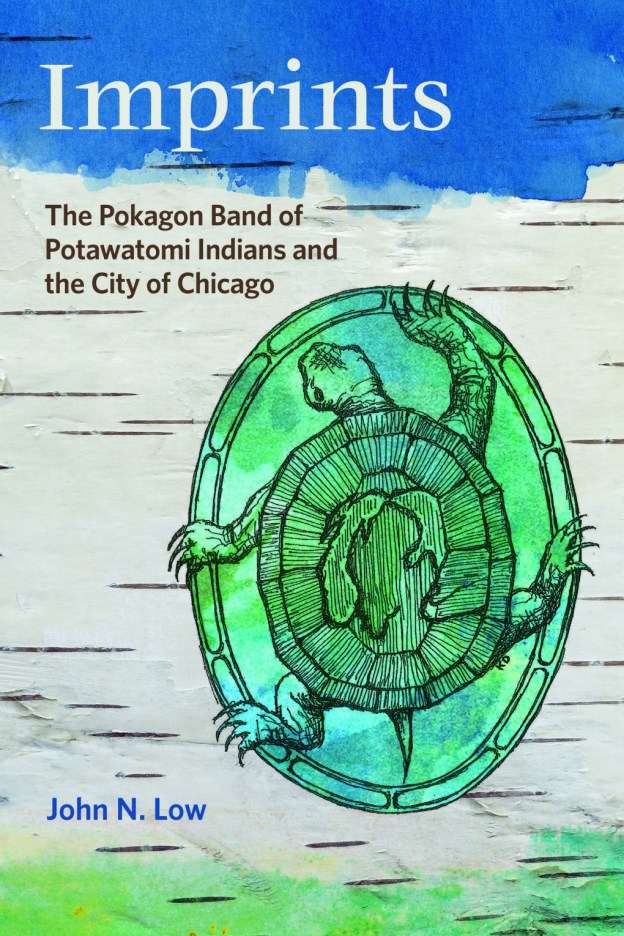
The description:
The Pokagon Band of Potawatomi Indians has been a part of Chicago since its founding. In very public expressions of indigeneity, they have refused to hide in plain sight or assimilate. Instead, throughout the city’s history, the Pokagon Potawatomi Indians have openly and aggressively expressed their refusal to be marginalized or forgotten—and in doing so, they have contributed to the fabric and history of the city.
Imprints: The Pokagon Band of Potawatomi Indians and the City of Chicago examines the ways some Pokagon Potawatomi tribal members have maintained a distinct Native identity, their rejection of assimilation into the mainstream, and their desire for inclusion in the larger contemporary society without forfeiting their “Indianness.” Mindful that contact is never a one-way street, Low also examines the ways in which experiences in Chicago have influenced the Pokagon Potawatomi. Imprints continues the recent scholarship on the urban Indian experience before as well as after World War II.
We’ve known for a few days that our great friend and inspirational leader Rina Swentzell had walked on, but we’ve taken a few extra days to collect our thoughts on how to best represent her.
We invited Rina to Michigan State’s annual Indian law conference in 2008 and she was very gracious in accepting our invitation. That year’s conference was dedicated to the 40th anniversary of the Indian Civil Rights Act legislation, and would eventually lead to a volume of edited essays on the Act published in 2012, the misleadingly titled book, The Indian Civil Rights Act at 40.
We knew about Rina from her prior appearances at law school conferences, but mostly from her compelling talk (published as a law review article), “Testimony of a Santa Clara Woman.” The talk remains for us one of the most compelling pieces of legal scholarship, cutting through the theoretical doctrines of law we hold so dear to the muscle and bone of what federal Indian law means to the Indian people it affects. In some ways she might not have understood at the time (although I suspect she might have), her testimony was a powerful and yet gentle rebuke to commentators critical and even supportive of the Supreme Court’s decision in Santa Clara Pueblo v. Martinez, which had held that there was no federal forum to challenge a tribal law that discriminated against on its face against Indian women and their children.
At our 2008 conference, we invited several American Indian women from all over the country to talk about the Martinez decision, its legacy and its impact on their lives — Rina, Eva Petoskey, Rebecca Miles, Francine Jaramillo, and Gloria Valencia-Weber — as well as Catharine MacKinnon, one of the decision’s most critical detractors. To our surprise, all of the Indian women voiced strong support for the decision, despite the outcome. Rina was the center of that discussion. We published the commentaries of the Indian women next to Professor MacKinnon’s paper in the book in 2012.
Rina’s argument, over spirited objections, that the federal courts, even the Supreme Court, was no place to force change on tribal government and tribal law eventually prevailed. In 2014, the people of the Santa Clara Pueblo changed the tribal law in question in Martinez to be more reflective of tribal norms. Rina was a driving force in that tribal political movement.
We are terribly sad to hear of Rina’s passing, but we celebrate what she taught us.
Here:
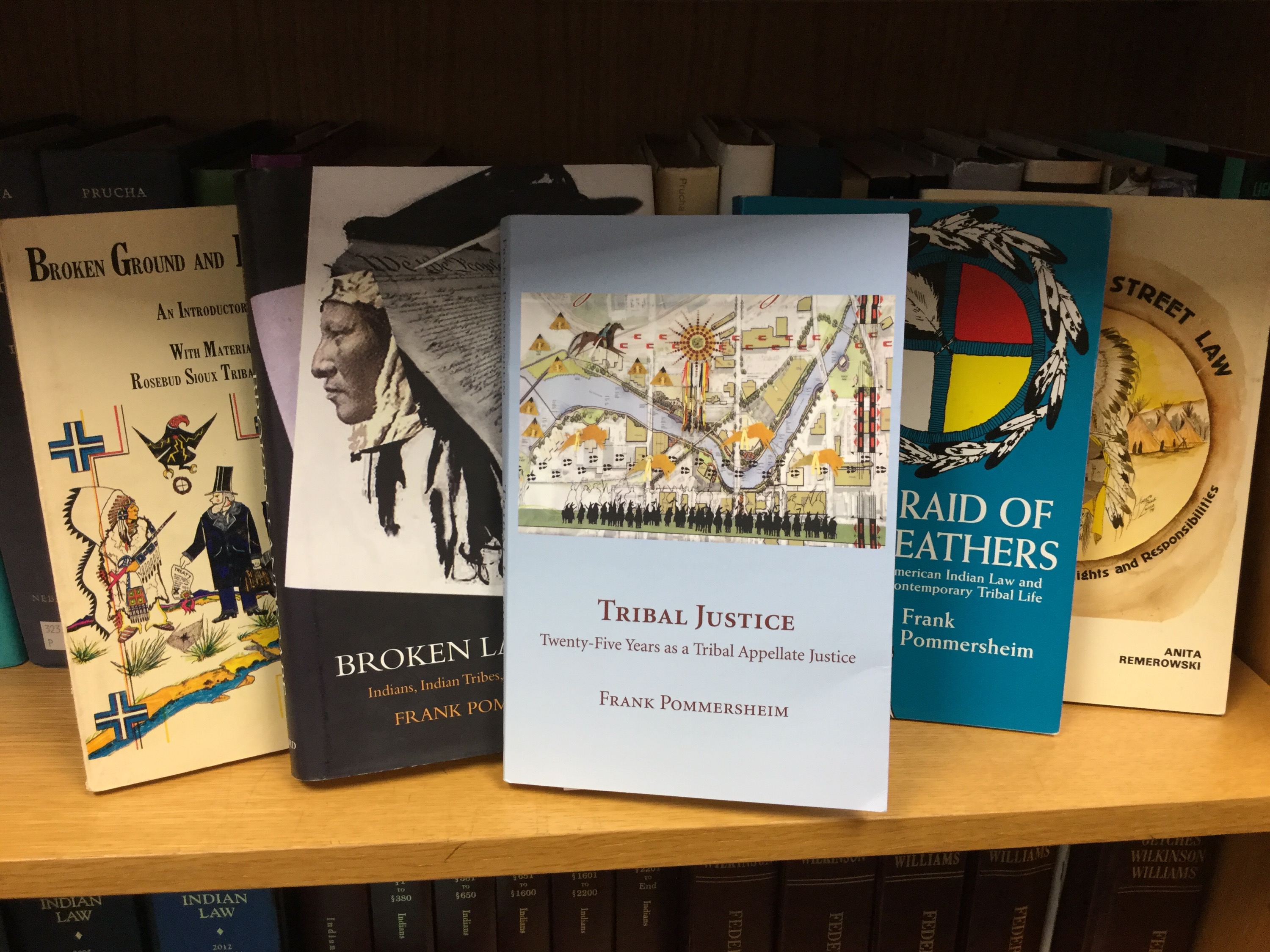
Blurbs:
“Frank Pommersheim is the modern apotheosis of Ksa, Nanaboozhoo, Quetzalcotl, Athena, John Marshall, and the Buddha—all legends of judicial wisdom. Tribal Justice is a powerful culmination of his career work so far, and gives us all hope for another quarter century of his judgment, experience, and calm thoughtfulness. As the Buddha (probably) said, Pommersheim ponders from the stars and judges from the sky, yet speaks from the heart and writes for the land.” — Matthew Fletcher, Professor of Law, Michigan State University College of Law
“Every Tribal Judge should read this book. Written from the perspective of an able and seasoned Tribal Appellate Justice, it shares judicial perspective that is unique to members of the Tribal Judiciary. Justice is sacred. Native Justice is rooted in a world view that is starkly different than that of dominant society. We serve in Tribal communities but must deal with misguided federal law. This writing gives us guidance. Miigwetch, Frank!” — Michael Petoskey, Chief Judge, Pokagon Band of Potawatomi
“Professor Pommersheim’s new book […] is a soul-searching and compelling look at the importance of tribal courts of appeals in the development of a body of tribal law that is responsive both to the needs of tribal citizens, who adhere to traditional notions of justice, and the non-Indian community, with well-reasoned court decisions that lay out clear parameters for law and order in tribal communities. By examining individual cases from several different tribal communities, one of which was examined by the US Supreme Court and one which is about to be critiqued, Professor Pommersheim demonstrates himself to be an indispensable player in the advancement of tribal justice in numerous communities. Having been involved in some of the cases chronicled in the book, and having served with Professor Pommersheim on appellate courts for approximately 18 years, I have seen first-hand Professor Pommersheim’s commitment to ensuring that tribal appellate courts serve the needs of all litigants in tribal courts.” — BJ Jones, Chief Judge Sisseton-Wahpeton Oyate Tribal Court; Director Tribal Judicial Institute, University of North Dakota School of Law
“Only a poet could so seamlessly intertwine memoir, practical how-to, and grand vision in one remarkable book about law and life in Indian country. Tribal Justice is deeply compelling, taking the reader on a more than quarter-of-a-century ride through an extraordinary career devoted to tribal law and the people from which it springs.” — Angela Riley, Professor of Law, UCLA School of Law
“Professor and Justice Frank Pommersheim has once again written an inspiring book […] to be read and reread. His current writing and appellate opinions provide an essential guide to understanding tribal courts, specifically appellate courts. Justice Pommersheim’s book is a must read by all legal and judicial practioners and tribal, federal and state leaders to understand the importance of the Tribal judiciary in protecting and enhancing the sovereignty of tribal nations. Respectfully, he shares his life with Indian people in a most graceful, intellectual, and poetic manner and emphasizes that justice, freedom and equality is for all.” — Cheryl Demmert Fairbanks (Tlingit-Tsimpshian), Esq., Justice for the Inter-Tribal Court of Appeals for Nevada and White Earth Nation; Visiting Professor of Law, University of New Mexico’s Southwestern Indian Law Clinic
Here is “Presenting … the Class of 2015 Up & Coming Lawyers” from Michigan Lawyers Weekly.
Materials in St. Germain v. Dept. of Interior (W.D. Wash.):
60 Plaintiffs’ Motion for Attorneys’ Fees and Costs
71 Stipulation for Order of Dismissal with Prejudice; Order Thereon
Prior post here.
 Turtle Talk
You must be logged in to post a comment.