Here (CFP 2014_V 7):
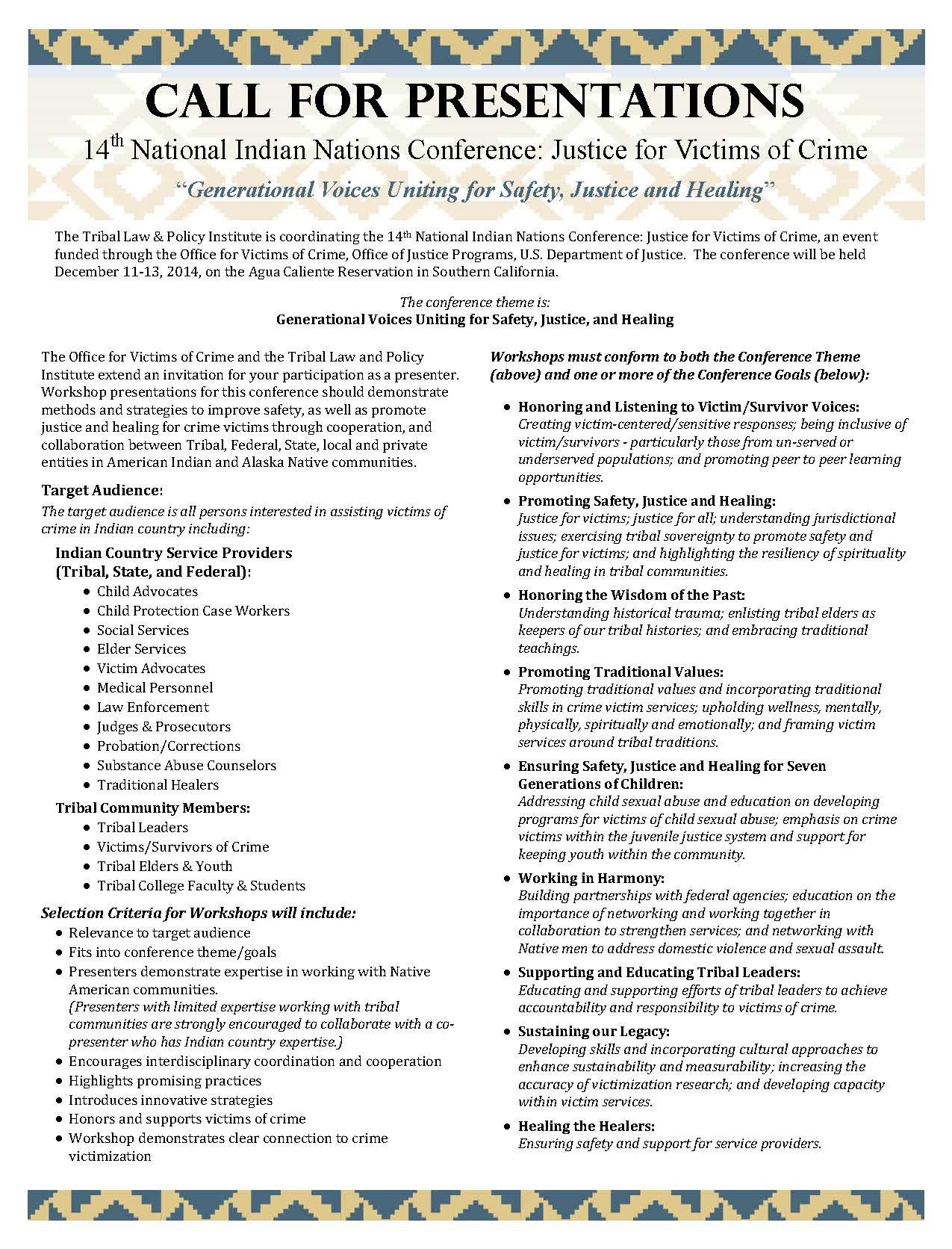
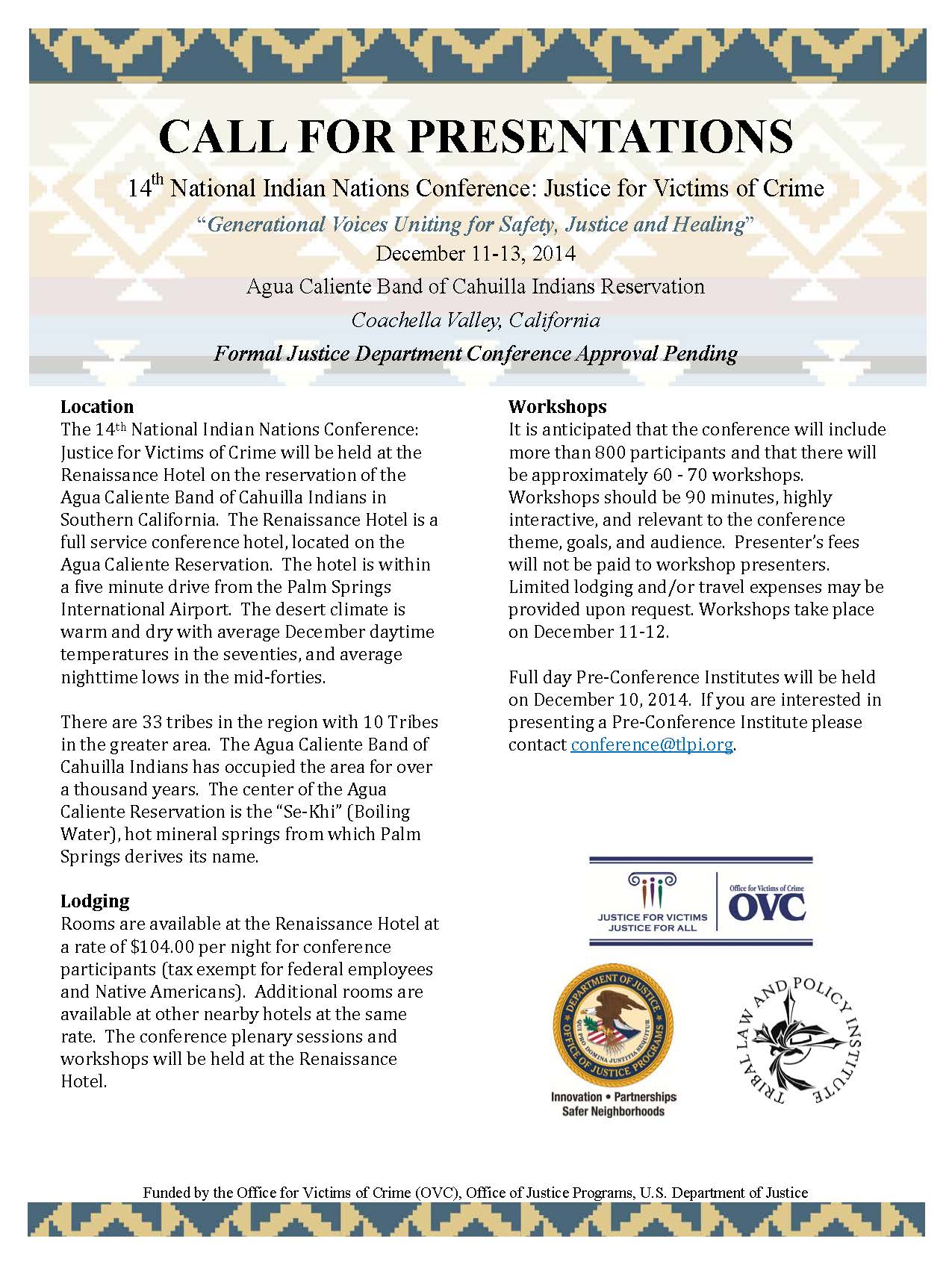
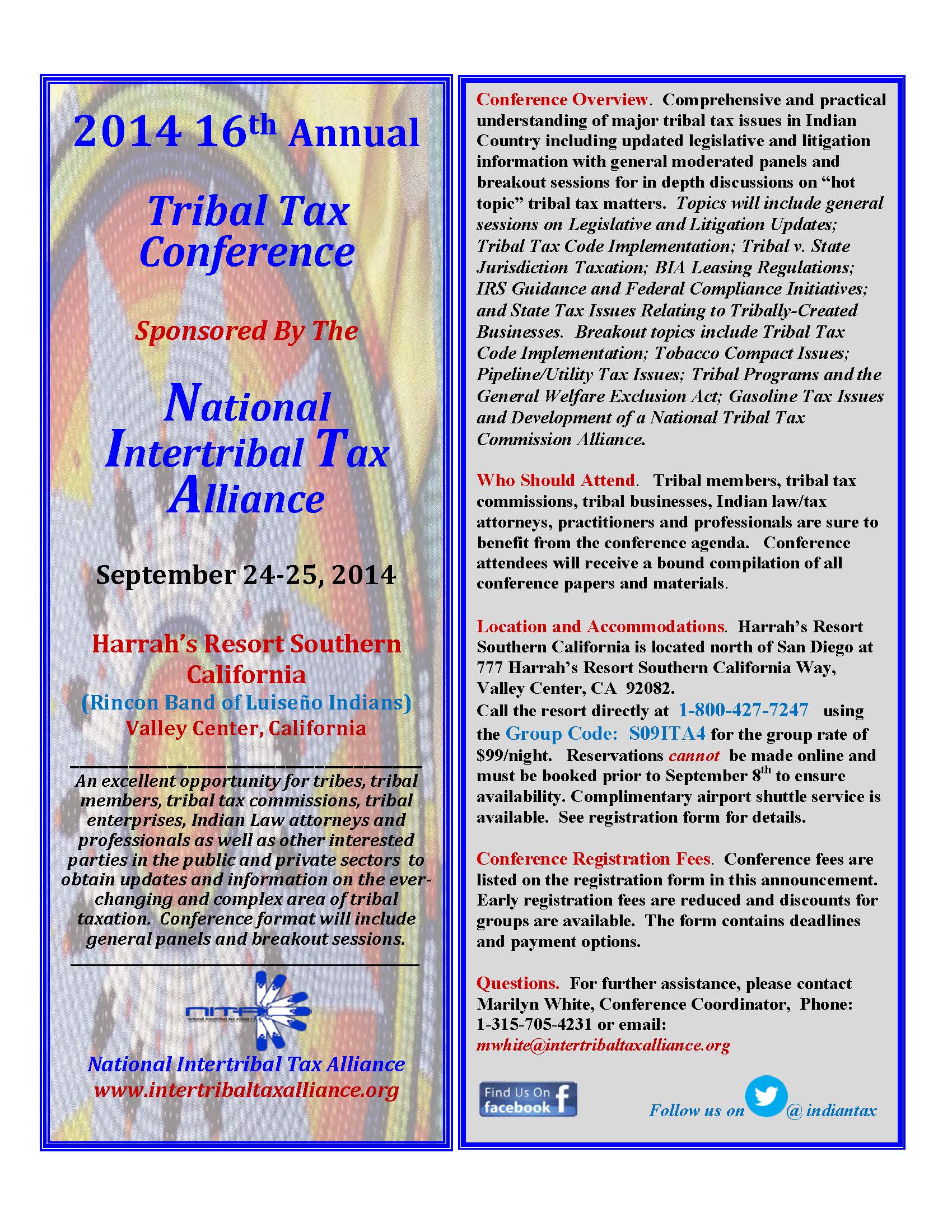
Here, with agenda, (PDF):
Here:
This morning, in an op-ed published in Indian Country Today, President Obama announced his upcoming travel to Cannonball N.D. to visit the Standing Rock Sioux Tribe on Friday, June 13. The President will be accompanied by the First Lady in his first visit to Indian Country since taking office.
The following op-ed by President Obama appeared this morning in Indian Country Today:
https://indiancountrytodaymedianetwork.com/2014/06/05/my-upcoming-trip-i…
Six years ago, I made my first trip to Indian Country. I visited the Crow Nation in Montana – an experience I’ll never forget. I left with a new Crow name, an adoptive Crow family, and an even stronger commitment to build a future that honors old traditions and welcomes every Native American into the American Dream.
Next week, I’ll return to Indian Country, when Michelle and I visit the Standing Rock Sioux Tribe in Cannonball, N.D. We’re eager to visit this reservation, which holds a special place in American history as the home of Chief Sitting Bull. And while we’re there, I’ll announce the next steps my Administration will take to support jobs, education, and self-determination in Indian Country.
As President, I’ve worked closely with tribal leaders, and I’ve benefited greatly from their knowledge and guidance. That’s why I created the White House Council on Native American Affairs – to make sure that kind of partnership is happening across the federal government. And every year, I host the White House Tribal Nations Conference, where leaders from every federally recognized tribe are invited to meet with members of my Administration. Today, honoring the nation-to-nation relationship with Indian Country isn’t the exception; it’s the rule. And we have a lot to show for it.
Together, we’ve strengthened justice and tribal sovereignty. We reauthorized the Violence Against Women Act, giving tribes the power to prosecute people who commit domestic violence in Indian Country, whether they’re Native American or not. I signed the Tribal Law and Order Act, which strengthened the power of tribal courts to hand down appropriate criminal sentences. And I signed changes to the Stafford Act to let tribes directly request disaster assistance, because when disasters strike, you shouldn’t have to wait for a middleman to get the help you need.
Together, we’ve resolved longstanding disputes. We settled a discrimination suit by Native American farmers and ranchers, and we’ve taken steps to make sure that all federal farm loan programs are fair to Native Americans from now on. And I signed into law the Claims Resolution Act, which included the historic Cobell settlement, making right years of neglect by the Department of the Interior and leading to the establishment of the Land Buy-Back Program to consolidate Indian lands and restore them to tribal trust lands.
Together, we’ve increased Native Americans’ access to quality, affordable health care. One of the reasons I fought so hard to pass the Affordable Care Act is that it permanently reauthorized the Indian Health Care Improvement Act, which provides care to many in tribal communities. And under the Affordable Care Act, Native Americans across the country now have access to comprehensive, affordable coverage, some for the first time.
Together, we’ve worked to expand opportunity. My Administration has built roads and high-speed internet to connect tribal communities to the broader economy. We’ve made major investments in job training and tribal colleges and universities. We’ve tripled oil and gas revenues on tribal lands, creating jobs and helping the United States become more energy independent. And we’re working with tribes to get more renewable energy projects up and running, so tribal lands can be a source of renewable energy and the good local jobs that come with it.
We can be proud of the progress we’ve made together. But we need to do more, especially on jobs and education. Native Americans face poverty rates far higher than the national average – nearly 60 percent in some places. And the dropout rate of Native American students is nearly twice the national rate. These numbers are a moral call to action. As long as I have the honor of serving as President, I’ll do everything I can to answer that call.
That’s what my trip next week is all about. I’m going to hear from as many people as possible – ranging from young people to tribal leaders – about the successes and challenges they face every day. And I’ll announce new initiatives to expand opportunity in Indian country by growing tribal economies and improving Indian education.
As I’ve said before, the history of the United States and tribal nations is filled with broken promises. But I believe that during my Administration, we’ve turned a corner together. We’re writing a new chapter in our history – one in which agreements are upheld, tribal sovereignty is respected, and every American Indian and Alaskan Native who works hard has the chance to get ahead. That’s the promise of the American Dream. And that’s what I’m working for every day – in every village, every city, every reservation – for every single American.
Keweenaw Bay Indian Community stands 500 strong at Eagle Mine Court of Appeals Hearing (PDF)
For Release: June 5, 2014
Contact: Donald Shalifoe, Sr., Tribal President
Phone: 906-353-6623
Baraga, MI — About 500 members of the Keweenaw Bay Indian Community (KBIC)  stood united around the importance of keeping their waters clean from contamination associated with sulfide mining on June 3, 2014 at the Michigan Court of Appeals. Oral arguments were heard involving the Eagle Mine, Michigan’s first permitted sulfide mine in the Upper Peninsula.
“This is the first time in our generation that the community as a whole came together to fight for true sovereignty and engage in spontaneous government participation. The goal of the new moving-forward Tribal Council is to bring transparency and involvement to the Anishinaabeg (the people),” said Donald Shalifoe, Sr., KBIC’s Ogimaa (Chief).
Many tribal members carpooled and traveled about eight hours to line up for the 10:00 a.m. Lansing hearing. KBIC’s remarkable presence overwhelmed the Michigan Hall of Justice whose staff reported it was their largest turn out ever for a court hearing.
Tribal leaders and elders observed the hearing from within the court room, while hundreds watched and listened to the proceedings in an overflow video conferencing room. Traditional drumming and singing resounded outside the building following the hearing.
KBIC’s Vice President Carole LaPointe remarked “it was a very educational experience for our membership and youth.”
The Anishinaabeg band has opposed the Eagle Mine development, located on Treaty of 1842 ceded homeland, since it was first permitted by the Michigan Department of Environmental Quality (MDEQ) in 2006.
Unsettled concerns involve the mining regulatory process, improper permitting and inadequate assessment of impacts to the area environment, cultural resources and water quality, including groundwater contamination and the potential for perpetual acid mine drainage upstream from Lake Superior.
Tribal member Jeffery Loman said “the hearing today is another testimony to the fact that inadequate regulation and collusion between industry and government results in endless litigation.”
One aspect of the evolving case questions what qualifies as a “place of worship” under Michigan’s sulfide mining statute. An initial ruling by Michigan Administrative Law Judge Richard Patterson recommended mitigation of impacts to an Anishinaabeg sacred place, Migi zii wa sin (Eagle Rock), but the MDEQ made a final permit decision asserting only built structures are places of worship.
Discriminatory enforcement of Michigan law has led to substantial degradation to KBIC’s sacred site. This includes obtrusive mine facilities and a decline access ramp into the base of Eagle Rock, non-stop noise and activity, and hindered traditional access and use. Spiritually significant high places like Eagle Rock are used in solitude by the Anishinaabeg for multi-day fasting, vision quest and ceremony.
Despite the passage of the American Indian Religious Freedom Act of 1978, Native people still struggle to protect their remaining sacred places in the face of extractive development agendas. “It is a shame that the United States of America, proudly founded upon values of religious freedom, has trouble guaranteeing this right to all of its nation’s first people,” said tribal member Jessica Koski.
KBIC anticipates a decision from the Michigan Court of Appeals within six months. The Eagle Mine’s timeframe for production start-up is the end of 2014. “While the court deliberates, it is important to remember that regardless of the outcome, we are in the right for standing up for the Yellow Dog Plains. We hope the court understands their decision will have long lasting implications for this place, as well as other areas that are slated for mining,” said Emily Whittaker of Big Bay, Michigan who gathered alongside KBIC and other locally affected residents.
The Michigan Court of Appeals ruling will be an important precedent for additional sulfide mining proposals threatening Michigan’s Upper Peninsula and waters of the Great Lakes.
###
Michalyn Steele, a Seneca Nation member and soon to be one of only a handful of American Indian tribal member women to be a tenure system law professor (BYU), has published “Comparative Institutional Competency and Sovereignty in Indian Affairs” in the University of Colorado Law Review.
Here is the abstract:
While vigorous debate surrounds the proper scope and ambit of inherent tribal authority, there remains a critical antecedent question: whether Congress or the courts are ultimately best situated to define the contours of inherent tribal authority. In February 2013, Congress enacted controversial tribal jurisdiction provisions as part of the Violence Against Women Act reauthorization recognizing and affirming inherent tribal authority to prosecute all persons, including non-Indian offenders, for crimes of domestic violence in Indian country. This assertion by Congress of its authority to set the bounds of tribal inherent authority—beyond where the United States Supreme Court has held tribal inherent authority to reach—underscores the importance of addressing the question of which branch ought to resolve the issue. This Article proposes a framework drawn from Supreme Court jurisprudence in the field of state sovereignty to argue that when sensitive issues of sovereignty are at stake, the comparative competence of the respective branches must be considered. Unlike any preceding work in this field, this Article proposes a model based on the indicia of institutional competence to suggest that Congress, rather than the courts, is the branch best suited to determine the scope of inherent tribal sovereignty.
Here:
Victoria Sweet posted the Atlantic Monthly profile of this case here.
Here are the materials in First Citizens Bank & Trust Co. v. Harrison (Wash. App.):
437511 Reply Appellant Cross Respondent
437511 Reply Respondent Cross Appellant
D2 43451-2-II Published Opinion
An excerpt:
25 U.S. C. § 410 provides that money accruing from any lease of Indian land the United States holds in trust for a Native American is not liable for the payment of any debt or claim against that Native American. The issue here is whether the statute applies when lease payments from Indian trust land are distributed to a Native American and placed in a private bank account.
Here are the materials in United States v. Mitchell (W.D. N.Y.):
74 MJ R&R Denying Omnibus Motion
116 US Response to Motion to Dismiss — Immunity
123 Mitchell Objections to 119
137 US Response to Motion to Dismiss — Jurisdiction
138 Mitchell Brief on Major Crimes Act
140 DCT Order Denying Motion to Dismiss
Prior federal case challenging his banishment is here.
Here.
an excerpt:
After several discussions with tribal leaders regarding systemic issues within the Department of the Interior’s Bureau of Indian Education (BIE), in September 2013, Secretary of the Interior Jewell and Secretary of Education Arne Duncan appointed the American Indian Education Study Group (Study Group) to diagnose the causes of chronic academic failure in BIE-funded schools, one of the lowest-performing set of schools in the country. Charged with developing and implementing recommendations to transform the BIE, the make-up of the Study Group combines management, legal, education, and tribal expertise and ensures that the Study Group’s recommendations are grounded in a comprehensive, institutional understanding of how schools work, how effective teaching and learning occur, and American Indian affairs.


You must be logged in to post a comment.