New Fletcher Working Paper on Amicus Briefs in the Supreme Court’s Indian Cases

I have posted a fairly rough draft of a new paper titled, “The Utility of Amicus Briefs in the Supreme Court’s Indian Cases,” on SSRN. Comments welcome.

Here is the abstract:

Four times in the past 15 years, arguments or information raised by amici before the Supreme Court have had dramatic impacts on the Court’s decision making process in cases involving federal Indian law. In two cases involving government contracting, amicus briefs filed by the United States Chamber of Commerce supporting tribal interests played important roles in pointing out the impact the Court’s decision would have on defense and other government contractors. In another case, an amicus railroad company alleged that the procedures in one tribal court were stacked against nonmembers, apparently causing the Court to reconsider its views on tribal civil jurisdiction. In a fourth case, an amicus resuscitated a line of argument long thought to be retired from the field (in fact, none of the parties briefed the argument) and persuaded the Court to decide a case on that basis. What about these briefs, as opposed to the hundreds of other Supreme Court amicus briefs filed in the Court’s Indian cases, served to influence the Court so heavily? This short paper hopes to sort out a few general guidelines for amicus brief writers in federal Indian law cases by reviewing a series of amicus briefs and how we know the Court deals with them.

First Amended Complaint in Penobscot Suit against Maine AG over Fishing

Here:

Penoscot First Amended Complaint

Prior post here.

New Scholarship on Tribal Bonds

Bill Maurer and Justice Richland have posted their paper, “Lex Llewellyn and the Tribal Tax Status Act: ‘Fallible Gropings’ in Law and Society,” on SSRN.

Here is the abstract:

This article is the result of our inquiry into two proximate fields in which issues of law, custom and markets arise in sociolegal scholarship and praxis: the mid-20th century jurisprudence of the legal realist Karl Llewellyn and the contemporary debates surrounding efforts by tribal governments in the U.S. to issue tax-exempt bonds. Both are sites for efforts by legal scholars and practitioners to grapple with the convergence of social categories that, until very recently, are normally held apart – Native Americans, law, and commerce. We first explore Llewellyn’s efforts at drafting the Uniform Commercial Code, and the extent to which in this and his The Cheyenne Way (written at virtually the same time), he drew considerable influence from the American pragmatist philosophical tradition. In so doing, we find that his jurisprudence and lawmaking (often maligned for its circular reasoning) can be better understood as an effort to announce a philosophy of law and enact commercial legislation that was more a method for doing legal analysis and taking legal action than it was an expression of legal principles. Once understood in this way, we suggest it offers a fresh way of accounting for the performative force of law that can move sociolegal research beyond certain constructivist impasses. We then offer how such an approach can be brought to bear on the unfolding relationships among custom, law and commerce in the back and forth between scholars, law-makers, and tribal leaders around tribal tax-exempt bonds and their regulation.

NYTs Article on Controversy Over Fort Sill Apache N.M. Gaming Efforts

Here.

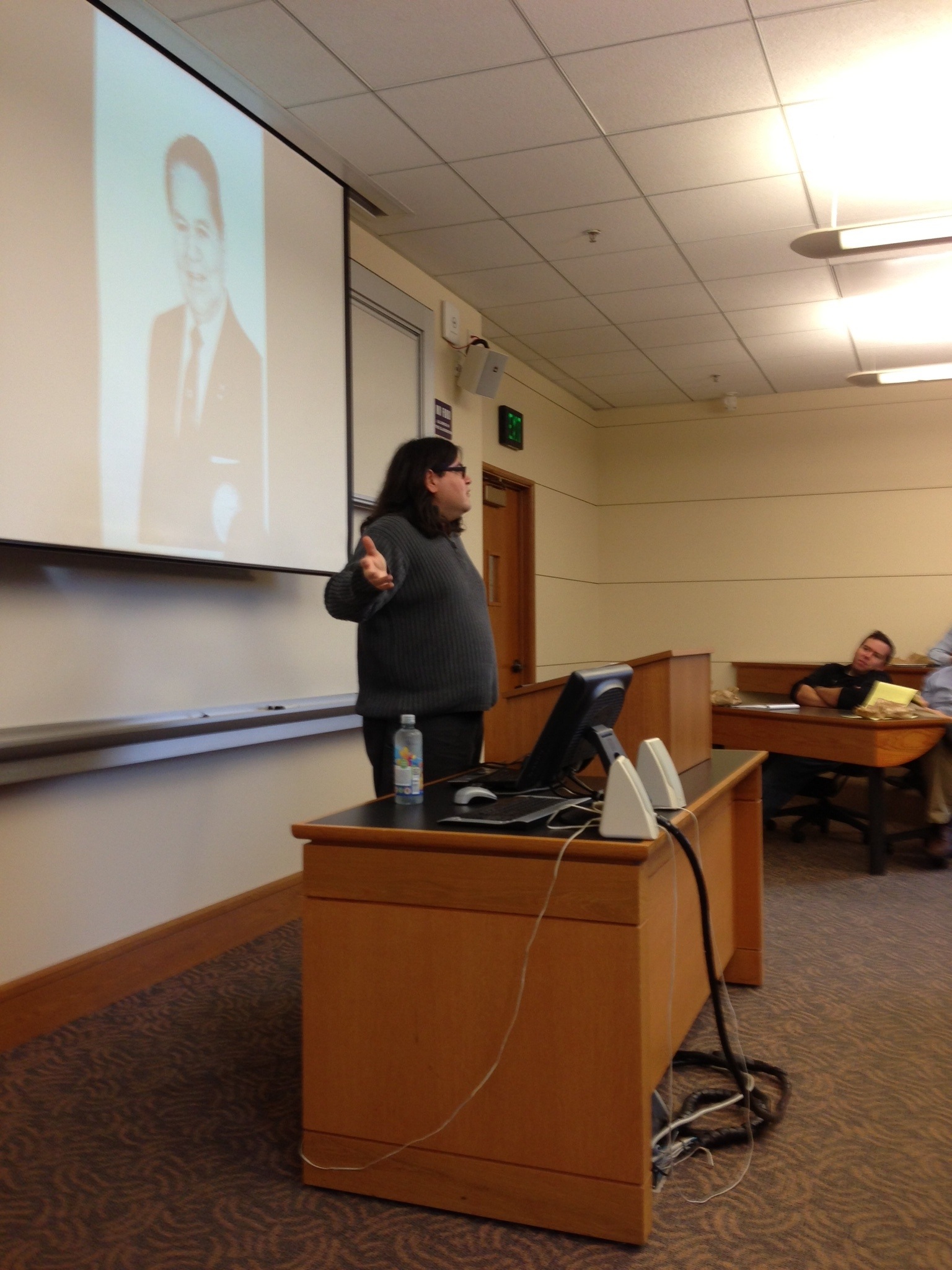
Fletcher/Singel Talk to Stanford NALSA

Ci-miigwetch to Kristin Wickler and the rest of the Stanford NALSA and the Stanford Civil Rights and Civil Liberties Journal.

Wenona

20121117-061601.jpg

Matthew

20121117-061720.jpg

The Fletcher Room (we weren’t in there but it would have been awesome!)

20121117-061807.jpg

The announcement:

20121117-061905.jpg

Ray Cross on Fracking and the Fort Berthold Reservation

Probably the most important article on fracking in Indian country so far.

Raymond Cross has published “Development’s Victim or Its Beneficiary?: The Impact of Oil and Gas Development on the Fort Berthold Indian Reservation” in the North Dakota Law Review.

Madison County v. Oneida Indian Nation Cert Petition

As expected, Madison and Oneida Counties filed a cert petition over the Second Circuit’s affirmation of the Oneida reservation boundaries. Here:

11-12-12 Madison v. NY Oneida Cert Petition

Question presented:

Does the 300,000-acre ancient Oneida reservation in New York still exist, neither disestablished nor diminished, despite (1) the federal government’s actions taken in furtherance of disestablishment (including, but not limited to, the 1838 Treaty of Buffalo Creek); (2) this Court’s holding in City of Sherrill v. Oneida Indian Nation of New York, 544 U.S. 197, 214 (2005) (“Sherrill”) that the Oneida Indian Nation of New York cannot exercise sovereignty over lands it purchases in the ancient reservation area; and (3) this Court’s finding in that case that land in the ancient reservation area has not been treated as an Indian reservation by the federal, state or local governments for nearly two centuries?

Lower court materials here.

Colorado Indian Law Program Fall 2012 Newsletter

From our friends, especially Cedar and Jasmine, in Boulder:

AILPNewsletter Fall 2012

Thanksgiving Horrors: Time to Boycott the Ignorant Bigots at McFadden’s in DC

Image speaks for itself.

Columbia NALSA Announces National NALSA Writing Competition

The Columbia Law Native American Law Students Association is proud to present the 12th Annual
Indian Law Writing Competition

The purpose of the competition is to recognize excellence in legal research and writing related to Indian law, actively encourage the development of writing skills of NNALSA members, and enhance substantive knowledge in the fields of Federal Indian Law, Tribal Law and traditional forms of governance. The competition is open to matriculated law students at any point in their law school career and regardless of race or tribal membership status. Eligible topics are Federal Indian law and policy, Tribal law and policy, International law and policy concerning indigenous peoples, and Comparative Law (i.e intertribal or government-to-government studies). Existing work is welcomed.

• First Prize – $1000.00 – Sponsored by Sonosky, Chambers, Sachse, Endreson & Perry, LLP
& Publication in the Columbia Journal of Race and Law.
• Second Prize – $500.00 – Sponsored by SNR Denton US LLP
• Third Prize – $250.00 – Sponsored by Shanker & Kewenvoyouma, PLLC
• The Federal Bar Association has donated registrations for each awardee to the 38th Annual Indian Law Conference. (Awardees are responsible for their own travel and lodging costs.)

All awardees will be recognized at the National NALSA yearly conference.

Submission Deadline: 5:00 pm EST, Friday January 18, 2013.
All submissions must be electronically submitted to NNALSAWritingCompetition@gmail.com.
Visit the NNALSA Web Site at http://nationalnalsa.org/events/writingcomp/ for official rules and submission form.