Who Gets to Speak for Indian Country at the Supreme Court?

The Tribal Supreme Court Project will mark its 25th anniversary in Washington, D.C., on September 17-18, with a reception at the National Museum of the American Indian and a colloquium on Indian law jurisprudence, emerging legal issues, and Supreme Court strategy. Program and registration information is here.

The Project itself traces its origins to a gathering of Tribal leaders and advocates in Washington on the morning of September 11, 2001, a date that gives today’s anniversary reflection an additional historical resonance. Created by NCAI and NARF after Tribal interests had lost 82 percent of the Indian law cases decided by the Supreme Court over the preceding ten terms, the Project has since transformed the way Indian Country approaches Supreme Court litigation.

Over 25 years, it has monitored more than 550 cases, supported every major federal Indian law case argued before the Court, and built a network of more than 300 volunteers, including federal Indian law and Supreme Court practitioners, professors, and advocates. Its 25th Anniversary Report calculates that Tribes prevailed in 70 percent of their Supreme Court cases from the October Term of 2015 through the October Term of 2024. Those results reflect substantial work behind the scenes, including identifying dangerous cases, coordinating amici, strengthening briefing, connecting Tribal parties with Supreme Court specialists, organizing moot courts, and helping Indian country make strategic decisions about when, and when not, to seek Supreme Court review.

The anniversary therefore offers plenty to celebrate. But it also creates an opportunity to reflect on a different measure of Supreme Court advocacy: who gets to stand at the lectern.

In 2012, the American Indian Law Center brought together a group it called “The First Thirteen”: thirteen Native attorneys who made sixteen oral arguments in federal Indian law cases before the Supreme Court from 1980 through 2001. They included:

  • Rodney Lewis, Gila River Indian Community, in Central Machinery Co. v. Arizona State Tax Commission (1980) (Tribal win);
  • Arlinda Locklear, Lumbee Tribe, in both Solem v. Bartlett (argued 1983) (Tribal win) and County of Oneida v. Oneida Indian Nation (argued 1984) (Tribal win);
  • Raymond Cross, MHA Nation, in the two Three Affiliated Tribes v. Wold Engineering cases (argued 1983 and 1986) (Tribal wins in both appearances);
  • Jeanne Whiteing, Blackfeet-Cahuilla, in Montana v. Blackfeet Tribe (argued and reargued 1985) (Tribal win);
  • Terry Pechota, Rosebud Sioux, in United States v. Dion (1986) (Tribal loss for Tribal/treaty rights position);
  • Marilyn Miles, Kickapoo, in Lyng v. Northwest Indian Cemetery Protective Ass’n (argued 1987) (Loss for Indian religious practice position);
  • Dale White, Mohawk/Akwesasne, in California v. United States (argued 1988) (4-4 vote was favorable for the Tribal respondents);
  • Susan Williams, Sisseton-Wahpeton Dakota, in Wyoming v. United States (argued 1989) (4-4 vote was favorable for the Tribal respondents);
  • G. William Rice, United Keetoowah Band of Cherokee Indians, in Oklahoma Tax Commission v. Sac and Fox Nation (argued 1993) (Tribal win);
  • Martin Seneca, Seneca Nation, in Hagen v. Utah (argued 1993) (Tribal loss);
  • Melody McCoy, Cherokee Nation, in Strate v. A-1 Contractors (argued 1997) (Tribal loss);
  • Heather Kendall-Miller, Native Village of Dillingham, in Alaska v. Native Village of Venetie (argued 1997) (Tribal loss); and
  • S. James Anaya, Apache and Purépecha, in Nevada v. Hicks (argued 2001) (Tribal loss).

Across the fifteen distinct cases in which the First Thirteen argued, Tribal interests received favorable outcomes in nine, including seven outright wins and two 4-4 affirmances that left favorable lower court judgments in place. This resulted in 60 percent favorable outcome rate for the First Thirteen.

Six of the First Thirteen were Native women: Arlinda Locklear, Jeanne Whiteing, Marilyn Miles, Susan Williams, Melody McCoy, and Heather Kendall-Miller. Locklear argued twice, and Whiteing argued and reargued Montana v. Blackfeet Tribe — a remarkable level of Native women’s representation at the Supreme Court lectern for that era. Following their oral arguments in seven distinct cases, these six Native women received three outright Tribal wins and a fourth favorable result based on a 4-4 vote in Wyoming v. United States, resulting in favorable outcomes for Tribes or Tribal interests in 57.1 percent of their cases.

That history matters to me personally. When I was in college, I knew a Native woman who was attending Harvard Law School. I remember thinking that if she could do it, perhaps I could do it, too. Later, when I was in law school, I met Susan Williams and was deeply impressed by her career and by the fact that she had argued before the Supreme Court, successfully defending Tribal rights. Seeing Native women who had already done things I hoped someday to do made those possibilities feel real. That’s part of what representation does. Role models don’t just symbolize inclusion after opportunities have already been distributed. They help create the next generation of people who can imagine themselves pursuing those opportunities.

Since Jim Anaya argued Hicks on March 21, 2001, no Native attorney has argued before the U.S. Supreme Court. What followed was not a steady expansion of representation. It was a contraction.

Among lawyers arguing directly for Tribal parties during the Supreme Court Project era, I can only identify two women: Danielle Spinelli, who represented the Tohono O’odham Nation in 2010, and Patricia Millett, now a judge on the U.S. Court of Appeals for the D.C. Circuit, who represented the Match-E-Be-Nash-She-Wish Band (Gun Lake Tribe) in 2012. No woman has argued directly for a Tribal party since then. By contrast, five women made seven Supreme Court arguments on behalf of the United States in pro-Tribal or partly pro-Tribal positions during the same period.

The timing is remarkable. The Tribal Supreme Court Project was created at almost exactly the moment Native lawyers stopped appearing at the Supreme Court lectern. Over the next 25 years, Indian Country developed an increasingly sophisticated system for coordinating Supreme Court strategy. That professionalization has produced real benefits. But the same turn toward highly specialized Supreme Court expertise may also have made prior Supreme Court experience an increasingly powerful gatekeeping credential.

That isn’t an argument against specialized Supreme Court counsel. When a case could reshape sovereignty throughout Indian Country, retaining a lawyer with extensive Supreme Court experience is an entirely rational response to extraordinary risk. Indeed, one of the reasons the Project exists is that the consequences of a bad Supreme Court decision rarely stop with the particular Tribal Nation whose name appears in the caption. But prior experience can become the price of admission, even though no lawyer becomes an experienced Supreme Court advocate without first being given the opportunity to handle a consequential case.

That produces a difficult question for the Project’s next 25 years: Who receives the exceedingly rare opportunity to speak for a Tribe before the Supreme Court, and how often do those advocates reflect the communities whose interests they present?

Gender is only one dimension of the concentration of opportunity. Of the 40 advocates identified in the oral argument records for cases argued since September 2001 as representing Tribal parties, Tribal-aligned interests, or pro-Tribal positions, 31 appeared only once. A small group of repeat players, overwhelmingly men, accounted for a disproportionate share of the arguments.

The history of the First Thirteen suggests that this concentration isn’t inevitable. Seven of those thirteen had attended the American Indian Law Center’s Pre-Law Summer Institute, and seven had direct connections with NARF. Their emergence was itself a product of institution-building. AILC has continued that work through PLSI and its longstanding participation in the ABA’s Judicial Clerkship Program.

Developing a Native Supreme Court bar will require more of that institution-building: expanding pathways into judicial clerkships and appellate practices while creating meaningful opportunities for Native attorneys already practicing Indian law to write merits briefs, shape litigation strategy, participate in moot courts, serve as lead counsel, share argument time, and ultimately stand at the lectern. Indian Country shouldn’t have to choose between Supreme Court expertise and advocates drawn from Native communities, nor between specialized experience and accountability to Tribal clients.

The First Thirteen mattered not just because of the clients they represented and the doctrines they helped shape. They also made paths visible.

Twenty-five years after Hicks, that door has remained closed far too long.

The Tribal Supreme Court Project’s anniversary is therefore both a celebration of what coordinated advocacy has built and an opportunity to decide what Indian Country will build next, not only for the next generation of cases, but for the next seven generations of advocates.

Methodological note: The Supreme Court Project’s report identifies 36 federal Indian law cases heard and decided on the merits since the Project began. My review uses a broader universe of 38 cases involving Tribal parties or significant Tribal interests. The additional cases are South Florida Water Management District v. Miccosukee Tribe of Indians, which addressed the Clean Water Act, and United States v. Tohono O’odham Nation, which addressed 28 U.S.C. § 1500. Although the Project monitored and supported both cases, their holdings concerned generally applicable federal statutes rather than questions classified as distinctly federal Indian law. The advocate figures in this post are based on the broader 38-case dataset.

Click the image above to view the trailer for the Supreme Court Project’s anniversary video.

For September 11: The Indigenous History Built into the World Trade Center

Lindsay, fourth-generation ironworker
Mohawk Name, Skanenratti (The Other Side of the River/Street)
Tintype by Melissa Cacciola
Reproduction photography by D. Primiano

Mohawk ironworkers helped build the original Twin Towers. After September 11, they returned to Ground Zero for rescue and recovery work, and they later helped build the new One World Trade Center.

The National September 11 Memorial & Museum’s online Skywalkers exhibition documents that multigenerational history through tintype portraits, recorded voices, and an audio tour produced in English as well as Ahkwesáhsne and Kahnawá:ke. Also worth reading is the Museum’s profile of Lindsay LeBorgne, a fourth-generation ironworker and Kahnawà:ke Council Chief who worked twelve-hour shifts for five consecutive days at Ground Zero after returning home from a trip abroad four days after the attacks.

A 2023 hour-long interview with Lindsay LeBorgne on WBAI’s Deadline NYC is available here. He talks about what’s entailed with being Council Chief of the Kahnawà:ke, the Mohawk community in Brooklyn, his family history, his life as a New York ironworker, and his rescue and recovery work at Ground Zero after 9/11.

Additional Resource

Allan Downey, Indigenous Brooklyn: Ironworking, Little Caughnawaga, and Kanien’kehá:ka Nationhood in the Twentieth Century, American Quarterly, Vol. 75, Number 1, March 2023, pp. 27-50.

International Human Rights Update: Indigenous Peoples Can Help Set the UN Climate Platform’s Next Priorities

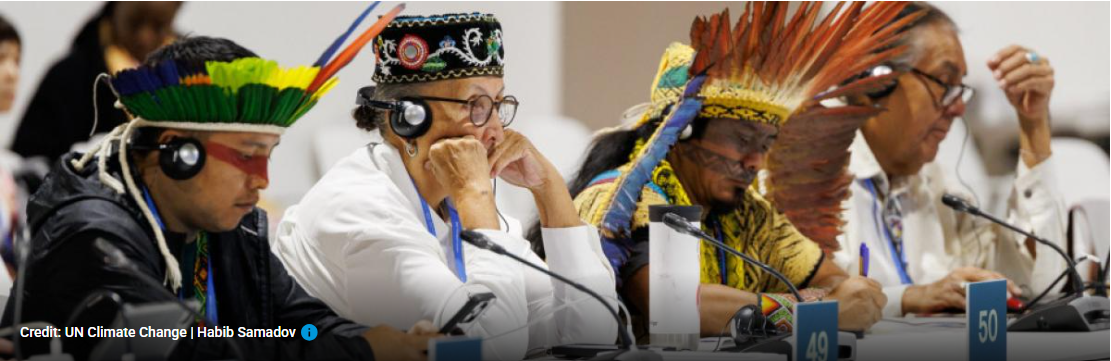
The UN climate process is seeking input on what its Local Communities and Indigenous Peoples Platform should do next.

Indigenous Peoples, Tribal governments, local communities, and other stakeholders may submit proposed activities and thematic priorities for the LCIPP’s 2028–2031 workplan by September 30. Comments will be considered by the Facilitative Working Group at its 16th meeting (FWG 16) in November 2026 in Antalya, Turkey.

Some questions commenters might address include:

  • Looking towards 2031, what concrete outcomes should the LCIPP seek to achieve?
  • Drawing on the discussions across the gathering, what issues, activities, or areas of work should be prioritized in the 2028-2031 workplan to help achieve those outcomes?
  • Where could stronger connections between the LCIPP and other bodies, workstreams, and processes under the UNFCCC create the greatest added value?

Organizations with UNFCCC observer status submit through their designated contacts; those without observer status may send comments directly to submission-info@unfccc.int.

A separate November 1 deadline invites views on the LCIPP’s impact to date. The official two-page submission guide is here.

The current workplan of the LCIPP can be accessed here: https://lcipp.unfccc.int/sites/default/files/2024-12/Baku_Workplan_of_the_Local_Communities_and_Indigenous_Peoples_Platform.pdf

Treasury Recognizes Tribal Child Welfare Authority in New Children’s Accounts

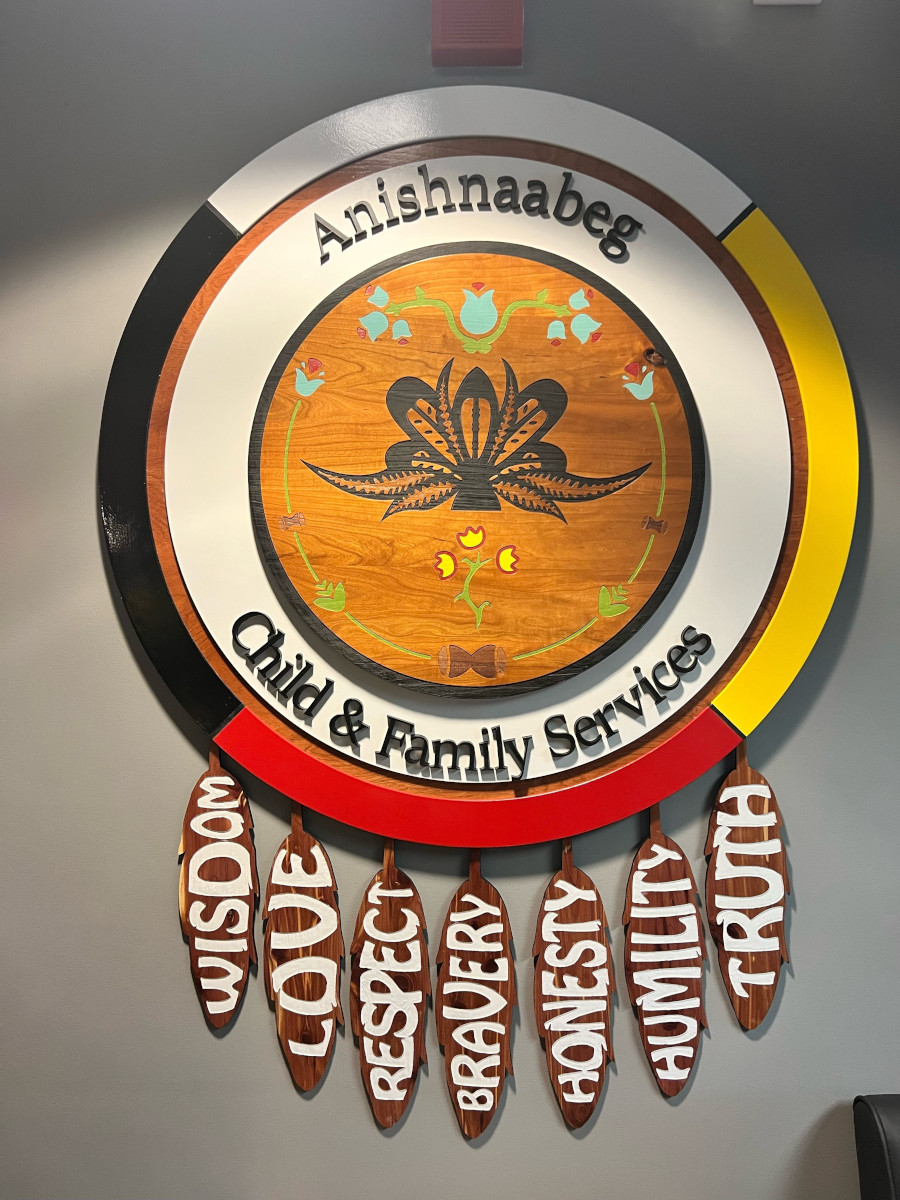
Photo from the Saginaw Chippewa Indian Tribe’s Department of Anishnaabeg Child & Family Services

ICWA litigation and scholarship understandably focus heavily on getting jurisdiction into Tribal hands, emphasizing notice, intervention, transfer, exclusive jurisdiction, placement, termination, and adoption. But jurisdiction is just the beginning. Once the Tribe is the responsible government, does the rest of the administrative state actually recognize that authority? Who receives federal benefits on the child’s behalf? Who manages the child’s assets? Who can consent to services? And when a Tribal guardianship order reaches a federal or state administrative system, does that system recognize it? Ultimately, getting jurisdiction is necessary but not sufficient.

Treasury’s implementation of the new “Trump Accounts” provides a small but useful data point. A child welfare agency of a state, territorial, or Tribal government that is the legal guardian of an eligible child may elect to open the child’s account. The IRS further says its Office of Governmental Liaison will work directly with the relevant Tribal agency and coordinate with the IRS Office of Indian Tribal Governments in assisting Tribal child welfare agencies. For Native children in Tribal foster care, the interesting question is therefore not simply who fills out a federal form, but whether the administrative machinery downstream of a Tribal jurisdictional determination actually treats the Tribe as the government exercising legal authority over the child.

Treasury itself recognizes the issue. Its Dear Tribal Leader Letter says Tribes may have “distinct laws and guardianship structures” that should inform implementation, and it asks Tribal leaders and Tribal child welfare representatives for feedback on how the department can assist Tribes with understanding the filing requirements to open up this initiative to Tribal foster youth. Feedback is specifically requested for the below questions:

  1. What questions or comments do you have regarding the Fostering the Future Accounts, for eligible youth in Tribal foster care systems?
  2. What questions do Tribal child welfare agencies have regarding submitting account elections?
  3. What communication would help Tribal child welfare agencies understand this filing process? Discuss with OTP and Fiscal Service.
  4. What questions do Tribal child welfare agencies have regarding situations where a child’s placement, guardianship status, jurisdiction, or responsible child welfare agency changes after a Trump Account has been opened and a child remains eligible for the pilot contribution?

Treasury will hold a Tribal listening session on September 18 at 1:00 p.m. EDT, with written comments due October 23 at 11:59 p.m. Alaska time. The session offers a concrete opportunity to identify whether this particular system recognizes Tribal guardianship cleanly in practice, and where the problems may arise.

Additional resources

Three Fires Confederacy Reclaims the Straits as a Place of Anishinaabe Ceremony and Collective Action

About 1,000 Native Americans from the
Great Lakes region walked the Mackinac
Bridge on Labor Day.
(Photo/Dustin Meshigaud)

For the first time, the Three Fires Confederacy joined the annual Mackinac Bridge Walk on Labor Day, recasting it as an assertion of Anishinaabe presence and responsibility at the Straits. About 1,000 Native participants gathered at sunrise for water ceremonies on both shores, then walked behind water protectors and eagle staffs to meet over the water. Organizers emphasized that the gathering wasn’t merely a demonstration against Line 5, but a ceremony affirming that the Straits remain Anishinaabe homelands.

Odawa, Ojibwe, and Potawatomi people appeared collectively as the Three Fires Confederacy, a living regional institution carrying responsibilities to the waters, future generations, and more-than-human relatives. The Confederacy called for Line 5’s decommissioning based on treaty rights, the rights of nature, and protection of the public good.

Additional Resources

Native News Online’s report includes photographs and statements from organizers.

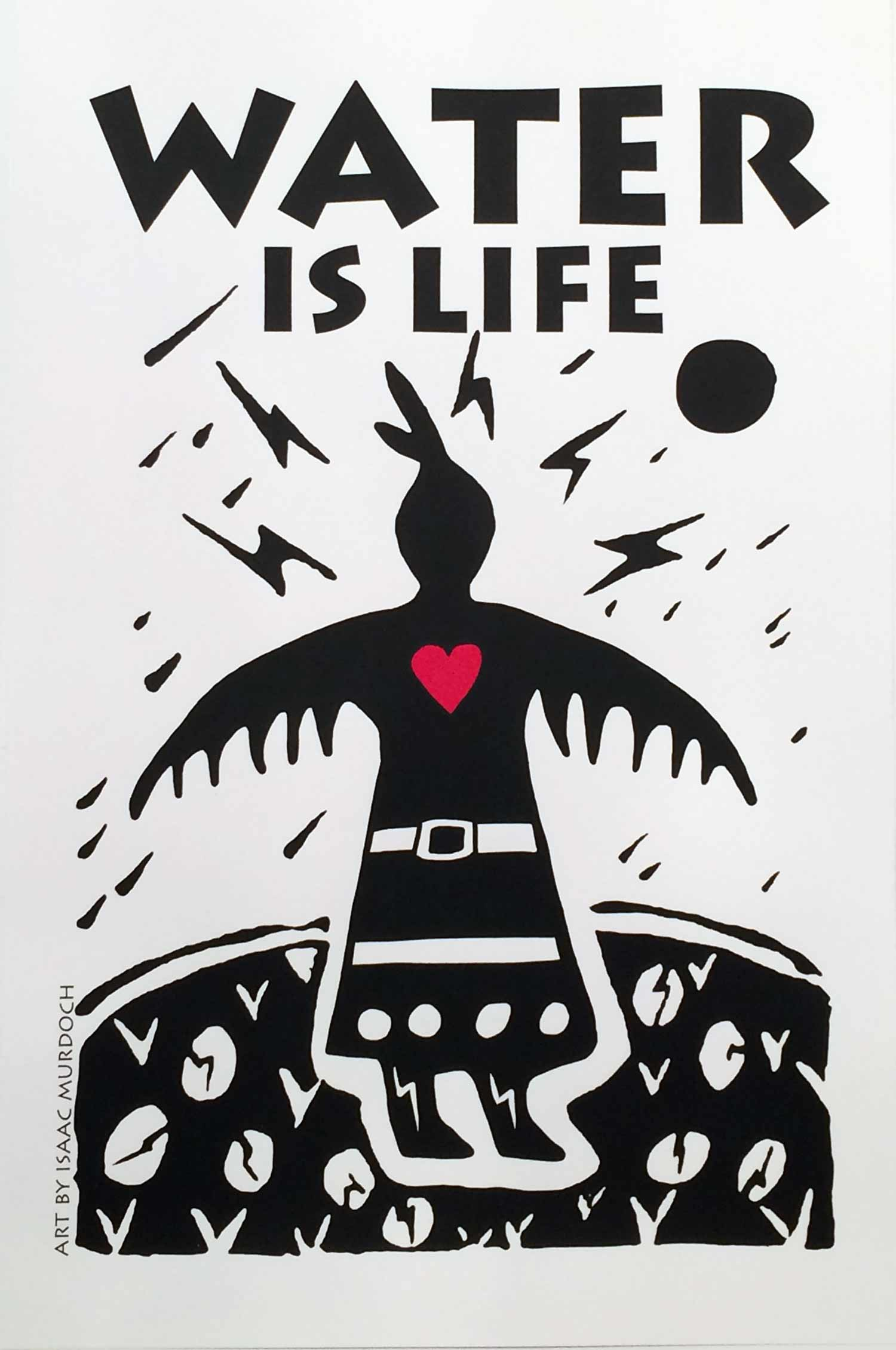
EPA’s New WOTUS Proposal Deepens the Regulatory Gap for Tribal Waters

EPA and the Army Corps have supplemented their proposed WOTUS rule with alternatives that could sharply reduce federal protection for Tribal waters in a prepublication document shared at the link above.

The agencies are now considering limiting “relatively permanent” waters to those flowing virtually year-round and requiring wetlands to contain perennial surface water continuously connected to another jurisdictional water, a standard they acknowledge would exclude most intermittent streams and a majority of currently jurisdictional adjacent wetlands, with especially significant effects in the arid West.

The proposal would result in significant implications for Tribes, since most eligible Tribes lack TAS authority to administer Clean Water Act programs, many lack resources to build equivalent Tribal programs, and pollution may originate in adjacent jurisdictions. In other words, the federalism premise that another sovereign can simply regulate waters abandoned by the federal government often fails in Indian country. The Tribal regulatory gap would effectively be made more consequential under this proposed substantially narrower federal rule. Tribes may request government-to-government consultation at CWAwotus@epa.gov once the supplemental notice is published in the Federal Register, opening the 30-day comment period.

From the supplemental notice of proposed rulemaking:

The agencies acknowledge that because they generally implement Clean Water Act programs on Tribal lands, a reduced scope of Federal jurisdiction as a result of the Sackett decision will affect Tribes differently than it will affect States. Currently, of the Tribes that are eligible, most have not received treatment in a manner similar to a State (TAS) status to administer Clean Water Act regulatory programs. While some Tribes have established Tribal water programs under Tribal law or have the authority to establish Tribal programs under Tribal law, many Tribes are still building capacity and may lack resources to create a Tribal water program under Tribal law, to administer a program, or to expand programs that currently exist.

Therefore, Tribes may disproportionately rely on the Federal Government for water program implementation and enforcement of water quality violations. Tribes may also be affected by pollution from adjacent jurisdictions. Many Tribes are located in the arid West, where there are fewer waters that may meet the relatively permanent standard. Nonetheless, the proposed rule, as supplemented by this notice, preserves Tribal authority to choose whether to include waters that are not covered under the Clean Water Act under Tribal laws and regulations. Any decision by the Tribes to protect beyond the limits of the Clean Water Act is not compelled by the statute or by this proposed rule, as supplemented.

Worth a Read: After more than a century, Fort Peck children are coming home from Carlisle

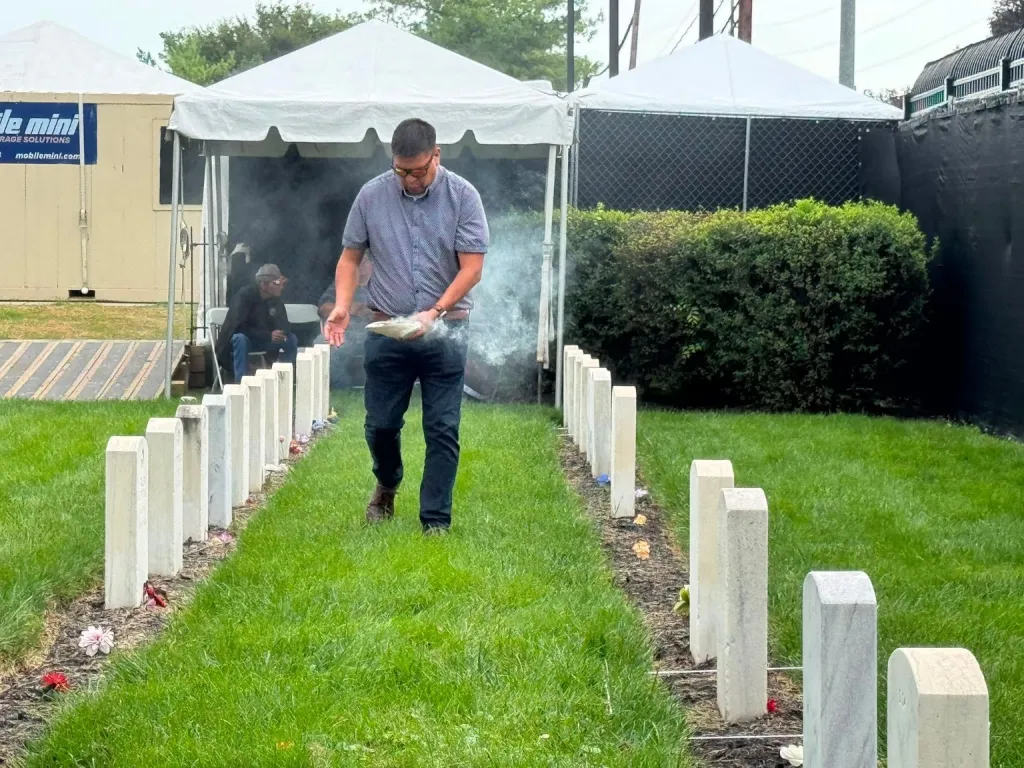
The Fort Peck Journal has provided community-centered coverage of the return of three Fort Peck children who were sent to the Carlisle Indian Industrial School together in 1890 and died there.

Louis H. Montclair’s coverage documents how the Fort Peck community has prepared to bring the children home through family participation, an awareness walk across the reservation, the Orange Flag Project, community prayers, and ceremony.

Peter Howe and Richard Morgan Disinterred at Carlisle; Christine Redstone Next by Louis H. Montclair for Fort Peck Journal, Sept. 1, 2026

After More Than a Century, Fort Peck Children Are Coming Home From Carlisle by Louis H. Montclair for Fort Peck Journal, September 1, 2026

From a Phone Screen to Carlisle: How the Orange Flag Project Took on a Life of Its Own by Louis H. Montclair for Fort Peck Journal, September 1, 2026

Fort Peck Tribal Executive Board member Melvin Scott smudges the Carlisle Indian Cemetery on Sept. 1 ahead of the scheduled disinterments of Peter Howe and Richard Morgan. The Fort Peck delegation traveled to Carlisle, Pennsylvania, to bring home three Fort Peck children who died after being sent to the Carlisle Indian Industrial School. Photo from Fort Peck Journal.

Akwesasne Governments Reject “Lake America” Across the International Border

From a statement posted by the Saint Regis Mohawk Tribe and published on Sept. 4:

AKWESASNE — (Seskehkó:wa/September 1, 2026) The Saint Regis Mohawk Tribe (SRMT) and Mohawk Council of Akwesasne (MCA) stand together in opposition to the recent Executive Order issued by the current United States administration seeking to rename Lake Ontario as “Lake America.”
 

The name Ontario is widely understood to be derived from an Iroquoian word, often transcribed as ontarí:io, or similar spellings in historical records. The word has been interpreted as meaning “great lake”, “beautiful lake”, or “sparkling water”.
 

More importantly, the name predates the creation of Canada and United States. European explorers adopted an existing indigenous name for the lake and the name was later applied to the province when Ontario was established in 1867.
 

For the Kanien’kehá:ka, however, the lake is known as Kaniatari:io, often translated as “Beautiful/nice lake.” This name reflects our own language, worldview, and enduring relationship with the lake.
 

These names are not simply words on a map to our people. They carry our languages, histories and responsibilities to the lands and waters since time immemorial.
 

For Akwesasronon, the international boundary is a present-day reality that came long after our ancestors’ presence here. Akwesasne territory extends across both Canada and the United States, and is a stark reminder that our people were here long before either country was established. Replacing a name derived from one of the original languages of these lands with one intended to assert a modern national identity disregards that Indigenous history.
 

What has carried meaning for generations should not be rewritten to satisfy the politics of a moment.
 

Governments and administrations will change. Our language, our history and our relationship with these lands and waters will remain.
 

The Saint Regis Mohawk Tribe and Mohawk Council of Akwesasne will continue to recognize the history and Indigenous origins of Lake Ontario and uphold the Kanien’kehá relationship with Kaniatari:io.
 

No act of government can erase that relationship.

Our earlier post on this topic is here.

What the Record Shows: ACF’s Head Start Rulemaking, More Than 9,200 Comments, and a Tribal Consultation Ahead

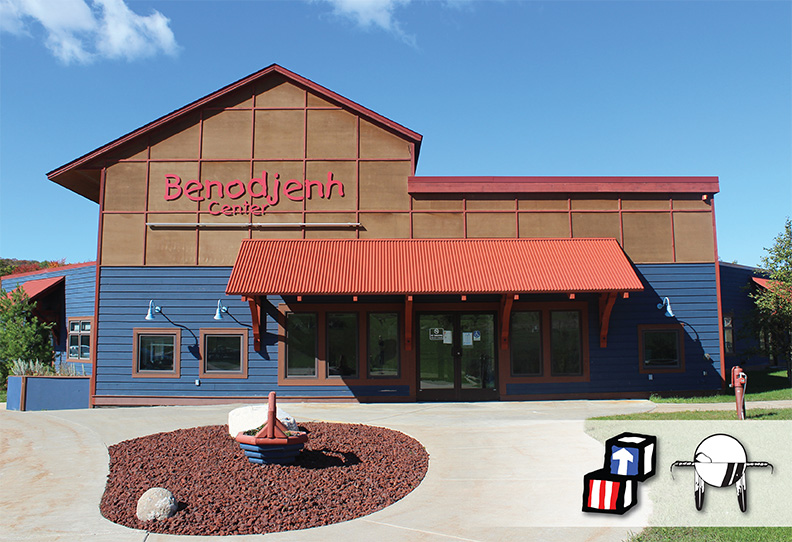
GTB’s Benodjenh Child Center in Peshawbestown, MI which provides Head Start, Early Head Start, and child care services to GTB children and families. Image: Grand Traverse Band of Ottawa and Chippewa Indians.

More than 9,200 comments were submitted on the Administration for Children and Families’ proposed Head Start rewrite by September 6, 2026. 46 of them discussed Tribal programs, Tribal languages, Indigenous children, or other Tribal concerns. But none could be verified from the public record as having been submitted by a Tribe, Tribal organization, or Tribal Head Start provider.

That may soon change. The Office of Head Start has scheduled a virtual Tribal consultation specifically on the proposed rule for September 16, 2026, from 1:00 to 4:00 p.m. ET. Tribal leaders and their representatives may provide testimony regarding the proposed changes and their implications for American Indian and Alaska Native Head Start programs, children, families, and communities. Testimony will be included in the proposed rule’s public comment record unless the Tribe or individual providing it requests otherwise.

A signed letter authorizing a representative to speak for a Tribe is due September 11. Written testimony may be submitted to AIANHeadStart@acf.hhs.gov through October 6. Registration and additional information are available here.

As of September 6, therefore, the publicly visible docket contained other people’s descriptions of Tribal interests, but no identifiable submission from the Tribal governments and providers that operate the affected programs. The September 16 consultation offers an important opportunity to change that record.

The Office of Head Start also conducted its regularly scheduled Tribal Head Start consultation on June 18, 2026 before this proposed rule was published. ACF’s preamble says the proposal reflects feedback received over time from Head Start leadership, “including Tribal leaders,” but it doesn’t identify the Tribal leaders consulted about these particular changes or explain how their views shaped the proposal.

What ACF is Proposing

ACF’s proposed rule, Reducing Federal Burden for Head Start Programs, would replace much of the existing Head Start Program Performance Standards with a substantially shorter set of regulations. Among other changes, the proposal would:

  • Reduce the administrative cost cap from 15% to 5%, subject to a waiver process
  • Remove federal staff-child ratios and class size limits in favor of other applicable standards
  • Eliminate or reduce requirements governing staff qualifications, professional development, coaching, and caseloads
  • Remove or reduce requirements for health, developmental, dental, mental health, and family services
  • Reduce requirements for home visits, program duration, parent committees, and community assessments
  • Change eligibility documentation and enrollment requirements
  • Require education to be conducted in English, with an exception allowing an Indian Head Start agency to use a Tribal language when doing so is related to “the furtherance of tribal heritage.”

Some provisions recognize Tribal circumstances or preserve existing Tribal flexibility. But the rule as a whole would apply to Tribal Head Start programs, not just the provisions that specifically reference Tribal Head Start. The Tribal language exception and the operation of Tribal Head Start programs in general should be considered together with the 5% administrative cost cap, elimination of federal standards, and changes to health, staffing, eligibility, governance, and home visiting requirements.

The proposal also raises a distinct jurisdictional question. ACF frequently presents deregulation as a choice between federal requirements and state or local control. Tribal Head Start programs don’t always fit that binary. If a federal regulatory standard disappears and particular Tribal Head Start program is not subject to state child care licensing, what becomes the governing minimum? Does Tribal law control? Does the proposed rule consistently recognize Tribal licensing and regulatory authority? Or does it create uncertainty for Tribes where the federal government claims to be creating flexibility?

What Other Commenters are Saying about Tribal Head Start Programs

I reviewed the 9,233 public submissions included in a regulations.gov bulk download that I obtained on September 6. I identified 46 comments that expressly discussed Tribal, American Indian, Alaska Native, Indigenous, reservation, or Tribal-program concerns.

Those comments repeatedly raised several issues:

  • The 5 percent administrative cost cap. Commenters warned that the cap could fall especially heavily on small, rural, and Tribal programs, which cannot spread fixed costs for audits, payroll, human resources, technology, facilities, and federal compliance across large enrollments or multiple locations.
  • Tribal languages and cultural continuity. Many commenters invoked Tribal language preservation to oppose the proposed English-instruction requirement. (The exception permitting use of Tribal language is limited to Indian Head Start programs.) Several connected language to identity, family relationships, intergenerational transmission, and cultural survival.
  • Assimilation and boarding school history. Some commenters described English-only education as language erasure or compared it to the forced assimilation of Indigenous children in Indian boarding schools.
  • Reservation geography and service access. Commenters identified rural and Tribal communities as particularly dependent on home visiting, transportation, and flexible service delivery systems.
  • Consultation and participation. Several urged ACF to work with Tribal Nations, Tribal communities, or Tribal organizations before changing the standards.
  • Child care and workforce infrastructure. Commenters described Tribal Head Start as essential not only to children’s education and health, but also to parents’ ability to work and to the economic stability of Tribal communities.

One unidentified commenter asked how Tribal child care subsidy payments would be included, noting that Tribal subsidy rates were even lower than state rates.

These comments recognize many important problems. What they generally can’t supply is evidence that Tribes possess that establish the scale, operation, and legal significance of these problems.

  • Non-Tribal commenters can predict that the 5% administrative cost cap will harm Tribal programs, but they can’t document a Tribal program’s existing administrative costs, or the positions and services that would be lost under the proposed cap.
  • Non-Tribal commenters can invoke the importance of teaching Tribal languages, but they can’t determine whether the proposed exception adequately protects immersion programs, intertribal classrooms, urban Native children, or how it interacts with a Tribe’s own language and education laws.
  • They can mention the challenges of access to Tribal Head Start programs given reservation geography, but Tribes are in the best position to establish what home visiting, transportation, health coordination, and workforce recruitment actually require.

Tribal interests are not absent from the docket. But as of September 6, identifiable Tribally authored comments, and the financial, governmental, cultural, and operational evidence that Tribes themselves are uniquely positioned to provide, was absent.

What the Record Still Needs

Tribal governments, Tribal organizations, and Tribal Head Start providers are uniquely positioned to tell ACF:

  • What percentage of their budgets currently qualifies as administrative costs.
  • How a 5% administrative cost cap would interact with negotiated indirect-cost rates and shared Tribal-government services.
  • Which staff positions, services, or enrollment slots would be affected.
  • Whether reliance on the Tribal language exception offers meaningful protection, how broadly it applies, and who determines whether language furthers Tribal heritage.
  • Which statutory, Tribal, state, or other standards would govern when particular federal regulatory requirements are removed.
  • How reservation geography and remoteness affect transportation, home visiting, facilities, workforce recruitment, and access to health and mental health providers.
  • How the proposed changes would interact with Tribal health, education, licensing, and child care systems
  • Whether the Tribal language exception protects the language models Tribes actually use.
  • Who should determine whether instruction furthers Tribal heritage.
  • Whether the proposal is consistent with the Head Start Act, the Native American Languages Act, Tribal law, federal consultation requirements, and the federal trust responsibility.
  • Whether ACF’s Tribal consultation was timely, adequate, and capable of influencing the proposed rule.

The existing comments frequently address Tribal programs, but the docket still needs evidence from the Tribal governments and providers that operate them.

Comments are due October 6, 2026. The public docket is available here.

A note on method: This review covers the 9,233 public submissions included in a regulations.gov bulk download obtained September 6, 2026, covering comments submitted in response to ACF-2026-0595-0001 and ACF-2026-0595-0002. The bulk download includes a Government Agency Type field that lets a submitter self-identify as a federal, state, local, or Tribal government; none of the 9,233 submissions had this field populated as Tribal, or, in fact, populated at all, for any government type. 46 submissions expressly addressed Tribal, American Indian, Alaska Native, Indigenous, reservation, or Tribal program issues, based on a keyword search of the comment text included in that download. That search could not reach the substance of 4,678 submissions, just over half the docket, whose comment field contains only a placeholder (“See Attached”) pointing to an attachment file not included in the bulk download; those attachments were not separately reviewed. No submission could be verified from the available metadata, comment text, or the Government Agency Type field as filed by a Tribe, Tribal organization, or Tribal Head Start provider, but that finding necessarily reflects only the roughly half of the docket whose substance was available for review. A Tribal government, organization, or provider could be among the submissions whose content appears solely in an unreviewed attachment. This review also predates the Tribal consultation scheduled for September 16; testimony from that consultation will become part of the public comment record unless its inclusion is declined.

Tribal Innovations Update: Chickasaw Nation Begins Construction on 160-acre Health Campus

The medical campus will include twelve buildings, a hospital, an outpatient clinic, and more than twenty-three specialties.

From the Chickasaw Nation press release:

Upon completion, the facility will grow to include a nearly 2.5 million-square-foot medical campus with 140 inpatient beds and will employ more than 5,500 staff. It is expected to serve more than 100,000 First Americans in the region.

“This campus will do things most hospitals cannot. We are building medical residencies, training the next generation of doctors right here in Oklahoma, and in Newcastle,” Governor Anoatubby said. “We are building a First American research center owned and operated by a tribal nation, the first of its kind anywhere in the country.”

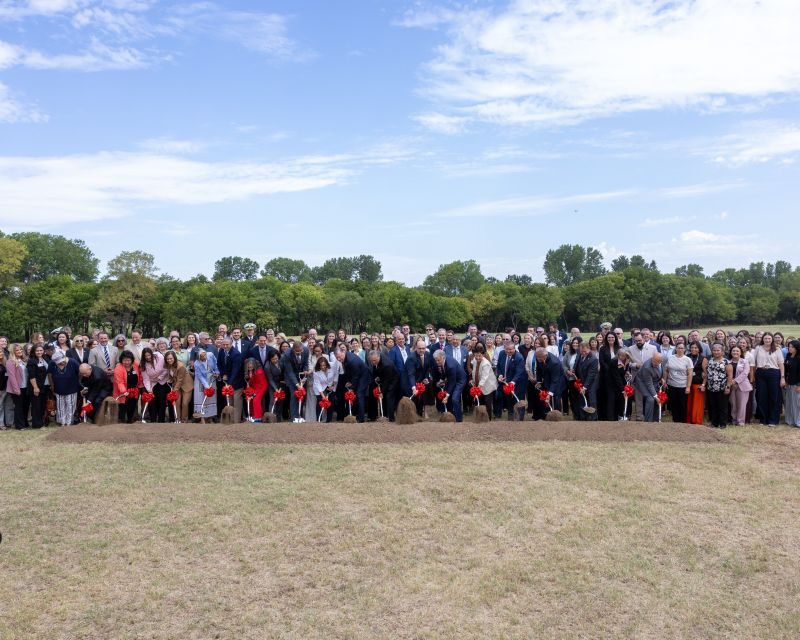
Chickasaw Nation Governor Chris Anoatubby, center, is joined by Chickasaw Nation elected officials and leadership staff, federal and state officials, and community leaders July 31 in groundbreaking ceremonies for the Chickasaw Nation Health Newcastle Medical Center, marking a significant investment in First American healthcare access in the Oklahoma City area.