Federal Court Dismisses Grand Canyon Skywalk Development Complaint Seeking Arbitration against Hualapai Tribe

Here are the materials in Grand Canyon Skywalk Development LLC v. Hualapai Indian Tribe of Arizona (D. Ariz.):

DCT Order Denying Motion to Compel Arbitration

First Amended Complaint

Amended Complaint Exhibit Set 1

Amended Complaint Exhibit Set 2

Hualapai Motion to Dismiss

Hualapai Motion to Disqualify

Charlton Declaration

Rhodes Affidavit

GCSD Opposition

Greenberg Traurig Opposition to Motion to Disqualify

Harrison Declaration

Overton Declaration

Overton Exhibit Set 1

Overton Exhibit Set 2

Overton Exhibit Set 3

Quasala Declaration

Hualapai Reply in Support of Motion to Disqualify

Hualapai Reply in Support of MTD

From the opinion:

Defendants Hualapai Indian Tribe and seven named members of the Hualapai Tribal Council have filed a motion to dismiss Plaintiff Grand Canyon Skywalk Development, LLC’s (GCSD) first amended complaint to compel arbitration. Doc. 19; see Doc. 18. The motion has been fully briefed. Docs. 21, 29. Defendants also have filed a motion to disqualify Greenberg Traurig (GT) as counsel for GCSD and for related orders protecting theTribe’s confidential information. Doc. 25. GT has filed a response in opposition which GCSD joined. Docs. 43, 37. For the reasons that follow, the Court will grant Defendants’ motion to dismiss GCSD’s first amended complaint, and deny Defendant’s motion to disqualify GCSD’s counsel and for related orders.

Prior post on this specific suit is here.
Federal Indictment of 18 Individuals for Smuggling Smokes to Seneca Cayuga Tobacco, Ho-Chunk Inc., Etc.

Here is the indictment in United States v. Sheffler (W.D. Mo.):

Sheffler Indictment

News coverage here.

Idaho SCT Affirms Jurisdiction over Native Wholesale Supply

Here is the opinion.

The court’s summary:

In an appeal from Ada County, the Supreme Court affirmed the decision of the district court that the State of Idaho can regulate the importation of cigarettes onto reservations located in Idaho and that the State has personal jurisdiction over non-resident defendant Native Wholesale Supply Company. The Supreme Court reversed the district court’s decision that Native Wholesale Supply Company is required to obtain a wholesaler permit for its sales to a tribal-owned retailer on the Coeur d’Alene reservation.

News coverage here.

Confederated Salish and Kootenai Tribe set to acquire Kerr Hydroelectric Project in 2015

In September 2015, the Confederated Salish and Kootenai Tribes’ corporation, Energy Keepers, Inc. (EKI), plans to acquire the Kerr Hydroelectric Project. While the purchase price is still under dispute, the tribal news is publishing a series of articles to educate tribal members (and other interested parties) on the history of this deal, as well as the steps that EKI is taking to be prepared to manage this project.

According to the Char-Koosta News:

The Tribes fought hard for the right to acquire the Project when the last FERC license was issued in 1985. For several decades, this opportunity has been seen by successive Tribal Councils as a primary option for CSKT’s future economic development and self-sufficiency. Acquisition of the Kerr Project is also an important way for the Tribes to manage and reclaim natural resources that are critical to the Salish, Kootenai and Pend d’Oreille peoples of the Flathead reservation.

Today, only two years from the opportunity to own and operate the Kerr Project, EKI, the Tribally owned corporation responsible for the management of the Kerr Dam acquisition process, is in full swing– evaluating, planning and preparing for the conveyance of this major hydroelectric facility.

The first three articles in the series are available on the Char-Koosta News site:

The Twists and Turns of Acquiring Kerr Dam here.

Conveyance of Kerr Dam Continues to Move Along here.

Due Diligence on Kerr Dam: Structural Evaluation here.

This is an exciting opportunity for the Confederated Salish-Kootenai Tribe, and I plan to keep checking the Char-Koosta News site to see how this project is progressing.

Thanks to NG

Nooksack Petition for Review in Sovereign Immunity Appeal

Here are the materials in the petition stage of Outsource Services Management LLC v. Nooksack Business Corp.:

Nooksack Petition for Review + Appendix

Answer to Petition for Review

Lower court materials here.

Fort Sill Apache Industries Loses In Its Claims of Conversion/Fraud in Government Contracting Dispute

Here is the federal court’s order in Fort Sill Apache Industries v. Mott (E.D. Va.):

DCT Order Granting Defendants Motion

An excerpt:

In this civil action, which has been fully tried to the bench, plaintiff Fort Sill Apache Industries (“FSAI”) seeks to recover compensatory and punitive damages from defendant Deborah Evans Mott (“Mott”) based on claims of Conversion (Count I), Breach of Fiduciary Duty (Count II), Deceit by False Representation (Count III), Deceit by Nondisclosure and Concealment (Count IV), Actual Fraud (Count V), and Constructive Fraud (Count VI). During the bench trial, defendant orally moved for judgment as a matter of law under Fed. R. Civ. P. 52(c), on the ground that all of plaintiff’s tort claims against Mott in her individual capacity are actually contractual disputes with Mott’s employer, Team Systems International, Inc. (“TSI”), over the amounts billed for services performed pursuant to several contracts between the two corporate entities. Citing well-established Virginia case law, Mott argues that all of FSAI’s claims against her fail and that judgment should be entered in her favor. FSAI contends in response that Mott personally took on fiduciary duties and other responsibilities for which she is individually liable by acting as FSAI’s Chief Financial Officer (“CFO”) and by virtue of her level of access to one of FSAI’s bank accounts, including the use of a debit card linked to that account. FSAI also orally moved for inferences adverse to defendant because of alleged spoliation of evidence. The Court took both motions under advisement and in the weeks following the bench trial, the parties fully briefed these motions. This Memorandum Opinion constitutes the Court’s findings of fact and conclusions of law supporting the decision to grant defendant’s motion and deny plaintiff’s motion as moot.


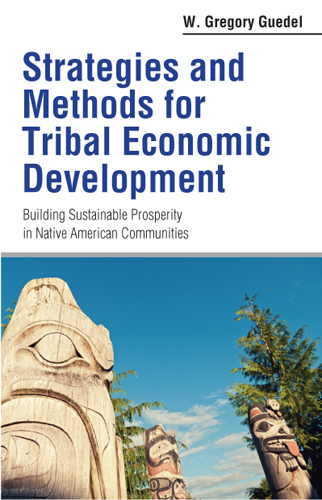
Book Announcement: “Strategies and Methods for Tribal Economic Development”

Guedel Book Cover

Blurb here:

Each year, billions of dollars of funding and technical assistance are available to native governments, businesses, and individuals for a wide variety of economic and community development activities. From multi-million dollar tax-exempt bonds to microloans, tribal governments and businesses can access capital from public and private sources to create companies, construct housing, produce energy, build infrastructure—essentially any element of an economic development program. Written by an internationally recognized legal expert and educator, Strategies and Methods for Tribal Economic Development provides strategic-level guidance for tribal economic development planning, along with connections to available funding and resources for implementing the selected strategies. Each chapter includes website addresses for the specific programs being discussed, allowing the reader to go directly from the program description to the online link for the program in one step. The book also offers practical advice for combining multiple funding sources and support services into a comprehensive development approach. For tribal leaders and businesses interested in pursuing opportunities in native communities, Strategies and Methods for Tribal Economic Development is an invaluable resource for planning and implementing programs for sustainable economic growth.

Text here:

Strategies_and_Methods_for_Tribal_Economic_Development_Text

Bakken Boom Satellite Maps

Amazing material. Thanks to Drs. Braun and Reed at the University of North Dakota.


Since late 2011, Dr. Sebastian Braun (American Indian Studies) and Dr. Ann Reed (Anthropology) have been working on a project to investigate the social impacts of the Bakken oil boom in western North Dakota.

One of the best ways to visualize the impacts of the boom is through satellite images. Seen from the ground level, it is hard to imagine the overall impact on the landscape, the ecosystem, and the flora and fauna (including homo sapiens) that depend on it. Satellite images reveal the challenges, changes, and disruptions that are caused by access roads and well pads, as well as the booming support economy. This is especially true if viewed over time – in case of a boom, a short time.

Here are some examples of Satellite images from 2005, 2009, 2010, and 2012 of specific locations: Mandaree, New Town, and Watford City. We will add more images in the future.

These images reveal how the physical environment has been changed, and make it possible, perhaps, to imagine how the landscape might look like in the future.

Pending Indian Country Payday Lender Case — Brown v. Western Sky

Here are the materials so far in Brown v. Western Sky Financial (M.D. N.C.):

ws — complaint filed, nc federal court

NC case — amended complaint — Western Sky

brown — brief re amend as filed

Western Sky Motion to Dismiss

brown — brief re dismiss — as filed

Western Sky Motion to Compel Arbitration

brown — brief re arb as filed

Federal Trade Commission Partially Settles Suit against Indian Country Payday Lenders

The case is Federal Trade Commission v. AMG Services (D. Nev.). Here are the most recent materials from the FTC website:

News coverage here.

Briefs here:

FTC Motion for Partial Summary J

AMG Response

Brady Response

Tucker Defendants Response

FTC Reply