Center for American Progress Report on American Indian Mascots

Here is “Missing the Point: The Real Impact of Native Mascots and Team Names on American Indian and Alaska Native Youth:” StegmanAIANmascots-reportv2

An excerpt:

Although the debate over the Washington football team may rage on until either the NFL or the team’s owner, Dan Snyder, finally does the right thing and changes the name, there are many things that can be done right now to support AI/AN students in schools that perpetuate harmful stereotypes. Instead of debating merchandise economics and fan sentimentality, it is time to get to the point in this debate and to stop the harm that racist mascots and team names do to AI/AN youth.

Save the Date: Apply to Clerk at NARF by September 29, 2014

Founded in 1970, the Native American Rights Fund (NARF) is the oldest and largest nonprofit law firm dedicated to asserting and defending the rights of Indian tribes, organizations, and individuals nationwide. NARF’s practice is concentrated in five key areas: the preservation of tribal existence; the protection of tribal natural resources; the promotion of Native American human rights; the accountability of governments to Native Americans; and the development of Indian law and educating the public about Indian rights, laws, and issues.
Summer Clerkships
NARF is currently seeking candidates for its Summer 2015 Clerkships! Each year, NARF conducts a nation-wide search for law students to participate in its Law Clerk Program. Positions are available in all three of NARF’s offices: Anchorage, AK; Boulder, CO; and Washington, D.C.

Here is the advertisement.

California COA Rules in Favor of American Indian Model Schools in Oakland

Here is the opinion in American Indian Model Schools v. Oakland Unified School District (Cal. App.):

A139652

An excerpt:

The American Indian Model Schools (AIMS) operates three public charter schools in the City of Oakland (Oakland). The Oakland Unified School District (the District) decided to revoke AIMS’s three charters after an independent audit uncovered evidence of conflict of interest violations, fiscal mismanagement, and improper use of public funds at the three charter schools. Funding of the charter schools was to halt while AIMS appealed the revocation decision.

AIMS filed a writ petition in the superior court against the District and others (collectively, defendants),1 challenging the District’s revocation of its charters. AIMS also requested a preliminary injunction to stop the implementation of the revocation order during the appeal process.
The trial court granted in part AIMS’s request for a preliminary injunction. The court highlighted the outstanding scholastic achievements of the students at AIMS’s three charter schools and the harm these students and schools would suffer if instruction were interrupted and the schools were no longer able to operate. The court concluded that the hardships weighed in favor of granting a preliminary injunction and that AIMS had demonstrated a likelihood of prevailing at trial because the record did not contain substantial evidence that the District complied with the requirements under Education Code section 47607, subdivision (c)(2).2 The court issued a preliminary injunction to maintain the status quo pending resolution of the appeal of the revocation decision.
Defendants appeal from the preliminary injunction order, arguing that the trial court abused its discretion in finding that AIMS is likely to prevail at trial. Defendants maintain that section 47607, subdivision (c)(2) requires the District to consider academic achievement but the trial court incorrectly interpreted this provision as requiring the District to make findings supported by substantial evidence that it complied with this provision. Defendants also challenge the trial court’s interpretation of section 47607, subdivision (i), and claim that issuing an injunction, which requires continued funding to the charter schools during the pendency of AIMS’s appeal, contravenes the mandate of section 47607, subdivision (i). Additionally, defendants maintain that the court failed to give sufficient deference to the District’s decision when it ruled AIMS was likely to prevail on the merits, that the court usurped the jurisdiction of the State Board of Education (the SBE), and that the court should not have issued any ruling in the absence of the California Department of Education (the CDE), which they maintain was an indispensable party.
We are not persuaded by defendants’ arguments and affirm the order granting the preliminary injunction.

Draft Report on Reorganization of Bureau of Indian Education

Here.

an excerpt:

After several discussions with tribal leaders regarding systemic issues within the Department of the Interior’s Bureau of Indian Education (BIE), in September 2013, Secretary of the Interior Jewell and Secretary of Education Arne Duncan appointed the American Indian Education Study Group (Study Group) to diagnose the causes of chronic academic failure in BIE-funded schools, one of the lowest-performing set of schools in the country. Charged with developing and implementing recommendations to transform the BIE, the make-up of the Study Group combines management, legal, education, and tribal expertise and ensures that the Study Group’s recommendations are grounded in a comprehensive, institutional understanding of how schools work, how effective teaching and learning occur, and American Indian affairs.

Upcoming Event, Raising Awareness and Knowledge of Proposed Pipelines that Threaten MN Wild Rice

April 17, 11:30 am – 12:30 pm, Hamline University School of Law will host a law student training event. The students will learn about administrative processes related to proposed oil pipelines, specifically focusing on the ones slated to run through Minnesota.

From the press release:

Honor the Earth, a Native-led environmental organization, has joined with a coalition of related organizations to protect Minnesota’s wild rice stands. The group is participating in the Minnesota Public Utilities Commission (“PUC”) and administrative processes regarding two proposed oil pipelines threatening some of the most significant wild rice stands in the state. To advance those efforts, Winona LaDuke of Honor the Earth and her team of legal allies will train Minnesota environmental law students on April 17th. Hamline University School of Law will host the event from 11:30 am to 12:30 pm which will also be available statewide via webcast. Environmental law students from all four Minnesota law schools (University of Minnesota, William Mitchell, Hamline, and St. Thomas) will be reviewing the legal and administrative cases. 

Press interviews will also be offered from 10:30 am – 11:25 am in the Moot Court Room.

Further information on the pipelines and efforts to propose alternative routes can be found in the press release:

Press Release Honor the Earth

News coverage here.

Sandpiper map

Critical Issues Conference Presentation on Indian Law Careers

With our own Wenona Singel

20140321-141356.jpg

More Pics from Critical Issues

Estrella Torrez prepares for her workshop, Establishing an Urban Indigenous Curriculum

20140321-103913.jpg

Ogemakwewaag Sharon Kota and June Mamagona Fletcher

20140321-104132.jpg

Emily Procter and Brandon Stevens

20140321-104240.jpg

Michigan Critical Issues Conference 2014

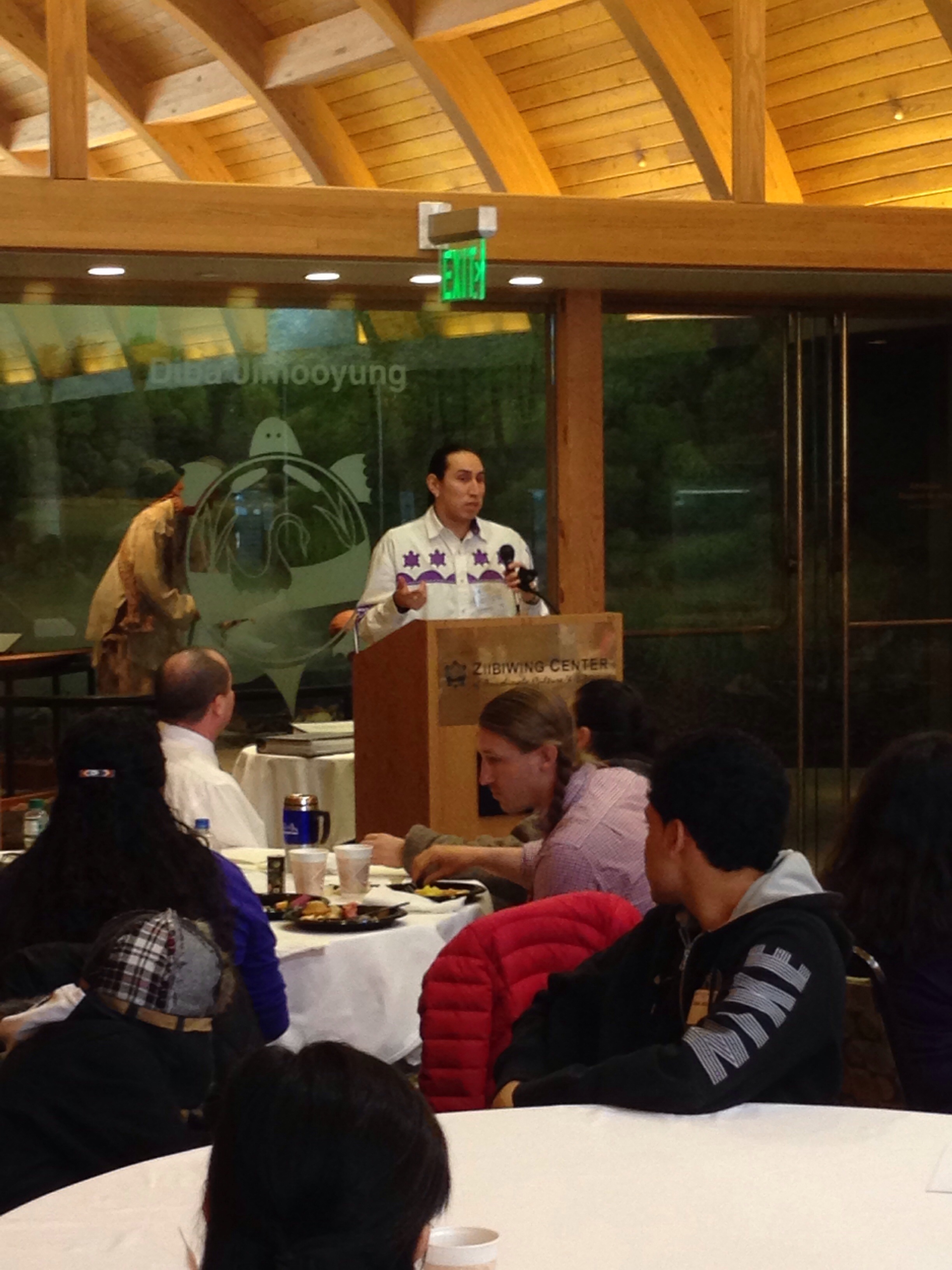
Opening keynote speaker Brandon Stevens

20140321-094351.jpg

MIEC board member Rochelle Ettawageshik

20140321-094432.jpg

2014 Native American Critical Issues Conference — March 20-22, 2014

Agenda here. Our own Wenona Singel will be talking about careers in tribal law on Friday.

More details here.

The conference will be held at Ziibiwing.

ziibiwing1

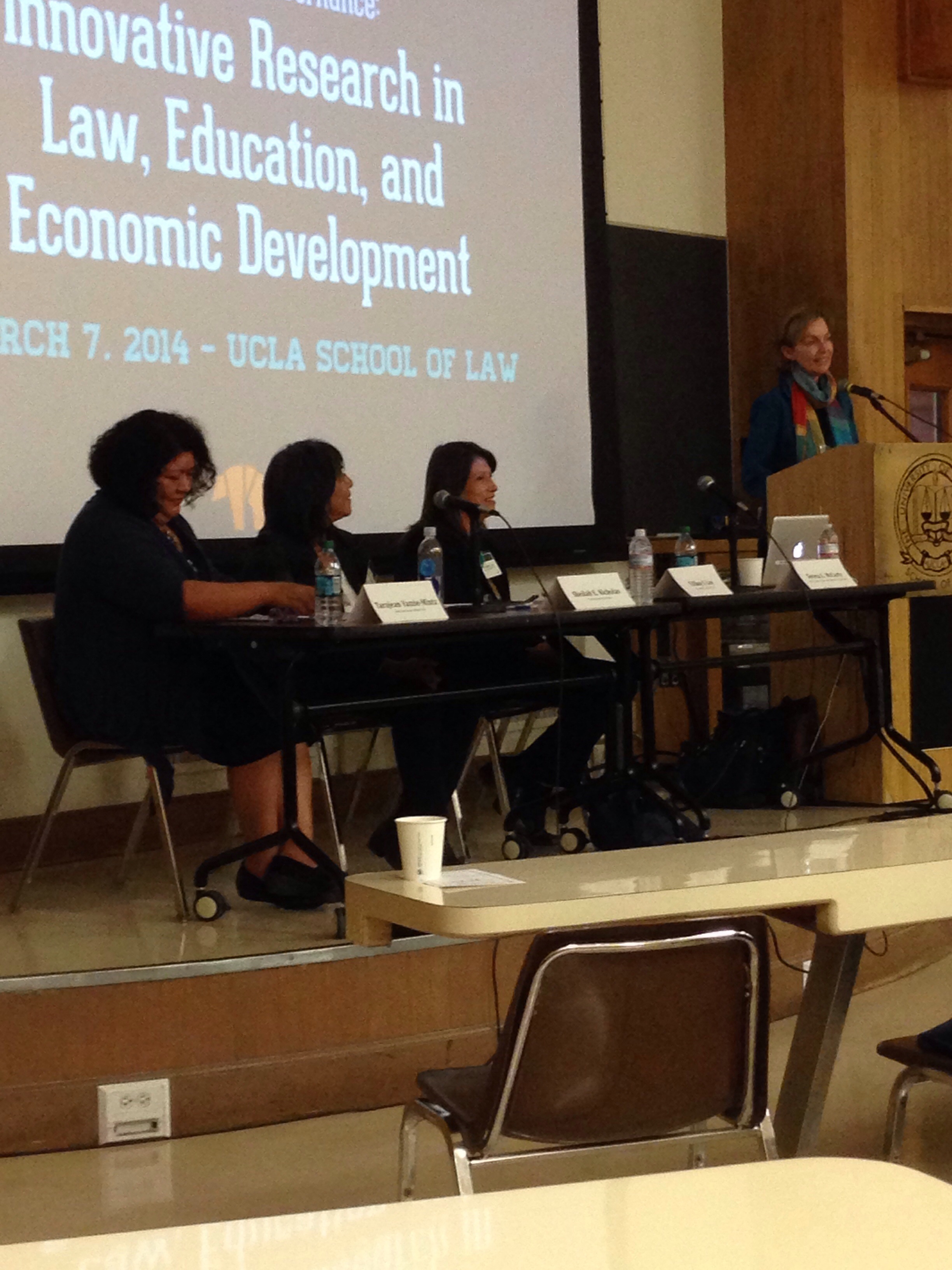
UCLA GNG Innovative Research in Education Panel

Tarajean Yazzie-Mintz, Sheilah Nicholas, Tiffany Lee, and Teresa McCarty

20140307-161240.jpg