Book review of “Unworthy Republic: The Dispossession of Native Americans and the Road to Indian Territory” by Claudio Saunt.
Here.
Book review of “Unworthy Republic: The Dispossession of Native Americans and the Road to Indian Territory” by Claudio Saunt.
Here.
From Carolina Academic Press, here (h/t Legal History Blog):
Forthcoming April 2020 • paper
| ISBN | 978-1-5310-1841-2 |
| e-ISBN | 978-1-5310-1842-9 |
Tags: Indian and Indigenous Peoples Law, Legal History, Regional Interest
The first legal history of the first tribal court upends long-held misconceptions about the origins of Westernized tribal jurisprudence. This book demonstrates how the Cherokee people—prior to their removal on the Trail of Tears—used their judicial system as an external exemplar of American legal values, while simultaneously deploying it as a bulwark for tribal culture and tradition in the face of massive societal pressure and change. Extensive case studies document the Cherokee Nation’s exercise of both criminal and civil jurisdiction over American citizens, the roles of women and language in the Supreme Court, and how the courts were used to regulate the slave trade among the Cherokees. Although long-known for its historical value, the legal significance of the Cherokee Supreme Court has not been explored until now
From the Seattle Times, here is “‘Terrible and disgusting’: Decision to close National Archives at Seattle a blow to tribes, historians in 4 states.”
Update:
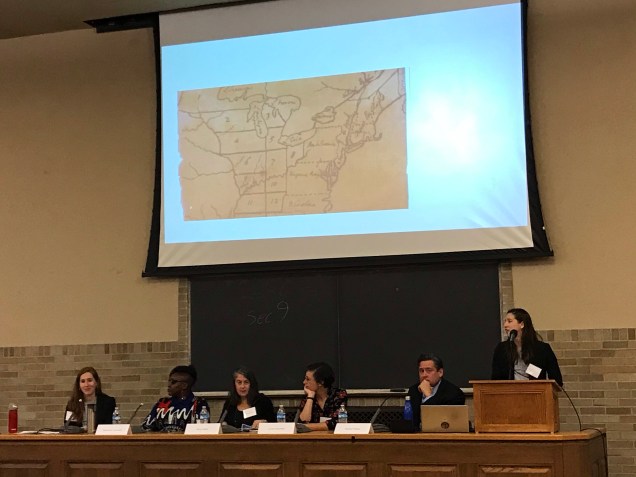
Here:
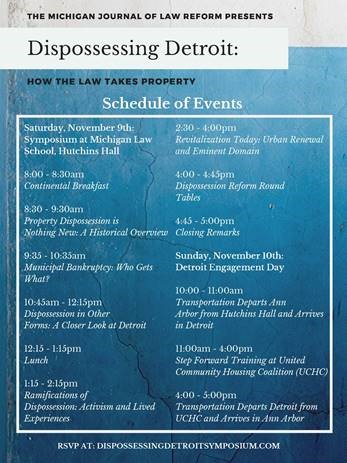
WHEN: Saturday, November 9, 8 AM – 5 PM
WHERE: Hutchins Hall (various locations)
WHAT: The goals of this Symposium are to provide historical and political context for current issues of property dispossession and to consider how governments, private industry, and private citizens can together seek reform. We are excited to bring together voices from law, policy, city government, community organizations, and more to engage the audience on this critical topic! Whether your interests are in tax foreclosure, bankruptcy, or Detroit’s story of dispossession, we hope you will join us.
RSVP: https://dispossessingdetroitsymposium.com/rsvp-comment/
Here, by Nick Estes.
Here is “Lyda Conley and the battle for Wyandot recognition.”
“Thank you, TurtleTalk, for this story. Lyda Conley is an inspiration to all of us who practice in the field. Oftentimes, I have been identified as the first native woman to argue in the Supreme Court, wrongly so as it turns out. For one, I’m proud to stand behind Lyda in second, third, or whatever place it puts me. Let the record stand corrected.” Arlinda Locklear
We at Turtle Talk have always thought of Arlinda as the first in the modern era. 🙂
Definitely worth a listen. First two episodes are about Carpenter v. Murphy.
Here.
Michael C. Blumm and Cari Baermann have posted “The Belloni Decision and Its Legacy: United States v. Oregon and Its Far-Reaching Effects After a Half-Century” on SSRN. It is forthcoming in Environmental Law.
Abstract:
Fifty years ago, Judge Robert Belloni handed down an historic treaty fishing rights case in Sohappy v. Smith, later consolidated into United States v. Oregon, which remains among the longest running federal district court cases in history. Judge Belloni ruled that the state violated Columbia River tribes’ treaty rights by failing to ensure “a fair share” to tribal harvesters and called upon the state to give separate consideration to the tribal fishery and make it management priority co-equal with its goals for non-treaty commercial and recreational fisheries. This result was premised on Belloni’s recognition of the inherent biases in state regulation, despite a lack of facial discrimination.
The decision was remarkable because only a year before, in Puyallup Tribe v. Department of Game, the U.S. Supreme Court seemed to accord considerable deference to state regulation of tribal harvests (which it would soon clarify and circumscribe). Instead of deference, the Belloni decision reinstated burdens on state regulation that the Supreme Court had imposed a quarter-century earlier, in Tulee v. Washington, but seemed to ignore in its Puyallup decision. The directive for separate management was prescient because otherwise, tribal harvests would remain overwhelmed by more numerous and politically powerful commercial and recreational fishers.
Judge Belloni eventually grew tired of resolving numerous conflicts over state regulation of the tribal fishery, calling for the establishment of a comprehensive plan, agreed to by both the state and the tribes, to manage Columbia Basin fish harvests. Eventually, such a plan would be negotiated, implemented, and amended over the years. Today, the Columbia River Comprehensive Management plan is still in effect a half-century after the Belloni decision, although the district court’s oversight role is now somewhat precariously perched due to statements by Belloni’s latest successor. Nonetheless, the plan remains the longest standing example of tribal-state co-management in history and a model for other co-management efforts. This article examines the origins, effects, and legacy of the Belloni decision over the last half-century.
Here (fox-decision-flyer.pdf):

 Turtle Talk
You must be logged in to post a comment.