From the NYTs, here.
David Heska Wanbli Weiden: “This 19th-Century Law Helps Shape Criminal Justice in Indian Country”
From the NYTs, here.
From the NYTs, here.
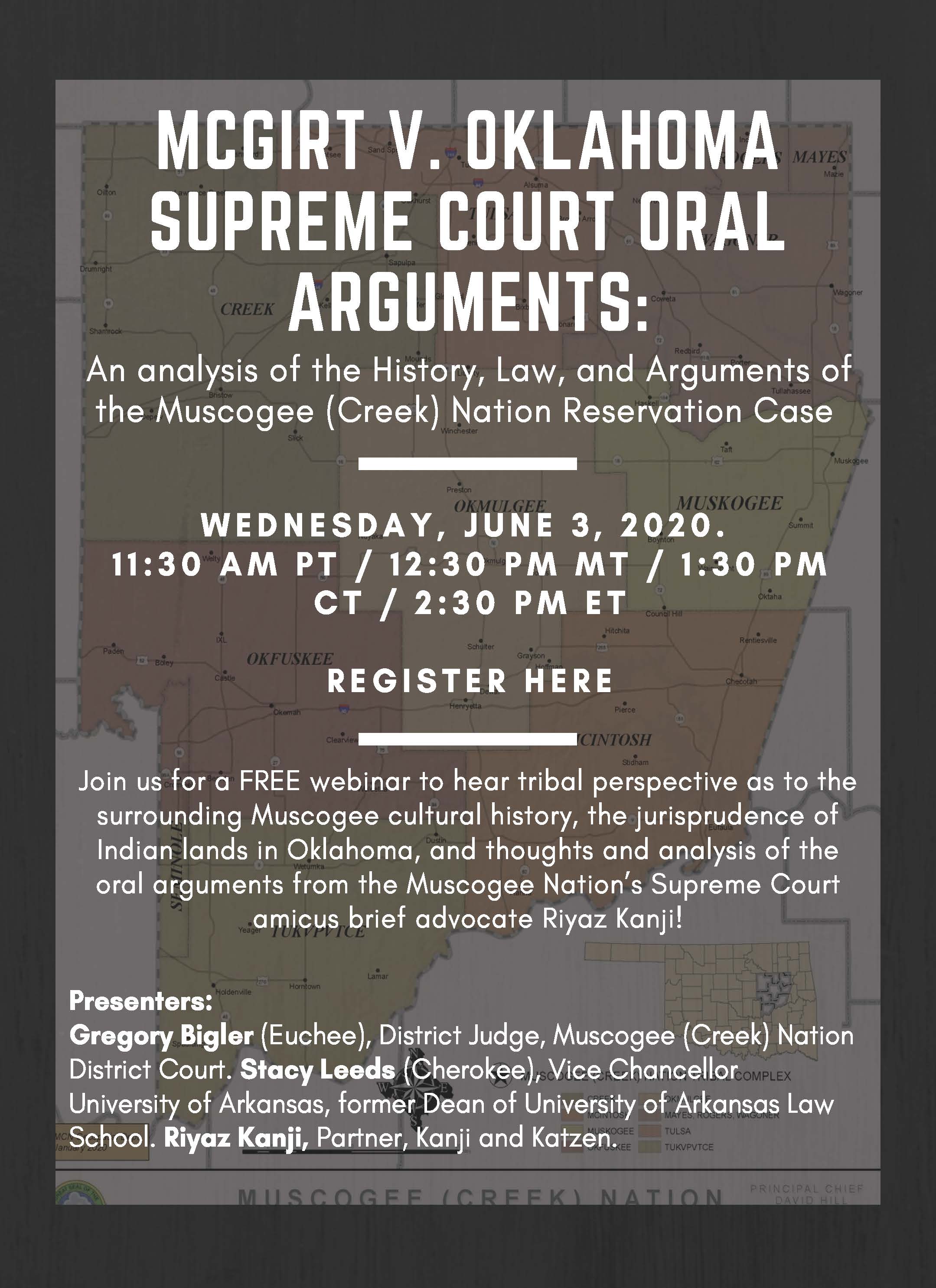
Date & Time: Wednesday, June 3, 2020 from 12:30 pm-2:00 PM MST (90) minutes.
Webinar Narrative: The United States Supreme Court heard oral arguments on May 11, 2020 in McGirt v. Oklahoma, case #18-9526 (by telephone) involving the status of the Muscogee (Creek) Nation reservation. Last year, the Court heard arguments on a nearly identical case in the Murphy matter. This decision could have enormous impact for Indian law, positive or negative. Come join us for a FREE webinar to hear tribal perspective as to the surrounding Muscogee cultural history, the jurisprudence of Indian lands in Oklahoma and thoughts and analysis of the oral arguments from the Muscogee Nation’s Supreme Court amicus brief advocate Riyaz Kanji.
Register Here: https://us02web.zoom.us/webinar/register/WN_7CZVYSf8QMSxDtxHftI-Tg
Book review of “Unworthy Republic: The Dispossession of Native Americans and the Road to Indian Territory” by Claudio Saunt.
Here.
From Carolina Academic Press, here (h/t Legal History Blog):
Forthcoming April 2020 • paper
| ISBN | 978-1-5310-1841-2 |
| e-ISBN | 978-1-5310-1842-9 |
Tags: Indian and Indigenous Peoples Law, Legal History, Regional Interest
The first legal history of the first tribal court upends long-held misconceptions about the origins of Westernized tribal jurisprudence. This book demonstrates how the Cherokee people—prior to their removal on the Trail of Tears—used their judicial system as an external exemplar of American legal values, while simultaneously deploying it as a bulwark for tribal culture and tradition in the face of massive societal pressure and change. Extensive case studies document the Cherokee Nation’s exercise of both criminal and civil jurisdiction over American citizens, the roles of women and language in the Supreme Court, and how the courts were used to regulate the slave trade among the Cherokees. Although long-known for its historical value, the legal significance of the Cherokee Supreme Court has not been explored until now
From the Seattle Times, here is “‘Terrible and disgusting’: Decision to close National Archives at Seattle a blow to tribes, historians in 4 states.”
Update:
Here:
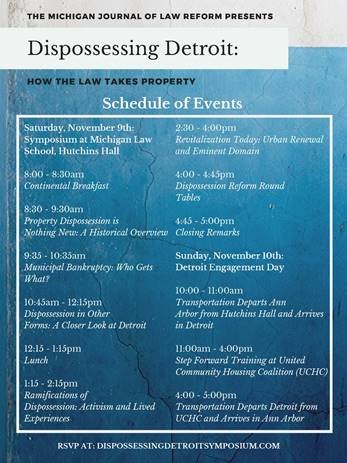
WHEN: Saturday, November 9, 8 AM – 5 PM
WHERE: Hutchins Hall (various locations)
WHAT: The goals of this Symposium are to provide historical and political context for current issues of property dispossession and to consider how governments, private industry, and private citizens can together seek reform. We are excited to bring together voices from law, policy, city government, community organizations, and more to engage the audience on this critical topic! Whether your interests are in tax foreclosure, bankruptcy, or Detroit’s story of dispossession, we hope you will join us.
RSVP: https://dispossessingdetroitsymposium.com/rsvp-comment/
Here, by Nick Estes.
 Turtle Talk
You must be logged in to post a comment.