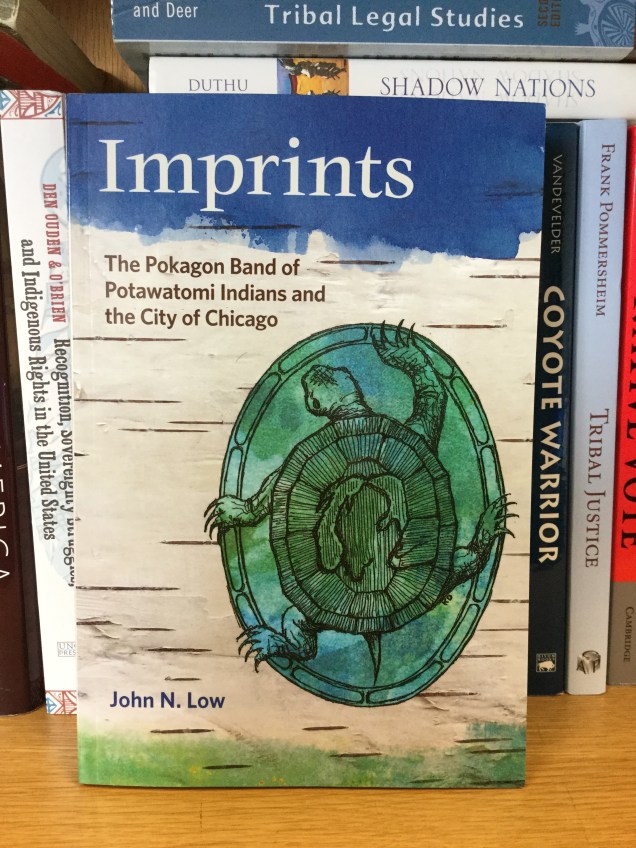
Here:
Symposium website here.
Webcast here.
Carrie Menkel-Meadow has posted “Unsettling the Lawyers: Other Forms of Justice in Indigenous Claims of Expropriation, Abuse, and Injustice” on SSRN. It is published in the University of Toronto Law Journal in a symposium on the Indian Residential Schools Settlement. When we have the other papers, we will post.
Here is her abstract:
This article considers, from the experience of the Indian Residential Schools Settlement, the limitations of the current formal justice system and the common ways that lawyers and parties act within it. Looking at the combinations of lawsuits, settlement negotiations, structured compensation schemes, truth and reconciliation processes, and memorial and education programs now provided for in the IRSS, the article suggests that we may need ‘process pluralism’ and different orientations to deal with modern mass harms: now recognized harms (like loss of culture, family, language, as well as physical, mental, and social injury) that the formal legal system has not yet developed the capacity to address. Placing the IRSS in a larger international context, the article suggests that some legal and social recognition of ‘new’ human harms and injuries has necessitated the development of different legal and quasi-legal processes. Whether called ‘restorative,’ ‘transitional,’ or ‘alternative’ justice, new forms of dealing with wrongs, harms, and conflicts will require redesigning legal processes and institutions; legal professional education; and social, cultural, and philosophical orientations to human injuries and ‘redress.’ Not all who are injured (both individually and in groups) want or require the same ‘remedies,’ and our conventional and historical common law and adversarial system must be adapted to the diverse needs of those who are injured by past and unconscionable wrongs, especially when inflicted by major governmental, religious, and civil society institutions and practices.
Angela Riley has posted her very impressive paper, “Native American Lands and the Supreme Court,” published in the Journal of Supreme Court History, on SSRN.
Here is the abstract:
The Supreme Court has been instrumental in defining legal rights and obligations pertaining to Indian lands since its first path-making decision in the field in Johnson v. McIntosh in 1823. But the groundwork for the Court’s contemplation of such cases predates Supreme Court jurisprudence, and it in fact predates the formation of the Court and the United States itself.
When Europeans first made contact with this continent, they encountered hundreds of indigenous, sovereign nations representing enormous diversity in terms of language, culture, religion, and governance. For those indigenous groups — as is a common attribute of indignity of similarly situated indigenous groups around the world — this land was and is holy land. Indigenous creation stories root Indian people in this continent — Turtle Island to many — as the focal point of life, creation, religion, culture, and language. In the settlement of the country, the colonial powers initially — and the United States subsequently — treated with Indian nations to negotiate the transfer of lands from Indians to Europeans, often in exchange for peace or protection.
“Our Cause Will Ultimately Triumph”:Profiles in American Indian Sovereignty, edited by Tim Alan Garrison, has just been published by Carolina Academic Press.
Here is the blurb:
“Our Cause Will Ultimately Triumph” examines the history of American Indian tribal sovereignty from a peoples’ perspective. An impressive group of historians and legal scholars offer up engaging biographies of the courageous leaders who helped establish and protect the autonomy of their people. Subjects range from early nineteenth-century leaders such as Alexander McGillivray (Creek) and John Ross (Cherokee), chiefs who helped bring their nations into the modern age of tribal sovereignty, to Ada Deer, Mary and Carrie Dann, and Elouise Cobell, women who worked for the benefit of all Indian people.
MSU ILPC alum Adrea Korthase wrote the chapter on Michigan tribal judge Michael Petoskey.
Here are the updated stats for the Supreme Court of Canada’s rulings in Aboriginal law cases since the patriation of the Constitution in 1982. There have been some big changes since the last update a few years ago – Justices Binnie (14/33 – 42.4% in favor of Aboriginal interests), Charron (6/19 – 31.5%), and Deschamps (7/23 – 30.4) have left and Justices Moldaver (0/2 – 0%), Karakatsanis (0/2 – 0%) and Wagner (0/1 – 0%) are not off to a very auspicious start since coming on board.
Overall, as the court sits today, the Justices have collectively found in favor of Aboriginal interests only 30.7% of the time. Here’s the breakdown by individual Justice – McLachlin: 35.1% (19/54); LeBel: 23% (6/26); Fish: 36.3% (8/22); Abella: 35% (7/20); Rothstein: 25% (4/16); Cromwell: 30% (3/10); Moldaver: 0% (0/2); Karakatsanis: 0% (0/2); and Wagner: 0% (0/1).
An important read for anyone in northern Michigan:
A Bitter Memory’ — The Burt Lake Burn-out of 1900
Moreover, it is a fairly direct response to the recent Michigan Historical Review article (here) that essentially argues it was perfectly legal to resort to arson to enforce a foreclosure order. Imagine if that were really true — a bank or a sheriff could simply set alight a foreclosed home, with people inside, in order to enforce a foreclosure order. Obviously not.
Here is an imaged version of article as well, with pics:
My article. “How Allotment-Era Literature Can Inform Current Controversies on Tribal Jurisdiction and Reservation Diminishment” was recently published in volume 82 of the University of Toronto Quarterly, in a special issue on law and literature.
I looked at non-Native authored and Native-authored literature of the time, specifically in South Dakota and surrounding states and territories, to see whether it helped illuminate the injustices that were being perpetrated on tribes through the allotment process and the takings of surplus lands. The idea was that this literature might have, like the news articles I looked at in “Unjustifiable Expectations: Laying to Rest the Ghosts of Allotment-Era Settlers,” put purchasers on notice that tribal lands were being taken unjustly. Most of the non-Native literature I looked at was not that helpful, but a work by historian/poet Doane Robinson was an exception. On the Native side, Zitkala-Sa’s short stories proved to be the most helpful, but the works I looked at by Luther Standing Bear and Charles Eastman were also somewhat helpful.
Unfortunately, the article isn’t available on Lexis or Westlaw, but it is on Muse, if you have access to that. A sightly older version is on my ssrn page.
Ann Piccard has published Death by Boarding School: “The Last Acceptable Racism” and the United States’ Genocide of Native Americans, 49 Gonz. L. Rev. 137 (2014).
A summary:
There is a special kind of racism in this country against Native Americans, and it is the “last acceptable racism.” The author of that poignantly accurate description of most Americans’ attitudes towards Native Americans, who is both a Native American and a Jew, noted,
Not that long ago, white administrators of Indian boarding schools told our children that the “Indian in you shall die.” This kind of treatment and forced thinking has a lasting generational effect. It can be difficult to break through that type of programming. Many of our people, however, have shaken off these forced ideological shackles to speak the truth and demand long overdue respect. Our voice is getting louder.
Our words are being said with more frequency and emphasis. But people need to hear us. Societal racism should no longer be an ad hoc affair, which is routinely accepted when directed against a certain group. It should be universally condemned. Perpetuating past wrongs and dehumanizing concepts hurts everyone.
This last acceptable racism is rarely mentioned in the U.S. However, one day in a very small town in northern Minnesota, in an area that has been economically depressed ever since the decline of the taconite and iron ore mining industry several decades ago, I watched two Native American men park a pickup truck in front of the local pawn shop.
I could tell the young men were Native Americans only because of the Bois Forte Band license plate on their truck; other than that, they looked, sounded, and acted like most of the other men in that rural north woods town. Upon reflection, of course, I realized that their skin was slightly darker than most residents of the town; I also began to notice that I did not see dark-skinned people working or shopping in any of the town’s stores. My eye was untrained, a fact that I attribute to my upbringing in the Deep South,6 where I was in a small minority of white children who were raised by our parents to see and to protest (and refuse to accept) the prevailing racism toward African-Americans. The subtle differences in appearances between the Native Americans and the “whites” in Minnesota had gone unnoticed by my Southern eyes. But as we watched the young men take their chain saws into the pawnshop that day, my husband remarked that men in northern Minnesota who hock their chain saws must be in pretty bad shape, because how could they survive, let alone make a living, without such tools?
The Energy Law Journal has published “Land in the Second Decade: The Evolution of Indigenous Property Rights and the Energy Industry in the United States and Brazil” by Danielle C. Davis.
You must be logged in to post a comment.