This article examines the history of Native people’s use of habeas corpus to resist family separation employed in the United States’ system of Indian boarding schools. It highlights three cases brought by Native petitioners from Alaska, New Mexico, and Iowa between 1885 and 1900. These cases show how Native parents, husbands, and cousins challenged the federal agents responsible for boarding schools by appealing to federal courts for intervention on behalf of their kin confined in such schools. Moving beyond legal interpretations, however, this article further argues that Native people used these petitions to assert their capacity to make their own decisions about the proper education of their young people and to convey Indigenous values of teaching and learning. Consequently, these cases illustrate an important but understudied means by which Native people used the legal tools available to them to assert self-determination in education. These habeas corpus cases are therefore a crucial part of boarding school history, American Indian and Indigenous history, and the history of U.S. education.
The first article focuses on the Clean Water Act, a 50-year-old law that, among other things, allows Tribes to assert regulatory jurisdiction over water quality and activities that impact water quality within reservation boundaries. In our next Report update, we plan to address the changes the Trump Administration is attempting to make to the Clean Water Act and how that may affect Tribal Nations.
In the Report you will also find several slide decks on Tribal water rights information, including one on the basics of Tribal water rights, general stream adjudications, and Indian water rights settlements. We intend The Headwaters Report to act not only as a clearinghouse for Tribal water law and policy information, but as a place to bring questions and to get guidance.
Five generations of my family experienced and responded to U.S. policies of forced displacement and assimilation. In 1840, my third-great-grandfather lost his Native family around the time of the U.S. military’s forcible mass detention and removal of Native people in southern Michigan.
He was raised by a Native family that moved from southern Michigan to the northern part of the Lower Peninsula. My ancestors lived in northern Michigan settled in a Native village at Burt Lake, where they purchased multiple lots of land. Later, they transferred title to that land to the Governor of Michigan to be held in trust for their benefit.
On October 15, 1900, Sheriff Fred Ming of Cheboygan County and a lumber speculator named John McGinn poured kerosene on the entire Native village at Burt Lake, destroying everything but the church and one small shack. Following that event, which is now referred to as the Burt Lake Burnout by Michigan Native communities, children of Burt Lake village, including my great-grandfather’s generation, were sent to the federally operated Mount Pleasant Indian Industrial School.
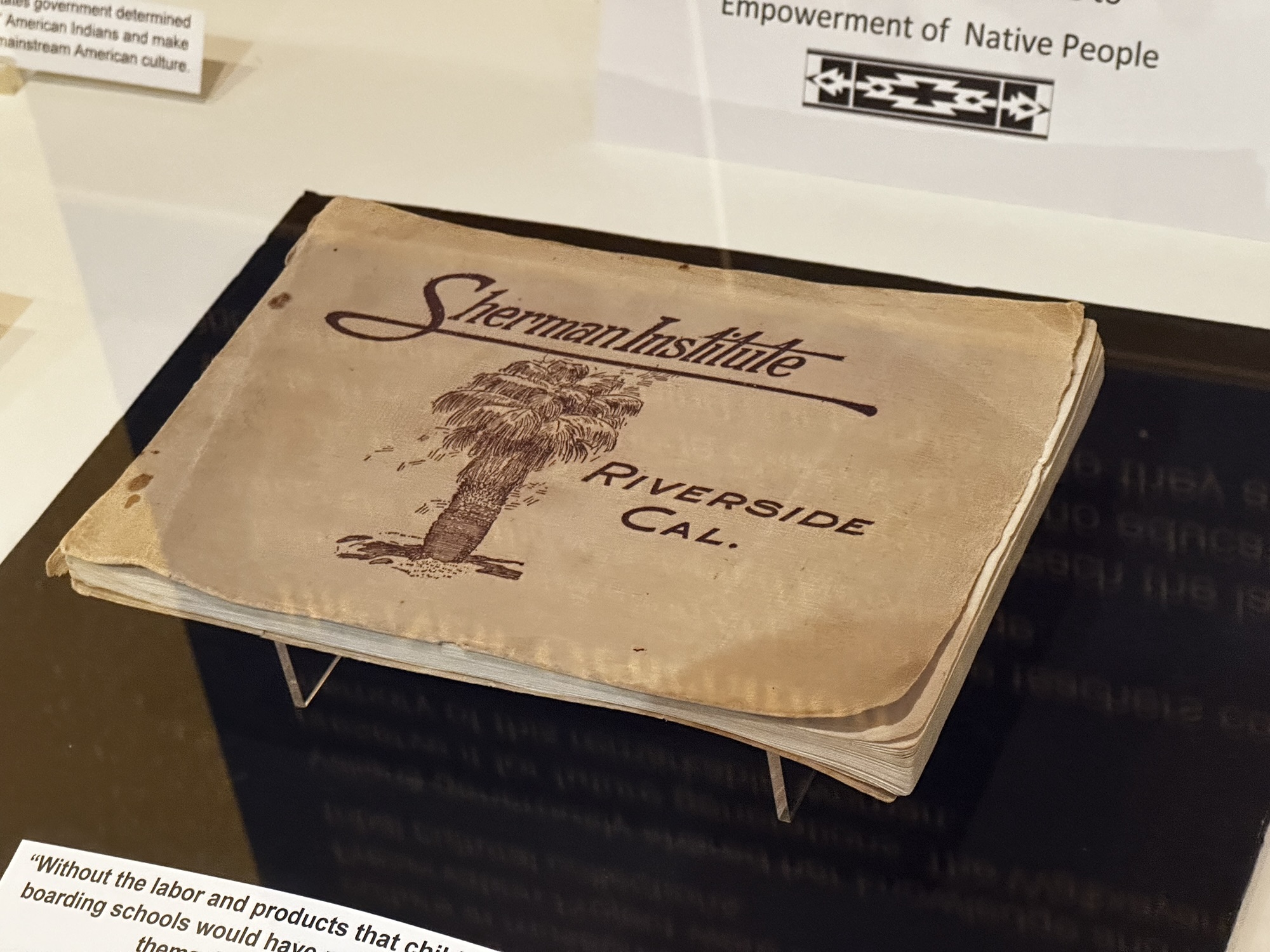
Indian boarding schools throughout the U.S. were well-documented sites of forcible assimilation, abuse, and neglect. Native children, who were frequently removed from their homes against their parents’ wishes, arrived at the schools, where they were stripped of their traditional clothing. Their hair was cut short, they were forbidden from speaking their Indigenous languages, they were taught menial skills, and they suffered from numerous forms of physical and sexual abuse as well as malnutrition, rampant spread of disease, and other forms of neglect.
Many Native children died during their institutionalization at Indian boarding schools, and the U.S. has only identified a portion of the grave sites of these children. Those who survived Indian boarding schools speak of persistent feelings of unworthiness and shame for being Indian.
My grandfather was among the children born to the generation that attended the Mount Pleasant Indian Industrial School. He attended Holy Childhood School of Jesus, an Indian boarding school operated by the Catholic Church in Harbor Springs, Michigan.
At Holy Childhood, my grandfather met my grandmother, who also lived at the school. They later married and had five children, all of whom were taken from them by social services.
One of the lasting legacies of Indian boarding schools is that children who attended these schools grew up without exposure to their own families’ parenting skills. Instead, survivors grew up learning cooking and cleaning over academics and were subjected to institutional abuse.
These experiences deeply traumatized many survivors of the schools and left them unprepared for gainful employment and economic prosperity in adulthood. Furthermore, social services agencies in the twentieth century treated Native families as incapable of raising their own children.
By 1978, 25% to 35% of all Native children in the U.S. were removed from their homes and placed in foster care, adoptive homes, or institutions. In nearly all cases, Native children were placed with families who were not Native, leading to the widespread loss of children’s cultural identity and connection with their tribal communities.
Like so many of the Native children born in the 1950s, my mother was removed from her family as an infant and lived in multiple foster care homes until she was adopted by a white Catholic family with one of her biological sisters at the age of five.
My mother and aunt experienced loss of their Anishinaabe cultural identity. They also confronted cruel negative stereotypes about Native Americans in their schools, church, and family.
As an 18-year-old girl, my mother became pregnant with me and left her adoptive family. For three years, my mother and I “couch-surfed” in temporary housing until my sister was born and we found an income-pooling commune founded by a church in Detroit. The following year, when I was four, my baby sister was taken from us and adopted by a white family.
Today, I am a parent to two children. I am committed to documenting the impact of federal and state Indian law and policy on Native families and the intergenerational trauma it produces. I want my own children to be the first generation in my family since at least 1840 not to experience separation from their parents. (However, my sister lost custody of her son following life in the adoptive home that she fled during adolescence.)
I became extremely self-reliant as a child to compensate for the challenges my family had as a result of abuse and neglect. However, many negative impacts of the toxic stress of my early years continue to affect me today, such as constant hyper-vigilance and the sensation of being in survival mode, even though I’ve long established the security I lacked in my youth.
My story is not exceptional; rather, it’s representative of and part of a pattern common to Native families throughout the country. Themes of substance abuse, thoughts of suicide, domestic violence, lack of secure housing, and financial issues plagued the adults in my family, contributing to toxic stress.
On the Adverse Childhood Experiences scale, which measures children’s exposure to various forms of abuse, neglect, dysfunction, and chaos, I score an 8 out of 10. Scores of 8 through 10 are shared by an estimated 1% to 3% of the U.S. population.
I know many Native community members who score a 10 out of 10. Studies have shown that people with an ACE score of 4 or more have a greater likelihood of developing chronic health conditions, they are four times more likely to experience depression, anxiety, and substance use disorders than the general population, and they have a lower life expectancy.
They are also 12 times more likely to attempt suicide.
My work is intended to help other Native families understand how federal and state Indian policies have contributed to multiple generations of profound harm that continue to cause reverberating impacts in the present.
I am exploring how evidence-based strategies for surviving and thriving despite high ACE scores can be scaled and tailored to address historic trauma using culture, traditional teachings, and education.
I am also examining how our justice and political system might respond and provide remedies for the intergenerational harm.
I am an advocate of a multi-pronged approach that includes components such as an acknowledgement of the full effect of the harms experienced by Native families; formal and meaningful apologies; accountability for individuals, organizations, and governments; restitution; rehabilitation; and healing as defined and prescribed by Indigenous communities.
Try as they did, the federal and state governments did not succeed at whitewashing our people. It came close. And now they must take action on each of these prongs to help Indigenous people heal.
What do you remember learning in United States or Michigan History classes? Matthew Fletcher explains the timeline of events that occurred after the signing of the Declaration of Independence up to the present time. Fletcher is the Harry Burns Hutchins Collegiate Professor of Law at the University of Michigan. He teaches and writes in the areas of federal Indian law, American Indian tribal law, Anishinaabe legal and political philosophy, constitutional law, federal courts, and legal ethics. He also sits as the Chief Justice of the Pokagon Band of Potawatomi Indians, the Porch Band of Creek Indians and the Grand Traverse Band of Ottawa and Chippewa Indians. Matthew is also the author of The Eagle Returns, The Legal History of the Grand Travers Band of Ottawa and Chippewa Indians. This interview was recorded on July 17, 2024.
Episode 16 is sponsored by the Grand Traverse Band of Ottawa and Chippewa Indians Tribal Council.






 Turtle Talk
You must be logged in to post a comment.