Not Invisible Act Commission Report

Here, finalized on Nov. 1:

34-niac-final-report_version-11.1.23_final

It’s over 200 pages, so I’ve only been able to skim it so far, but it appears incredibly comprehensive:

The Commission was charged with developing recommendations to the Secretary of the Interior and the Attorney General to improve intergovernmental coordination and establish best practices for state, Tribal, and federal LE to combat the epidemic of missing persons, murder, and trafficking of AI/AN persons. Specifically, the Commission was directed to develop recommendations on six key topic areas. The Commission organized itself into six Subcommittees to align with these six topic areas as follows: 

  • Subcommittee 1: Law Enforcement & Investigative Resources — Identifying/Responding to Missing, Murdered, and Trafficked Persons 
  • Subcommittee 2: Policies & Programs – Reporting and Collecting Data on Missing, Murdered, and Trafficked Persons 
  • Subcommittee 3: Recruitment & Retention of Tribal & Bureau of Indian Affairs Law Enforcement 
  • Subcommittee 4: Coordinating Resources – Criminal Jurisdiction, Prosecution, Information Sharing on Tribal-State-Federal Missing, Murdered, and Trafficked Persons Investigations 
  • Subcommittee 5: Victim and Family Resources and Services 
  • Subcommittee 6: Other Necessary Legislative & Administrative Changes 

First Circuit Affirms Interior Decision to Acquire Trust Land for Mashpee Wampanoag

Here is the opinion in Littlefield v. Dept. of the Interior.

Briefs and other materials here,

Texas Federal Court Dismisses Title VII Suit against Alaska Regional Corp.

Here are the materials in Balli v. Akima Global Services LLC (S.D. Tex.):

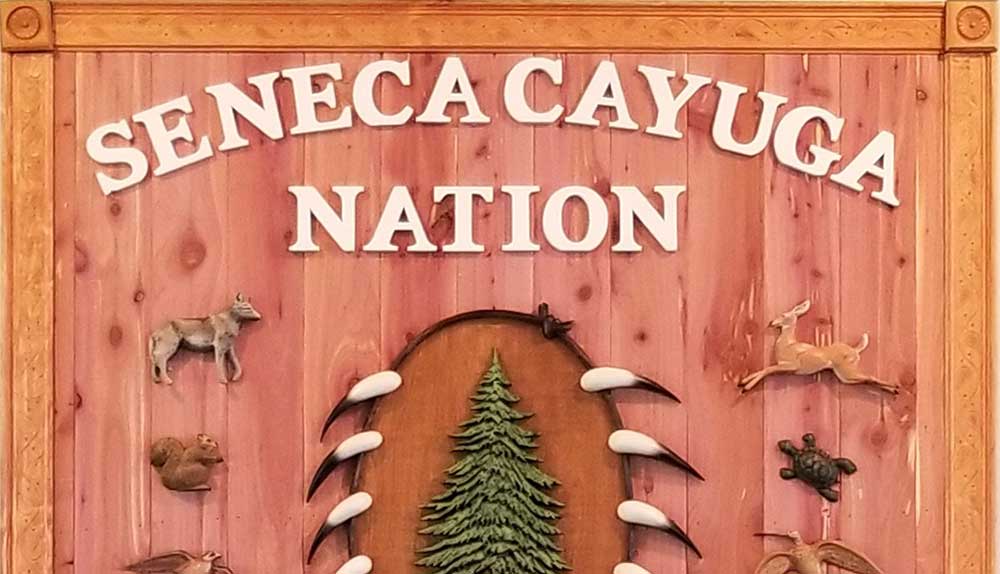
Seneca-Cayuga Sued for Political Banishments

Here are the materials so far in Channing v. Seneca-Cayuga Nation (N.D. Okla.):

2 Complaint

8-1 Bill Fisher Dec

Wyoming SCT Issues Mixed Opinion in Northern Arapaho Tribe v. Baldwin, Crocker, and Rudd

Here.

An excerpt:

BCR did not comply with the procedural requirements of Rule 11, and the district court erred when it imposed Rule 11 sanctions on the Tribe. The district court’s order imposing Rule 11 sanctions is reversed, and this matter is remanded to the district court with direction that the order imposing sanctions be vacated. We affirm the district court’s order granting summary judgment on the accounting claim because the Tribe could not bring a cause of action for an accounting under W.R.P.C. 1.15(e), and the Tribe failed to show its conversion and civil theft claim was not an adequate remedy at law. We affirm the jury’s verdict after finding the Tribe failed to show the verdict would have been more favorable to the Tribe if the racially charged evidence and argument had not been admitted.

Not Wind River . . . Creek Nation.

Briefs here.

Seventh Circuit Briefs in Bad River v. Enbridge

Here:

Lower court materials here, here, and here.

California COA Briefs in Yavapai-Apache v. La Posta

Here:

Prior post here.

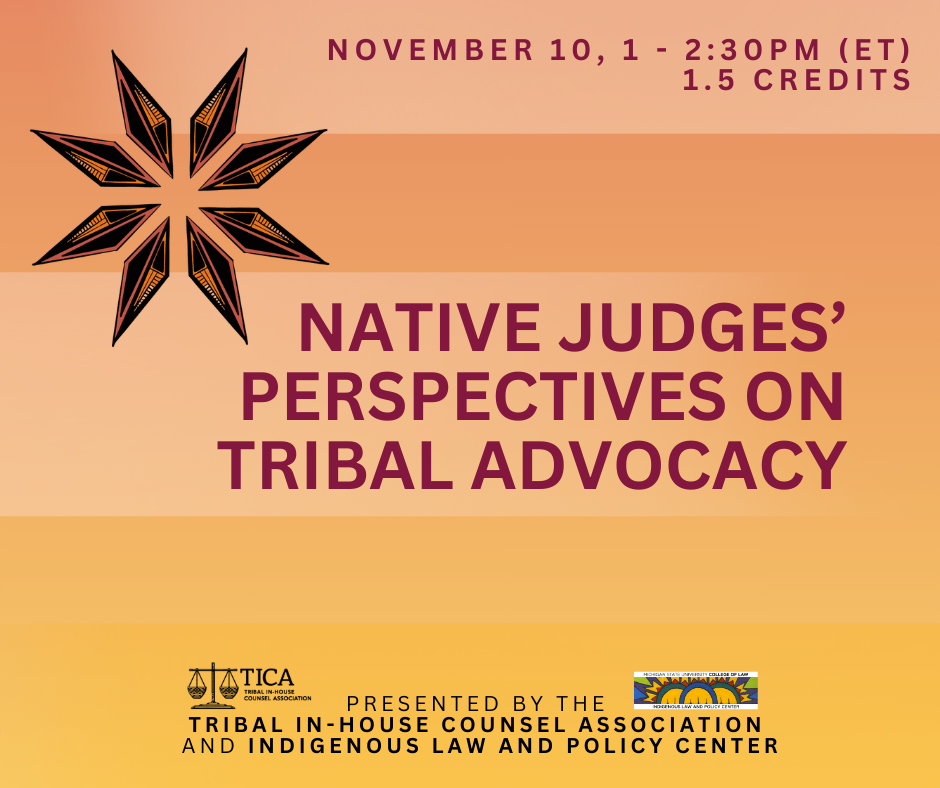
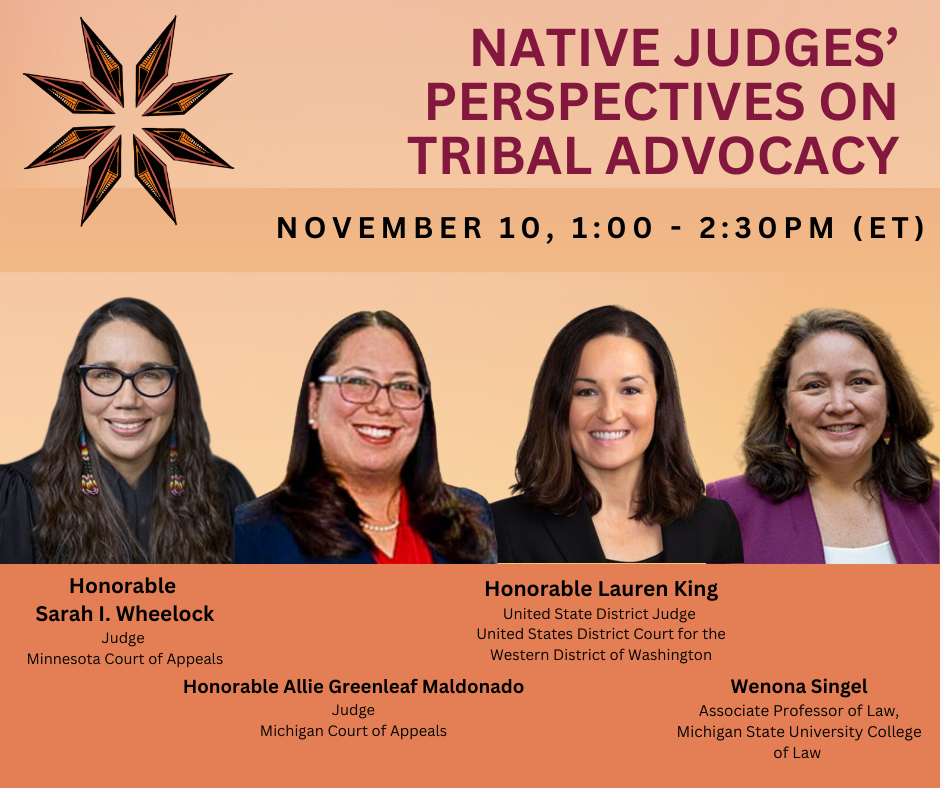
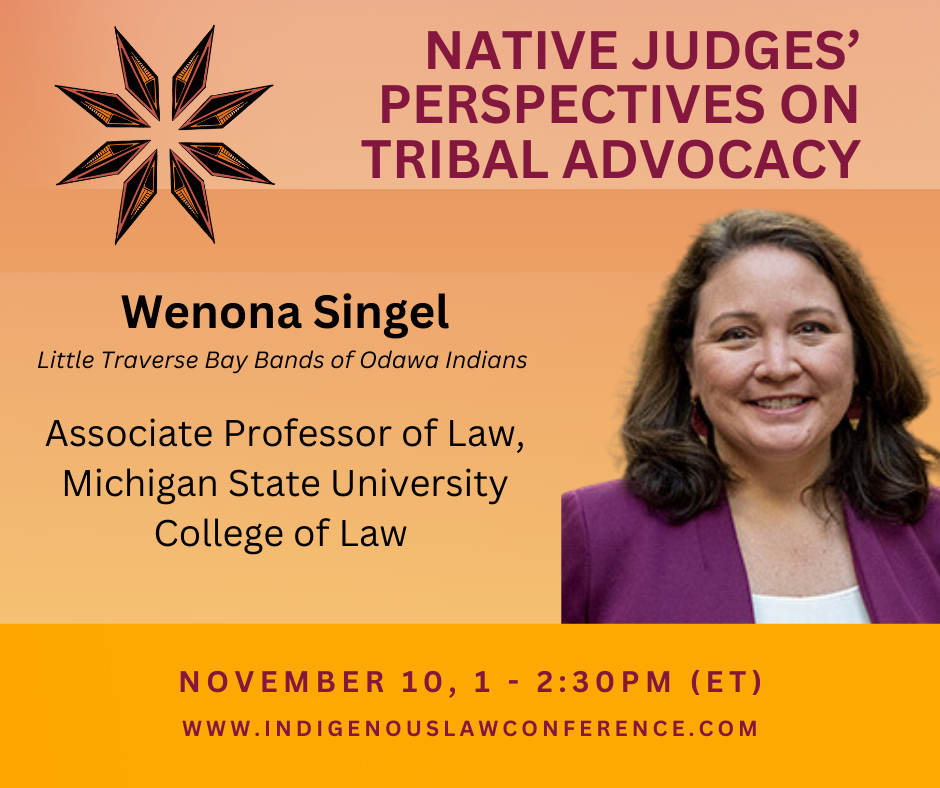
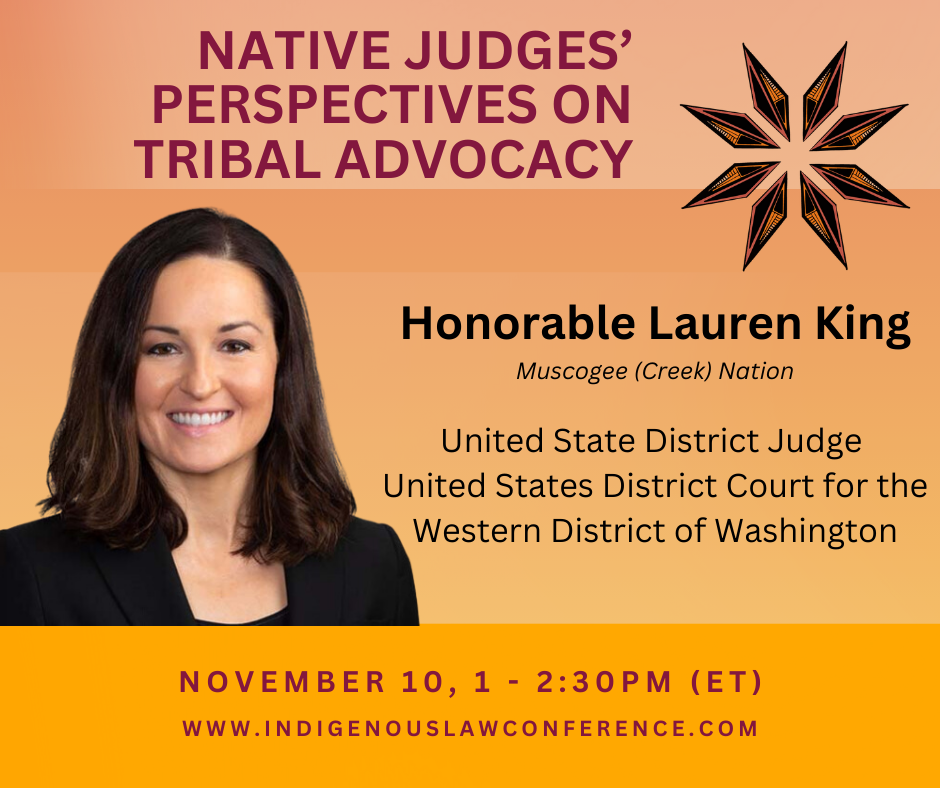
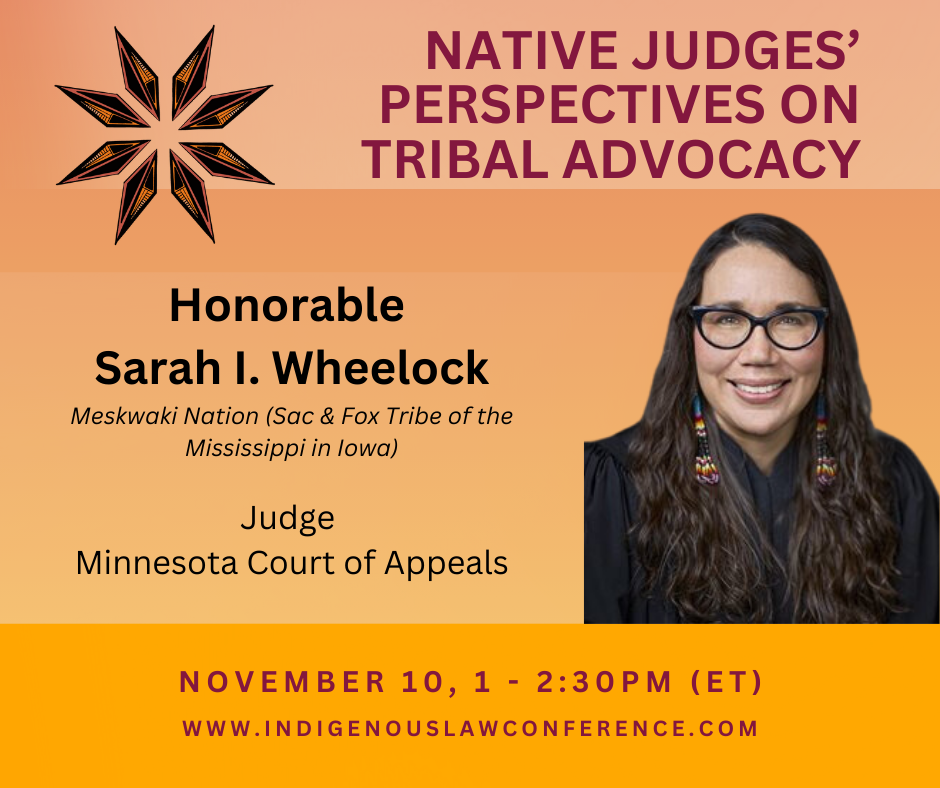
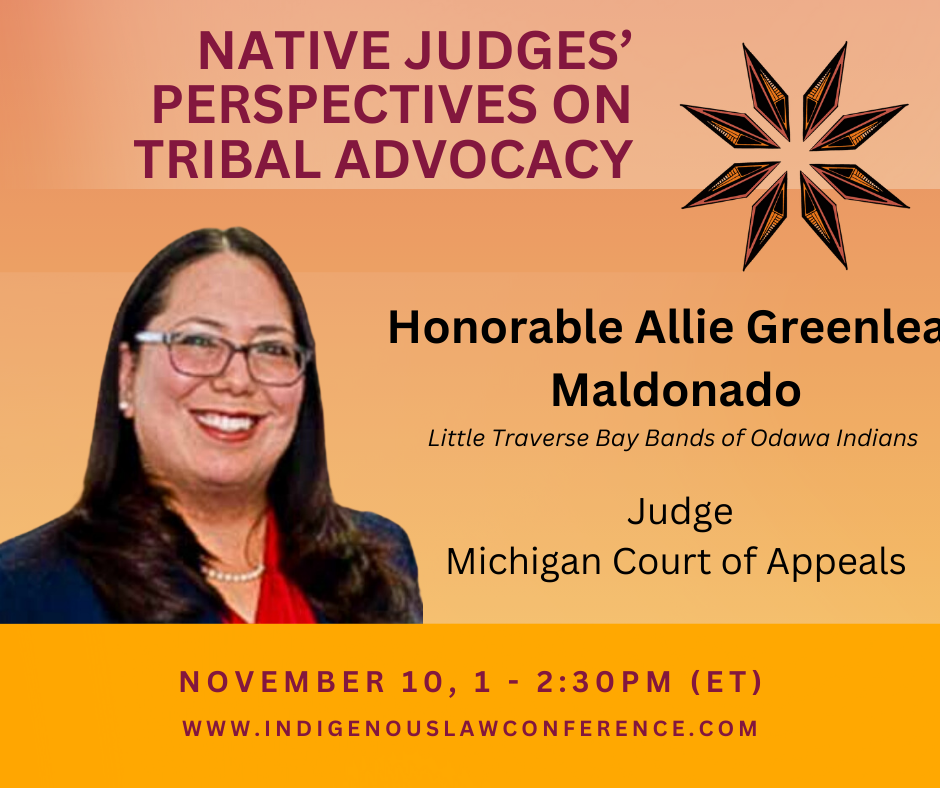
Native Judges’ Perspective on Tribal Advocacy at the Indigenous Law Conference

1:00-2:30 Native Judges’ Perspectives on Tribal Advocacy | 1.5 credits

Moderator: Wenona Singel (Little Traverse Bay Bands of Odawa Indians), Director, Indigenous Law and Policy Center, Michigan State University College of Law

Hon. Lauren King (Muscogee (Creek) Nation), United State District Judge, United States District Court for the Western District of Washington

Hon. Allie Greenleaf Maldonado, (Little Traverse Bay Bands of Odawa Indians, Turtle Clan), Michigan Court of Appeals

Hon. Sarah I. Wheelock (Meskwaki Nation, Sac & Fox Tribe of the Mississippi in Iowa), Judge, Minnesota Court of Appeals

Native judges who work in state and federal courts have a unique insider’s perspective on judicial review of litigation before the courts. This panel will give Native judges an opportunity to share that insiders’ perspective to strengthen tribal advocacy. The panel will also include members of the judiciary who previously worked as tribal in-house counsel. These judges will share their thoughts on tribal advocacy before the courts based on their prior work as tribal attorneys and their current work as state and federal court judges.

Modoc Drops Reservation Boundaries Suit

Here is the motion in the now-consolidated case of Eastern Shawnee Tribe v. Drummond (N.D. Okla.):

Prior post here.

Complaints by Eastern Shawnee and Seneca-Cayuga are here.

Professionalism – An Interactive Activity at the Indigenous Law Conference

8:30-10:30 ET Professionalism – An Interactive Activity (Ethics)

Virjinya Torrez (Cherokee Nation of Oklahoma), Assistant Attorney General, Pascua Yaqui Tribe

TJ McReynolds (Pueblo de San Ildefonso), Senior Counsel, Kewenvoyouma Law, PLLC

Harrison W. Rice (Sac & Fox Nation of Oklahoma), Assistant Attorney General, Tohono O’odham Nation

The Objective of this presentation is for attorneys to better understand how both the Oath of Admission to the Bar and the Lawyer’s Creed of Professionalism overlap and extend beyond the values and requirements of a respective State’s Rules of Professional Conduct. 

1. Maintaining objectivity for effective assessment of the impact actions have on clients, others and the legal system.

2. Competent client representation includes maintaining reasonable expectations through candid and objective advice, clear communication to clients.

3. Acting with courtesy and civility.

4. Advancing legitimate client interests can be accomplished through expeditious and cost-effective handling of all legal matters while maintaining respect, courtesy, and fairness. 

5. To act and speak honestly and respectfully in both personal and professional life, honoring the court and legal system, diligently advocating for clients, and protecting the integrity of the legal profession.