Here is the complaint in Prairie Band Potawatomi Nation v. Durrell (D. Kan.):

Here is the complaint in Prairie Band Potawatomi Nation v. Durrell (D. Kan.):
On June 29, 2026, the Supreme Court, in Watson v. Republican National Committee, allowed Mississippi ballots cast on time to be counted after Election Day, as permitted under state law. The decision respects longstanding absentee ballot receipt rules. It also protects Native voters who are disproportionately affected by a dearth of voter services and postal delays beyond their control.
An amicus brief on behalf of the National Congress of American Indians, Alaska Federation of Natives, and Washington Conservation Action Education Fund was filed in the case. The brief explained that Native voters often are forced to mail in ballots because in-person voting is made less available in their communities. Meanwhile, Native communities often lack reliable mail delivery, have fewer postal services, and endure longer mail transit time, especially in Alaska Native communities. You can see the brief here.
Thomas Stratmann has posted “Ten Years, Three Tribes” on the Rules and Results substack.
Here is an excerpt:
The Tulalip Tribes have been a fishing people for as long as anyone remembers. Their reservation runs 22,000 acres along the eastern shore of Puget Sound, 35 miles north of Seattle. The waters at the edge of the reservation, where the tide goes out and exposes the mudflats, are where shellfish grow, and salmon come to spawn. In an 1855 treaty, the United States agreed that those waters would always belong to the Tribes. The treaty remains in force today.
Today, 73 private docks and 124 private mooring buoys cover the Tulalip shoreline. Many were built without tribal permission. Tulalip’s own Natural Resources Department documents the consequences: water quality has fallen, salmon populations have fallen, and shellfish beds have closed.
In 2019, Tulalip asked the federal government for the authority to manage their own shoreline. The federal government said no.
In 2023, they asked again. The federal government said no.

Here are the new materials in Pechanga Band of Indians v. Kennedy (C.D. Cal.):
Prior post here.
Here is the complaint in Utu Utu Gwaitu Paiute Tribe of the Benton Paiute Reservation v. Dept. of the Interior (E.D. Cal.):

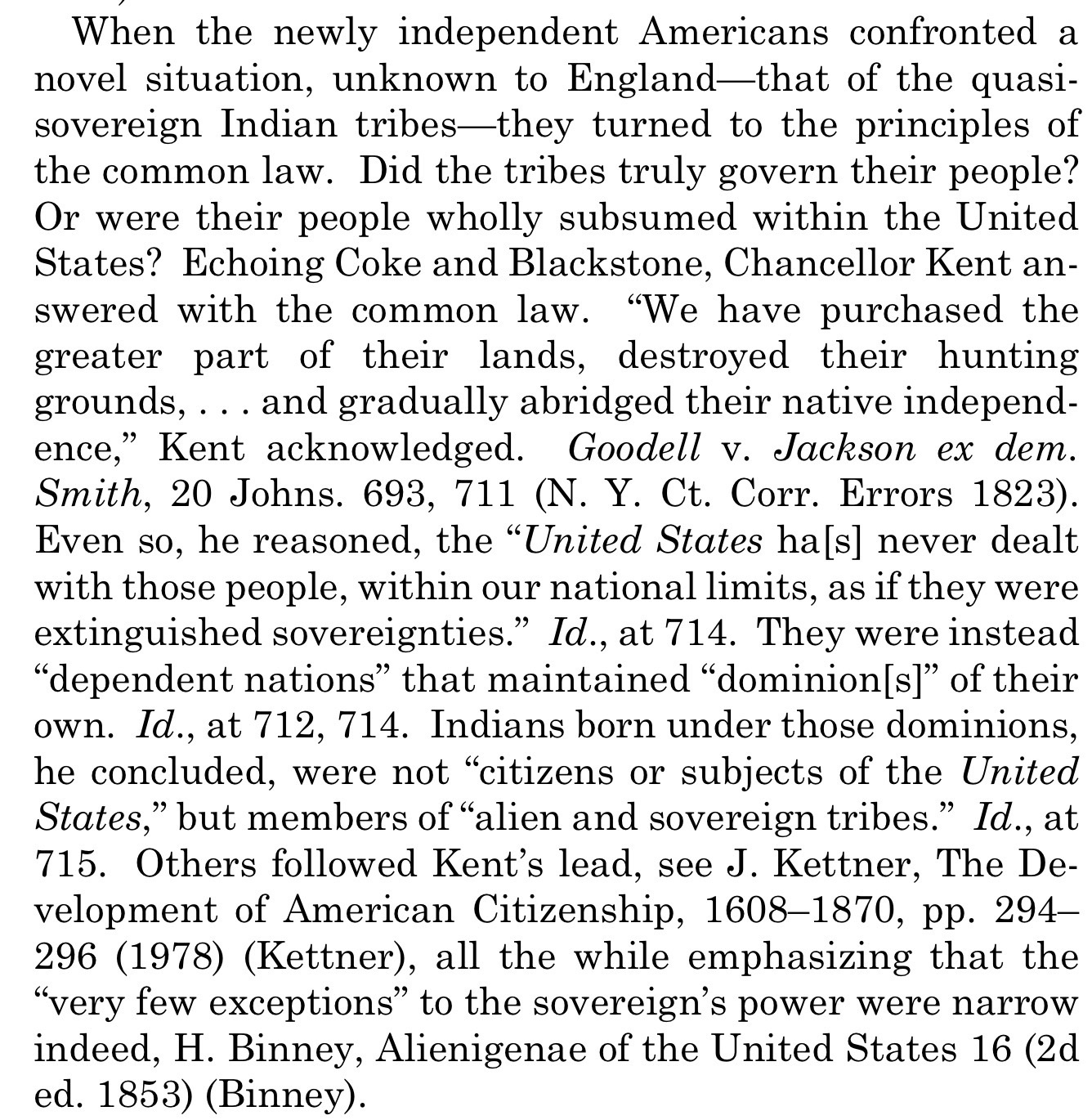
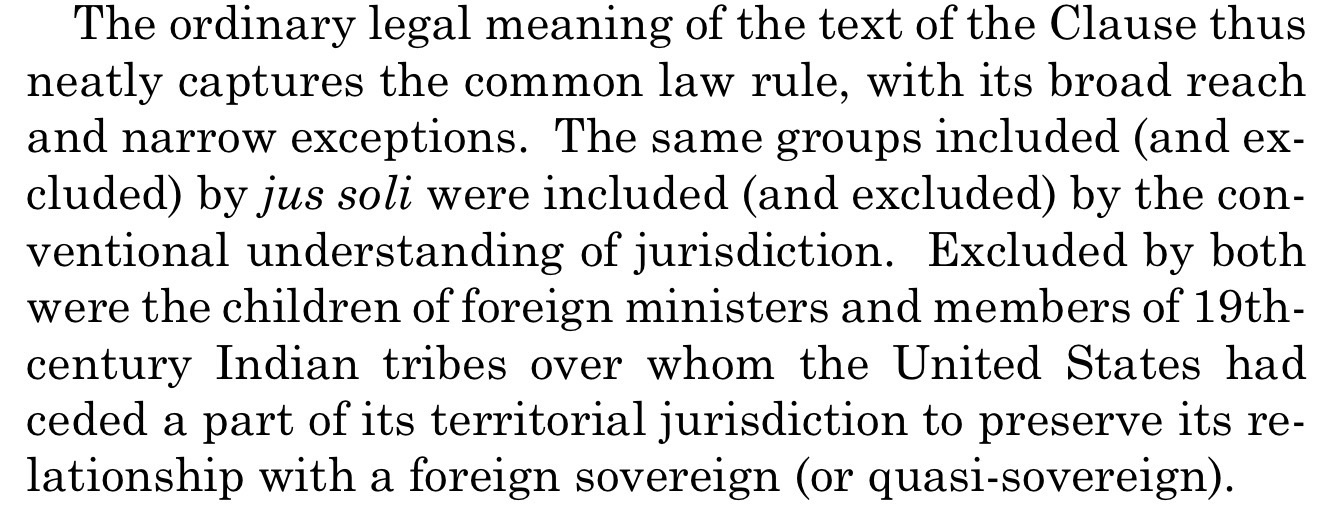
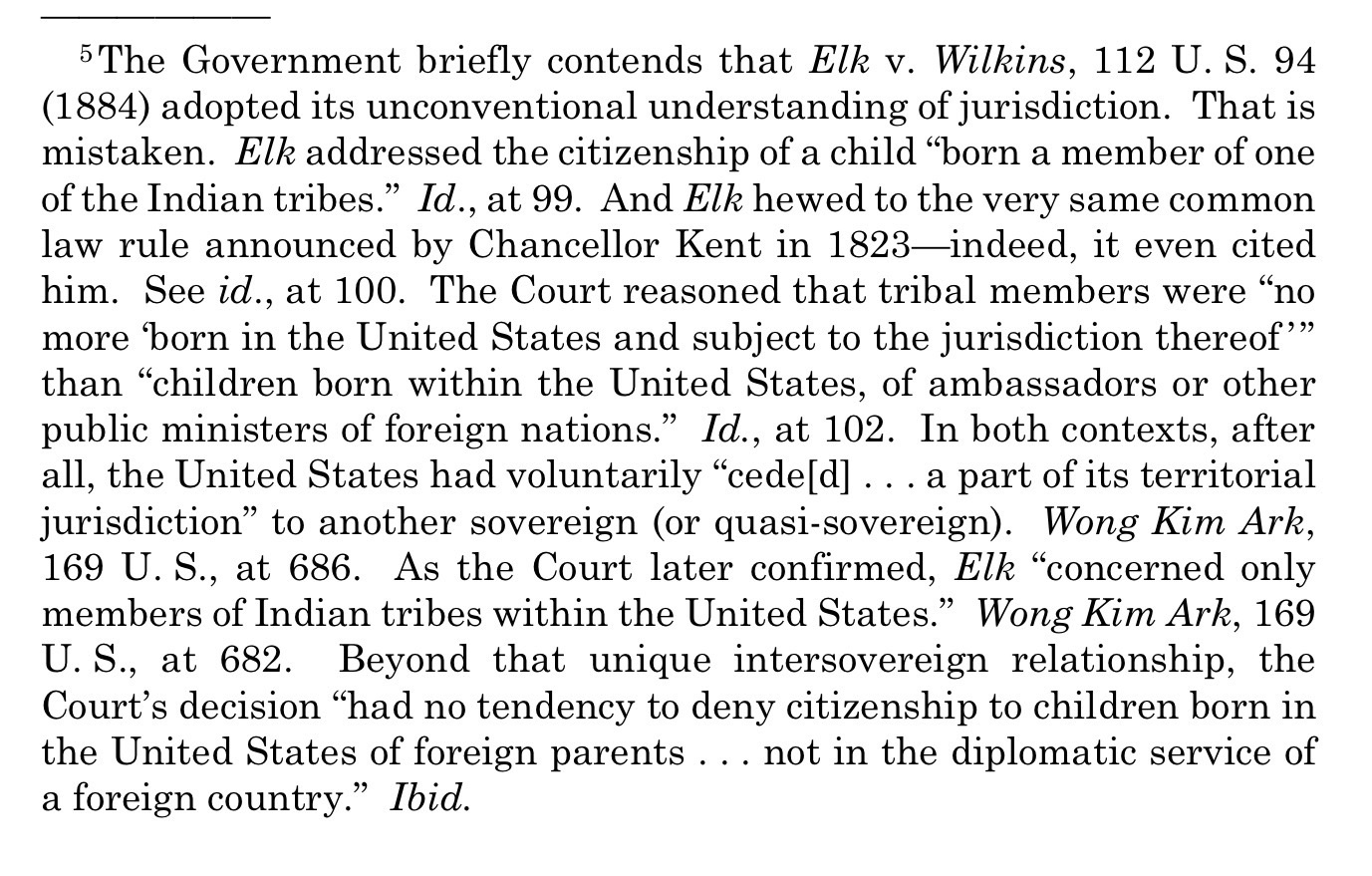
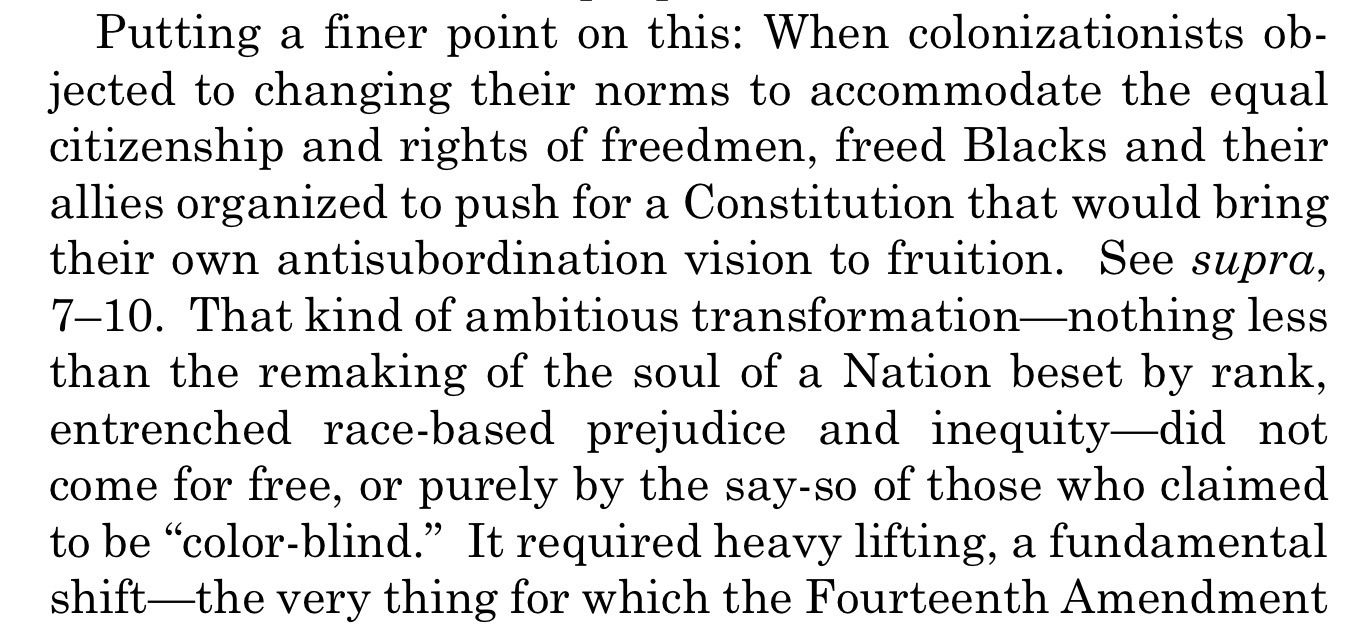
Here is the opinion in Trump v. Barbara.
One excerpt, suggesting Indians are like diplomats, what I’ve been saying all along, dammit:
Another, more explicitly, on Indians as diplomats:
Another on the government’s ridiculousness re: Elk v. Wilkins:
From Justice Jackson’s concurrence, the only intellectually honest opinion from this rat’s nest of white supremacy:
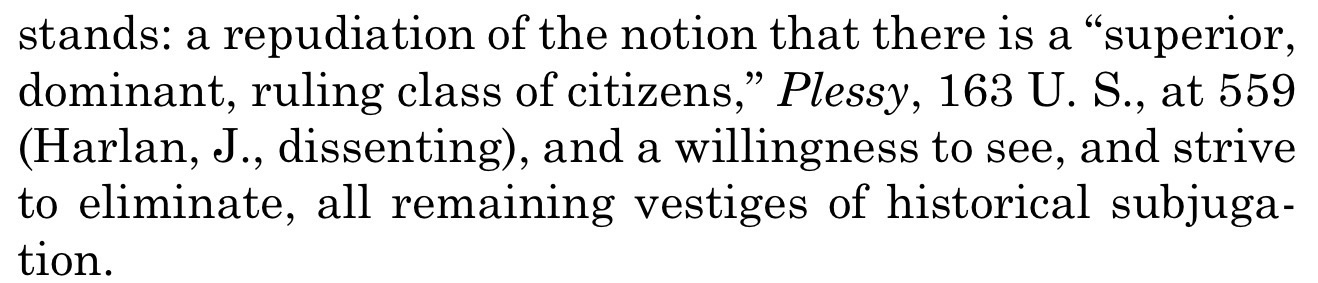
On why birthright citizenship is an issue in 2026:
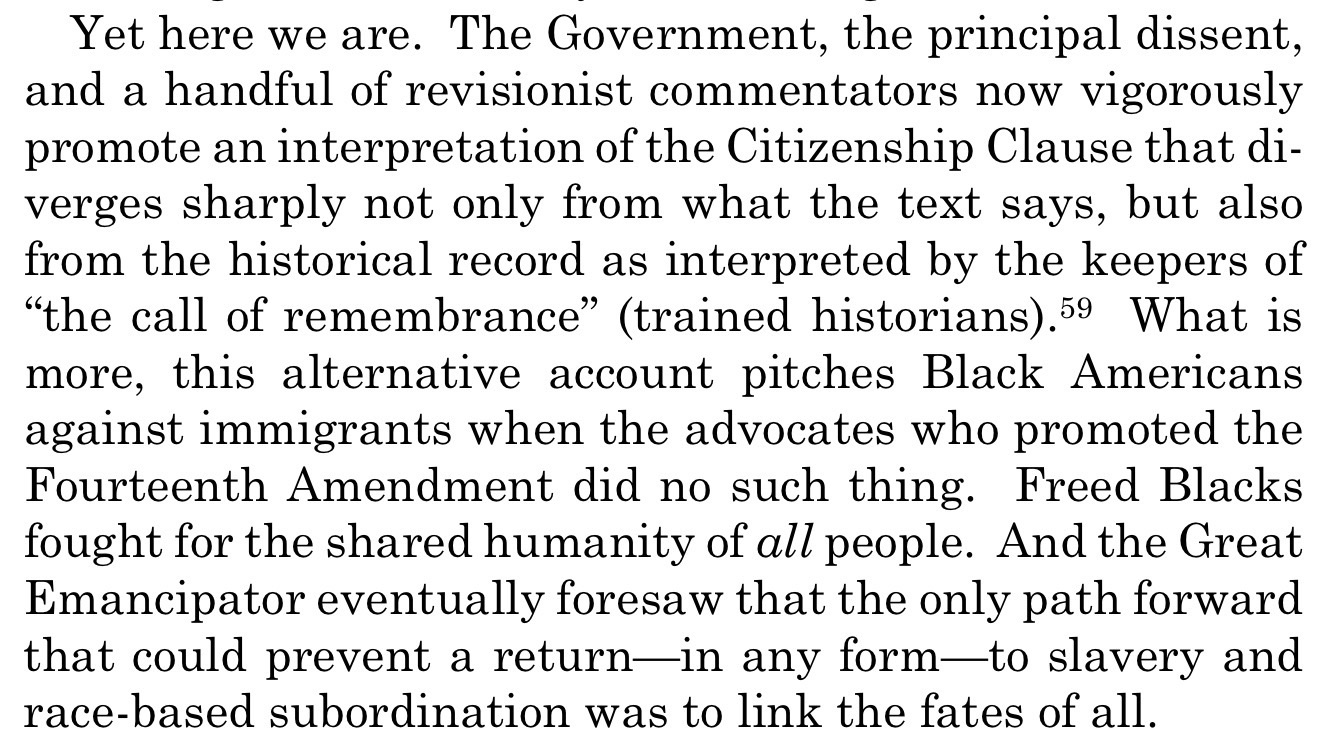
On the Indian Citizenship Act:

The possible seeds for an undoing of the contemptible Elk v. Wilkins decision, which also rested on Dred Scott:
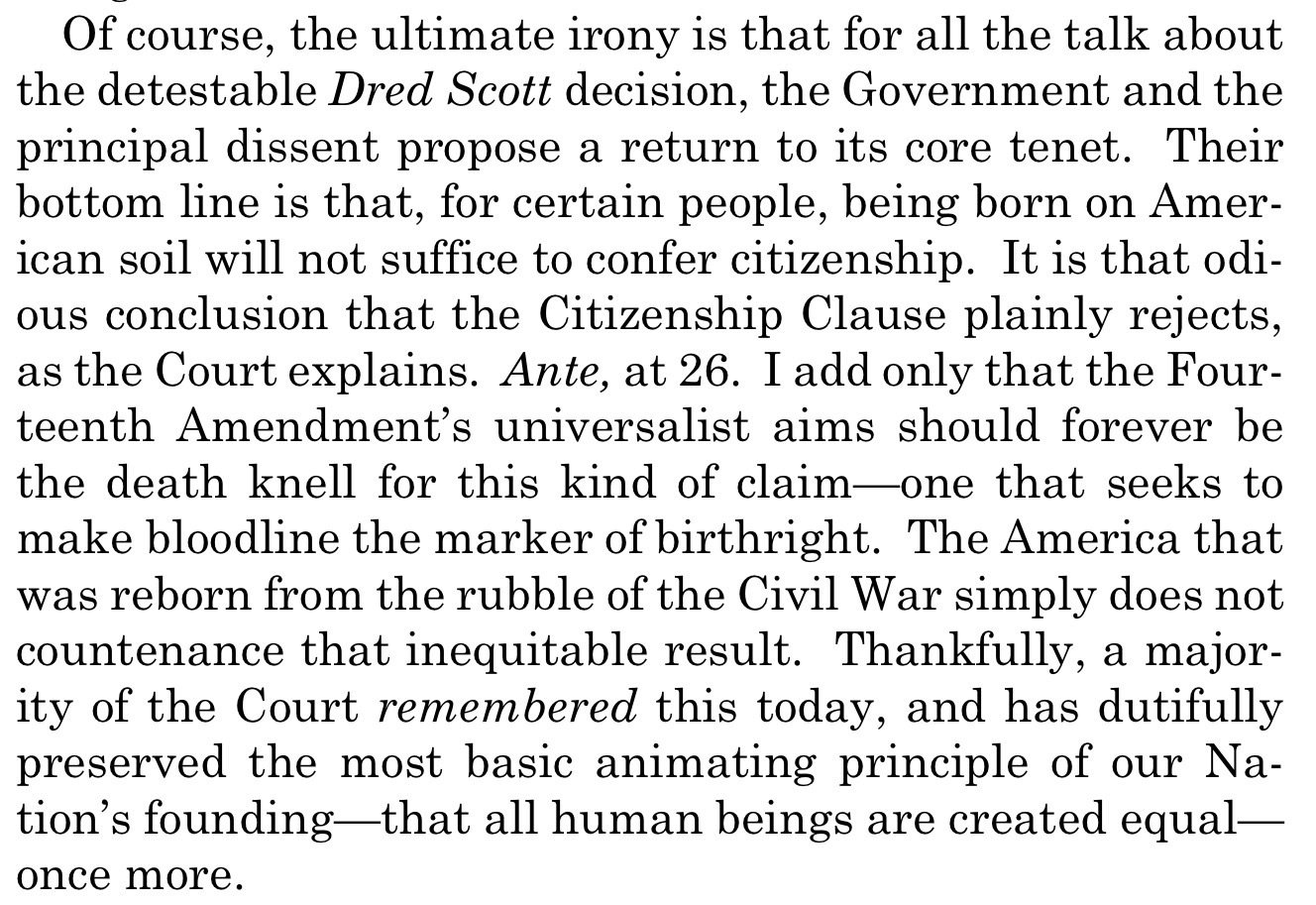
Justice Thomas’ dissent (the principal dissent) waxed on and on about “tribal Indians,” leading (I suggest) to at least two conclusions: (1) the United States does not have the power to tax “tribal Indians”; (2) the right of tribal self-government derives from international customary law (here comes UNDRIP!); and (3) Elk is wrong:

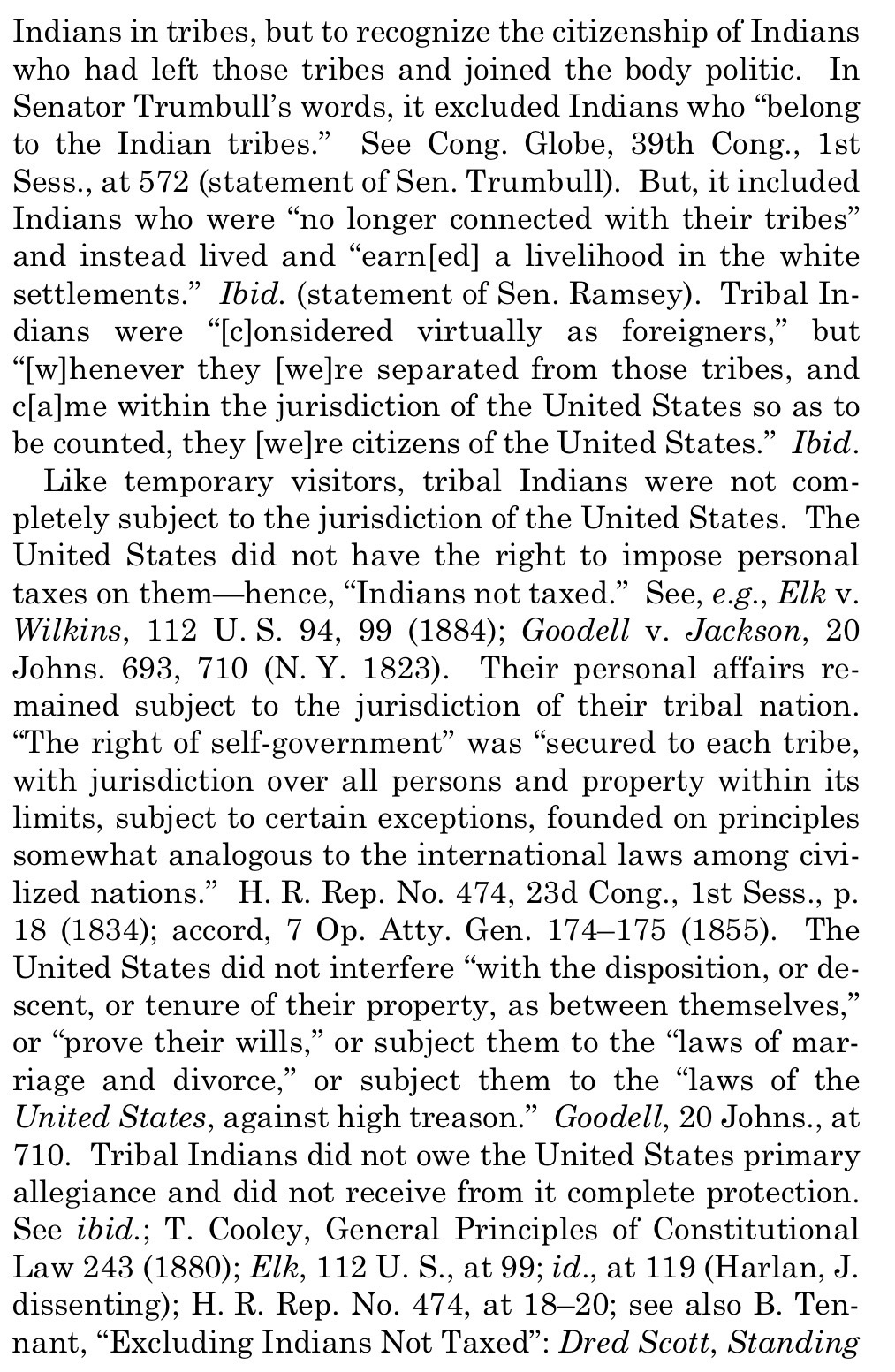
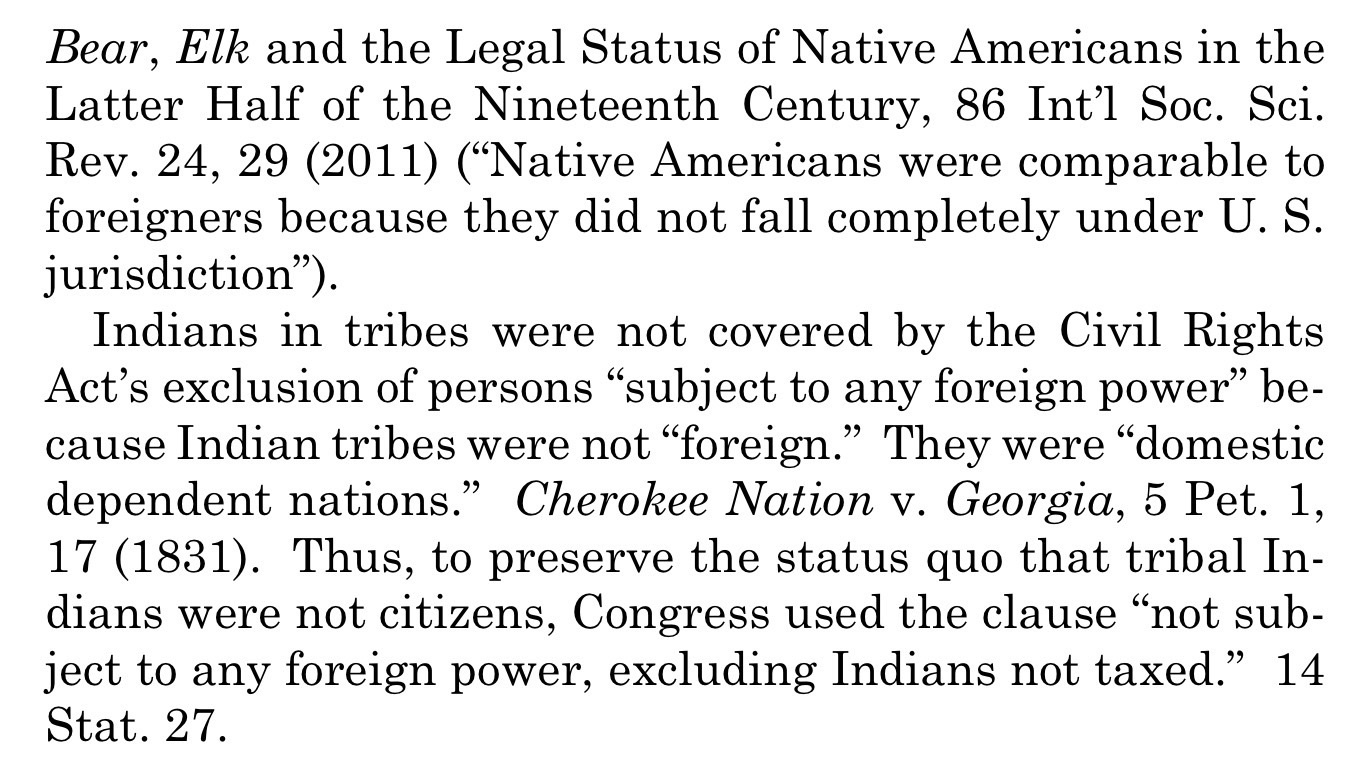
More Elk is wrong fodder:
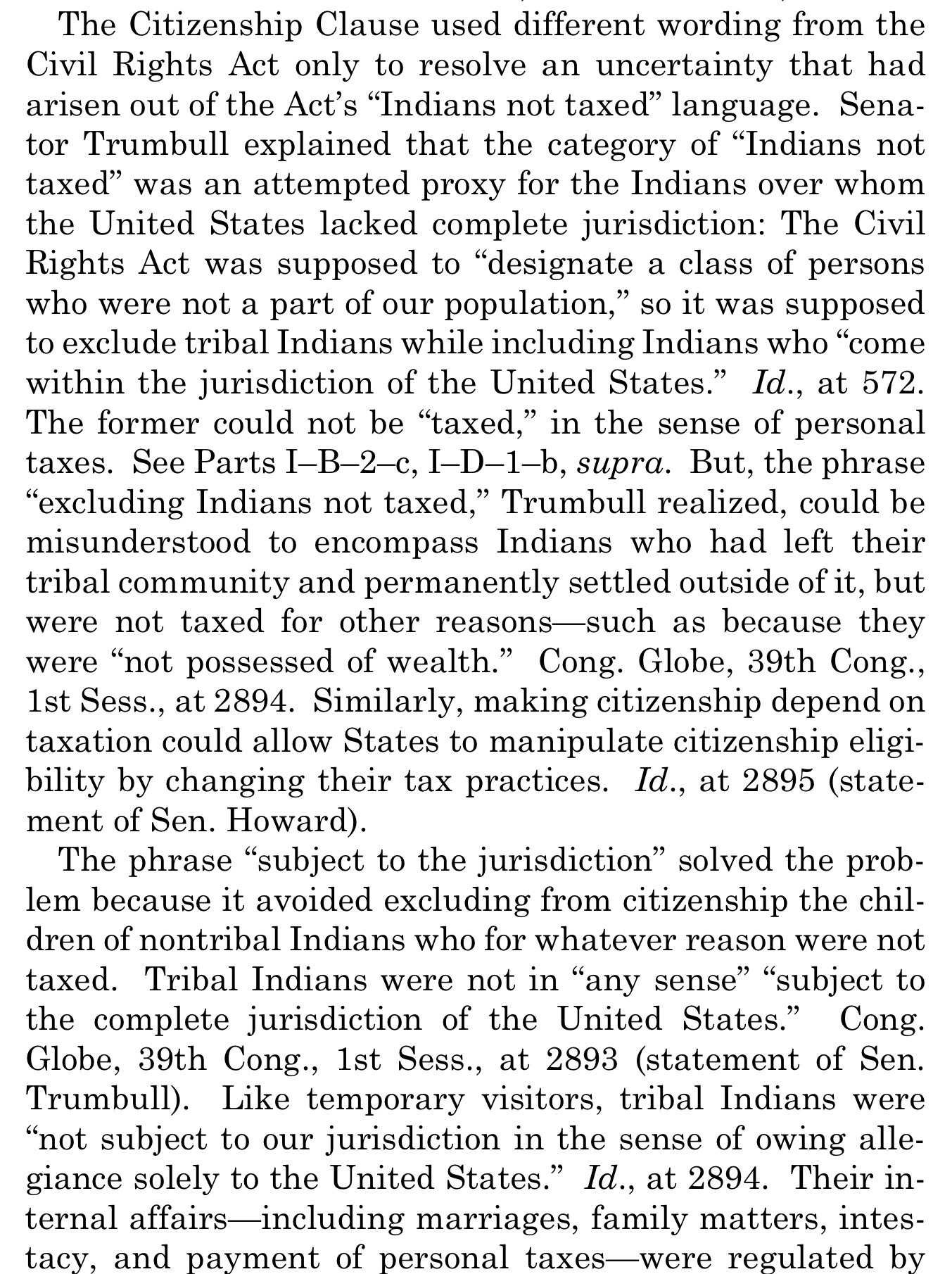

More on Elk, though in reliance this time:
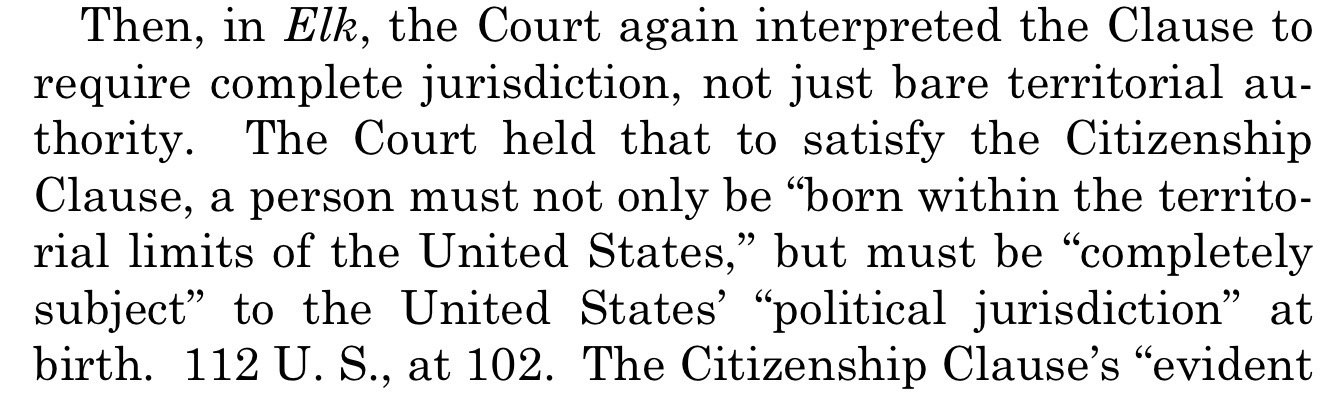
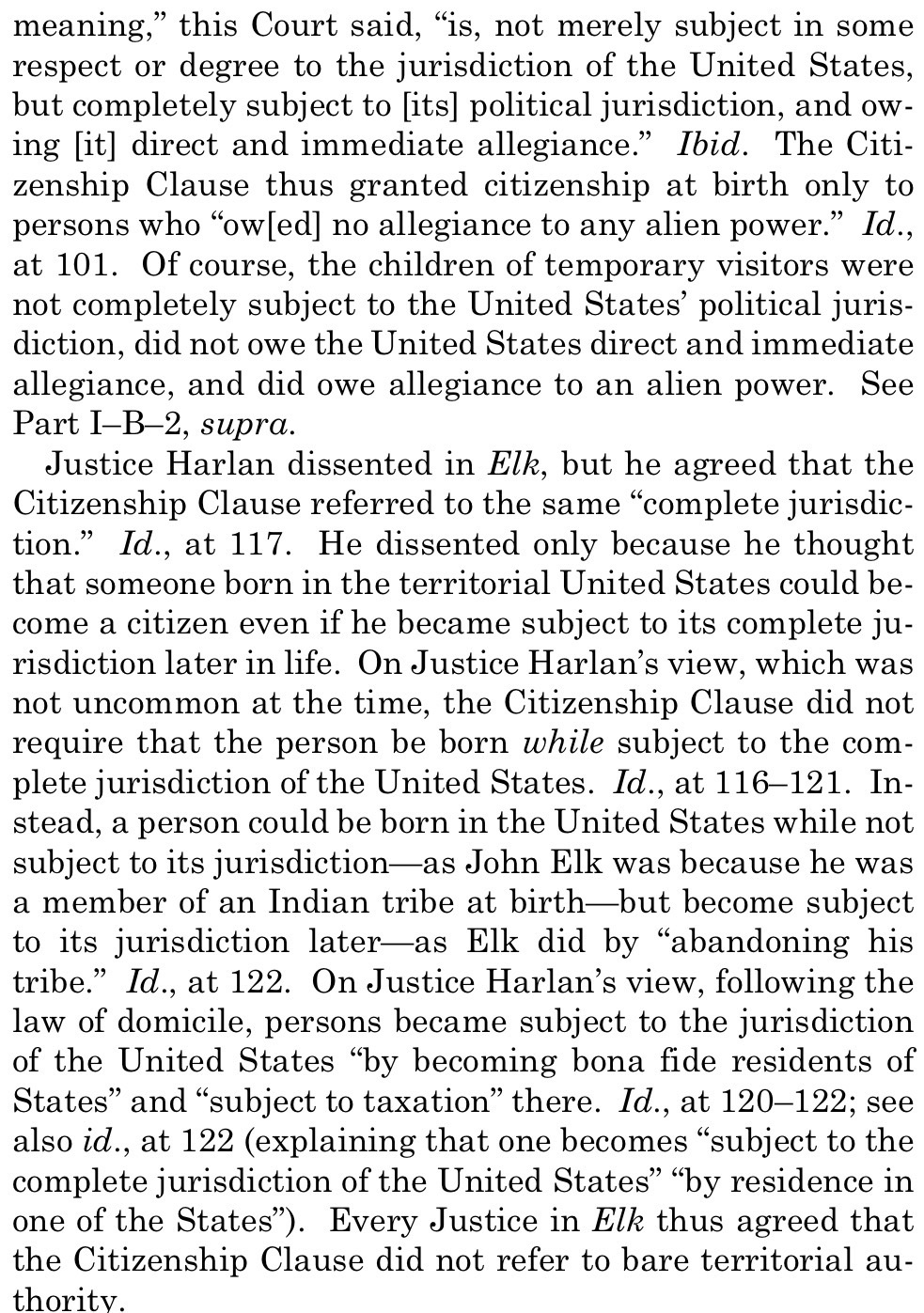
On the Indian Citizenship Act:
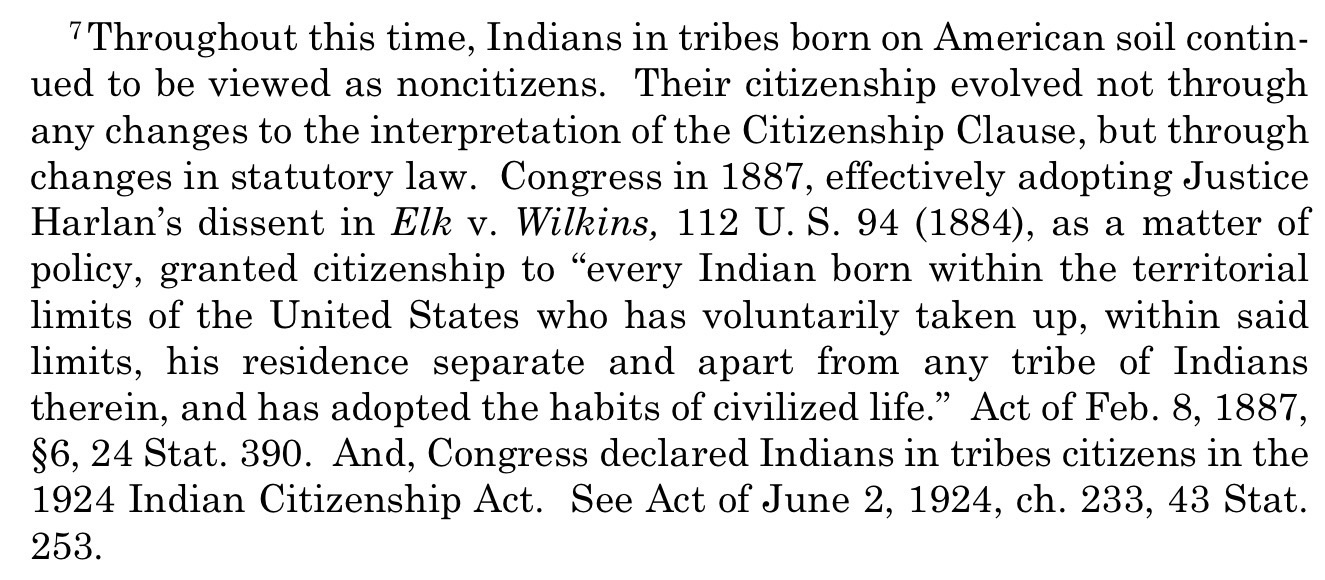
Wha?? China is less or equally alien than the Cherokee Nation?

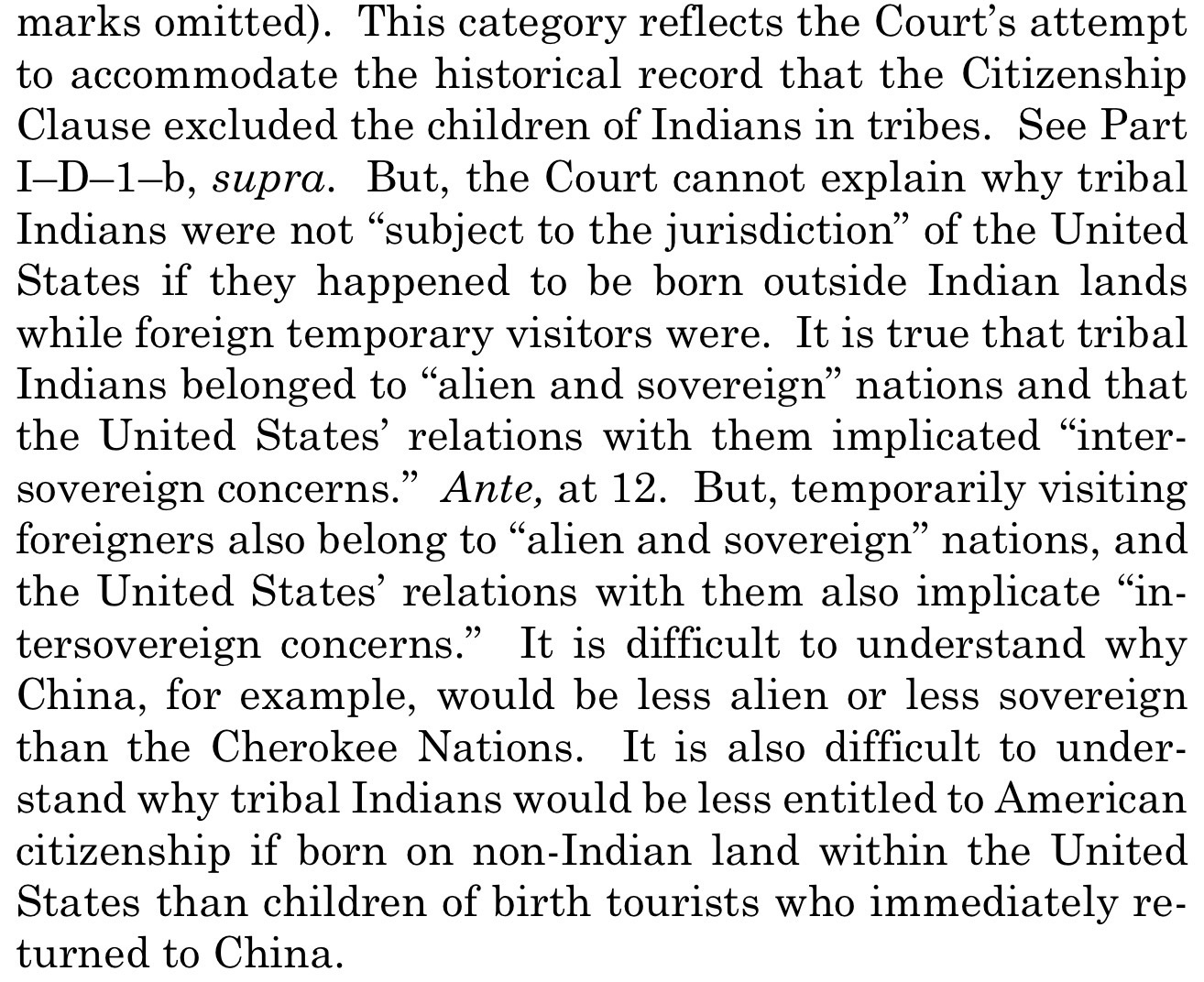
“Tribal Indians” in same category as diplomats and “hostile alien occupiers” — this is getting weird:
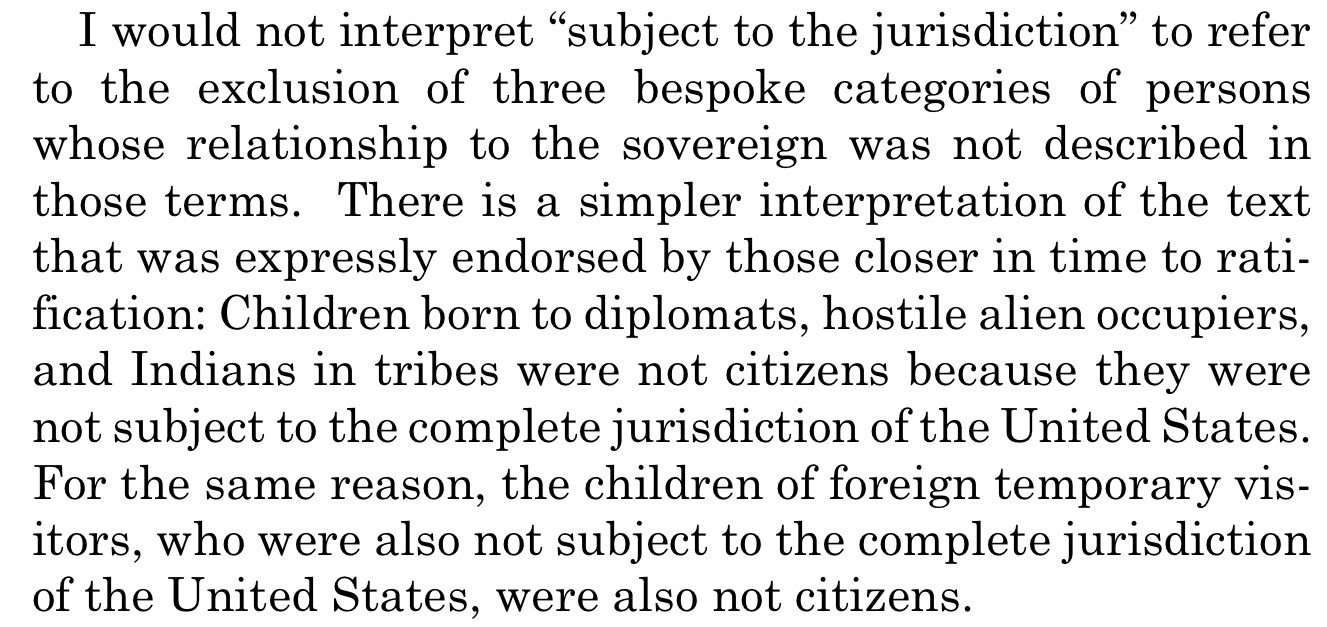
Nothing from me on Kavanaugh or Alito, who don’t merit attention.
Here are the new materials in Farella Braun + Martel LLP v. Guidiville Rancheria of California (N.D. Cal.):
Prior post here.

 Turtle Talk
You must be logged in to post a comment.