Fletcher Wisconsin Law Review Symposium Paper on the Indian Law Restatement

Here is “Restatement as Aadizookaan,” forthcoming in the Wisconsin Law Review. The abstract:

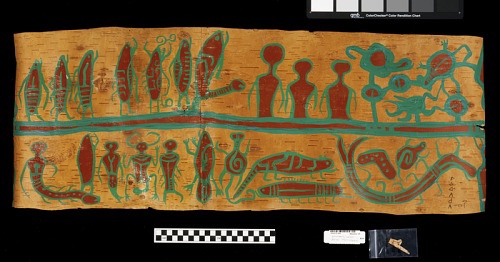
The goal of this essay for the Wisconsin Law Review’s symposium on the Restatement of the Law of American Indians is to develop a framework on the durability of this restatement. The aadizookaanag are unusually durable in terms of their transmission of underlying, foundational lessons, but the stories change all the time. The earth diver story explores and describes the critically important connection between the Anishinaabeg and the creatures of Anishinaabewaki, but only a very broad level of generality. How the Anishinaabe tribal government in the 21st century translates those principles into modern decision making requires new analysis, new stories. Additionally, old aadizookaanag may fade into irrelevance, even disrepute, as times and conditions change.

Law is the same. Restatements are intended to be durable and persuasive, supported by the great weight of authority, but not permanent. There are provisions in the Indian law restatement I believe are truly timeless, while the law restated in some sections is likely to change a great deal over the next few decades. I choose four sections in the restatement and match them with one of the four directions sacred to the Anishinaabeg. The youngest direction, Waabanong, the east, is the most likely to change. The next youngest, Zhaawanong, the south, is older, but still subject to change. Niingaabii’anong, the west, is still older, wiser, less likely to change, but also very dark in its philosophies. Kiiwedinong, the north, is the oldest, wisest, and most durable, yet distant. A restatement section includes black letter law, law that is well settled and indisputable. The reporters’ notes that accompany the black letter law constitute the legal support for that statement of law. The stronger the legal support, more durable the black letter.

In the east, I choose one of the plainest, easiest to restate principles of federal Indian law, the bar on tribal criminal jurisdiction over non-Indians. In the south, I choose the law interpreting the federal waivers of immunity allowing tribes to sue to the United States for money damages. In the west, I choose the darkest, yet perhaps the most foundational principles, the plenary authority of Congress in Indian affairs. For the north, I choose tribal powers, the oldest and most durable of all of the principles in the restatement.

New Scholarship Shows Tribes with Gaming Operations are 30% More Likely to Disenroll Members

Anna Malinovskaya has posted “Understanding the Native American Tribal ‘Disenrollment Epidemic’: An IV Approach” on SSRN.

Here is the abstract:

Recently, over 80 Native American tribes have banned or disenrolled members of their tribes or denied citizenship to eligible individuals. This phenomenon has received media attention nationwide, and even the term the “disenrollment epidemic” was coined. Many speculate that at least some of it is driven by political struggles over multi-million dollar revenues of tribal casinos, which are sometimes distributed in per capita payments to all tribal members. In this paper, we test whether gaming has been driving disenrollments, and since a tribe’s involvement in gaming might be endogenous, we employ an instrumental variable approach. In particular, we use machine learning to select an optimal subset of instruments for a Native American tribe operating a casino from the set of potential instruments all plausibly meeting the exclusion restriction and associated with the geographical characteristics of reservations, such as their proximity to an MSA, an interstate highway, or a border of a neighboring state with no brick and mortar casinos. We find that a tribe’s involvement in gaming leads to a large and statistically significant increase in the probability of the tribe experiencing a disenrollment episode.

An excerpt:

This paper sought to understand if tribes’ involvement in the gaming industry, particularly wealth from per capita distribution of gaming revenues made possible by this involvement, has been the primary factor driving disenrollments and other types of dismemberment episodes. Both gaming and per capita distributions of gaming revenues are likely to be endogenous. Although we did not find an instrument for per capita distributions, we identified a set of instruments for gaming, and used them to understand, albeit indirectly, whether gaming has been driving disenrollments (the direct approach would be instrumenting for per capita distributions rather than gaming). Although this approach has its limitations
(as discussed in the Empirical Strategy section, it represents, to the best of our knowledge, the first attempt to identify a causal link between gaming and dismemberment in Indian tribes. Additionally, the consistency of results across our OLS and IV estimates, as well as across several sub-samples, is encouraging.
This research could be strengthened by instrumenting for per capita distribution of gaming revenues directly, though finding an appropriate instrument might be challenging. It could also be strengthened by finding instruments that would pass the Weak Instruments test for the full sample (327 tribes) that is likely to produce less biased IV estimates, or by using a different quasi-experimental empirical approach that would overcome the limitations associated with IVs when the sample is relatively small.

Greg Ablavsky’s Federal Ground: Reviews and Book Panel

Our friend Gregory Ablavsky has published “Federal Ground: Governing Property and Violence in the First U.S. Territories” with Oxford. Columbia Law Review and Michigan Law Review (forthcoming) book reviews are available.

The book talk featuring Alison LaCroix, Joe Singer, and Fletcher. Liz Reese moderated.
Comic book here.

New Empirical Scholarship on Federal Prosecutor Declination Rates of Indian Country Cases

Regina Branton, Kimi King, and Justin Walsh have published an early print of “Criminal justice in Indian country: Examining declination rates of tribal cases,” forthcoming in Social Science Quarterly.

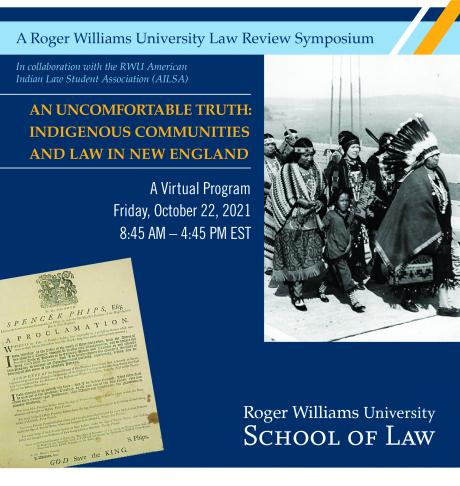
Fletcher Essay for Roger Williams University Law Review Symposium “An Uncomfortable Truth: Indigenous Communities and Law in New England”

Here is “Uncomfortable Truths about Sovereignty and Wealth.” The abstract:

How wealth and sovereignty interact is both hotly contested and misunderstood. In my view, sovereignty exists to preserve wealth for the already-wealthy. When it comes to Indigenous peoples and Indian nations, federal and state sovereigns have almost always exercised their powers to suppress tribal wealth, even a half-century after Congress turned toward tribal self-determination as guiding national policy. Federal and state sovereignty used in this manner is evidence of systemic racism.
This paper is part of the Roger Williams Law Review symposium “An Uncomfortable Truth: Indigenous Communities and Law in New England.”

Related comic book here.

Bill Wood on the Potential History of Indian Gaming

William Wood has published “The (Potential) Legal History of Indian Gaming” in the Arizona Law Review. PDF

Here is the abstract:

Indian gaming—casinos owned, operated, and regulated by Indian tribes—has been a transformative force for many Indigenous nations over the past few decades. The conventional narrative is that Indian gaming began when the Seminole Tribe of Florida opened a bingo hall in 1979, other tribes began operating bingo, litigation ensued across the continent, and the U.S. Supreme Court recognized tribes’ rights to operate casinos on their reservations in 1987, in California v. Cabazon Band of Mission Indians. Congress then passed the Indian Gaming Regulatory Act in 1988, ushering in the modern Indian gaming era.

This Article provides a heretofore-untold account of the early Indian gaming jurisprudence and related developments. Judges in the earliest Indian gaming cases, which have gone unnoticed, ruled against tribes. Then a series of cases involving the applicability of state law to mobile homes and cigarette and fireworks sales on Indian reservations produced a test under which states could exercise jurisdiction on reservations over activities they prohibit off-reservation but lack jurisdiction over activities they do not prohibit but only regulate. The Supreme Court used this test in Cabazon to hold that state laws did not apply to tribes’ bingo halls and cardrooms.

This Article details the development of the legal doctrine around Indian gaming and how the people involved—legal services attorneys working with legal scholars at the behest and on behalf of Indigenous peoples asserting their sovereignty against state pushback—changed the course of the jurisprudence, providing the framework that yielded the result in Cabazon and Indian gaming as it exists today.

Highly entertaining and recommended.

Palm Springs Desert Sun, March 31, 1971

Kekek Stark on Anishinaabe Law

Kekek Jason Stark has published “Anishinaabe Inaakonigewin: Principles for the Intergenerational Preservation of Mino-Bimaadiziwin” in the Montana Law Review. PDF

I cannot recommend this paper enough. It’s exactly the kind of paper I’ve been waiting for — waiting for a very long time. Miigwetch to Professor Stark for this incredible work. The ancestors would be proud.

Call for Submissions by the Indigenous People’s Journal of Law, Culture & Resistance

Call for Submissions for Volume VIII

Deadline: January 15th, 2022

The Indigenous People’s Journal of Law, Culture & Resistance is soliciting scholarly articles and student comments written about legal issues important to Indigenous communities in the United States and throughout the world, as well as works by artists that relate to or comment on legal issues. We also seek works on issues or aspects of life in Native communities that are impacted by law, whether tribal law or the laws of nation-states.

If you would like to submit a full-length submission for consideration, please email it to ipjlcr@lawnet.ucla.edu with the subject line “Volume VIII Submission” before January 15th, 2022. If you wish to submit an abstract first, please do so before December 15th, 2021.

Find out more at https://law.ucla.edu/academics/journals/indigenous-peoples-journal-law-culture-and-resistance

Please follow all of these guidelines as applicable to your submission (e.g. a poem will not likely need Bluebook citations).  Each submission should be sent as one Microsoft Word file with Bluebook formatted citations (21st ed. 2020). Brief bios are required, as well as 12 pt. Times New Roman typed font, paginated, and should include: your name, address, phone number, and email address in the header of the first page.

If you have any questions, please do not hesitate to reach out to us at <ipjlcr@lawnet.ucla.edu>.

Important New Scholarship on the Originalist Foundations of the Indian Canons and Tribal Sovereignty

Seth Davis, Eric Biber & Elena Kempf have posted “Persisting Sovereignties,” forthcoming in the University of Pennsylvania Law Review, on SSRN. Here is the abstract:

From the first days of the United States, the story of sovereignty has not been one of a simple division between the federal government and the states of the Union. Then, as today, American Indian tribes persisted as self-governing peoples with ongoing and important political relationships with the United States. And then, as today, there was debate about the proper legal characterization of those relationships. The United States Supreme Court confronted that debate in McGirt v. Oklahoma when, in an opinion by Justice Neil Gorsuch, it held that the reservation of the Muscogee (Creek) Nation “persists today.” The Court’s recognition of the persistence of Tribal sovereignty triggered a flurry of critical commentary, including from federal lawmakers who share Justice Gorsuch’s commitment to originalism. But the original story of federal Indian law supports the persistence of tribal sovereignty.

Through its treaty practice, and opinions of its Supreme Court, the United States recognized Indian tribes as political communities whose preconstitutional sovereignty persisted despite their incorporation within U.S. territory. According to the Marshall Court, tribes were “states” and “nations” with whom the United States had formed political relationships. These terms, the Court explained, had a “well-understood meaning” under the law of nations and applied to tribes as they applied “to the other nations of the earth.” This Article explores the original public meaning of those terms as they applied to Indian tribes through the first comprehensive analysis of the international law commentary cited by the Marshall Court as well as historical examples of shared sovereignty that were familiar to lawyers during the early Republic.

In particular, this Article explores two consequences of tribes’ status as “states” and “nations” under international law during the early Republic. First, it provides an originalist foundation for the Indian canon of construction’s rule that tribal sovereignty is preserved unless expressly surrendered. Like states under international law, tribes retained whatever measure of sovereignty they did not expressly surrender by agreement. Accordingly, a court interpreting an Indian treaty must construe ambiguous terms to retain tribal sovereignty. Today, this rule of interpretation is known as the Indian canon of construction and is thought to be peculiar to federal Indian law. To the contrary, however, the Indian canon’s foundations include generally accepted principles of the law of nations at the time of the Founding. Second, this understanding of Indian tribes as “states” implies that the sovereignty of tribes is not divested by their incorporation within the United States and persists despite periods in which federal and state governments have prevented its exercise. This principle, which has important implications for contemporary debates in federal Indian law, not only justifies the Court’s recognition of tribal persistence in McGirt, but also offers a way for thinking about the future story of divided sovereignty in the United States.

Harvard Law Review Note on United States v. Cooley

Here.

PDF

Highway 212