Here is today’s order from the Supreme Court. The Court granted cert in several cases, none concerning Indian law.
Supreme Court
Cert Petition in Seminole Tribe of Florida v. State of Florida Dept. of Revenue
Here:
Here is the question presented:
This Court established in Ex parte Young, 209 U.S. 123 (1908), that a plaintiff may sue state officials for prospective injunctive relief against the enforcement of an unconstitutional state law. In the intervening years, this Court and most courts of appeals have repeatedly held that Ex parte Young allows federal courts to enjoin the future enforcement of state tax schemes that violate federal law or the Constitution. This Court has also observed that an injunction requiring a state’s future compliance with federal law does not violate state sovereign immunity, even if it has a “substantial ancillary effect on the state treasury.” Papasan v. Allain, 478 U.S. 265, 278 (1986).
In this case, however, the Eleventh Circuit concluded otherwise. It departed from this Court’s precedent, and “create[d] a circuit split,” Pet. App. 24a (Jordan, J., concurring in part and dissenting in part), when it held that Ex parte Young does not permit the Seminole Tribe of Florida to seek injunctive or declaratory relief against the future unconstitutional enforcement of Florida’s fuel tax scheme. The court’s holding turned on the fact that Florida precollects this tax from a third party, which means that an order barring future enforcement against the tribes might require the state to issue tribal consumers refunds “from state coffers,” supposedly in violation of the Eleventh Amendment. Pet. App. 12a.
The question presented is whether sovereign immunity bars an American Indian tribe from seeking Ex parte Young relief from the unconstitutional enforcement of a state tax scheme merely because that relief might require refunds for taxes unlawfully collected in the future.
Lower court materials and my commentary here.
Gun Lake Trust Land Reaffirmation Act Signed
Here are materials from the tribe:
Friends of Amador County v. Jewell Cert Petition
Here:
Question presented:
Whether, in an action by a third party against the Secretary of the Interior under the Administrative Procedure Act, 5 U.S.C. 551 et seq., a putative Indian tribe may invoke its sovereign immunity to prevent a court from reviewing the lawfulness of the Secretary’s decision to recognize it as a tribe.
Lower court materials here.
News Coverage of Justice Sotomoyor’s Visit to Oklahoma Indian Country
Here is Tony Mauro’s “Arm in a Cast, Sotomayor Tours Oklahoma and Meets Tribal Leaders.”
An excerpt:
At an appearance on Sept. 11, Oklahoma City University president Robert Henry—formerly chief judge of the Tenth Circuit—asked Sotomayor to discuss her meeting earlier that day with “some of our native people.” Henry said, “I so much appreciated” that she met with tribal members. Neither Henry nor Sotomayor gave details about where the meeting took place or how it was arranged.
Sotomayor heard about broken agreements between tribes and the U.S. government. “There are so many misunderstandings about Native Americans,” she said, producing resentments that “run deep… It still stings.” She added, “There is a basis for that feeling.”
The Oklahoma tribes, she said, are “all displaced tribes—all wrenched from their homes in different states” and sent to Oklahoma in the “Trail of Tears,” an exodus in the 1830s in which Supreme Court rulings played a part.
Sotomayor also said the public has a misperception that tribes are rich because of the advent of casinos at many reservations. That is not the case, she said. “They have problems like the larger society,” she asserted, including obesity and diabetes. Sotomayor noted she has diabetes herself.
Hicks v. Hudson Ins. Co. Cert. Petition
Here is the petition:
Question presented:
Whether an insurance company doing business with a federally recognized American Indian Tribe is entitled to sovereign immunity for the acts and omission it takes in furtherance of the business of insurance.
Colorado Law Symposium on Bay Mills Decision
Wenona Singel and I are delighted and honored to speak at Colorado’s symposium on Michigan v. Bay Mills Indian Community. Thanks to Rick Collins, Sarah Krakoff, Carla Fredericks, Kristen Carpenter, and the rest of the great people at CU.
In honor of the Michigan-centric character if this symposium, it snowed in Boulder.
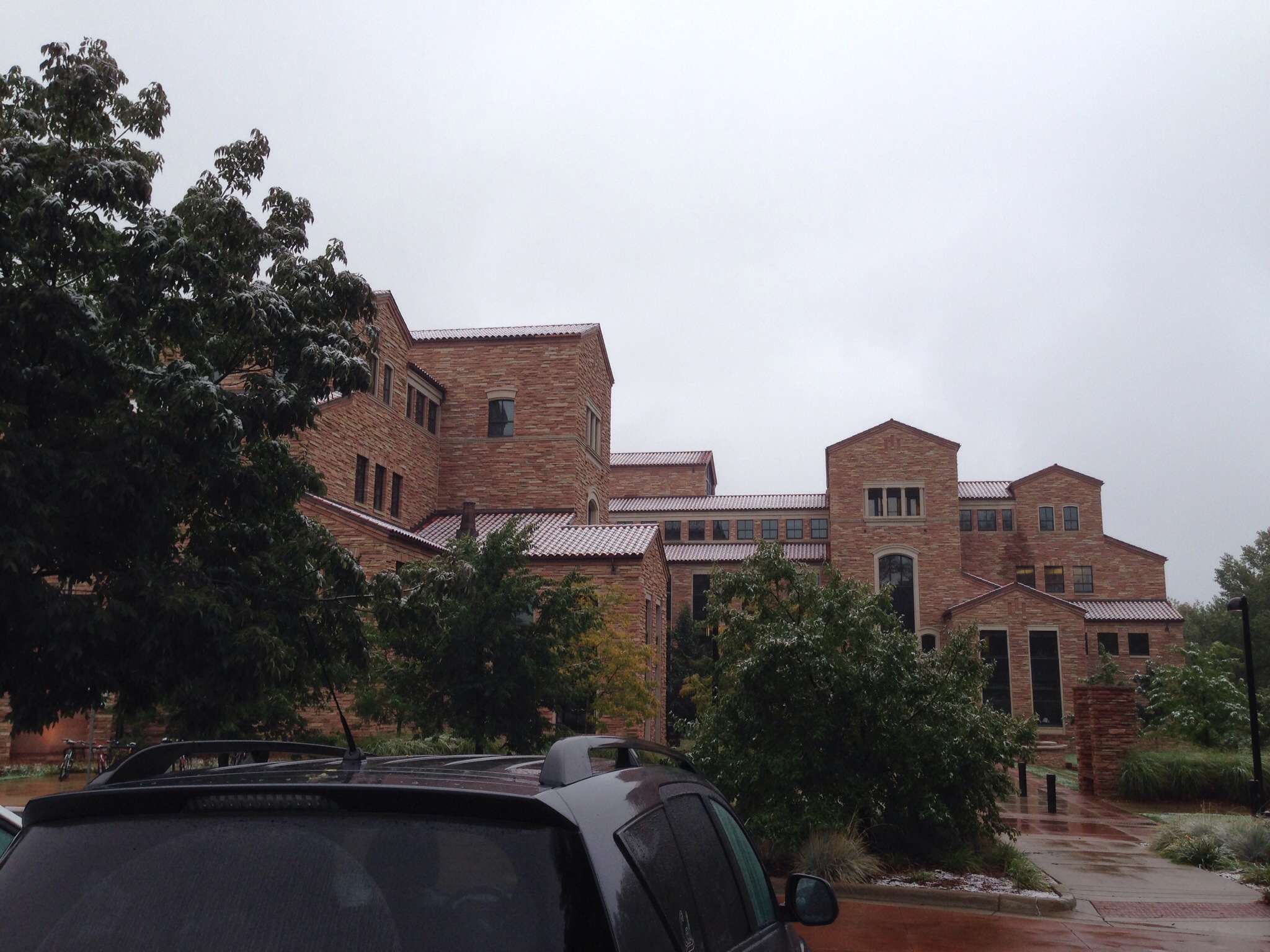
I am honored to share the stage with Kathryn Tierney, the general counsel for the Bay Mills Indian Community. She is a legend, going back to her work on the LCO treaty rights cases in Wisconsin, the LeBlanc matter in Michigan, and United States v. Michigan. Wenona and I know her from the more calmer days of negotiating the Michigan tax agreements a decade ago.
I’ll be patching together a short talk about lessons we can learn from the decision from the successful strategic moves made by Bay Mills.
Dollar General v. Mississippi Choctaw Cert Petition on SCOTUSBlog Watch List
Here.
I wondered when I learned that Tom Goldstein is co-counsel for the petitioners when this petition would end up as a SCOTUSblog “Petition of the Day.” As might be well known to TT readers, SCOTUSblog is the best daily source of news on the Supreme Court. But it is also (or was) a tool for Mr. Goldstein to drum up business. The blog recently make some headlines in its effort to acquire/obtain/earn a Supreme Court press credential, and was denied. Mr. Goldstein’s passionate and sophisticated response is well worth the read. As a question of journalism, I strongly support SCOTUSBlog’s efforts. It doesn’t bother me that SCOTUSblog-as-client development tool might somehow affect SCOTUSblog-as-journalist.
For what appears to be the first time, Mr. Goldstein is representing a Supreme Court petitioner against tribal interests, and so to the extent that it means anything at all, the tribal interests here are adversely affected by the SCOTUSblog-as-journalism outlet and SCOTUSBlog-as-Supreme Court advocate dynamic. There’s not enough information before me to make a conclusion as to whether that dynamic will affect the Court’s certiorari decision at the long conference here in a few weeks.
Here is a list of TT posts recognizing an Indian law “Petition to Watch” as identified by SCOTUSblog (grants are in red): Continue reading
Cert Opposition Brief in Dollar General v. Mississippi Choctaw Tribal Court Jurisdiction Matter
Useful Scholarly Materials on RFRA, the Eagle Act, and Hobby Lobby
I urge readers to check out two papers by Kati Kovacs at Rutgers Law School. She formerly worked in DOJ ENRD. She just published Eagles, Indian Tribes, and the Free Exercise of Religion is available online, http://digitalcommons.lmu.edu/cgi/viewcontent.cgi?article=2863&context=llr, and has a forthcoming piece on Hobby Lobby and the Eagle Act, entitled Hobby Lobby and the Zero-Sum Game, http://papers.ssrn.com/sol3/papers.cfm?abstract_id=2484613.
 Turtle Talk
You must be logged in to post a comment.