Here is the decision in United States v. Washington subproceeding 17-03, captioned Stillaguamish Tribe of Indians v. State of Washington.
Briefs and lower court materials here.
Here is the complaint in United States v. Crowley Marine Services Inc. (W.D. Wash.):
Bethany R. Berger has published “Intertribal: The Unheralded Element in Indigenous Wildlife Sovereignty” in the Harvard Environmental Law Review.
Here is the abstract:
Intertribal organizations are a powerful and unheralded element behind recent gains in Indigenous wildlife sovereignty. Key to winning and implementing judicial and political victories, they have also helped tribal nations become powerful voices in wildlife and habitat conservation. Through case studies of these organizations and their impact, this Article shows why intertribal wildlife organizations are necessary and influential, and how the intertribal form reflects a distinct relational approach to wildlife governance. As the first article focused on the intertribal form, moreover, the Article also identifies an unexamined actor in tribal sovereignty and legal change.
Highly recommended!
Here are the materials in Grand Portage Band of Lake Superior Chippewa v. EPA (D. Minn.):
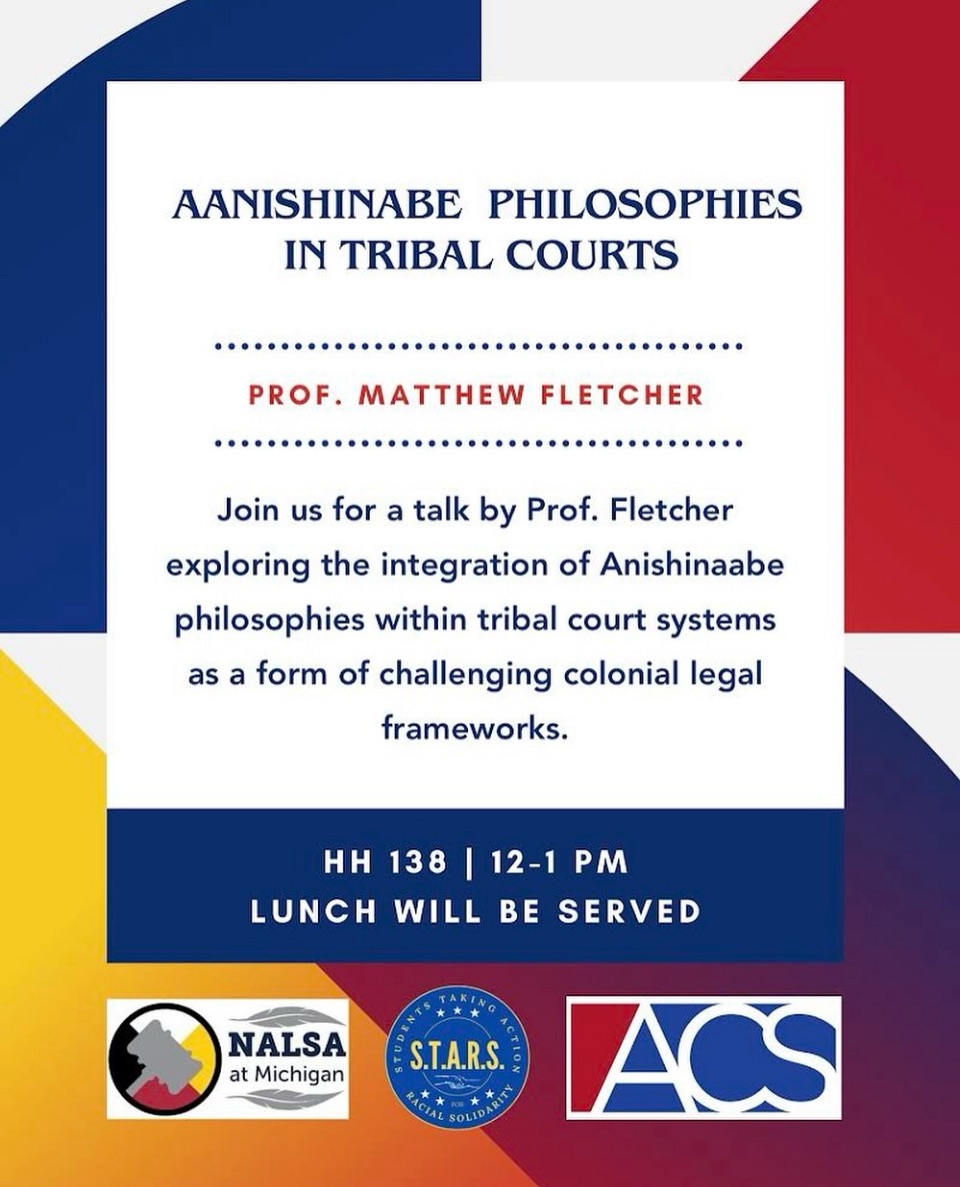
A new film, BAD RIVER, narrated by Quannah ChasingHorse with Edward Norton, and produced by Allison Abner (writer for Narcos/West Wing and descendant of the Stockbridge Munsee Band), Grant Hill (owner of the Atlanta Hawks) and award-winning filmmaker Mary Mazzio, opens in select AMC Theatres on MARCH 15-20.
Trailer: www.BadRiverFilm.com
About: BAD RIVER chronicles the Wisconsin-based Bad River Band and its ongoing fight for sovereignty, a story which unfolds in a groundbreaking way through a series of shocking revelations, devastating losses, and a powerful legacy of defiance. This project brings us into the present, with a David vs. Goliath battle to save Lake Superior, the largest freshwater resource in America. As Eldred Corbine, a Bad River Tribal Elder declares: “We gotta protect it… die for it, if we have to.” And as New Yorker writer and author, Bill McKibbon wrote about the film: “It’s a powerful chronicle of some of the saddest chapters in American history, and a hopeful picture of the emerging possibilities for power in the crucial fights of our time. And oh, what beautiful country is at stake!”
Opening Cities: New York, Los Angeles, Boston, Seattle, Washington DC, Chicago, Atlanta, Detroit, Madison WI, Minneapolis, Ashland WI (with additional cities likely being added.)
50% of all profits will be donated back to the Bad River Band.
 Turtle Talk
You must be logged in to post a comment.