
Justice McKeig will address the MLaw Native American Law Students Association and the Michigan Tribal-State-Federal Judicial Forum.
Justice McKeig will address the MLaw Native American Law Students Association and the Michigan Tribal-State-Federal Judicial Forum.
Here are the available materials in Parker v. Halftown (N.D. N.Y.):

Here:
Purpose: The United Nations Special Rapporteur on the independence of judges and lawyers, Margaret Satterthwaite, invites Member States, national human rights institutions, and other relevant State institutions, international and regional organizations, civil society, scholars, activists, and other interested individuals and organizations to provide written inputs for her next thematic report on Indigenous justice. The report will be presented at the 59th session of the Human Rights Council in June 2025.
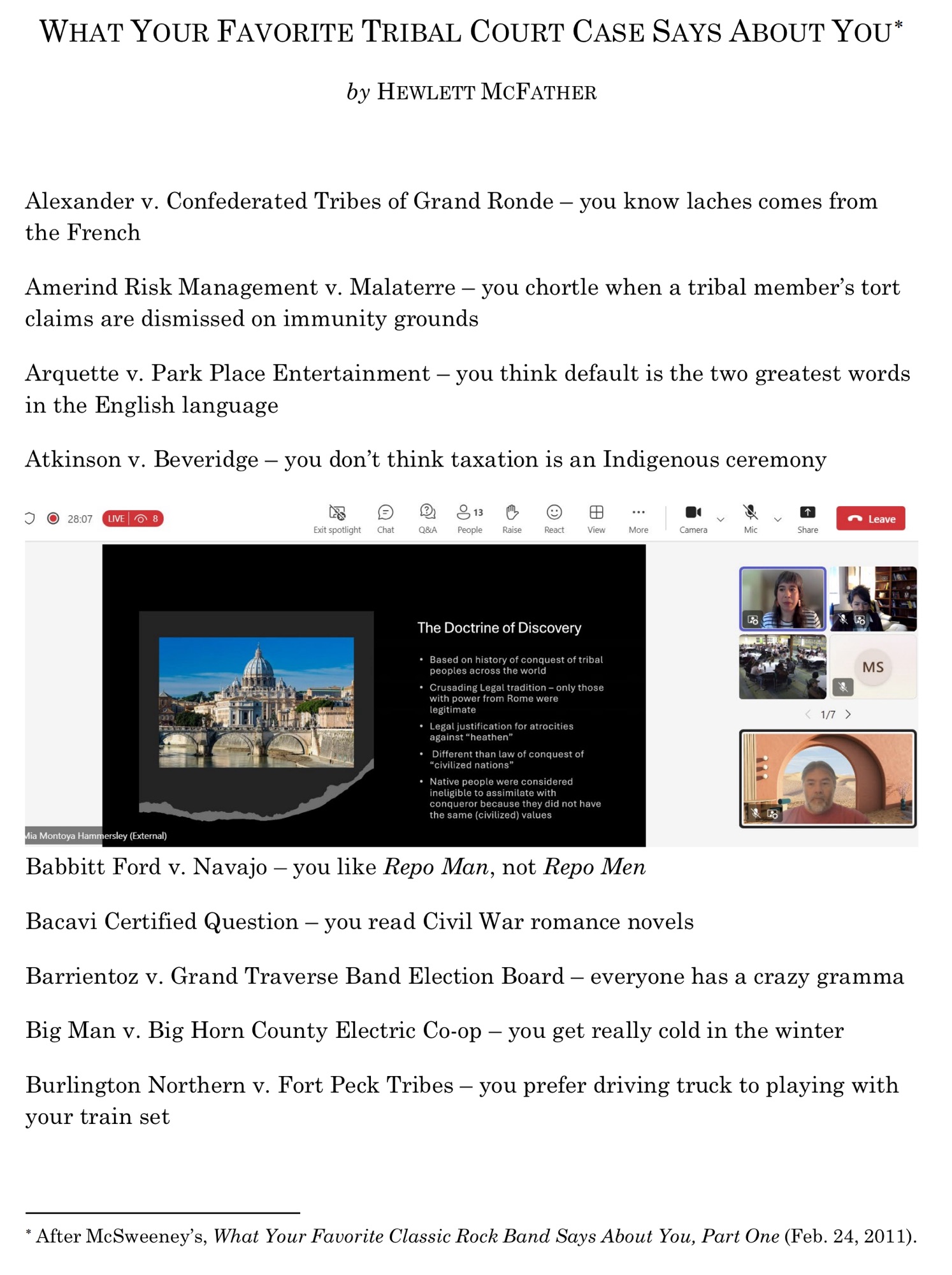
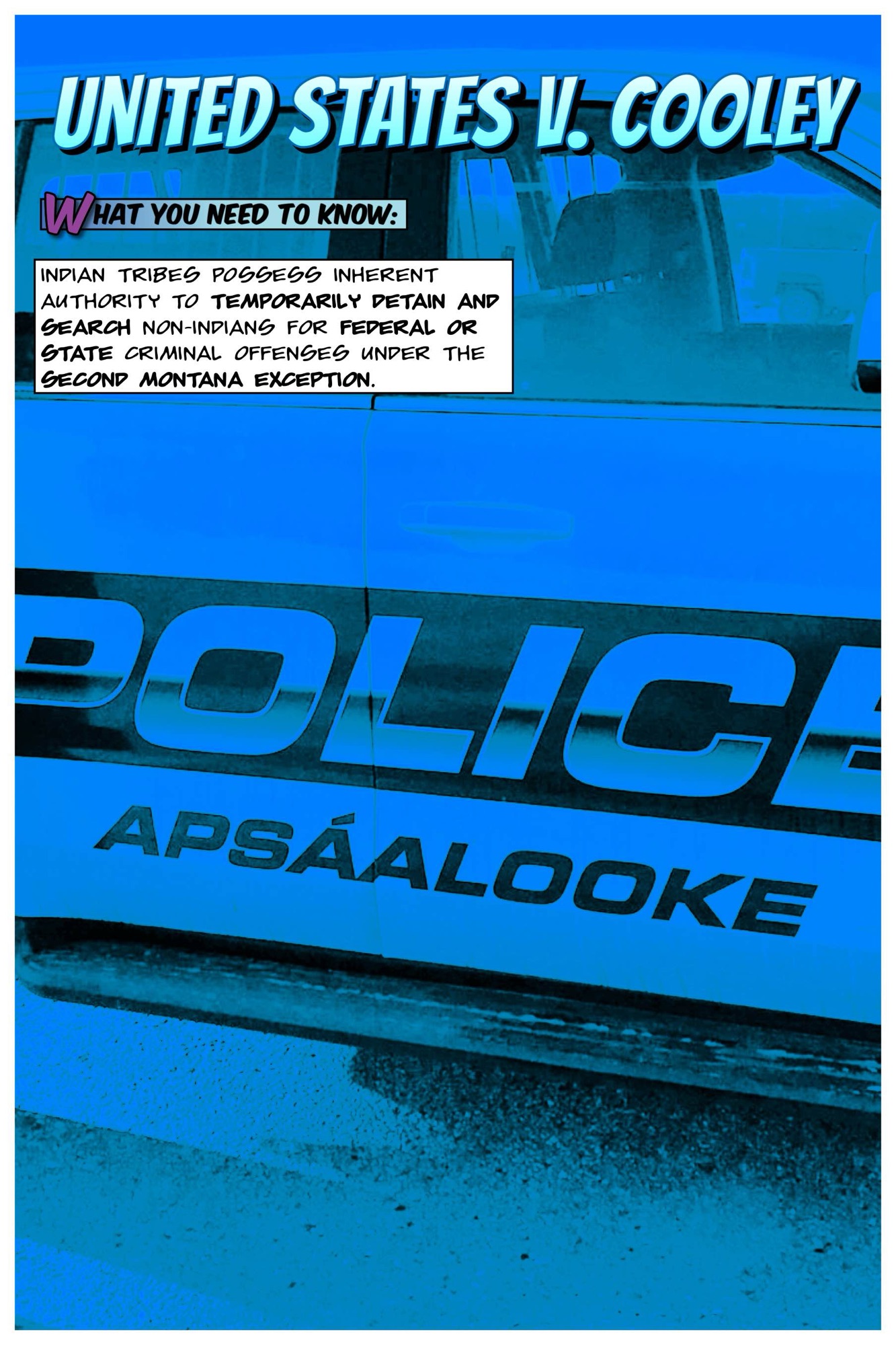
Looking forward to talking about tribal court jurisprudence, Brackeen, and Cooley:


Here is the opinion in Jackson v. Fort Peck.
An excerpt:
Congress amended the Indian Civil Rights Act to define Indian status for purposes of tribal court criminal jurisdiction in order to address the United States Supreme Court decision in Duro v. Reina, 495 U.S. 676, 110 S.Ct. 2053, 109 L.Ed.2d 693 (1990). In Duro, the SCOTUS held that Indian tribes lack inherent criminal jurisdiction over non-member Indians. Congress disagreed and passed federal legislation amending the Indian Civil Rights Act to recognize tribal inherent authority over all Indians who commit criminal offenses in Indian country. Unfortunately, for Indian tribes, Congress referred to the definition of Indian under the Major Crimes Act, 18 USC § 1153, in amending the ICRA. However, there is no definition of Indian under 18 USC § 1153 and the federal courts have generally used a federal common-law definition of Indian, first enunciated in United States v. Rogers, 45 US 567, 572, 4 How. 567, 11 L.Ed. 1105 (1846), to establish Indian status for purposes of federal court Indian country jurisdiction. This has created a whole host of problems in the federal courts, see Skibine, Indians, Race and Criminal Jurisdiction in Indian Country, 10 Alb. Govt. L. Rev. 49 (2017). As Professor Skibine notes in this excellent article, the federal courts, especially the 9th Circuit Court of Appeals, are perplexed by this whole issue of Indian status for purposes of Indian country jurisdiction and have struggled with whether the definition is a race-based one, that could potentially run afoul of the 5th amendment, or is sufficiently tied to tribal status to survive scrutiny under Morton v. Mancari, 417 U.S. 535, 94 S.Ct. 2474, 41 L.Ed.2d 290 (1974) (holding that disparate treatment of Indians is constitutional because of the unique political relationship Indian tribes have with the United States).
¶ 10 Tribal Courts are being dragged into this whole mess, apparently, because of the Duro fix and its reference to the Major Crimes Act. Whereas Indian tribes historically know who is and who is not Indian under tribal customary and common law, those customary practices may not be countenanced any longer under federal law. The United States Court of Appeals for the Ninth Circuit has been making itself a pretzel over this common-law definition that is the standard under the MCA and the ICRA. See e.g. United States v. Cruz, 554 F.3d 840 (9th Cir. 2009). However, other federal court decisions recognize that the first prong of the United States v. Rogers test for determining whether a person has some degree of Indian blood may be met by that person having native blood from a non-federally-recognized Tribe, See United States v. Maggi, 598 F.3d 1073 (9th Cir. 2010)(en banc) (reversing panel decision finding that an Indian from the state-recognized Little Shell Band of Pembina Indians did not meet the definition of Indian under United States v. Bruce, 394 F.3d 1215, 1227 (9th Cir. 2005)) provided the person meets the second prong of the Rogers test for affiliating with a federally-recognized Tribe). See also State v. Daniels, 104 Wash.App. 271, 16 P.3d 650, 654 (2001) (having Canadian Indian blood meets the first prong of Rogers, but Court finds second prong was not met thus the Defendant was non-Indian and subject to state court jurisdiction).

Here.
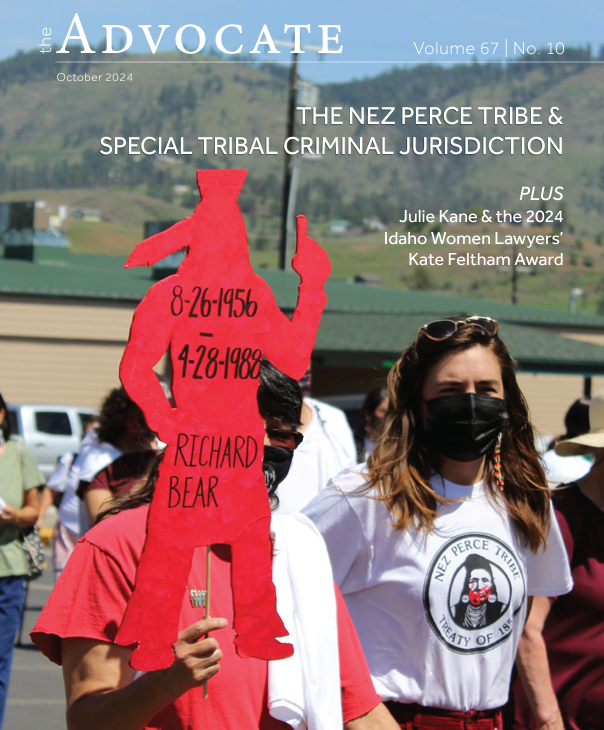
Brought to you by the Choctaw Nation of Oklahoma & OJS Tribal Justice Support
A tuition free event hosted in-person at the Choctaw Landing, Hochatown, OK
Visit the training website to register and view agenda topics
Here is the order denying en banc review in Lexington Ins. Co. v. Smith and accompanying opinions.
En banc stage briefs:
Panel materials here.


 Turtle Talk
You must be logged in to post a comment.