Here is the opinion in United States v. Britt.
Briefs:
Come be inspired living on Tulsa time, a place of rich contradictions and potential. THE UNIVERSITY OF TULSA COLLEGE OF LAW invites applications from both entry-level and experienced faculty for a tenured or tenure-track position researching and teaching in Indian Law to begin in August 2024; preference is for candidates with superior academic records and who demonstrate excellence in scholarship and a strong potential to excel as scholars.
Tulsa Oklahoma is located on the traditional tribal lands of the Muscogee Creek Nation, the Cherokee Nation, and the Osage Nation, and offers a rich opportunity to hear from Tribal leaders as your scholarship develops. The faculty at the University of Tulsa is committed to strong scholarship as a core value that influences excellent teaching. The University offers candidates an opportunity to work closely with local tribes to solve local problems and have their scholarship shape conversations across 38 federally recognized tribes in Oklahoma.
For consideration, applications must be submitted via the website: https://universitytulsa.peopleadmin.com/
Interested candidates should submit a Letter of Interest, CV, and research agenda. We value diverse experiences and backgrounds, including diversity of race, ethnicity, gender, age, religion, language, abilities/disabilities, sexual orientation, gender identity, socioeconomic status, and geographic region. For questions, please contact Professor Marc Roark Chair, Appointments Committee, marc-roark@utulsa.edu
The University of Tulsa is an affirmative action/equal opportunity employer and encourages qualified candidates across all group demographics to apply. The University does not discriminate on the basis of personal status or group characteristic including, but not limited to race, color, religion, national or ethnic origin, age, sex, disability, veteran status, sexual orientation, gender identity or expression, genetic information, ancestry, or marital status. The University of Tulsa is an Equal Opportunity Employer including Disability/ Veteran.
The University of Tulsa acknowledges the land it sits upon is the traditional lands of the Osage, Caddo, and Wichita Tribal Nations, and currently resides within the Muscogee Creek Nation. The University also acknowledges its role as a former Presbyterian School for Indian Girls seeking to create programs that reconcile the need for acknowledgement and responsibility.
Here is the news item on the prizes. And here are the articles:
Noah Goldberg published “Indian Embryos as ‘Indian Children’?” in the Arizona State Law Journal (PDF). Here is an excerpt:
This Comment argues that ICWA protections should apply to human embryos in all states that reject pure property regimes for embryo disposition. Otherwise, personhood regimes would serve as an end-run around ICWA.34 Once personhood regimes treat embryos as persons or create rules implementing family law before the birth of a child, inevitable tensions arise with ICWA. Not applying ICWA protections to these regimes would undermine the spirit of ICWA and create an unacceptable legal loophole to circumvent the rights of tribes, Indian parents, and Indian children. However, ICWA would not have to apply at the embryo-disposition stage in states that adopt pure property regimes because future parental rights are not determined at the dissolution stage. Part II surveys ICWA, its purpose, and its protections. Part III explores the current state of embryo-disposition laws and focuses on the newly passed Arizona personhood disposition regime. Part IV analyzes how ICWA should interact with personhood regime states and examines the risks that personhood states pose to tribes, Indian families, and the spirit of ICWA. Part V concludes that the best way forward is to reject personhood regimes in favor of pure property regimes or stringently impose ICWA protections at the embryo-disposition stage in personhood states whenever substantive family law is adjudicated.
Claire Newfeld has published “Indian Boarding School Deaths and the Federal Tort Claims Act: A Route to a Remedy” in the Arizona State Law Journal (PDF).
An excerpt:
With such somber results expected from the American investigation, tribes deserve a remedy that will make them as close to whole as possible. There are several potential remedies that tribes and families can pursue, such as filing a lawsuit or lobbying for relief in Congress. The United States must listen to Native communities in determining what remedy will provide the most opportunity for healing and reparation. This Comment will attempt to contribute to that dialogue by arguing that, should the affected parties seek relief through litigation, they possess valid wrongful-death or negligence causes of action14 under the Federal Tort Claims Act (“FTCA” or “Act”).


A tuition free event hosted in-person at the Choctaw Casinos & Resorts, Durant, OK
Visit the training website to register and view agenda information as it arises
The undersigned Tribal and First Nations submitted a petition to the Committee on the Elimination of Racial Discrimination to urge the Committee to examine the Government of Canada’s compliance with its obligations under the Convention on the Elimination of All Forms of Racial Discrimination.
The Convention requires Canada to prevent and rectify discriminatory practices direct and indirect – committed by Canadian corporations at home and abroad.
Representatives of fifty-one Tribal and First Nations located in what is now the United States and Canada submitted a report to the United Nations Human Rights Council calling on the Government of Canada to stop violating the human rights of Indigenous peoples through its support for Enbridge’s Line 5 crude oil pipeline. The groups submitted the report for consideration under Canada’s upcoming Universal Periodic Review (UPR). As a U.N. member state, Canada’s human rights record is periodically scrutinized by U.N. member States through the UPR at the Human Rights Council. Canada will be reviewed during the 44th session of the UPR Working Group, which will take place from November 6 through 17 this year, and it will be Canada’s fourth review.

The conference (hosted in Bar Harbor, ME and on Zoom Webinar) offers a unique opportunity to observe actual court proceedings, engage with court staff, and hear from program participants who have successfully navigated their path toward recovery.
The Workings of Multi-Disciplinary Teams
Mock Team Meeting Session
Mock Court Session
Success Stories
Funding Sources and Collaboration

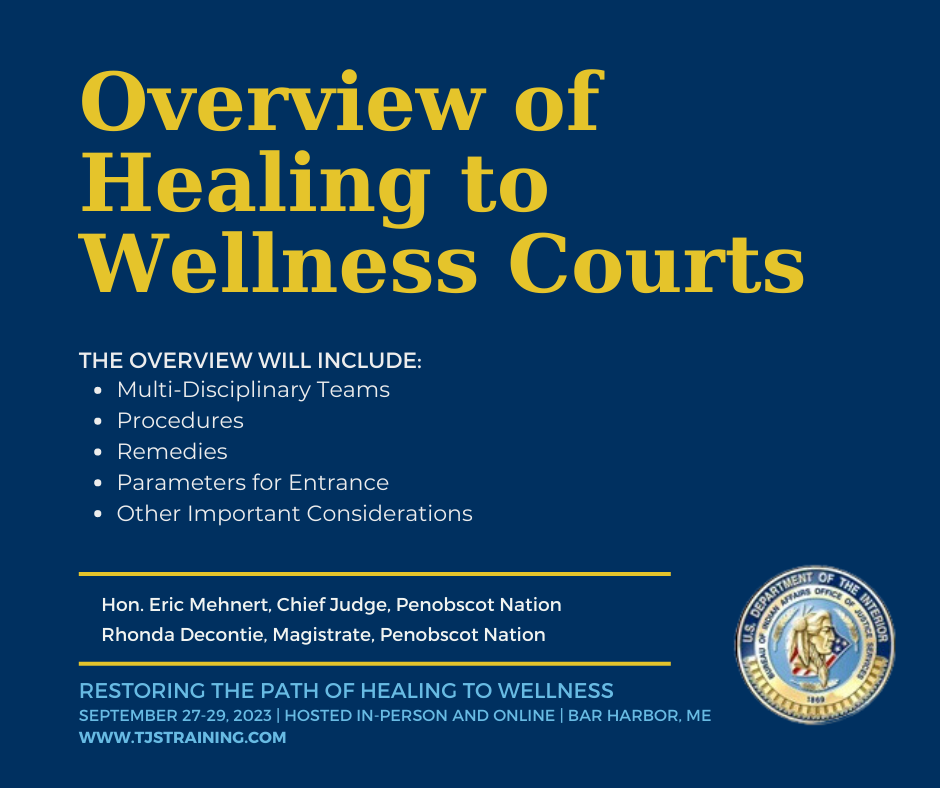
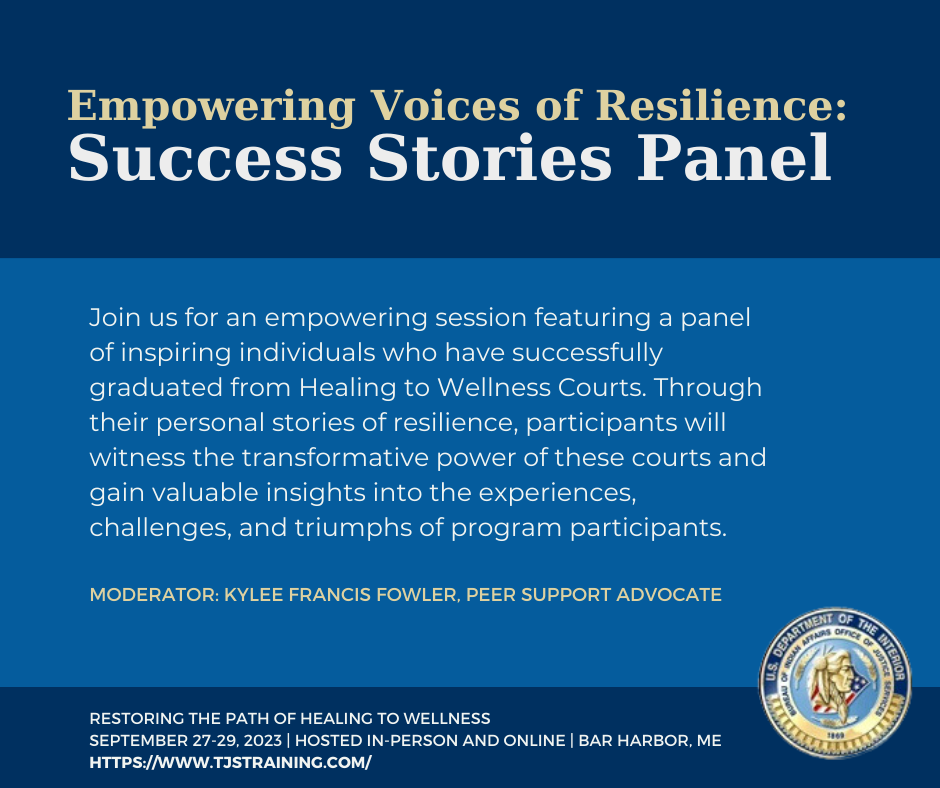
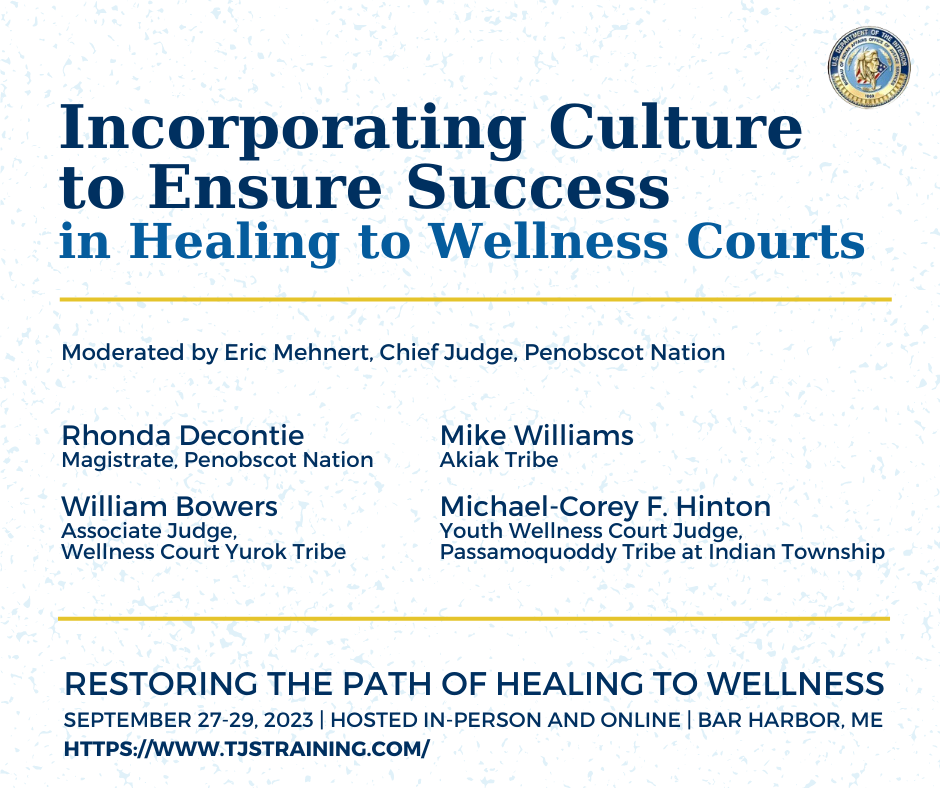
Hosted by Penobscot and Passamaquoddy in collaboration with the five Tribes of Maine, United States Department of Justice, Office of Justice Programs, United States Department of Health and Human Services, ACF and SAMSHA, United Stated Department of Agriculture, Funded by Tribal Justice Support
Here:
Southwestern Law Review Vol. 52, No. 2, Spring 2023
· Table of Contents (PDF), https://www.swlaw.edu/sites/default/files/2023-08/52.2%20TOC_0.pdf
· Foreword (PDF) Lloyd L. Lee, https://www.swlaw.edu/sites/default/files/2023-08/Article%201_Lee%20Foreword%20%28updated%29.pdf
· Reflections on Place and People from Within (PDF) M. Alexander Pearl, https://www.swlaw.edu/sites/default/files/2023-08/Article%202_Pearl.pdf

· Thoughts on A Nation Within’s Discussion of the Navajo Nation’s Water Rights (PDF) Adam Crepelle, https://www.swlaw.edu/sites/default/files/2023-08/Article%203_Crepelle.pdf
· Tribal Self-Determination and A Nation Within (PDF) Angela R. Riley, https://www.swlaw.edu/sites/default/files/2023-08/Article%204_Riley.pdf
· Ma’ii and Nanaboozhoo Fistfight in Heaven (PDF) Tamera Begay and Mathew L.M. Fletcher, https://www.swlaw.edu/sites/default/files/2023-08/Article%205_Begay%20%26%20Fletcher.pdf
· Reform in the Fifth World (PDF) Jessica A. Shoemaker, https://www.swlaw.edu/sites/default/files/2023-08/Article%206_Shoemaker.pdf
· The Reports of My Death Are Greatly Exaggerated: The Continued Vitality of Worcester v. Georgia (PDF) Dylan R. Hedden-Nicely, https://www.swlaw.edu/sites/default/files/2023-08/Article%207_Hedden-Nicely.pdf
· The Nation Within: Prospects for an Indigenous Future (PDF) Wendy S. Greyeyes, https://www.swlaw.edu/sites/default/files/2023-08/Article%208_Greyeyes.pdf
· Afterword: With Gratitude (PDF) Ezra Rosser, https://www.swlaw.edu/sites/default/files/2023-08/Article%209_Rosser_Afterword.pdf
Here.
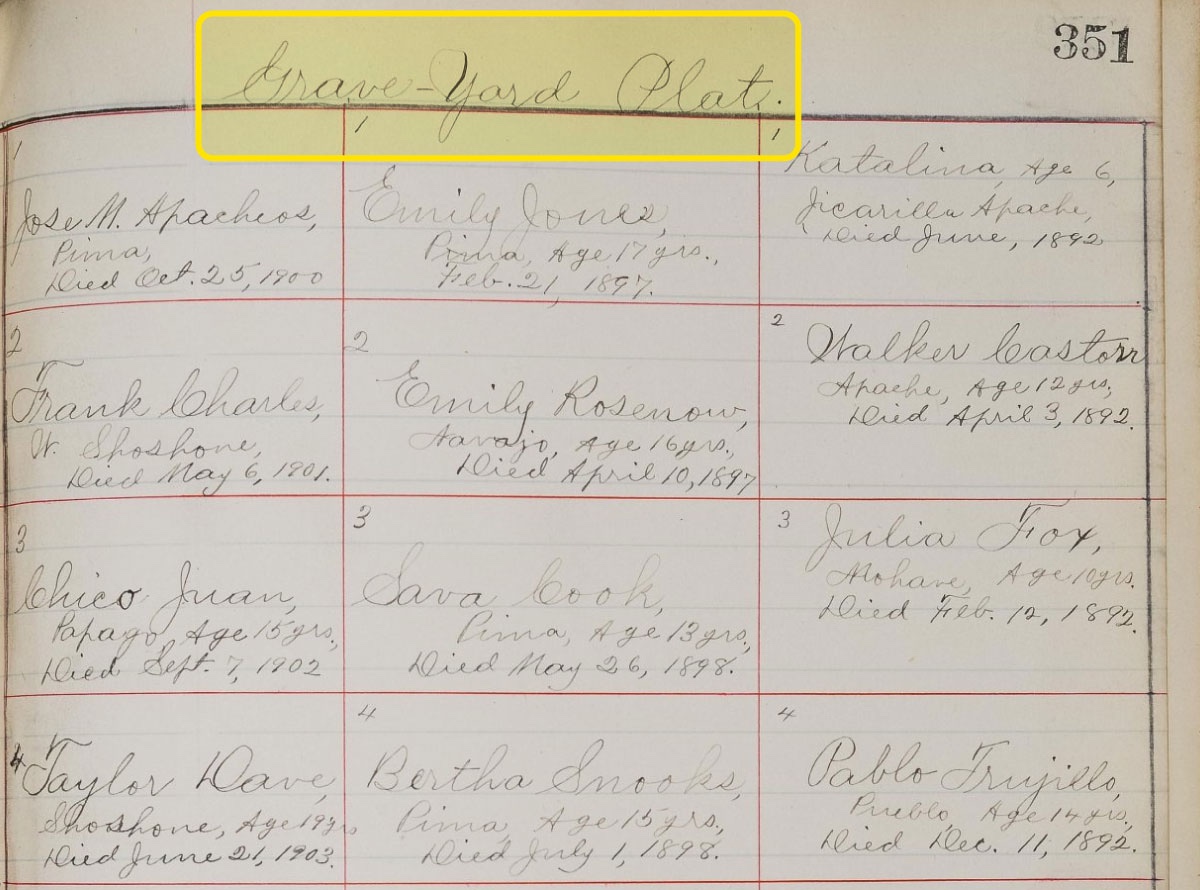
Here are the materials so far in Steve v. Tuni (D. Nev.):

 Turtle Talk
You must be logged in to post a comment.