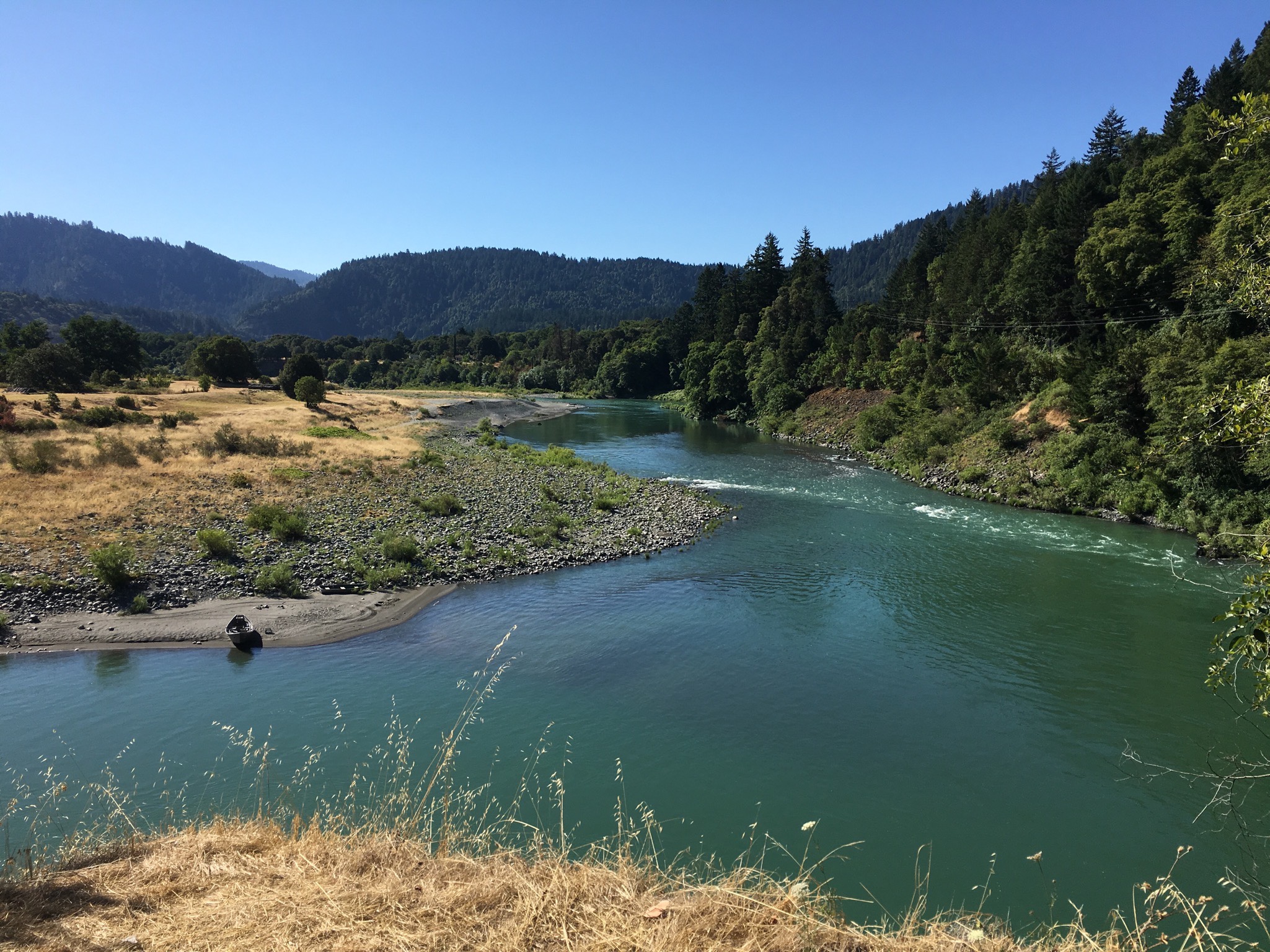
Federal Court Complaint Filed re: Cannabis Raid at Round Valley

Here is the complaint in Cordova v. Mendocino County Sheriff’s Office (N.D. Cal.):

Nicholas Stamates on White Collar Crime in the City of Tulsa after McGirt and Castro-Huerta

Nicholas Stamates has posted “The Aftermath of McGirt and Castro-Huerta: Problems and Possible Solutions relating to White Collar Crime in the City of Tulsa,” recently published in the Texas Tech Law Review, on SSRN.

Here is the abstract:

The Supreme Court ruling in McGirt v. Oklahoma drastically changed the legal jurisdiction of most of the state of Oklahoma under federal law. In 2017 the 10th Circuit held in Murphy v. Royal that the Oklahoma Enabling Act of 1906 never disestablished the reservations of the Five Civilized Tribes and the Supreme Court would concur with that opinion in McGirt v. Oklahoma which means that the Major Crimes Act and other federal and tribal laws relating to Indians now apply in Eastern Oklahoma, including the City of Tulsa, and not Oklahoma law in applicable cases. In doing so, the Supreme Court inadvertently created a white-collar crime jurisdictional nightmare but one that has many solutions that enshrine tribal sovereignty and corporate responsibility among Tulsa based businesses. These solutions include state and tribal compacts, congressional legislation and proactive measures by Tulsa corporations such as “McGirt forms” that list Indian status of involved parties under federal law in case of a crime, choice of law provisions in contracts for civil suits in Tribal Courts so that corporations know what to expect and can shape the outcome of a case and working with local law schools so that new hires are prepared for the post McGirt and Castro-Huerta landscape.

Kevin Washburn on the Biden-Harris Administration’s Expanding Work with Tribes

Kevin Washburn has posted “The March of Co-Management — The Biden-Harris Administration’s Expanding Work with Tribes” on SSRN.

Here is the abstract:

In response to a request from the Foundation of Natural Resources and Environmental Law for a description of the Biden-Harris Administration’s efforts to increase the role of tribal communities in federal land management, this essay provides a variety of ways that the Biden-Harris Administration has worked to provide a stronger relationship between the federal government and tribal governments. These efforts include historic appointments of Native Americans to significant positions, especially in the areas governing natural resources in the federal government. It also includes better processes for incorporating traditional ecological knowledge into decision making, enhancing efforts at tribal consultation, and dramatically increased appropriations for tribal governments. The essay also explains how tribes fit within broader administration priorities, such as the American the Beautiful initiative to conserve 30 percent of American land by 2030, and the Justice 40 initiative, providing 40 percent of federally-appropriated funds invested in support of the clean energy transition to communities burdened by traditional energy infrastructure.

Alexandra Fay on Criminal Jurisdiction and Federalism in Indian Country

Alexandra Fay has posted “Criminal Jurisdiction and Federalism in Indian Country” on SSRN.

Here is the abstract:

This Article examines criminal jurisdiction in Indian Country to describe tribal status in American federalism. In 2022, Congress and the Supreme Court altered the already byzantine scheme of criminal jurisdiction on tribal land through the Reauthorization of the Violence Against Women Act and Oklahoma v. Castro-Huerta, respectively. By instating both tribal and state jurisdiction over a common class of offenders without any structure for coordinating prosecutions, VAWA and Castro-Huerta have necessitated a new kind of inter-sovereign cooperation — in other words, a federalism problem.

To understand the import of these jurisdictional shifts, the Article traces the history of tribal criminal jurisdiction from the American War of Independence to the present. The national policies and decisions that shaped this record can be characterized by both a persistent distrust of tribal justice and an enduring recognition for tribal sovereignty. Given the historic antagonism between the subordinate sovereigns, namely states’ penchant for ignoring and undermining tribal governance, tribes have good reason to be wary of concurrent jurisdiction today.

At its heart, this Article is a study of federalism. It adapts existing theories of federalism to illuminate tribal political status and suggestions federalism values (e.g. innovation, local self-determination, minority empowerment) to guide tribal sovereigns’ continued integration into American constitutionalism. Ultimately, it presents a federalism argument for tribal sovereignty.

Fascinating New Scholarship on the “Wendigocene”

Jonelle Walker has published “Wendigocene: A Story of Hunger” with the Turtle Island Journal of Indigenous Health.

Highly recommended.

The abstract:

My mother once told me that if you speak about Wendigos out loud, they will come. They are cannibals, flesh eaters, spirit eaters. Wendigos survive by consuming the life of others without reciprocity, care, consent, or regard in the name of personal gain or profit. Growing up, I was taught that the Wendigo condition was something that you caught like a disease or that grew within yourself like a cancer. They were monsters, they were the closest thing we had to “human.” Afterall, according to the ideological lineages of Marxism, liberal Enlightenment, and settler colonialism, to be “human” is to be a monster, a capitalist, a cannibal. Each of these ideological lineages root the definition of the “human” in transcendence, defined by property, exhibited through man-made aesthetics rooted in capital, white supremacy, anti-Black racism, anti-Indigeneity, and a false human/nature divide. In this paper, I argue that the term “Anthropocene”, much like the “human” it centers, requires an ontological limiting that fails to encapsulate the fullness of Anishinaabe worlds, but most importantly Anishinaabe responsibility to each other. I offer a reframing from my positioning, where the last 500 years of apocalypses can be theorized through an analysis of the rise of the Wendigos. In conversation with other critiques of the well-problematized “Anthropocene,” this contribution offers a theoretical exploration of Wendigo theory to further support that the term “Anthropocene” is reflective of itself (Davis & Todd, 2017, p. 761-780). I suggest the term “Wendigocene” as an alternative to “Anthropocene” within the context of Anishinaabe communities for Indigenous theorists, as this reframing invokes a responsibility to care for our relations and exercise abolitionist legal praxes which are central to our sovereignty.

Job Announcements

To post an open Indian law or leadership job to Turtle Talk, send all of the following information to indigenous@law.msu.edu

In the email body:

A typed brief description of the position which includes

  • Position title
  • Location (city, state)
  • Main duties
  • Closing date
  • Any other pertinent details, such as a link to the application
  • An attached PDF job announcement or link to the position description

Wilton Rancheria

Tribal Court Director. Elk Grove, CA. The Tribal Court Director (Clerk of the Court) is the supervisory administrative position of the Tribal Court of Wilton Rancheria. The Tribal Court Director provides a variety of legal advice, counseling, research, and related legal services in support of the overall operation of the Wilton Rancheria Judicial Branch. Closing Date: August 14, 2023.

Coeur d’Alene Tribe

Tribal Prosecutor. Plummer, ID. Represents the Coeur d’Alene Tribe in Tribal Court in criminal prosecutions, youth in need of care (dependency) actions, exclusion proceedings, truancy filing and certain civil code violations. Main duties include, filing decisions for all criminal violations, both adult and juvenile, and youth in need of care petitions in the Tribal Court and advise the Tribal Police and the Social Services Department. The position is open until filled. 

New Mexico Legal Aid, Inc.

Director – Native American Program. Santa Ana Pueblo, NM. For this position, the Director is responsible for overseeing the Native American Program including: The provisions of legal services, performing administrative duties, and working in close collaboration with other members of NMLA’s management team, organizing and participating in community education and outreach activities to the various Pueblo communities, collaborating with tribal agencies and organizations, being active in local bar and community activities. Deadline: August 15, 2023 (or until filled)

University of Arizona James E Rogers College of Law

Clinic Director. Tucson, AZ. Our clinic website is here, and the clinic is also affiliated with the University’s Natural Resource Users Law & Policy Center. Please encourage your networks and law fellows to apply! The position will remain open until filled.

Maine Indian Tribal-State Commission

Executive Director. Trescott, ME. Pursuant to the strategic direction of the Commissioners, the Executive Director will be responsible for the management of Commission projects and activities, including organizing Commission meetings; supervision of staff and contractors; legislative and policy work; education; research and production of studies and reports; finances; fundraising; maintenance of records; and general office management. Applications due by 8/21/2023.

Senate Committee on Indian Affairs

Policy Advisor/Counsel. Washington, D.C. Work on Indian Affairs matters within the Committee’s jurisdiction, including public safety, voting, land and natural resources, transportation infrastructure, and economic development policy. Closing date: August 2, 2023.

Earthjustice

Associate Attorney, Rocky Mountain Office. Denver, CO. Earthjustice is seeking Associate Attorneys to join our Rocky Mountain Regional Office. The Associate Attorney position is a three-year position with the opportunity for a three-year extension as a Senior Associate Attorney. The position requires 1-5 years post-law-school legal experience and will begin in January or April 2024. Apply By Date: 8/20/2023.

Associate Attorney, California Regional. Los Angeles, CA or San Francisco, CA. We are accepting applications for an Associate Attorney to conduct legal advocacy, including administrative advocacy and litigation, with the California Regional Office. The position requires 1-5 years post-law school legal experience. This role may be based in Los Angeles or San Francisco. Apply By Date: 8/13/2023.

Legal Practice Assistant, Alaska. Juneau, AK. Earthjustice is seeking applications for a full-time Legal Practice Assistant to join the Alaska Regional Program. This role is based in our Juneau, Alaska office. Our ideal candidate would be available to start as soon as possible. Apply By Date: 8/6/23.

National Council of Urban Indian Health

Director of Congressional Relations. Washington D.C. Reporting to the Vice President of Policy and Communications, the Director of Congressional Relations will have both internal and external facing responsibilities to advance the mission of NCUIH through excellence in policy, advocacy, outreach, technical assistance, research projects and related programs. Closing Date: 8/31/23.

Kadiak, LLC

Assistant Project Manager. Anchorage, AK. Essential Functions, Responsibilities & Duties may include, but are not limited to: Work directly with the Tribal Court Project Manager to implement goals and objectives of projects, work cooperatively with Team Kadiak, interns and/or externs to implement project goals, as needed, assist in meeting goals and objectives of the training and technical assistance contracts and agreements, overview project goals and ensure project goals are achievable. liaise with project lead and other project managers to maintain project schedule and efficacy. Closing Date: Until filled.

Mille Lacs Band of Ojibwe

Deputy Solicitor General. Onamia, MN (Remote). Advise Band executive staff, legislative staff, and the Solicitor General on the interpretation, application, and enforcement of laws and regulations.  Assist in drafting legislation and reviewing proposed legislation.  Assist in the representation of the Band in civil actions brought by or against the Band, on all legal issues and at functions related to assigned responsibilities.  Prepare and present cases in the Band’s judicial system.  Review drafts of laws, rules, and regulations affecting Band operations and administration.   Assure that other divisions within the Band are updated on pertinent legal issues.  Coordinate regulatory and administrative projects as assigned.   Ensure Band members have access to capable legal representation when needed.   Other duties as assigned. CLOSING DATE:  Until Filled.

The Catawba Nation

Fall 2023 Legal Internship. Remote. Interns will assist the Nation’s Legal Department by researching pertinent issues and drafting ordinances, memoranda, and policies. Interns will be asked to work remotely. The closing date to apply for the Internship is August 19, 2023.

Nevada Legal Services

Legal Assistant/Secretary. Carson City, NV. Provide support to attorneys and staff by performing clerical duties, answering phones, conducting intake, managing outreach, preparing correspondence to attorneys and clients, filing documents, and managing case files.  Perform other duties as assigned. Closing date: Open until filled.

U.S. House of Representatives Committee on Natural Resources, Democratic Staff

Deputy Chief Counsel (Democratic Staff). Washington, DC. The primary responsibility of the position is to assist the Chief Counsel in advising the Ranking Member and other Committee Democrats on the rules and the procedures of the Committee and the House. The position entails: legislative drafting; jurisdictional analysis; advising on parliamentary procedure; acting as liaison to Republican staff, other congressional committees and offices, and Executive agencies; and providing general legal counsel to the Ranking Member and Democratic Staff on topics in the Committee’s jurisdiction, including Federal Indian Law and statutes governing the conservation and development of public lands and waters. Closing Date: August 21, 2023.

2023-2024 Teacher’s Memorandum for 7th Edition of Getches’ Federal Indian Law Casebook

Here.

Questions and comments directed to Fletcher.

D.C. Federal Court (again, mostly) Dismisses Narragansett Challenge to Federal Approval of Highways

Here is the order in Narragansett Indian Tribe v. Pollack (D.D.C.):

Updated: California Supreme Court Granted Rare Reviews in Two Sets of ICWA Inquiry Cases

Buckle up–this is a long one. ETA: And it just keeps getting longer. See below for the latest addition.

For a while now, California courts of appeal have been struggling with the level of ICWA inquiry required in a child protection case. These inquiry cases often involve are about inquiry beyond that of asking the parents about their Native ancestry. The question usually is what is the duty of inquiry to extended family members after parents have repeatedly and unequivocally denied any Native ancestry, as it is in the as it is in the Dezi C. case. However, the other case granted, Kenneth D., the court failed to inquire of father at all. These appeals are also coming up very late in the proceedings–in both cases the appeal was of a termination of parental rights order.

The CA courts of appeal have been fighting about the standard for years, though I would say in the past two-three years it has become particularly acute. There are so many contradictory reported cases that I haven’t posted a vast majority of them. I’ve had a draft post running for almost a year trying to collect and explain what was going on, but it is far too unwieldy. In 2022, I started tracking only reported ICWA cases. In 2022, California had 35 REPORTED ICWA cases on inquiry alone:

Screenshot 2023-07-27 at 11.33.29 AM

In all of 2022, there were only 67 TOTAL reported ICWA cases, making these inquiry cases a full 53% of all ICWA cases that year.

First Set of Appeals: Inquiry of Relatives

The California Supreme Court granted review on Dezi C. and Kenneth D. from the 2022 bunch in the past year or so. As you can see, I had classified the Dezi C. case as a “reason to believe” which means the Court did analysis on the level of information it needed to determine if the case was an ICWA case.

Dezi C. Opinion

KennethD C096051

CA Supreme Court Grants

The Dezi C. opinion outlines the current state in the California courts of appeal regarding whether “defective initial inquiry is harmless.” There were three concurrent rules as of the time of the opinion (June 14, 2022 if you wondered how slowly the CA Sct works):

1. “Automatic Reversal Rule:” Any defective initial inquiry requires reversal on that issue.

2. “Readily Obtainable Information Rule:” Defective initial inquiry is harmless unless the record indicates there is “readily obtainable information” that will “bear meaningfully” on the question on if the child is an Indian child.

3. “Presumptive Affirmance Rule:” Defective initial inquiry is harmless unless the parent comes forward with a reason on appeal why further inquiry would change the outcome of the ICWA determination.

Dezi C. introduced a fourth rule–

4. “Reason to Believe Rule:” objectively the only one that quotes the actual law, this rule states the record on appeal must “contain information suggesting a reason to believe the child may be an ‘Indian child.'” The Court gives three examples that would require reversal–someone tells the Agency there may be Native ancestry and the Agency ignores it; no one inquires of the parents if they have Native ancestry; the parents are adopted themselves and may not have the required information.

The Court then goes on the explain in detail why their rule is best and the other rules are the worst (obvi).  

In applying the reason to believe rule to the facts of the case, the Court found there was no reason to believe the children were Indian children, as both parents denied to the Agency, on a form, and in court that they had any Native heritage. No one came forward claiming they did. The parents grew up with their biological families. And on appeal, the mother did not offer any evidence that either parent in fact has Native ancestry. Therefore, the failure of the Agency to do further inquiry to extended family members was harmless error. 

The question at the Supreme Court is as follows:

In Re Dezi C., S275578. (B317935; 79 Cal.App.5th 769; Los Angeles County Superior Court; 19CCJP08030.) Petition for review after the Court of Appeal affirmed orders in a juvenile dependency proceeding. This case presents the following issue: What constitutes reversible error when a child welfare agency fails to make the statutorily required inquiry concerning a child’s potential Indian ancestry?

The Kenneth D. court applied the Dezi C. fourth rule to fairly different facts. In Kenneth D. the trial court completely failed to inquire of the putative father’s Native ancestry. The court order termination of parental rights on Mrch 22, 2022 and father appealed. The Agency supplemented the record on April 28 with the following information received from the father on April 21: Father said he might be Cherokee, and that his mother (grandmother) would have the information. The Agency spoke with the grandmother who explained their entire family is from Mexico so the Native heritage result she received on a DNA test likely results from Mexico. The grandmother provided the Agency with additional family contact information.

Mother in the case originally said she might have some Native ancestry from her Kentucky relatives, but denied any family member was a tribal citizen or that she was eligible to be a tribal citizen.

The father appealed the termination order asking for a reversal because of the lack of inquiry and the court held under the Reason to Believe test that the error of the court in not conducting an initial inquiry TO A PARENT was harmless.   

The question at the California Supreme Court is as follows:

In re Kenneth D., S276649. (C096051; 82 Cal.App.5th 1027; Placer County Superior Court; 53005180.) Petition for review after the Court of Appeal affirmed an order in a juvenile dependency proceeding. This case presents the following issues: May an appellate court take additional evidence to remedy the failure of the child welfare agency and the trial court to comply with the inquiry, investigation, and notice requirements of the Indian Child Welfare Act (25 U.S.C. § 1901 et seq.; Welf. & Inst. Code, § 224 et seq.), and if so, what procedures must be followed?

Briefing in Dezi C. is here

Kenneth D is here 

Second Set of Appeals: Interpretation of California Welfare and Institutions Code Sec. 224.2(b)

In 2023, there have been fewer reported cases on inquiry so far (only 9, though there was one this week I haven’t entered into this spreadsheet, but talk about below):

Screenshot 2023-07-27 at 3.26.41 PM

There have been 28 (29 if you count Brackeen) reported cases total, so they are currently running less than half of the total.

However, there was a new issue that arose in In re Robert F. and In re Ja. O. out of the Fourth District, Div. II, regarding California’s statutory requirement of inquiry. Both of these cases have been granted review in the California Supreme Court yesterday. The question turns on an interpretation of the California statute governing this issue. For reasons that feel to me like a scrivener’s oversight/a citation lost in the drafting, the Court held that when a child is removed pursuant to a warrant, there is no statutory requirement to make ICWA inquiry. But when a child is removed without a warrant, the statute does require the inquiry.

In both cases, the children are removed and ICWA would apply if the children “Indian children,” under the law, and inquiry should be happening in both instances. It is in many ways a distinction without a difference for the purposes of ICWA inquiry. Perhaps unsurprisingly then, the Fourth District, Div. II, late last week held the exact opposition in In re Delila D.:

We conclude there is only one duty of initial inquiry, and that duty encompasses available extended family members no matter how the child is initially removed from home. Applying a narrower initial inquiry to the subset of dependencies that begin with a temporary removal by warrant frustrates the purpose of the initial inquiry and “den[ies] tribes the benefit of the statutory promise” of A.B. 3176. (In re S.S. (2023) 90 Cal.App.5th 694, 711, 307 Cal.Rptr.3d 308 (S.S.).) The goal of the initial inquiry is to determine whether ICWA’s protections may apply to the proceeding, and the way a child is initially removed from home has no bearing on the question of whether they may be an Indian child. 

California Supreme Court Results from 7/26 Conference

In re Robert F.

In re Ja.O.

In re Delila D.

Finally, did I get myself turned around and initially post the older granted cases as the new cases and then find the new cases and have to go back and fix everything? Perhaps. Special thanks to Lenny Powell for alerting me after the original post and helping sort this all out. Maybe I got excited because few of us remember the last time ICWA came up to the CA Supreme Court back in 2015-2016 with the Abbigail A. (obligation to enroll) and Isaiah W. (notice) cases.

Idaho Federal Court Remands Contract Action to Tribal Court

Here is the order in Shoshone-Bannock Tribes v. Vanir Construction Management Inc. (D. Idaho):

Briefs here.