Here are the materials in Stanko v. Oglala Sioux Tribal Public Safety Division (D.S.D.):
Prior suit here.
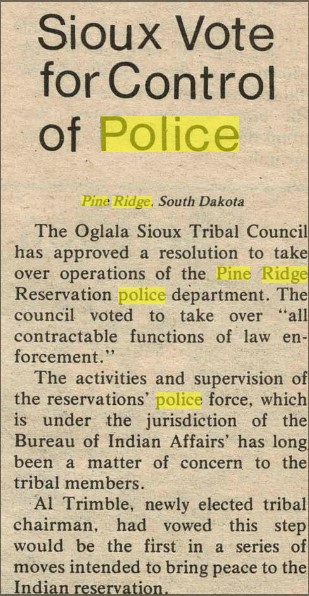
Here are the materials in Stanko v. Oglala Sioux Tribal Public Safety Division (D.S.D.):
Prior suit here.
Here.
Native youth have suffered the highest rate of caregiver loss from the pandemic—4.5 times higher than that of White children. This means that 1 of every 168 Native children have lost their primary caregivers to COVID, as compared with 1 of every 310 Black children, 1 of every 412 Hispanic children, and 1 in every 753 White children.
Thanks to Fred Fisher to sending this on to us.
Here are updated materials in Hardy v. City of Nome (D. Alaska):

45 DCt Order on Motion to Dismiss
The complaint is posted here.
Order list here. Prior post detailing the other petitions here.
Here are the materials in Oklahoma v. Davis, a petition in which Oklahoma only asked to overrule McGirt:
There are a bunch more denials of Oklahoma’s brilliant papering strategy (we’ll post materials later, cuz we have lives and Tribal Law won’t teach itself . . . or will it?):


Oh and because we can’t have nice things, the Court granted the Harvard affirmative action case, too.
Here are the materials in Soloniewicz v. Sugar Factory LLC (Conn. S. Ct.):
Here are the materials in Wadkins v. State of Oklahoma (Okla. Cr. Crim. App.):
An excerpt:
The State’s evidence did not refute Wadkins’s evidence of recognition in any meaningful way. The State called one witness, namely Michael Williams, a special agent with the Department of Corrections with expert knowledge of the current prison gangs. Williams testified that the UAB is a white supremacist gang. While there are presently five to ten Native American gangs, he admitted the only Indian gang in existence when Wadkins first went to prison was the Indian Brotherhood. He was unaware of any present affiliation between the UAB and Indian Brotherhood gangs, but admitted gangs sometimes align. He confirmed that DOC records reflected that Wadkins is a former member of the UAB and that Wadkins’s UAB tattoos have been defaced. His testimony neither refuted Wadkins’s evidence of tribal recognition nor showed Wadkins’s membership in the UAB was a renouncement of his Indian status.
The district court’s conclusion–that Wadkins failed to establish recognition–is not supported by the record. While eligibility for tribal membership alone is insufficient to prove recognition, Wadkins’s subsequent enrollment coupled with the other factors, specifically his possession of a CDIB card since childhood and receipt of Indian health services, showed he was recognized as Indian by the Choctaw Nation. Because he is an Indian for purposes of federal criminal law and the charged crimes occurred in Indian Country, the State lacked jurisdiction over this matter.




 Turtle Talk
You must be logged in to post a comment.