Hainipi, Boozhoo, Aaniin, Chokma, Yá’át’ééh, Imaynallan, Mohtompan wunne, Posoh, ᎣᏏᏲ, Lios em chaniavu, Ske:g taş: Greetings from the Native American Law Students Association (NALSA) at Michigan Law! Please join us for our inaugural NALSA Banquet to celebrate Indigeneity and be in community.
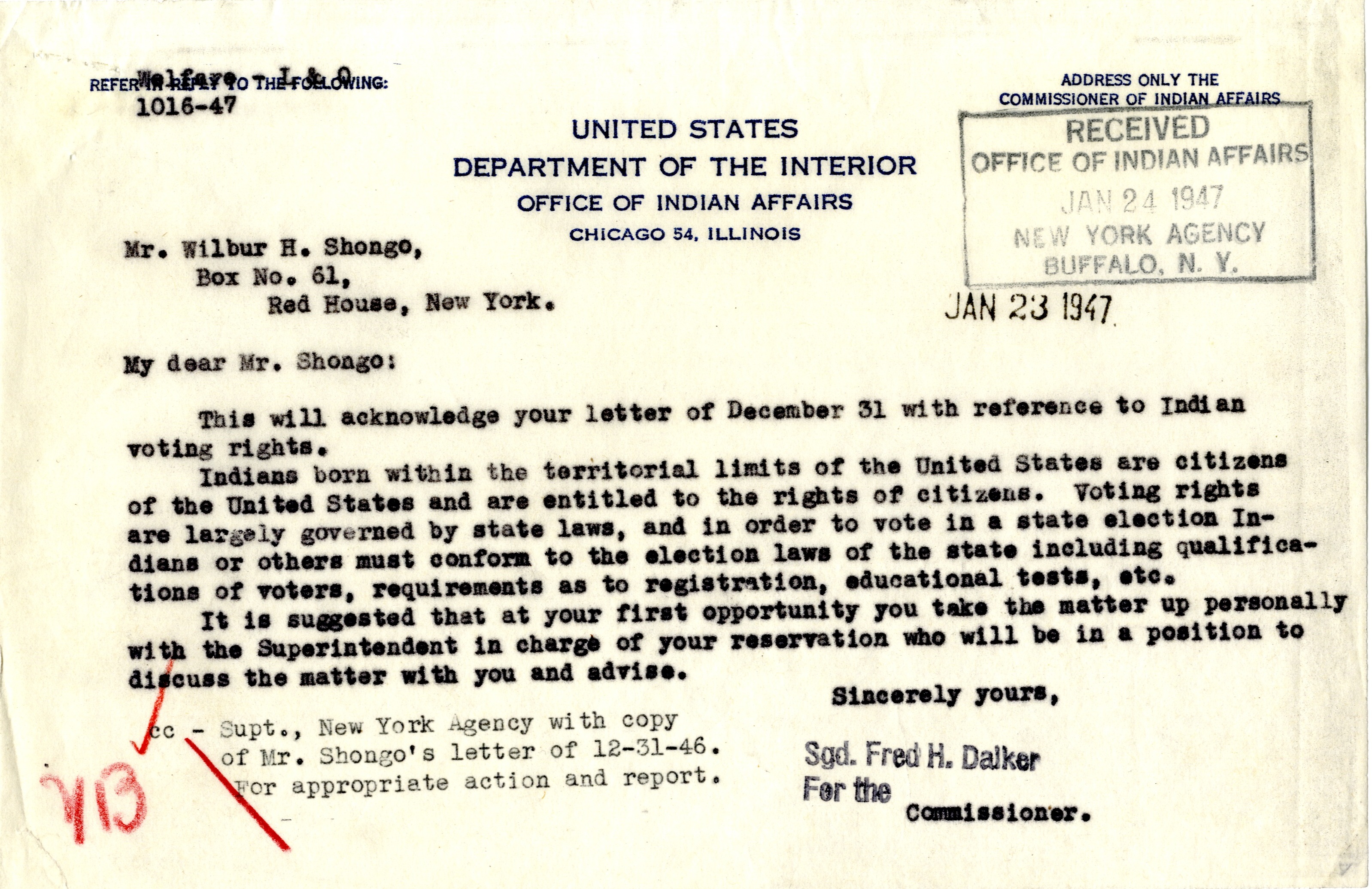
This Article examines the enduring legacy of Elk v. Wilkins, 112 U.S. 94 (1884), a Supreme Court decision that interpreted the Fourteenth Amendment’s Citizenship Clause to exclude Native Americans from birthright citizenship. By relegating Native citizenship status to a statutory privilege rather than a constitutional right, Elk created a framework that has since been weaponized to challenge birthright citizenship for the children of undocumented immigrants. This Article demonstrates how Elk’s flawed reasoning—particularly its narrow reading of “subject to the jurisdiction thereof”—continues to shape legal and political efforts to erode the Fourteenth Amendment’s guarantees.
Drawing on Justice Harlan’s dissent in Elk, the legislative history of the Fourteenth Amendment, and the text of the Citizenship Clause, this Article argues that Elk was wrongly decided and that the jurisdictional requirement was never intended as a tool for exclusion. The Reconstruction Framers designed the Citizenship Clause to ensure equal citizenship for all persons born on U.S. soil, regardless of ancestry or parental status. Justice Harlan’s dissent provides a blueprint for this inclusive reading, rejecting the notion that allegiance at birth determines jurisdiction.
This Article calls for the explicit repudiation of Elk and its continued misuse in modern birthright citizenship debates. The Fourteenth Amendment’s promise is clear: for anyone born in the United States who subjects themselves to its jurisdiction, birthright citizenship is a constitutional right, not a congressional privilege.
Recommended. I agree that Elk v. Wilkins wrongly decided. The opinion is filthy with rank bigotry and deserves no serious consideration, the reality of which is proven in the horrific, bigoted manner in which the Department of Justice is defending Trump’s birthright citizenship order by relying on Elk‘s application of a racial caste system. And wouldn’t it be nice if Indigenous Peoples, like all people, have the right to consent to or reject American citizenship?
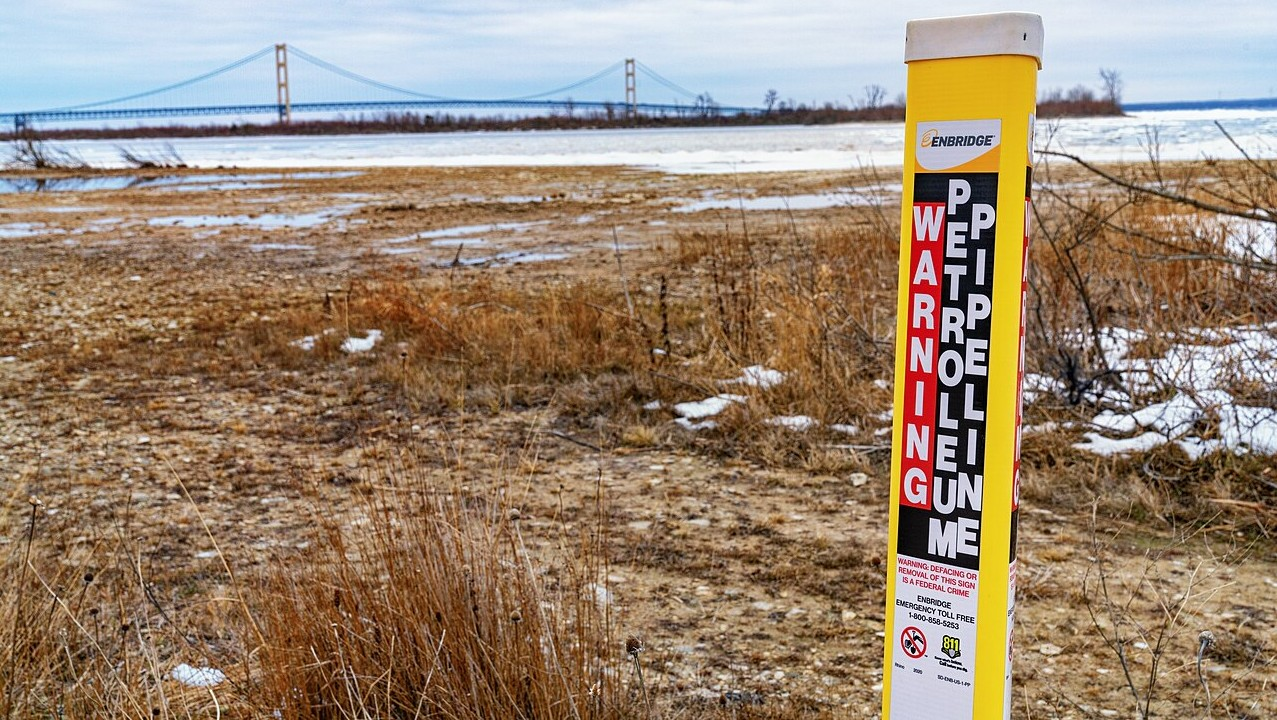
Tribes in Michigan oppose Enbridge the Line 5 oil pipeline replacement plan, arguing the environmental risks to their traditional waters far outweigh any benefits. The proposal to replace the 70-year-old pipeline that currently runs through Michigan and Wisconsin has faced many legal challenges over the years. Now, the U.S. Supreme Court will decide whether the state or federal government should have say over how the project proceeds. The decision could set a precedent on how much power tribes and states have in regulating fossil fuel development. We’ll speak with tribal leaders, Native legal scholars, and others about what’s next for the ongoing Line 5 pipeline legal battle.
GUESTS
Wenona Singel (Little Traverse Bay Bands of Odawa), associate professor of law at Michigan State University College of Law and associate director of the Indigenous Law and Policy Center
Pursuant to the Pechanga Band of Indians’ Judicial Ordinance and substantive laws, the Tribal Court has jurisdiction over any matters filed directly with the Court, those transferred from another tribal or state court, and those referred to it by the Óomish Yáamish Peacemaker Court. The purpose of the Tribal Court is to provide a tribal forum where matters involving child welfare, including children in need of care, adoption, child support and child custody; disputes regarding tribally-approved business leases; claims pursuant to the Pechanga Employment Claims Act; appeals of the Band’s exercise of eminent domain; appeals from the Band’s Trust Review Board; cases arising from the Band’s Tribal Tax Code; and disputes arising from the Pechanga Band Member Health Program, can be heard and addressed according to Pechanga Tribal law, custom and tradition. All cases will be initially assigned to the Chief Judge, who may assign cases to any Associate Judges or judges Pro-Tem depending on the circumstances. As an officer of the Pechanga Tribal Court, the Chief Judge will support and defend the sovereignty and Constitution and Bylaws, of the Pechanga Band, and its traditions, customs, and Tribal laws.
QUALIFICATIONS:
• Minimum age requirement is twenty-five (25) years of age.
• Must be of good moral character and integrity.
• Must have graduated from an accredited law school.
• Must have a minimum of five (5) years experience in the practice of law.
• Must be in good standing with a bar of a federally recognized Indian Tribe or any state.
• Must be capable of carrying out the duties of the Chief Judge’s office.
• Must never have been convicted of a felony offense.
• Must be familiar with the provisions of the Judicial Ordinance, Óomish Yáamish Peacemaker Code, Pechanga Band of Indians Court Procedures, all applicable substantive laws of the Band, federal law applicable to the Reservation, Pechanga Band of Indians customs and traditions, and any other relevant tribal law, resolutions or executive orders.
• Tribal Member applicants must be in “good standing” with the Pechanga Band of Indians.
• Must be able to avoid actual or perceived conflicts of interest.
• Must possess and maintain a valid drivers’ license and provide proof of insurance
Contract position – Contract rates shall be subject to the terms of an individual contract. Open until 4/30/2026.
This position can be fully remote with the understanding that travel to Washington, D.C., will be required for court.
We are seeking a seasoned litigator with deep expertise in federal environmental, preservation, and administrative law, particularly under NEPA, NHPA, and the APA, to lead and independently manage a high-profile docket of complex federal cases — including briefing, oral argument, and client communication — primarily in the U.S. District Court for the District of Columbia. The ideal candidate will develop and file new cases challenging unlawful federal agency actions, driving litigation strategy from administrative record review through dispositive motion practice and appellate proceedings. This role also requires the ability to supervise junior attorneys and collaborate with co-counsel, experts, and clients, while contributing to organizational strategy and thought leadership in cultural heritage, environmental, and administrative law. The position is fully remote with required travel to Washington, D.C., for court appearances, and is best suited for a strategic advocate motivated by a commitment to the rule of law and federal agency accountability.
J.D. from an accredited law school with strong academic credentials.
7–10+ years of litigation experience, with a substantial portion devoted to federal court practice.
Demonstrated expertise litigating NEPA, NHPA, and APA cases.
Significant experience in the U.S. District Court for the District of Columbia; appellate experience preferred.
Proven ability to manage complex cases independently and lead litigation strategy.
Excellent legal research, writing, and oral advocacy skills.
Admission to the D.C. Bar (or eligibility to waive in promptly).
Picayune Rancheria of the Chukchansi Indians , Oakhurst, CA – Hybrid work arrangements may be considered for qualified candidates
The Picayune Rancheria of Chukchansi Indians is seeking a highly skilled attorney and dedicated and strategic leader to join the Office of Attorney General. The position of Attorney General shall be responsible for advancing Tribal self-governance and sovereignty, protecting all Tribal assets, defending the integrity of the Tribe, assisting and advising Tribal entities in their pursuit of progress on behalf of Tribal members, and managing and providing legal services and representation to the Tribe, the Tribal Council, the Tribal Government, and its Tribal Entities. The Attorney General is prohibited from offering legal advice or representing individual Tribal Members but instead serves to protect the rights of all members of the Tribe administering fair and impartial justice. Maintains confidentiality of all privileged information.
Advises and represents the PRCI in all contract matters; manages relations with the United States Government, federal agencies, and state and local governments and agencies.
Offers legal advice and representation on matters including, but not limited to, economic development, gaming, taxation, tribal lands, energy and natural resources, environmental regulation, child welfare, cultural resources, civil and criminal law, administrative matters, health and welfare issues, and employment law.
Drafts legal documents, including ordinances, regulations, policies, procedures, position papers, legal memoranda, correspondence, and executive summaries.
May be assigned to support various PRCI Boards, Commissions, and Committees, including attending meetings and addressing issues of concern.
•Juris Doctor (J.D.) degree from an ABA accredited or State Bar–accredited law school.
Active license to practice law in the State of California and in good standing with the State Bar of California.
•A minimum of seven (7) to ten (10) years of legal practice experience with a law firm, legal department, nonprofit organization, or legal services organization.
•At least three (3) years of supervisory experience in a law firm, legal department, nonprofit organization, or legal services organization.
•Must be free of any conviction by any state or the United States for a crime punishable by imprisonment in a penitentiary for a term of one (1) year, or more, or by any foreign government for a crime which would be punishable by imprisonment for a term of one year, or more, if committed in California, or must have been pardoned for such offense, or have had a conviction for offense overturned, or reversed by a court of competent jurisdiction.
•Must be available to work flexible hours.
PREFERRED QUALIFICATIONS
•At least three (3) years of substantive legal experience in Indian law, including areas such as trial practice, government or municipal law, civil rights, land use, energy and natural resources, corporate and business law, gaming law, real estate law, tax law, or civil legal services.
•A minimum of three (3) years of experience with Tribal business entity formation and regulation.
•Familiarity with the Tribe’s Constitution, laws, and culture is preferred, but not required.
Picayune Rancheria of the Chukchansi Indians, Oakhurst, CA
JOB SUMMARY
Under the direction of the Deputy Attorney General, the Paralegal provides legal and administrative support to the Office of the Attorney General and Tribal leadership. This position assists attorneys by conducting legal research, preparing and organizing case materials, drafting legal documents, and maintaining legal records. The role supports legal matters related to tribal governance, compliance, and operations and requires strong attention to detail, discretion, and the ability to manage sensitive legal information.
•Conduct legal research on tribal, federal, and state laws affecting the Tribe and its operations.
•Assist attorneys in preparing legal documents including resolutions, contracts, pleadings, memoranda, and policy documents.
•Prepare and organize materials for hearings, court proceedings, and Tribal Council meetings.
•Review contracts and agreements and assist with document preparation under attorney supervision.
•Assist with legal department workflow, scheduling, document management, and correspondence.
•Associate’s degree or Paralegal Certificate, or equivalent combination of education and experience.
•Minimum of two (2) years of experience in a legal setting such as a law firm, tribal government, public agency, or nonprofit organization.
•Proficiency in Microsoft Office Suite and legal research tools such as Westlaw or similar platforms.
•Ability to type at least 50 words per minute.
PREFERRED QUALIFICATIONS
•Bachelor’s degree in Legal Studies, Native American Studies, Political Science, or related field.
•Experience working with tribal governments, federal Indian law, or tribal governance matters.
•Familiarity with tribal legal systems, tribal constitutions, or tribal governance structures.
Under the general direction of the Chief Judge, this position is responsible for the following: 1) confer with judges; 2) legal research and writing; 3) schedule and participate in meetings: 4) act as mediator; 5) work with court staff on internal projects; 6) maintain the Tribal Court Bar; and 7) supervise judicial externs.
Education and/or Experience
Law degree (Juris Doctorate) from an accredited Law School. Intermediate to Expert experience and knowledge using word processing and Westlaw.
Language Skills
Employee must demonstrate the ability to interact tactfully and positively with Tribal members, all levels of staff and management. Ability to maintain a high level of confidentiality. Ability to read, analyze and interpret common professional journals, and legal documents. Ability to respond to common inquiries or complaints from staff and regulatory agencies. Ability to write reports and business correspondence. Ability to effectively present information and respond to questions. Ability to effectively present information to management, employees and groups of people. Ability to advocate on behalf of the tribe in a variety of settings.
Reasoning Ability
Ability to solve practical problems and deal with a variety of variables in situations where limited standardization exists. Ability to interpret a variety of instructions furnished in written, oral, diagram, or schedule form.
Licenses or Certificates
Must be an active member of a state bar association, or be willing to take the Washington State Bar exam if necessary.
Must have or be willing to obtain a valid Washington State driver’s license.
Must pass background check.
PHYSICAL DEMANDS
While performing the duties of this job, the employee is frequently required to sit; use hands to finger, handle, or feel; and talk or hear.
The employee is occasionally required to stand, walk, and reach with hands and arms.
Specific vision abilities required by this job include close vision, distance vision, color vision, and ability to adjust focus. The noise level in the work environment is usually moderate.
Under the general supervision of the Director, this position conducts research and interviews to gather information for documenting policy and procedure manuals for departmental operations for all entities within the Tribe by performing the following duties. Provides advice to the Tribal Government, the Tribal Council, and various departments and programs of the Tribe to ensure Code, Ordinances, Resolutions, are in compliance with the Tribe’s Constitution and By-Laws and implements the directives of the Tribal Council and Government.
Position requires a Law Degree. Ability to interpret and communicate technical information to all levels of experience is required. Intermediate proficiency with Microsoft Word and Excel required.
Language Skills
Employee must demonstrate the ability to interact tactfully and positively with Tribal members, all levels of staff and management. Ability to maintain a high level of confidentiality. Ability to read, analyze and interpret common professional journals, financial reports, and legal documents. Ability to respond to common inquiries or complaints from staff and regulatory agencies. Ability to write reports and business correspondence. Ability to effectively present information and respond to questions. Ability to effectively present information to management, employees and groups of people.
Must have a valid Washington State Drivers License and proof of insurance required.
Able to handle multiple projects simultaneously.
Strong, persuasive and clear verbal communication, customer service and interpersonal skills.
Motivated self-starter and able to perform under pressure.
– Travel to off-site meetings with prospective and current clients
– Apply knowledge of business issues, legal procedures, cases, statutes, and applicable regulatory authority to effectively counsel clients
– Conduct legal research by preparing legal memoranda, necessary pleadings, and documents required in all aspects of state, federal, and tribal litigation matters on an as needed basis.
– Appear at hearings and trials as needed and/or assigned.
– Draft tribal codes, regulations, agreements, analyze and review legal documents as needed.
Juris Doctorate
0-3 Years Experience Required
Knowledge of Federal Indian Law and its key statutes
– Travel to off-site meetings with prospective and current clients – Apply knowledge of business issues, legal procedures, cases, statutes, and applicable regulatory authority to effectively counsel clients – Conduct legal research by preparing legal memoranda, necessary pleadings, and documents required in all aspects of state, federal, and tribal litigation matters on an as needed basis. – Appear at hearings and trials as needed and/or assigned. – Draft tribal codes, regulations, agreements, analyze and review legal documents as needed.” “Position 1: 0-3 Years Experience Required
Position 2: 3-5 Years Experience Required (Litigation Experience Preferred)
– Travel to off-site meetings with prospective and current clients – Apply knowledge of business issues, legal procedures, cases, statutes, and applicable regulatory authority to effectively counsel clients – Conduct legal research by preparing legal memoranda, necessary pleadings, and documents required in all aspects of state, federal, and tribal litigation matters on an as needed basis. – Appear at hearings and trials as needed and/or assigned. – Draft tribal codes, regulations, agreements, analyze and review legal documents as needed.
Juris Doctorate
1-3 Years Litigation or Transactional Experience
Knowledge of Federal Indian law and its key Statutes
A successful applicant will possess exceptional legal writing and research skills, strong oral advocacy, sound judgment, and rigorous ethics. We value critical and creative thinking, tenacity, integrity, and a genuine commitment to serving Indigenous communities and people. While this is not solely a litigation position, an applicant must also have experience with motion and civil rules practice, if not trial experience, and the ability to self-direct and work remotely. Strong applicants will have a demonstrated commitment to representing Indigenous interests, and at least five to seven years of experience practicing law and/or clerking. Strong applicants with as few as three to five years of experience practicing law and/or clerking are also encouraged to apply. Applicants must be licensed in Washington, Oregon, Idaho, or Arizona, or be willing to become licensed in one or more of those jurisdictions within one year of employment. Salary: $140,000 to $180,000. Open Until filled https://www.galandabroadman.com/blog/2026/3/we-are-hiring-tribal-law-and-civil-litigation-associate-position
Senior Attorney
Hoopa Valley Tribe Office of Tribal Attorney, Hoopa, CA
The Senior Tribal Attorney is responsible for providing legal advice, representation, drafting, research, and opinions on a wide range of matters as requested by Tribal Administration, Tribal Programs, and Tribal Enterprises. Major responsibilities include: tribal policy development, legal research and drafting, review of business contracts and facilitation of economic development efforts, representation in civil and administrative proceedings, negotiations with local, state, and federal agencies, and other duties as assigned. Will also work closely with the Tribe’s legal team and other attorneys with whom the Tribe has contracted for specific additional legal representation. Administrative duties include: preparing annual departmental budgets, assisting the Hoopa Valley Tribal Council (and its various departments and entities) in allocating its legal resources in a cost-effective manner, supervising outside counsel, and hiring/managing Office of Tribal Attorney staff.
QUALIFICATIONS:
• Respectful, courteous, and friendly to the public, other tribal employees, and tribal leaders. A team player who helps the Tribal Council meets its objectives. Takes initiative to meet work objectives. Effective communications with the public and other tribal employees. Gets along with co-workers and managers. Demonstrates honesty and ethical behavior.
• To perform this job successfully, an individual should have knowledge of Microsoft Word, Acrobat, Word Processing software and Excel Spreadsheet software.
• Establish and maintain effective working relations with the Tribal Council, Tribal Departments and/their Entities, Committees, Community, and outside resources with firmness, tact, and impartiality;
• Prepare and present effective oral and written informative material related to the activities of the Hoopa Valley Tribal Council. This will include technical writing and presentations to diverse audiences;
• Ability to analyze complex problems and situations and to propose quick, effective, and reasonable courses of action;
• Ability to organize information (maintain organized files, notes, and records) and be able to organize, and plan multiple tasks and projects;
• Maintain personal integrity and cultural sensitivity; and
• Ability to check, analyze workload/caseload to determine effectiveness and determine future needs.
EDUCATION AND EXPERIENCE:
Must be a graduate of an A.B.A. approved Law School; Juris Doctor (JD) Degree. Must be licensed to practice law in any state of the United States, preferably California, and obtain admission to the Hoopa Valley Tribal Court Bar. At least four (4) years of experience practicing Federal Indian Law or providing legal services to Tribal Governments.
Hoopa Valley Tribe Office of Tribal Attorney, Hoopa, CA
The Associate Attorney is responsible to provide advice, negotiation, research, representation, drafting, interpretations, and opinions on all legal matters without limitation as requested by Tribal Administration, Tribal Programs, and Enterprises. Will work closely with the Tribe’s Legal Team and other attorneys with whom the Tribe has contracted for specific additional legal representation. Conducts civil lawsuits, drafts and/or draws up legal documents, and advises the Hoopa Valley Tribal Council, Departments and its Entities as to legal rights, including other duties as assigned by the Hoopa Valley Tribal Council, Chairman, or his designee. Associate Tribal Attorney does not provide legal services to individual Tribal Members, except upon the express resolution of the Hoopa Valley Tribal Council when representation of the individual involves significant tribal government interests.
QUALIFICATIONS:
• Respectful, courteous, and friendly to the public, other tribal employees, and tribal leaders. A team player who helps the Senior Attorney and Tribal Council meet their goals. Takes initiative to meet work objectives. Effective communications with the public and other tribal employees. Gets along with co-workers and managers. Demonstrates honesty and ethical behavior.
• To perform this job successfully, an individual must be able to perform each essential duty satisfactorily.
• Knowledge of Microsoft Word, Acrobat, Word Processing software, Excel Spreadsheet software and basic understanding of Legal filing applications.
• Establish and maintain effective working relations with the Tribal Council, Tribal Departments and/their Entities, Committees, Community, and outside resources with firmness, tact, and impartiality;
• Prepare and present effective oral and written informative material related to the activities of the Hoopa Valley Tribal Council. This will include technical writing and presentations to diverse audiences;
• Ability to analyze complex problems and situations and to propose quick, effective, and reasonable courses of action;
• Ability to organize information (maintain organized files, notes, and records) and be able to organize, and plan multiple tasks and projects;
• Maintain personal integrity and cultural sensitivity; and
• Ability to check, analyze workload/caseload to determine effectiveness and determine future needs.
EDUCATION AND EXPERIENCE:
Must be a graduate of an A.B.A. approved Law School; Juris Doctor (JD) Degree. Must be licensed to practice law in California and be able to obtain admission to the Hoopa Tribal Court Bar. One to five (1-5) years of experience practicing law, Indian law, or other governmental law preferred.
The Wilderness Society, Washington, D.C., Denver, CO, or Bozeman, MT
The Project Attorney will support The Wilderness Society’s (TWS’s) critical conservation priorities related to public lands protection. They will bring legal and policy experience to assist with administrative record building, engagement in government agency decision-making processes, policy interpretation and advocacy, and managing litigation from an in-house counsel role. Work will include conducting research, supporting case management, and providing legal expertise to various campaigns and cross-functional teams. The position will help fill capacity gaps across the work of TWS’s Legal Team in areas ranging from land management planning and national monuments protection to federal oil, gas, and mining and Arctic public land defense. Throughout this work, the Project Attorney will integrate community-led conservation and Tribal partnerships, utilize the law and agency policy to advance and defend protective policy interpretations and outcomes, and establish a strong record for potential administrative challenges or litigation.
Compact Negotiation and Tribal Legal Affairs Coordinator
Washington State Dept of Revenue, Tumwater, WA
As the Compact Negotiation and Tribal Legal Affairs Coordinator (TPS4), you will have primary responsibility for finalizing agency tax compacts and other government-to-government tax-related agreements under the direction of the tribal program’s management. Also, you will be called on to provide actionable options-based technical advice often involving in-depth policy analysis and the development of related recommendations. Additional information on this position’s duties is outlined below. In this role, you will have the opportunity to work on a variety of complex, cutting edge, and politically sensitive state and national issues that are of a significant value to the agency, the Tribes, and the State. This position serves as a key member of the Department’s Compact Negotiation Team and may assist in dispute resolution with tribes. If you want to make a difference, this role may be for you.
Juris Doctor (JD) degree and ability to practice law in Washington State; Advanced coursework or certification in Federal Indian Law or Tribal Taxation; experience negotiating tribal compacts.
Experience drafting complex tax compacts or government-to-government agreements.
Formal training in mediation or dispute resolution.
Experience providing legislative analysis or drafting bill language related to taxation or tribal affairs.
Experience in government-to-government consultation or tribal outreach programs.
Experience facilitating public hearings or tribal consultation sessions.
Experience implementing workload management systems or process improvement initiatives.
Experience preparing executive-level briefings or legislative testimony.
The Corporate Counsel reports to the CTFC Board of Directors with day-to-day supervision from the CTFC Chief Executive Officer (CEO). The Corporate Counsel works with the CTFC CEO and Executive team providing legal services, representation and advice on legal issues confronting the corporation within the scope established by law.
Essential Functions:
• Provides hands-on counsel to all levels of executive staff and manages all legal matters related to accomplishing CTFC’s goals and strategic objectives.
• Enhances and protects the Tribes sovereignty, jurisdiction, and authority.
• Responsible for identifying and analyzing legal issues, drafting contracts, board resolutions, corporate policies and other key documents, presenting clear recommendations, and assuring legal compliance and protections.
• Advises executive members on new laws, existing laws and legal rights that would impact the functionality of the corporation.
• Keeps records and maintains knowledge of the company’s legal documents and operations.
• Determines the legal feasibility of projects and other business matters.
• Represents CTFC at the local, state and federal levels in court and on councils, taskforces, administrative bodies and other such entities to further CTFC’s mission.
• This job description does not list all the duties of this position. The incumbent may be instructed by the CEO to perform other duties or to assist with special projects as assigned.
• Juris Doctorate degree required with admission to the Washington State Bar Association or able to obtain admission within one year of employment.
• Five (5) years of progressively responsible experience in the legal profession with a minimum of three (3) years in business law including gaming, business development, and employment laws that govern tribal corporations; or,
• Eight (8) years of progressively responsible experience in the legal profession with a minimum of five (5) years in business law including gaming, business development, and employment laws that govern tribal corporations preferred.
• Must be a member of the Colville Tribal Bar or pass the Tribal Bar and be admitted to practice in Tribal Court within 6 months of hire.
• Knowledge of Section 17 Federal Corporations and tribally chartered limited liability companies preferred.
• Knowledge of SBA 8(a) program preferred
• Requires exceptional expertise in Indian Law and tribal government operations and expert working knowledge of applicable federal and state laws, regulations and rules related to tribal governmental operations.
• Requires the ability to present in front of distinguished groups and general audiences.
• Requires sufficient human relations skills to convey a positive image of CTFC and Colville Tribes at all times.
• Requires knowledge of cultural competence or a willingness to learn, understand, appreciate and adapt to a Tribal Court environment and Native American culture. This includes understanding how advocacy may differ within the context of the Colville Tribal Court versus other court systems.
• Requires the ability to negotiate, draft and review contracts, MOU’s, a wide range of policies, model contracts, and other legally enforceable agreements.
• Requires the ability to plan, organize and prioritize work in order to meet schedules and timelines.
• Must possess excellent legal research and writing skills, superior oral communication skills in order to write correspondence, legal memoranda, and draft court documents.
• Requires the highest level of confidentiality and behavior consistent with attorney ethics rules.
• Requires the ability to work in cooperation with others within or outside of CTFC.
• Must obtain and maintain a Colville Tribal Gaming License and have an impeccable credit history.
• Must have a valid driver’s license.
Please submit a cover letter, resume and writing sample.
DNA – People’s Legal Services (“DNA”) is committed to providing high-quality legal services to persons living in poverty on the Navajo, Hopi, and Jicarilla Apache Reservations, and in other parts of Northern Arizona, Northwest New Mexico, and Southern Utah. DNA is seeking to hire an individual for our open New Mexico Senior Attorney position located in our Farmington, New Mexico Office.
RESPONSIBILITIES INCLUDE:
(a) Under the supervision of the Director of Litigation and the Executive Director, the Senior Attorney oversees all activities in the designated jurisdiction to ensure that clients receive the full range of high-quality legal services.
(b) Responsible for the day-to-day oversight of the offices and projects operating in the designated jurisdiction.
(c) Engages with client and community groups, local stakeholders, bar associations, funders, and governmental associations to identify, assess, and meet client and community legal needs.
(d) Follows all DNA and funder policies and all applicable state, federal, and local regulations.
(e) Participates in community outreach, training programs, client education events, and management meetings.
(f) Participates and coordinate remote, local, and online intake in the designated jurisdiction.
(g) Handles a caseload consistent with Senior Attorney responsibilities and case staffing needs.
(h) Participates in grant writing, grant reporting, and grant management applicable to the designated jurisdiction.
(i) Performs all other duties as assigned.
REQUIREMENTS: Senior Attorney must be a graduate of an accredited law school and a member of the New Mexico bar, or if licensed in another jurisdiction, able to gain admission to the New Mexico Bar within one year by motion or reciprocity. Admission to the Arizona or Utah bar is a plus, as is admission to the Navajo, Hopi, or Jicarilla Tribal Court bar. Must have at least five (5) years of experience as an attorney in a legal aid organization or similar non-profit law firm with strong litigation skills; strong oral and written communication skills; the ability to travel and work throughout the DNA service area; competence in working with diverse individuals and communities, especially with Native Americans, persons of color, and other marginalized communities; a commitment to providing legal services to the poor; the ability to identify and successfully pursue strategic, systemic, and affirmative advocacy; good judgment, the ability to handle stress, take initiative, and have a willingness to work as a team; and the ability to manage and supervise others, including the ability to mentor other staff and law students. Senior Attorneys are supervised by the Director of Litigation and the Executive Director. SALARY RANGE (depending on experience): $89,610 – $100,425. Open Until Filled
HOW TO APPLY: Email: HResources@dnalegalservices.org | Direct: 928.871.4151 ext. 5640 Cell: 928.245.4575 Fax: 928.871.5036 (Faxed documents accepted)
Preference is given to qualified Navajo and other Native American applicants. DNA requires all applicants to be eligible to work within the United States. DNA will not sponsor visas unless otherwise noted on the position description.
Staff Attorney (State Licensed)
DNA-People’s Legal Services Farmington, NM
DNA – People’s Legal Services (“DNA”) is committed to providing high quality legal services to persons living in poverty on the Navajo, Hopi and Jicarilla Apache Reservations, and in parts of Northern Arizona, New Mexico, and Southern Utah. DNA’s main office, as well as DNA’s Fort Defiance branch office, are located in Window Rock, Arizona. DNA also has branch offices in Chinle, Arizona, Tuba City, Arizona, Flagstaff, Arizona, on the Hopi BIA judicial compound near Keams Canyon, Arizona, and Farmington, New Mexico. DNA legal staff practice in tribal, state, federal, and administrative courts.
RESPONSIBILITIES INCLUDE:
a) Reporting to Managing Attorney and Director of Litigation
b) Providing the full range of high-quality legal services to DNA clients.
c) Being familiar with and following all DNA and funder policies, and all applicable state, federal, tribal and local laws.
d) Participating in community outreach, training programs, and client education events.
e) Participating in remote, local, or online intake.
f) Performing other duties as assigned.
REQUIREMENTS: Staff Attorney must be a graduate of an accredited law school and a member of the New Mexico bar, or if licensed in another jurisdiction, able to gain admission to the New Mexico Bar within one year by motion or reciprocity. Must have strong oral and written communication skills; the ability to travel and work throughout the DNA service area; competence in working with diverse individuals and communities, especially with Native Americans, persons of color, other marginalized communities; and a commitment to providing legal services to the poor. SALARY RANGE (depending on experience): $59,328 – $78,795 Open Until Filled
WHAT TO SUBMIT: Employment Application (found at https://dnalegalservices.org/career-opportunities-2/), Resume, Cover Letter, and, upon request, Transcripts (if applicants graduated within the last two years) and Writing Sample (Attorney applicants only).
HOW TO APPLY: Email: HResources@dnalegalservices.org | Direct: 928.871.4151 ext. 5640 Cell: 928.245.4575 Fax: 928.871.5036 (Faxed documents accepted)
Preference is given to qualified Navajo and other Native American applicants. DNA requires all applicants to be eligible to work within the United States. DNA will not sponsor visas unless otherwise noted on the position description.
New Mexico VOCA Project Director
DNA-People’s Legal Services Farmington, NM
DNA – People’s Legal Services (“DNA”) is committed to providing high quality legal services to persons living in poverty on the Navajo, Hopi and Jicarilla Apache Reservations, and in parts of Northern Arizona, Northwest New Mexico, and Southern Utah. DNA’s main office, as well as DNA’s Fort Defiance branch office, are located in Window Rock, Arizona. DNA also has branch offices in Chinle, Arizona, Tuba City, Arizona, Flagstaff, Arizona, on the Hopi BIA judicial compound near Keams Canyon, Arizona, and Farmington, New Mexico. DNA legal staff practice in tribal, state, federal, and administrative courts.
RESPONSIBILITIES INCLUDE:
(a) Reports to Director of Litigation and Managing Attorney.
(b) Provide the full range of high-quality legal services to DNA clients.
(c) Be familiar with and follow all DNA and funder policies, and all applicable state, federal, and local regulations.
(d) Participate in community outreach, training programs, and client education events.
(e) Participate in remote, local, or online intake.
(f) Performs other duties as assigned.
REQUIREMENTS: Attorneys must be a graduate of an accredited law school and a member of the New Mexico, Arizona, or Utah bar association, or if licensed in another jurisdiction, able to gain admission by motion or reciprocity. Must have strong oral and written communication skills; the ability to travel and work throughout the DNA service area; competence in working with diverse individuals and communities, especially with Native Americans, persons of color, other marginalized communities; and a commitment to providing legal services to the poor. SALARY RANGE (depending on experience): $59,328-$78,795 Open Until Filled “WHAT TO SUBMIT: Employment Application (found at https://dnalegalservices.org/career-opportunities-2/), Resume, Cover Letter, Transcripts, and Writing Sample (upon request).
HOW TO APPLY: Email: HResources@dnalegalservices.org | Direct: 928.871.4151 ext. 5640 Cell: 928.245.4575 Fax: 928.871.5036 (Faxed documents accepted)
Preference is given to qualified Navajo and other Native American applicants. DNA requires all applicants to be eligible to work within the United States. DNA will not sponsor visas unless otherwise noted on the position description.
Paralegal
Tulalip Office of Civil Legal Aid, Tulalip, Washington
TOCLA is a tribal civil legal services office that provides free legal assistance to tribal members with civil legal issues including those that affect safety, family integrity, health, access to public benefits, and education. TOCLA assists clients in identifying legal and non-legal needs, then works with them holistically to address barriers to accessing services. TOCLA currently houses five separate legal divisions: Civil Legal Aid and Re-Entry Assistance, Victim Advocacy, Parent Dependency Representation, Youth Dependency Representation, and Education Advocacy. Under the direction of an attorney, the paralegal will resolve routine legal issues, complete substantive legal work that requires knowledge of legal concepts, practices, and procedures within a particular civil legal aid field. The paralegal researches and analyzes law sources as requested, and performs clerical duties as needed by TOCLA attorneys.
MINIMUM REQUIRED EDUCATION • High School Diploma or GED equivalent • Associates Degree in Paralegal studies or a Certificate in Paralegal studies required.
MINIMUM RELATED EXPERIENCE • Five (5) years of experience working in legal services in a law firm, government legal office, or court. • Three (3) years of experience working with the public, providing guest service. • Experience working with or within Native American communities preferred. • Experience working with underprivileged populations preferred. SKILLS TESTING • Typing 30 WPM
The salary range is $27.62 to $41.43 per hour, depending on experience. This is a regular, full time position with full benefits such as a medical, dental, vision, yearly accrued annual and sick leave, all federal holidays, and a 401K contribution. This is an in person position with limited remote work abilities. Office hours are Monday through Friday, 8:00-4:30 pm.



 Turtle Talk
You must be logged in to post a comment.