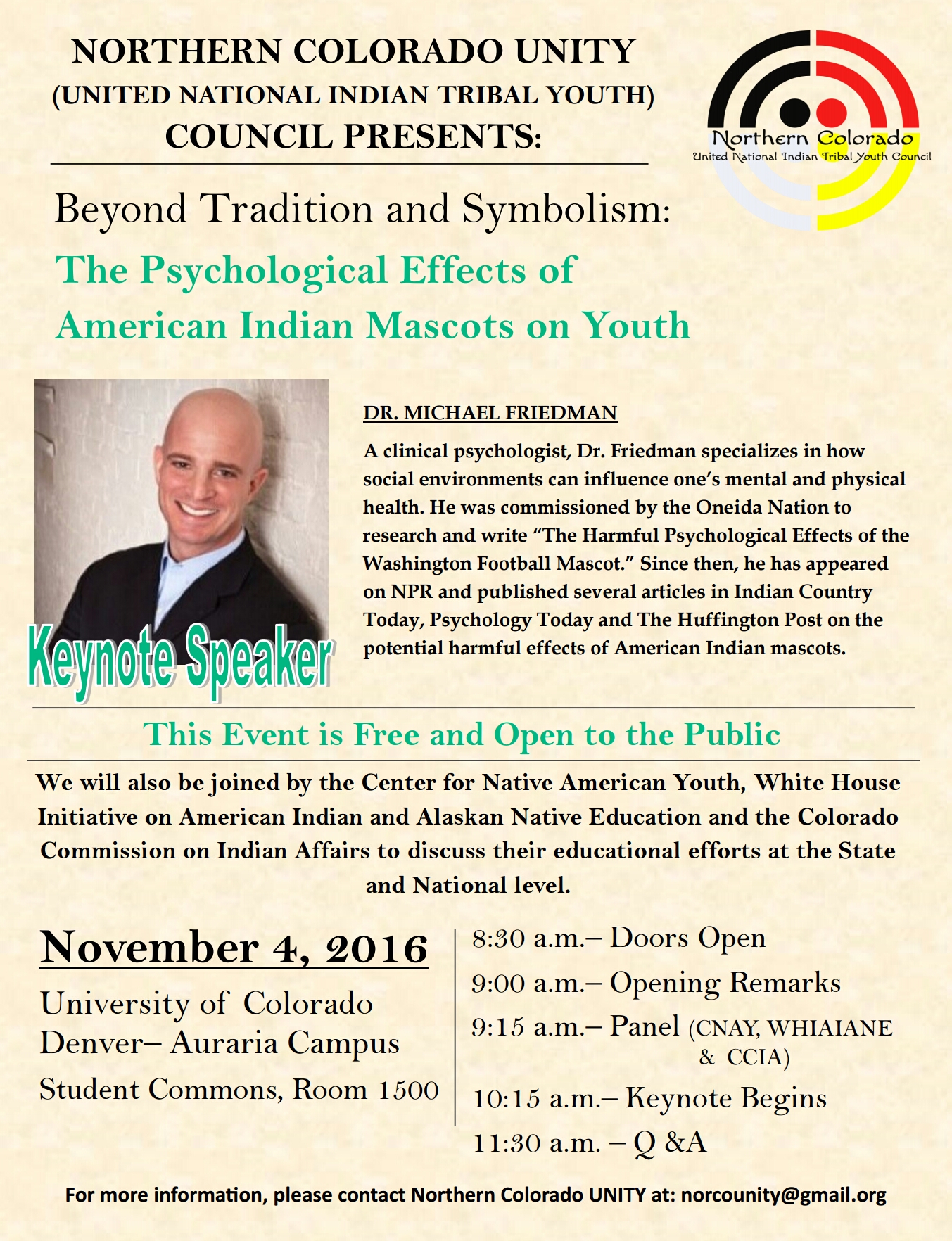
Northern Colorado UNITY Council Event November 4th
The Fond du Lac Band of Lake Superior Chippewa is soliciting proposals from qualified, licensed attorneys to provide judicial services for the Band’s tribal court. The Band anticipates selecting four individuals to serve as appellate court judges and one individual to serve as a pro tem trial court judge.
The pro tem trial court judge will serve when the Band’s Chief Judge is unavailable, as assigned by the Chief Judge. The pro tem judge presides on motions and requests of the parties; schedules and presides over conferences, evidentiary hearings and bench trials; conducts necessary legal or factual research; and renders legal opinions.
The Band’s trial court hears cases on the first Monday and Tuesday of the month, unless the first Monday is a holiday. In that case, the court convenes on the second Monday and Tuesday of the month. Other court dates may be scheduled by the Chief Judge as necessary. The Trial court hears cases involving violations of the traffic, animal control, truancy and conservation codes, as well as general civil matters, including but not limited to dissolution of marriage, name change, small claims, contracts, and probate. In 2015, there were 179 new cases filed with the court. The Band’s ordinances are available at http://www.fdlrez.com/government/fdlordinances.htm.
The Band does not currently have an appellate court. The Band’s appellate code is currently under development. It is anticipated that oral arguments will be held at the Fond du Lac Tribal Court, and that the number of appeals will not exceed five annually.
Indian preference will apply in the selection process in accordance with the Band’s Tribal Employment Rights Ordinance.
Applicants must meet the following minimum qualifications:
Demonstrable knowledge and experience with Tribal Courts is preferred, but not required.
To submit a proposal, send a proposal by e-mail to kristiwheale@fdlrez.com or by mail to Kristi Wheale, Clerk of Court, Fond du Lac Tribal Court, 1720 Big Lake Road, Cloquet, MN 55720
The proposal should include:
Proposals must be received by 4:30 p.m. central time on Friday, October 7, 2016.
Here is the letter and accompanying materials:
fb-ltr2-doj-re-ndn-civil-rights-sept-6-2016
8th-circuit-opinion-upheld-square-hook-chippewa-treaty-rights-2-10-2015
bissonette-cass-app-brief-4-26-2016
buddie-greene-v-mn-dhs-commissioner-8-28-2008-mn-s-ct
joel-roy-v-mn-petition_for_cert
notice-of-change-oral-panel-composition-8-10-2016
This is the second full commentary on “The New Trail of Tears” (TNToT), written by Naomi Schaefer Riley (NSR or the author). The first commentary, “Framed by a Friend,” is here. The announcement post is here.
Chapter 1 is a story about modern tribal economies, using the Crow Nation and the Northern Cheyenne Tribe as examples of failed tribes. But it also a story of the history of American Indian law and policy from the allotment era to the reorganization era, loosely the mid-19th century to 1934 or so. Students of American Indian history will see a lot of familiarity to the recitations of history in TNToT, but don’t be fooled: the conclusions drawn by NSR are geared toward the termination of the federal-tribal trust relationship and the confiscation and dispersal of tribal and Indian property rights.
TNToT’s Attack on the Crow Nation
TNToT’s description of the Apsaalooke Nation (and Northern Cheyenne, too) is truly unpleasant reading. In TNToT, the Crow Reservation is full of broken down cars and trucks, broken windows, children’s toys, lawn chairs, trash, and stray dogs. [at 6] The Indians there have a “dark sense of humor”; “They’ve seen it all before, and they don’t expect anything to get better.” [at 7] There’s “too little law enforcement.” [at 7]
TNToT alleges that the Crow Nation government is corrupt and/or incompetent. This is a frequent allegation by NSR about all tribal governments, usually comes from a disgruntled tribal or community member, and usually supported by no facts whatsoever. Here, NSR quotes a tribal leader as saying that the Crow Nation owes $3 million to HUD, and cannot construct new housing until HUD is repaid. This sounds weird. The tribe and HUD are in a protracted legal battle. Is that dispute the source of the statement? We sure don’t know from reading TNToT. All we get from NSR is implied corruption or incompetence. BTW, in FY 2016, HUD allocated $2.7 million to the tribe.
TNToT’s Attack on the Northern Cheyenne Tribe
NSR’s main source on the Crow and Northern Cheyenne reservations is Ivan Small, the director of the St. Labre Indian School (though NSR doesn’t reveal that tidbit until chapter 4, when she praises Mr. Small and the school without referencing the controversial $11 million payment the school made to the Northern Cheyenne Tribe after being sued for “exploitation“). Small is quoted as criticizing Crow reservation residents as not respecting the maxim, “A man’s home is his castle.” [at 6] He’s the first of several Indian people in the book NSR quotes as being angry at other Indians for a wide variety of character flaws. These informants usually are accusing Indians of flaws based on their status as Indian people — in other words, on their race. NSR brilliantly (and cynically) only quotes Indians to make these race-based commentaries about Indians; to quote non-Indians for the same propositions would be to quote racists. These Indians are usually described as slowly shaking their heads or muttering in frustration throughout TNToT (they must have very sore necks). Small is angry, but “mostly tired,” [at 6] and “past the point of anger.” [at 7]
NSR notes that there is a small casino there, asserting: “These gamblers are effectively taking money given to them by the tribal government for food or housing and giving it back to the tribe through its slot machines.” [at 6] It is my understanding that small casinos in small markets don’t make much dough. In my experience at Hoopa and at Grand Traverse Band (the Leelanau Sands casino), casinos might remain open to maintain some semblance of a job market at that location. Maybe the tribe makes little or no money from that casino, but it doesn’t lose money, and tribal employees are employed. And that can have important benefits — tribal members can establish an employment record at that casino, for one. Also, NSR’s reference to food or housing money “given” to tribal members is not supported by evidence. This kind of talk is just dog whistle politics.
Again, I’d love to hear more about the Crow and Northern Cheyenne reservations in light of NSR’s characterizations. Comments are welcome, or you can email me.
The World Bank Approves Indigenous Peoples Policy
This month, the World Bank’s board of directors approved a new Environmental and Social Framework, modernizing a decades old set of policies aimed at preventing Bank-funded development projects from harming the environment and people. (More …)
About the American Declaration on the Rights of Indigenous Peoples
The American Declaration on the Rights of Indigenous Peoples will help protect our self-determination rights, our rights to our territories and natural resources, our right to sustainable development and to the healthy environment on which indigenous peoples physical and cultural survival depends. It will also help to ensure respect for the practices, traditions, laws, and cultural values of indigenous people. (More …)
Mayan leadership learns how to hold development banks accountable for human rights violations
Multilateral development banks play a key role in financing large-scale development projects, such as dams and forestry initiatives, that have often had devastating impacts on indigenous people and their communities. The Center led a workshop on the United Nations System and multilateral development banks for the traditional and ancestral authorities of the Mayan Nation. (More …)
Indian Law Resource Center chairwoman appointed to top UN body on indigenous issues
Terri Henry, the Eastern Band of Cherokee Indians Secretary of State and chairwoman of the Indian Law Resource Center board of directors, is one of 16 experts tapped to serve on the United Nations Permanent Forum on Indigenous Issues. She will begin her three-year term on January 1, 2017. (More …)
Minnesota tribes learn about engaging in the UN
Tribal leaders from the Mille Lacs Band of Ojibwe and other Minnesota Indian Affairs Council representatives met with Indian Law Resource Center lawyers August 4, 2016, for a high-level workshop about how to engage in the United Nations system to protect tribal lands, sovereignty, and cultures. (More …)
Here are the materials in Cheyenne River Sioux Tribe v. Jewell (D.S.D.):
The Indigenous Law Journal, Volume 16, CALL FOR SUBMISSIONS DEADLINE: SEPTEMBER 30, 2016
The Indigenous Law Journal is dedicated to developing dialogue and scholarship in the field of Indigenous legal issues, both within Canada and internationally. We encourage submissions from all perspectives on these issues. Our central concerns are Indigenous legal systems and the interaction of other legal systems with Indigenous peoples. We are the only legal periodical in Canada with this focus. We welcome the addition of your voice to the discussion. For full details on the submissions process, requirements, and student awards, please see: ilj.law.utoronto.ca We now accept recorded oral submissions.
Please contact the Submissions Manager prior to making an oral submission, or to submit written work: submissions.ilj@utoronto.ca. Please address questions to Sinéad Charbonneau & Jesse Waslowski, Co-Editors-in Chief: indiglaw.journal@utoronto.ca.
Download(PDF): Brochure
The conference is December 8-9 in Seattle.
Here are the materials in Stand Up for California v. Dept. of Interior (D.D.C.):
106-1-sufc-motion-for-summary-j
108-1-picayune-rancheria-motion-for-summary-j
111-1-north-fork-rancheria-motion-for-summary-j
Here are the materials:
By of background, in November 2015, the Connecticut Superior Court issued a decision in the Otoe-Missouria Tribe’s favor, remanding a prior state agency decision which purported to subject the Tribe’s lending entities and Chairman Shotton to civil and injunctive damages. Following this ruling, the Connecticut Department of Banking attempted to run afoul of the Court’s prior decision and potentially subject the Tribe to participating in its administrative proceedings through discovery and possible depositions.
On August 31, 2016, the Connecticut Superior Court rejected this attempt and issued another ruling the Tribe’s favor and reaffirming its decision from November 2016 and granting the Tribe’s most recent challenge by issuing another strong decision in its favor. In doing so, the Court explicitly stated that the Tribe’s rights were “substantially prejudiced” as a result of the Department’s actions.
 Turtle Talk
You must be logged in to post a comment.