Press release here:
Job Postings Roundup: 2.20.25
Hi all! Thank you to those that have submitted job postings using our Google form. Unfortunately we had an issue and had to redo the form. The new form can be found here: Turtle Talk Job Postings Form. Please feel free to bookmark that page and use that form going forward. We appreciate your patience with us as we navigate new employees at ILPC and writers for TT! Miigwech.
1 Senior Assistant General Counsel
Fort McDowell Yavapai Nation Fort McDowell, AZ (On-Site)
Serves as a senior legal advisor to the Tribal Council, tribal government departments and economic enterprises; Performs high level legal research and analysis in numerous areas of law and policy related to Federal Indian and Indian Law; Provides legal advice and analysis of tribal, State and Federal laws and regulations; Drafts and revises the Nation’s Constitution, Law and Order Code, other tribal laws, ordinances, and policies; Drafts, reviews and recommends changes to various contracts and agreements on behalf of the Nation’s departments and economic enterprises; Represents the Nation in Tribal, State and Federal
court actions; Delegated authority to oversee the Office of General Counsel during the General Counsel’s absence; and Performs other duties as assigned by the General Counsel.
“MINIMUM QUALIFICATIONS/EDUCATION:
1) An attorney in good standing and currently licensed to practice law in the State of Arizona; 2) Five (5) years legal experience working for a federally recognized Indian Nation or in the area of Federal Indian Law, Labor and Employment Law or Business/Corporate Law; and 3) Current valid AZ driver’s license and ability to meet FMYN insurance standards.
$123,578.64 to $155,000.00 CLOSES: March 12, 2025
SUBMIT APPLICATION TO:
Fort McDowell Yavapai Nation
Human Resources Department
Attn: Recruiter
P O Box 17779
Fountain Hills, AZ 85269
Phone: 480-789-7138
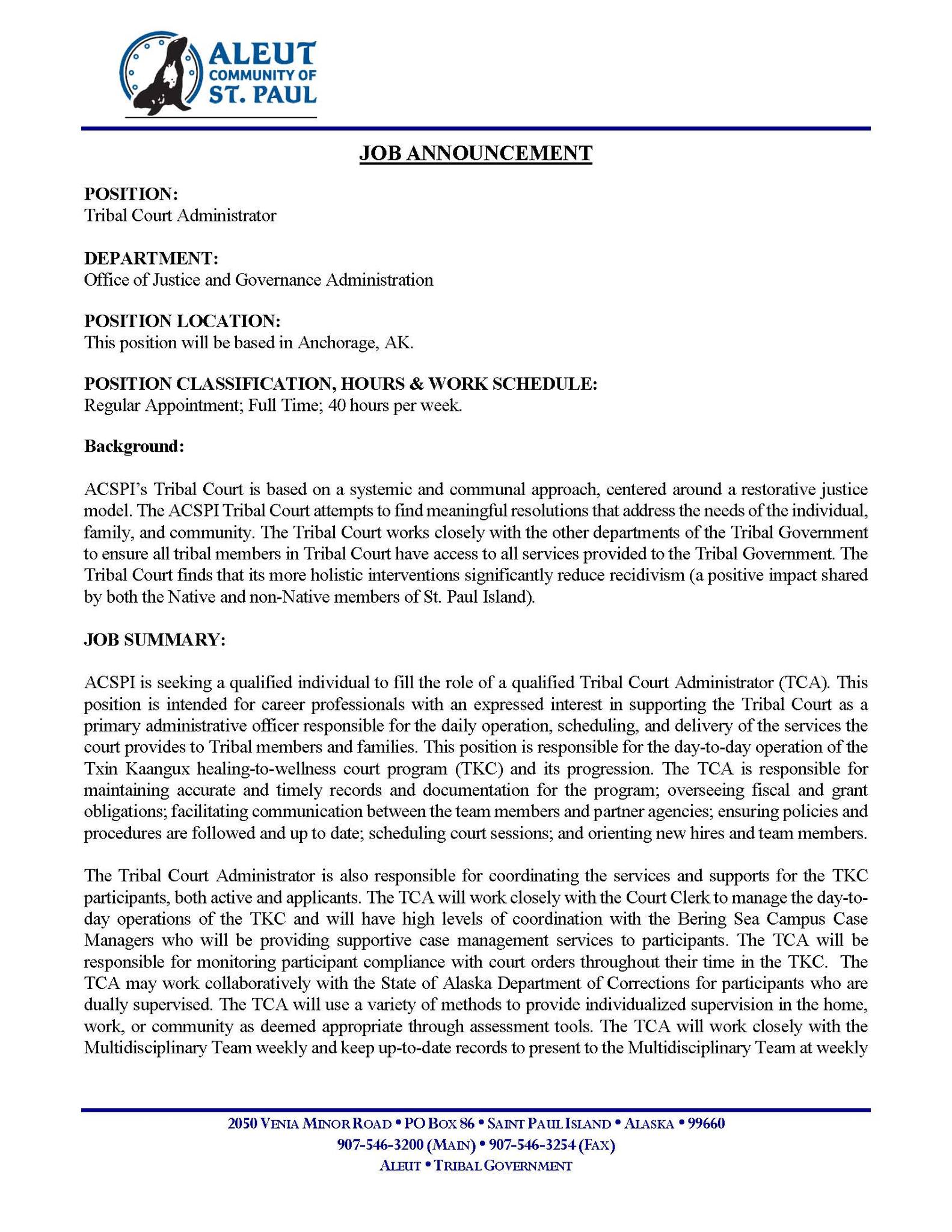
Fax: 480-816-0419
Email: recruiter@fmyn.org
2 Assistant Tribal Prosecutor
Shoshone-Bannock Tribes Fort Hall, Idaho
This position will mainly handle a criminal caseload, but will assist with child protection, child support, and juvenile matters. No prior experience or bar license is needed to begin employment.
Salary depends on experience and licensure, with a range from approximately 60k to 70k. Closes: 02/21/2025
3 Attorney II
Yakama Nation, Toppenish, WA
Public Defender in Tribal Court
J.D. degree, 6 months experience, passed state bar
Salary: $50.83 – 57.21 Closes: 3/4/25
https://yakama.isolvedhire.com/jobs/1425346
4 Manager V-Law & Order Executive Officer
Nez Perce Tribe, Lapwai, Idaho
The Nez Perce Tribal Executive Committee (NPTEC) is recruiting for: MANAGER V – LAW & ORDER EXECUTIVE OFFICER [HR-24-200] (
To provide executive level management for the Law and Order operations of the Nez Perce Tribe; specifically, the divisions of Tribal Court/Law Enforcement/Prosecutor/Probation/Tribal Employments Right Office (TERO)/Child Support Program. Develops departmental policy, long-range goals, and present department recommendations to appropriate Subcommittees and NPTEC. Ensure compliance with the Nez Perce Law and Order code and state and federal regulations and laws; implements tribal and oversight to ensure project development, budgets, annual review, reports and personnel administration are implemented as designed. CD available at the NPT Human Resources contact person, Robert Kipp at robertk@nezperce.org. Requires a Juris Doctorate (Law) degree.
Grade 30/$50.71-$66.73 DOQ,
Open until filled.
5 Law and Order Executive Officer
Nez Perce Tribe, Lapwai, Idaho
To provide executive level management for the Law and Order operations of the Nez Perce Tribe, including Law Enforcement, Judicial Services and Child Support Enforcement Requires a Juris Doctorate, criminal and fiscal background check, 5 years executive level management experience and 3 years of supervisory experience, and have a valid driver’s license.
Salary: $50.71 – $66.73 DOQ
Open until filled.
6 Legal Counsel
Office of the President of the Republic of Palau, Koror, Palau
The Office of the President of the Republic of Palau is seeking a
qualified legal counsel to advise and assist the President with
domestic and international legal issues. The President’s legal counsel
is expected to work with a wide variety of stakeholders and
organizations, and to perform all legal work necessary to accomplish
the President’s priorities, goals, and objectives. Travel to meetings and
conferences outside of Palau may be required.
Must possess a Juris Doctor from an accredited law school and be
admitted to, and in good standing with, the bar of a United States
jurisdiction or the Bar of the Republic of Palau. Applicant should
have 3 or more years of legal experience.
Prior experience as general or in-house counsel, prior experience
managing a broad legal portfolio, or prior experience working or
living in a developing country is strongly preferred.
Salary: $50,000 to $65,000
https://www.linkedin.com/jobs/view/4155526535
7 Associate Attorney
Kanji & Katzen, PLLC Remote
Kanji & Katzen, P.L.L.C., a law firm dedicated exclusively to defending the sovereign rights and interests of Indian nations and tribes, is accepting applications for an associate attorney position. While our flagship offices are located in Seattle, Washington, and Ann Arbor, Michigan, there is no geographic restriction on the position, and we will consider any remote work arrangement that helps to advance advocacy for our tribal clients nationwide. Kanji & Katzen represents tribes on a wide variety of issues, with key areas of expertise including tribal sovereignty and governance, treaty fishing and hunting rights, environmental protection, taxation, economic development, gaming, land claims, reservation boundaries, and tribal jurisdiction. The firm expects its attorneys to devote their careers to advocacy on behalf of tribes.
The firm offers competitive salaries and benefits and an opportunity to hone advocacy skills in a wide variety of interesting settings. To learn more about the firm, please see our website at http://www.kanjikatzen.com.
To apply, please send by email a cover letter, resume, law school transcript, undergraduate transcript, and writing sample to employment@kanjikatzen.com, as soon as possible, and ideally by March 1, 2025, though the firm may begin considering applications prior to that date.
1-4 years of practice or judicial clerkship experience after law school, but such experience is not an absolute requirement for highly qualified applicants
Closes: 3/01/2025
https://kanjikatzen.com/category/careers/
8 Associate Counsel I
Pueblo of Isleta, Isleta, New Mexico
Under the direction of General Counsel, provides professional legal counsel in the areas of tribal government, federal-tribal relations, jurisdiction issues, environmental and natural resources law and policy, economic development, tribal business enterprise, and employment issues. Works to protect tribal assets and preserve tribal sovereignty.
0-3 years experience E12 ($51.26 – $71.77/ hr)
Position open until filled. https://www.isletapueblo.com/wp-content/uploads/2024/12/AssociateGeneralCounsel-120324.pdf
Employment Application can be found at https://www.isletapueblo.com/wp-content/uploads/2024/04/POIEmploymentApplication-040124.pdf
Please submit resume and cover letter in addition to employment application.
9 Associate Attorney
Lieff Cabraser Heimann & Bernstein, LLP, San Francisco, CA
Lieff Cabraser Heimann & Bernstein, LLP, the leading national plaintiff-side litigation firm with more than 100 attorneys, seeks a lateral attorney in Nashville to join our thriving and collegial practice, representing tribes, tribal citizens, and non-indigenous plaintiffs. Associates have lead roles litigating cases, investigating cases, consulting closely with clients, taking and defending depositions, writing and arguing motions and appeals, working with experts, and participating in trials and mediations. The ideal candidate will have well-developed written and oral advocacy skills.
Salary: $140,000-$170,000 DOE
Open until filled
10 Legal Administrative Assistant I
Pechanga Tribal Government Temecula, CA
Responsible for filing all correspondence generated by the legal department. Assist in development and maintenance of electronic document management system. Input data into computer systems to support department with document and information retrieval both in electronic and physical format.
Must be flexible to work overtime as needed. Must have 2-3 years of related experience in an office environment required.
Salary: DOE Open Until Filled https://www.pechanga-nsn.gov/index.php/contact/employment
11 Associate Attorney
Zwillinger Wulkan, Phoenix, AZ
We are seeking an experienced associate attorney, with 1 to 5+ years of experience in both tribal courts, state courts, and federal courts to assist in civil litigation, criminal, employment, personal injury, complex commercial, business and real estate litigation. The position will entail legal research and the writing of memoranda, motions and pleadings. The associate will also attend court conferences, participate in discovery-related activities and investigations, as well as other tasks required in a busy and diverse practice.
Law Office: 1 year; Arizona Bar License
Salary: 110,000 – 140,000
Closes: 03/01/2025
https://www.zwfirm.com/careers
12 Associate Attorney
Mshkawzi Law, LLP, Grand Rapids, Michigan
Mshkawzi Law, LLP is a 100% women-owned and majority Native-owned law firm that provides legal services exclusively to Indian tribes, First Nations, and their business enterprises throughout the United States and Canada.
We are currently seeking an associate attorney for our Grand Rapids, Michigan office with a minimum of five (5) years of experience in mergers & acquisitions, corporate governance & structuring, financing transactions and real estate development. The ideal candidate will have strong research and writing skills and must be self-motivated, self-starting, and willing to work in a dynamic atmosphere with remote interaction with our offices, clients and staff across the United States and Canada. Strong writing, interpersonal, analytical, problem-solving, organizational, and communication skills are required. Candidates must have the ability to build and maintain strong client relationships and must be willing to travel for work on client matters. Experience in federal Indian law is preferred but not required. The candidate must be a member in good standing of the Michigan Bar. Preference will be given to attorneys who demonstrate an established commitment to Indian Country and a keen interest in federal Indian law. We offer competitive salary and benefits, including health care (including dental and vision), 401k, and paid vacation time.
Open until filled.
Please respond to this job posting with your cover letter, resume, certificate of good standing from the State Bar of Michigan and writing sample via email to D’onna King at dking@mshkawzilaw.com.
13 Asst. Attorney General (2)
Pascua Yaqui Tribe, Tucson, AZ
The Assistant Attorney General represents the Pascua Yaqui Tribe by providing nonpartisan legal advice and representation to officials, agencies, departments, divisions, enterprises and other entities of the Tribe’s government. Research and analyze tribal, federal, state legislation, regulations, and case law. Provide written legal opinions and recommendations to Tribal Council and government departments. Responsible for managing assigned outside counsel.
Draft codes, policies and procedures, contracts, resolutions and intergovernmental agreements.
Provide legal opinions and analyze developments in Indian law. Make presentations and recommendations to improve tribal laws. Attend Tribal Council sessions and other meetings. Represent the Tribe in statewide and nationwide legal forums.
Juris Doctorate, from a law school accredited by the American Bar Association. Minimum 1 year(s) of experience as practicing attorney; AND One (1) to three (3) years of experience as a practicing attorney with background in Indian law strongly preferred;
D.O.E.
Closes: 2/24/2025 “https://www.governmentjobs.com/careers/pascuayaqui/jobs/4817455/assistant-attorney-general
and
https://www.governmentjobs.com/careers/pascuayaqui/jobs/4817607/assistant-attorney-general
14 Associate Attorney
Kanji & Katzen, P.L.L.C., Remote
Kanji & Katzen, P.L.L.C., a law firm dedicated exclusively to defending the sovereign rights and interests of Indian nations and tribes, is accepting applications for an associate attorney position. While our flagship offices are located in Seattle, Washington, and Ann Arbor, Michigan, there is no geographic restriction on the position, and we will consider any remote work arrangement that helps to advance advocacy for our tribal clients nationwide. Kanji & Katzen represents tribes on a wide variety of issues, with key areas of expertise including tribal sovereignty and governance, treaty fishing and hunting rights, environmental protection, taxation, economic development, gaming, land claims, reservation boundaries, and tribal jurisdiction. The firm expects its attorneys to devote their careers to advocacy on behalf of tribes. Applicants should possess a stellar academic and professional record and a commitment to tribal representation and tribal communities. We prefer that applicants have 1-4 years of practice or judicial clerkship experience after law school, but such experience is not an absolute requirement for highly qualified applicants. Prior experience or demonstrated interest in the field of federal Indian law is strongly preferred.
Closes: 3/03/2025
15 Law Student Clerk – Summer 2025
California Tribal Families Coalition, Remote
The CTFC team focuses on high impact work, community driven needs identification with a focus on high needs stakeholders currently focused on systems change in child welfare, juvenile justice, and developmental disability systems. We are looking for engaged and driven individuals that thrive in a collaborative environment, seek mentorship and learning and enjoy creative problem-solving. The clerkship projects will vary. Past projects have included drafting state court briefs, research and writing an opposition to appellate case de-publication, developing training materials on state law, and drafting legal and policy strategy for legislation. “California Tribal Families Coalition (CTFC) is now accepting applications for Summer 2025 and Fall 2025 legal clerkships for 2L and 3L law students. We will also consider 1L applicants if they can demonstrate lived experience, related work, or training in the areas of Indian Law or child welfare. These paid clerkships are made possible through CTFC’s partnership with the San Manuel Band of Mission Indians and may also be eligible for academic credit, subject to law school approval.
We seek law students with lived experience in tribal communities and/or a demonstrated interest in federal Indian law, tribal law, or child welfare. Our team engages in high-impact work and community-driven advocacy, focusing on systems change in child welfare, juvenile justice, and developmental disability systems.
Priority Deadlines:Summer 2025: Apply by April 15, 2025; Fall 2025: Apply by May 15, 2025
16 Deputy General Counsel
Saint Regis Mohawk Tribe, Akwesasne, New York
Assist the General Counsel in reporting regularly to the governing body on all assigned directives and assignments. Identify and assess legal risks and opportunities and advise internal clients accordingly. Negotiate, draft and review contracts for the Tribe. Represent the Tribe in Court and administrative proceedings as needed. Draft, review, and provide feedback and suggestions on Tribal ordinances, codes, rules, regulations and policies. Provide legal advice, opinions, strategies, and assistance to Tribal departments and programs. Negotiate, draft and review agreements with other governments and governmental agencies. Special projects and initiatives for housing, finance and banking, taxation and jurisdiction matters. Oversee and coordinate retained outside legal counsel as directed by the General Counsel to ensure the Tribe’s interests are being protected.
At least six (6) months experience in working for Indian tribes either in-house or in private practice Working in the area of federal Indian law.
Salary: $110-552.00 – $202-841.60
Closes: March 5, 2025
https://www.srmt-nsn.gov/employment/deputy-general-counsel
17 Tribal Court Administrator
Aleut Community of St. Paul Island, Anchorage, AK
This position is intended for career professionals with an expressed interest in supporting the Tribal Court as a primary administrative officer responsible for the daily operation, scheduling, and delivery of the services the court provides to Tribal members and families. This position is responsible for the day-to-day operation of the Txin Kaangux healing-to-wellness court program (TKC) and its progression. The TCA is responsible for maintaining accurate and timely records and documentation for the program; overseeing fiscal and grant obligations; facilitating communication between the team members and partner agencies; ensuring policies and procedures are followed and up to date; scheduling court sessions; and orienting new hires and team members.
Bachelor’s Degree or equivalent. Preferably, but not limited to, Business Administration or Law or related field (Business Management, Justice, Social Work, Behavioral Health).Two years documented work experience in administrative duties, program administration/implementation, management or comparable work.
Salary: $78,000-$91,000 annually
Open until filled https://turtletalk.blog/wp-content/uploads/2025/02/aleut-job-description.jpg
18 Prosecutor I – Deputy Community Prosecutor
Gila River Indian Community, Sacaton, Az
The Prosecutor I – Deputy Community Prosecutor is responsible for representing the Gila River Indian Community in the litigation of criminal complaints, civil petitions, and juvenile offender matters in Community Courts as plaintiff or petitioner, which may include legal research and writing. The incumbent must be familiar with professional responsibilities as an Attorney, which include ethically prosecuting criminal cases for the Office of the Prosecutor.
Juris Doctorate degree from an accredited school of law by the American Bar Association and current membership in good standing with the State Bar of Arizona.
Salary: $82,522.50 – $144,522.50
Open Until Filled
19 Executive Assistant
Battered Women’s Justice Project, St. Paul or remote
Executive Support: Manage the CEO’s schedule, coordinate meetings, and ensure
seamless day-to-day operations. Project & Leadership Support: Oversee special projects, track progress, and anticipate challenges to keep initiatives moving forward.Communication & Strategy: Prepare briefings, reports, and presentations for internal
and external stakeholders.Relationship Management: Serve as a key liaison between the CEO and the board,leadership teams, funders, and external partners.
We offer a competitive salary of $60,000–$70,000 (DOE) for this full-time, exempt position. Closes: March 15th, 2025
20 Project Assistant
Battered Women’s Justice Project
Remote
Are you a detail-oriented and highly organized professional who thrives in a fast-paced
environment? Do you have a passion for supporting survivors of intimate-partner violence and promoting systemic change? BWJP is seeking a Project Assistant to join the Safe Access for Victims Economic Security (SAVES) National Clearinghouse, a national initiative aimed at improving safe access to child support and parenting time services for survivors of intimate partner violence.Project Coordination: Support training and technical assistance efforts for 13
demonstration sites across the U.S.Stakeholder Engagement: Interact with grantees, multidisciplinary team members,and project partners to organize information and coordinate project priorities.Commitment to racial justice, gender equity, and survivor empowerment.” Competitive salary: $50,000–$60,000 (DOE) for this remote full-time, hourly position.
Closes: March 15th, 2025
Federal Court Rejects Second Cow Creek Effort to Enjoin Coquille Gaming Project
Here are updated materials in Cow Creek Band of Umpqua Tribe of Indians v. Dept. of the Interior (D.D.C.):
Prior post here.

Lexington Insurance Co. v. Suquamish Tribe Cert Petition

Nonmember Business Sues to Avoid Tribal Court Jurisdiction
Here are the pleadings so far in Mazaska Owecaso Otipi Financial Inc. v. Montileaux (D.S.D.):

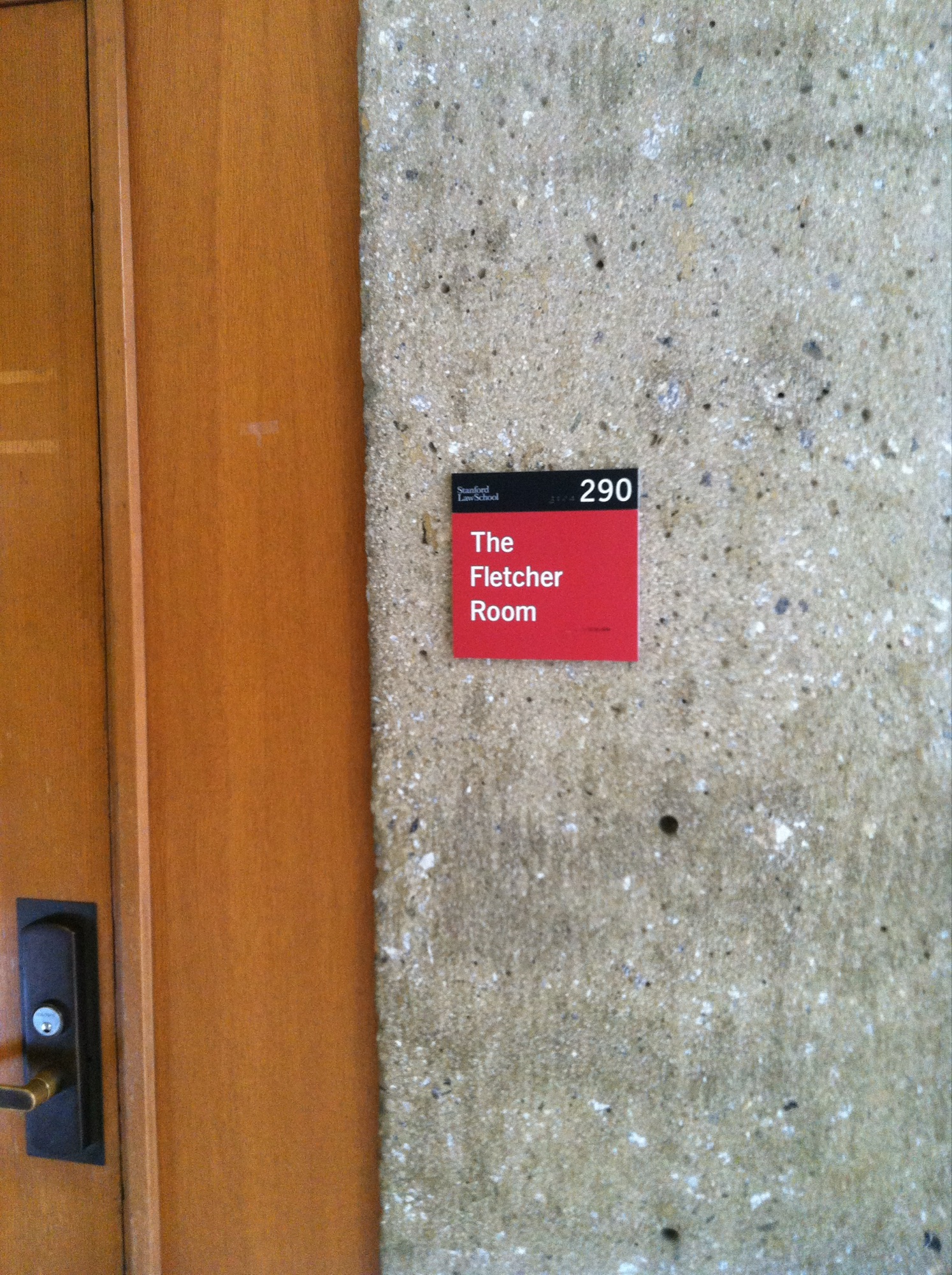
Stanford Law Review Symposium— “Promises of Sovereignty: A Quarter Century of Federal Indian Law in the Supreme Court” [Feb. 21-22, 2025]
Here.
Save the Date for Indian Law Preview Day at the University of Montana Alexander Blewett III School of Law
From Kekek Stark, Montana’s intrepid Anishinaabe law professor:
We would love for you and your students to join us at Montana’s Law School on Monday April 14th for our annual Indian Law Preview day.
Indian Law preview day is a great way to give students an overview of our Indian Law Certificate program, an overview of what types of jobs Indian Law specialists can have, and insights into the law school application process in general. The program is open to anyone interested in Indian Law as a subject matter, and students who are anywhere from application-ready to several years out from law school.
If you would like to continue to receive updates, please use the form below to register for the event, and please feel free to circulate this save the date to your interested students. Even if a student is unsure if they’ll be able to attend, please have them “register” using the form below to be sure to get updates.
Register for Indian Law Preview Day
Our tentative schedule is as follows- students should plan to be in Missoula In-Person:
8:00- Check in and Welcome from Dean Gagliardi
8:30- Law School Admissions Basics
9:00- Strategizing for the Law School Admissions Test
10:30- Attend Indian Law Class
12:00- Lunch with panel of Indian Law specialists, including a presentation from the American Indian Law Center and Pre-Law Summer Institute
1:00- close.
This preview day is the kickoff to our full Indian Law week that will include interesting lectures and events.

Webinar on Upcoming WIPO Treaty on IP and Genetic Resources Consultation

Consultation notice here.
Job Announcements Update
We recently learned of a technical issue with the form we used to collect job announcements. The issue is resolved, and announcements can now be uploaded on our Google Form. We apologize for any inconvenience this may have caused.
South Dakota Federal Court Suppresses Non-Mirandized Answer to Tribal Membership Question
Here are the materials in United States v. Whipple-Wright (D.S.D.):

 Turtle Talk
You must be logged in to post a comment.