Here is the complaint in Cloverdale Rancheria of Pomo Indians v. Salazar (N.D. Cal.): Cloverdale Rancheria Complaint
federal recognition
News Coverage on Shinnecock Response to Opposition
From Newsday mobile:
Incensed by two last-minute attempts to block their federal recognition, leaders of the Shinnecock Indian Nation called on the entire 1,200-person membership to attend a court hearing in Central Islip Wednesday as they fight to put their long-awaited status back on track.
On the day the nation was to celebrate its first day as a federally recognized tribe, one leader said a sense of sadness had been replaced by one of resolve. “We’ll continue to fight,” said senior trustee Lance Gumbs.
Chairman Randy King said he called on the entire tribal membership to attend the court hearing Wednesday “to celebrate our heritage.”
Also Tuesday, two Shinnecock members created a Facebook page to announce the formation of the New York Coalition for Shinnecock Gaming, which is calling for a boycott of Connecticut casinos they say are seeking to block the Southampton tribe’s federally recognized status.
Tela Loretta Troge, who is attending American Indian Law Center’s Pre Law Summer Institute, said she created the page with another tribal member, Kelly Dennis, out of “frustration” at “not being able to get Bureau of Indian Affairs scholarships for school next month” because of the Connecticut group’s filing.
Winnemem Wintu Tribe’s Cultural Property Claims Largely Dismissed
Here is the opinion in Winnemem Wintu Tribe v. DOI (E.D. Cal.): Winnemem Wintu Tribe v. DOI
It’s Begun: Interior Sued for Recognizing Shinnecock Indian Nation
Connecticut Cert Opposition to Schaghticoke Petition
Here: Schaghticoke Cert Opp
NYTs on Shinnecock Recognition
From the NYTs:
There’s no irony or attitude at the Shinnecock Nation Cultural Center and Museum, just the whaling artifacts, the carved elk on the front door, the portraits and memorabilia of a people whose history on Long Island goes back thousands of years.
Still, only a deity with a perverse sense of humor could have written the story of the Shinnecocks, which entered a new era on Tuesday when a 32-year legal effort culminated in the formal federal recognition of the tribe.
You could start with the locale: how the bays and beaches the Shinnecocks and their ancestors fished and nurtured for millennia morphed into not just the Hamptons, but some of the richest and snootiest precincts there. That left the Shinnecocks strangers in their own land, a largely poor tribe of 1,200 with an 800-acre reservation tucked amid the lime-green slacks, the $36 lobster roll (Silver’s on Main Street) and the perma-tan, perma-thin habitués of this playground of the seriously rich.
Then there’s been the long legal dance and periodic skirmishes over the tribe’s nuclear option: its threat to build a casino on the reservation that could have turned the standard East End gridlock into a graveyard of permanently immobilized Lexuses, Range Rovers and BMWs.
And now, with the economy still in the tank and development hard to come by, the outsiders at the banquet are the ones holding all the chips. The courting and wooing for what could be one of New York State’s biggest economic projects in many years have been going on quietly for some time.
But the action begins in earnest next month, when, 30 days after the designation, the tribe can start taking official steps to build what could be New York’s answer to Connecticut’s mega-casinos.
Shinnecock Indian Nation Recognized
DOI press release here: PRSHINRECOGNITION.
From the NYTs:
ALBANY — The Obama administration approved the Shinnecock Indians on Long Island for federal recognition on Tuesday, culminating a court battle lasting three decades and paving the way for the tribe to build a casino in New York City or its suburbs.
While there is still a 30-day comment period before the matter is fully settled, the support of the administration all but assures the 1,292-member tribe’s recognition. The announcement, made by the Bureau of Indian Affairs on Tuesday morning, will almost certainly change the way of life for the relatively impoverished tribe, whose members live on 800 acres in Southampton, N.Y., in the midst of some of the nation’s wealthiest and most famous celebrities.
It will also touch off negotiations between the tribe and the state over casino gambling. With federal recognition, the tribe can build a Class II casino on its land that could have thousands of video slot machines but no table games.
But state and local officials have long been worried about the traffic implications of building a casino in the Hamptons, and the tribe would prefer to negotiate with the state and federal government to build a more lucrative Class III casino on land elsewhere that would be allowed to have table games. The state would share in the revenue of any deal.
The tribe had no immediate comment.
In December, after an initial ruling in favor of the tribe, Randy King, chairman of the Shinnecock trustees, said, “This recognition comes after years of anguish and frustration for many members of our Nation, living and deceased.”
ICT Article on Schaghticoke Federal Recognition Cert Petition
From ICT:
WASHINGTON – The Schaghticoke Tribal Nation has petitioned the U.S. Supreme Court to review whether a lower court should have considered the appearance of undue political influence as well as its actual effect on Interior Department officials, who rescinded the nation’s federal acknowledgment.
The 220-page petition for a writ of certiorari was filed May 24. It presents a single question to the high court: “Whether certiorari should be granted to resolve a conflict among the Courts of Appeals on this question: When reviewing a petition’s due process claim that undue political pressure has actually affected or influenced a federal administrative adjudicative decision, must a federal court also consider the petitioner’s claim that due process was violated by the appearance of bias or impropriety arising from the political pressure?”
The petition is the last judicial stop on the Schaghticoke’s long quest for federal acknowledgment – a journey that began in 1981 with a letter of intent to seek federal status with the BIA.
The nation was federally acknowledged in a Final Determination on Jan. 29, 2004, but within minutes of the BIA announcement Connecticut politicians led by Attorney General Richard Blumenthal vowed to do everything in their power to overturn the decision.
They kept their promise.
Over the next year and a half, Blumenthal, Sens. Chris Dodd and Joe Lieberman, former U.S. Reps. Nancy Johnson, Chris Shays and Rob Simmons, Connecticut Gov. Jodi Rell, state and local officials and the White House-connected lobbying firm of Barbour, Griffith and Rogers – hired by residents of Kent, Conn., where the nation has a 400-acre reservation – lobbied former Interior Secretary Gale Norton, the White House, then-Attorney General Alberto Gonzales, the Interior Board of Indian Appeals, and even a federal district court judge to overturn the nation’s federal acknowledgment.
In October 2005, the BIA issued a Reconsidered Final Determination reversing the Schaghticoke’s acknowledgment.
The nation appealed the BIA reversal to a federal district court, where Judge Peter Dorsey acknowledged the unprecedented political influence exerted on federal decision makers. But, ultimately, Dorsey threw out the case because, among other things, he believed federal officials who said they weren’t influenced by the enormous political pressure that they acknowledged was brought to bear upon them.
A panel of the 2nd Circuit Court of Appeals agreed with the district court and denied the nation an en banc hearing.
Schaghticoke attorney Richard Emanuel said the case has far-reaching implications.
“The petitioner’s principal contention is that in the context of a federal administrative adjudicative decision, a litigant’s due process right to a fair hearing may be violated by the ‘appearance of bias’ or impropriety. It is an issue that can affect any litigant in any adjudicative proceeding before any federal agency,” Emanuel wrote.
He said circuit courts are split on the issue.
The Supreme Court will need to decide if there is, indeed, a clear split and whether it’s important enough for them to take it up, said Matthew L.M. Fletcher, director of the Indigenous Law Center at Michigan State University. If it does, the court will probably decide whether the federal acknowledgment process is quasi-judicial or quasi-legislative, Fletcher said.
“It’s definitely more the former. So the real question is whether there is a circuit split. The 2nd Circuit apparently has adopted a rule that a petitioner like STN (the Schaghticoke) has to show ‘actual’ prejudice or bias in a political influence case involving a federal agency – as in, members of Congress or others with power actually influenced an agency decision. STN is arguing that in some instances a petitioner should only have to show ‘apparent’ prejudice or bias. As we all know, there is plenty of apparent political influence in this case, but STN was unable to prove actual political influence to the court,” Fletcher said.
Continue reading
30th Anniversary of Grand Traverse Band Federal Recognition!!!!
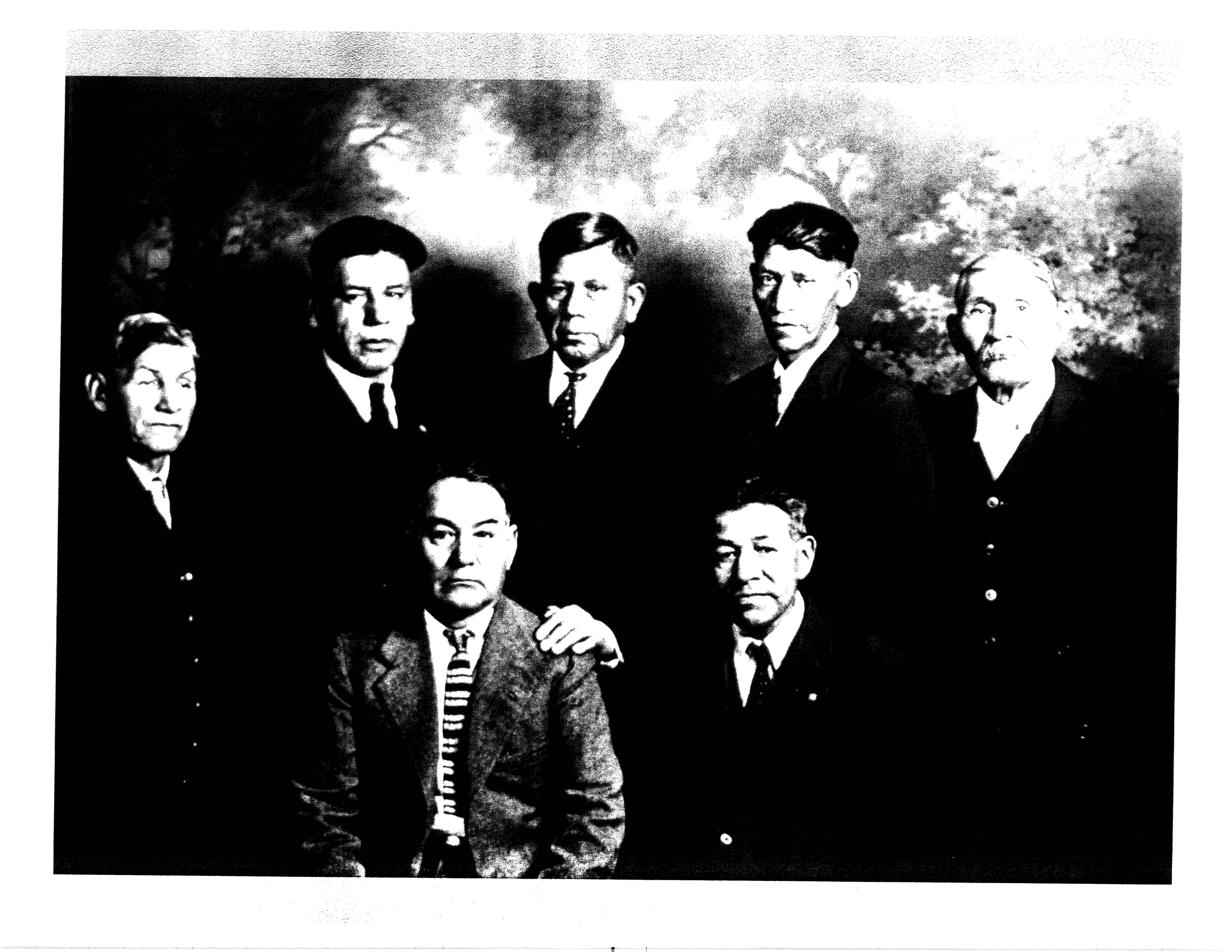
Here’s a pic of the Michigan Indian Defense Association headed by Ben Peshawbe:
And the government offices in Peshawbestown:

Schaghticoke Tribal Nation Federal Recognition Cert Petition
Here: STNCertPetitionandAppendixMay242010
Lower court materials here.
 Turtle Talk
You must be logged in to post a comment.