Mitchell Forbes on Powers of Alaska Tribes without Reservations

Mitchell Forbes has published “Beyond Indian Country: The Sovereign Powers of Alaska Tribes Without Reservations” in the Alaska Law Review. PDF

Here is the abstract:

The Alaska Native Claims Settlement Act of 1971 (ANCSA) devised a land entitlement system markedly different from the Indian reservation system that prevailed in the Lower 48 states. It directed the creation of twelve, for-profit Alaska Native regional corporations and over 200 private, for-profit Alaska Native village corporations, which would receive the bulk of Native land in the state. This corporate model left nearly all tribes in Alaska without a land base. As such, there is very little Indian Country land in the state over which tribes can exercise territorial-based sovereignty. Yet, the Supreme Court has long recognized the power of tribes to exercise membership-based jurisdiction. This Comment analyzes a range of state and federal court decisions addressing the authority of tribes and argues that Alaska tribes, through membership-based jurisdiction, can exercise various sovereign powers, like the exclusion of nonmembers. Importantly, this membership-based jurisdiction does not depend on lands over which tribes can exercise jurisdiction. Therefore, the exclusionary orders imposed by several Alaska Native tribes during the Covid-19 pandemic in 2020 were valid exercises of the tribes’ sovereign powers.

Highly recommended.
Klamath Irrigation District v. Bureau of Reclamation Cert Petition [Rule 19 & Tribal Immunity]

Here:

Question presented:

Whether Federal Rule of Civil Procedure 19 requires dismissal of an action challenging a federal agency’s use of water subject to state-adjudicated water rights if a Native American tribe asserts an interest in the suit and does not consent to joinder.

Lower court materials here.

Jaune Smith

NPR Code Switch Episode on ICWA (feat. Rebecca Nagle)

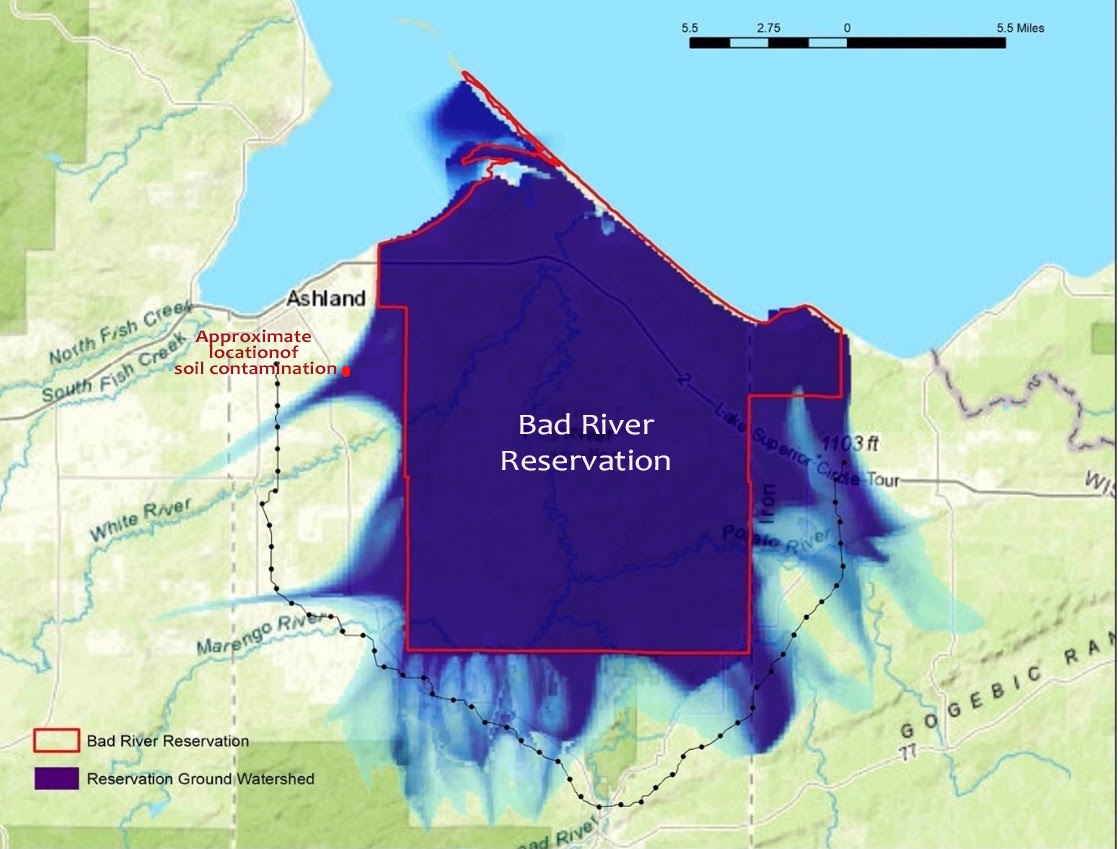
Bad River Ojibwe Moves to Shut Down Line 5 after Spring Flooding Exposes Line 5 Pipeline

Here are new materials in Bad River Band of Lake Superior Tribe of Chippewa Indians v. Enbridge Energy Co. Inc. (W.D. Wis.):

Shoshone-Bannock Tribes v. Vanir Construction Management, Inc. Materials (so far)

Here are the materials so far in Shoshone-Bannock Tribes v. Vanir Construction Management, Inc.

Sarah Deer on Feminist Jurisprudence in Tribal Courts

Sarah Deer has published “Feminist Jurisprudence in Tribal Courts: An Untapped Opportunity” in the Yale Journal of Law and Feminism.

An excerpt:

What if every gendered legal issue was not burdened by over 200 years of patriarchal and racist precedent? How would feminists craft legal practices and structures in a way that would be grounded by a clear understanding of the harms of oppression and subjugation? These questions are not just rhetorical; this essay argues that a fresh perspective is possible in the context of an Indigenous feminist jurisprudence. Indigenous feminist legal theory (IFLT) is in its nascent stages as a contemporary academic discipline and praxis. It has largely been elucidated by legal scholars in Canada, including Emily Snyder, Val Napoleon, and John Borrows. Snyder explains that IFLT lies at the intersection of feminist legal theory, Indigenous feminist theory, and Indigenous legal theory.

Washington Federal Court Dismisses Sauk-Suiattle Online Sales Tax Complaint

Here are the materials in Sauk-Suiatte Indian Tribe v. Ryser (W.D. Wash.):

Tax

Frank Pommersheim Guest Post: “The Red Bird Trilogy”

The Red Bird Trilogy: Comments Delivered at the 11th Annual University of South Dakota Native Alumni Dinner[1]

Frank Pommersheim

I. Opening Welcome

A special thanks to John Little,[2] Megan Red Shirt Shaw,[3] Damon Leader Charge,[4] the Tiyospaye Council, and many others for all their hard work on this event to recognize and highlight the contribution of Native alums to this University and to their Tribes and the State of South Dakota in their professional lives.

            I also want to give special thanks to John and Megan for the decision to highlight the contributions and accomplishments of Native law school grads both during their time at the Law School and in their subsequent professional lives.  This is an important first in the history of the Law School.

            Although I am not sure that this is public knowledge yet (I remain a relative stranger in the world of social media!), I want to commend Dean Neil Fulton of the Law School for selecting J.R. LaPlante, class of 2009 and member of the Cheyenne River Sioux Tribe, as the 2023 keynote speaker at the special hooding graduation ceremony held by the Law School on May 5.  This will be another first.  J.R. will be the first Native alum to give the keynote at this prestigious event.  Cheers!

Continue reading

Kirsten Carlson on the Democratic Difficulties of Castro-Huerta

Kirsten Matoy Carlson has published “The Democratic Difficulties of Oklahoma v. Castro-Huerta” in New Political Science. Here is the abstract:

The Supreme Court, some commentators argue, is at its most undemocratic since the Lochner Era in the 1930s. They point to the Supreme Court’s majority opinion in Dobbs v. Jackson Women’s Health Organization, which departs from public opinion on abortion and longstanding constitutional precedence. Dobbs, however, is not an outlier. The Supreme Court made a similar move in Oklahoma v. Castro-Huerta. The majority opinion questioned almost 200 years of constitutional interpretation and several decades of congressional policy to enable state governments to exercise criminal authority over non-Indians in Indian Country. This article compares the majority opinion in Castro-Huerta to congressional policy to explore the democratic and constitutional difficulties that can arise when the Supreme Court refuses to defer to Congress—the democratically elected and constitutionally appointed institution for making federal Indian policy. It reveals how the Court’s undemocratic turn extends beyond cases involving individual rights.