Here is today’s order list.
The Court denied Samish v. Washington, an effort by the tribe to assert treaty rights, and Hawkins v. Haaland, a challenge to the Klamath Tribes’ regulation of the Klamath River.

Here is today’s order list.
The Court denied Samish v. Washington, an effort by the tribe to assert treaty rights, and Hawkins v. Haaland, a challenge to the Klamath Tribes’ regulation of the Klamath River.
Here is “Going Down Clutching the Constitution.”

Here.
Here is the opinion.
Briefs here.
An excerpt:
We begin by discussing the tribal exhaustion doctrine involved in this case. “[W]hen a federal court has subject-matter jurisdiction over a claim arising in Indian country over which a tribal forum has colorable jurisdiction, principles of comity and the federal policy of promoting tribal self-government generally require that the plaintiff fully exhaust tribal remedies before proceeding in federal court.” Restatement of the Law of Am. Indians § 59 cmt. a (Am. Law Inst., Proposed Final Draft 2021).
slip op. at 14.
Maybe a little more Restatement. . . .
Post–Santa Clara Pueblo, federal review has been limited to habeas, leaving tribal courts to adjudicate any other civil rights claims. See Restatement of the Law of Am. Indians § 16 cmt. a (“With the exception of actions for habeas corpus relief [under § 1303, ICRA’s civil rights] guarantees are enforceable exclusively in tribal courts and other tribal fora.”).
slip op. at 21.
And more. . . .
Tribal exhaustion doctrine exists to preserve tribal sovereignty and prevent the federal courts from running roughshod over tribal legal systems. See Norton, 862 F.3d at 1243; Restatement of the Law of Am. Indians § 28 cmt. a (“[A]djudication of matters impairing reservation affairs by any nontribal court . . . infringes upon tribal law-making authority, because tribal courts are best qualified to interpret and apply tribal law.”).
Slip op. at 34.
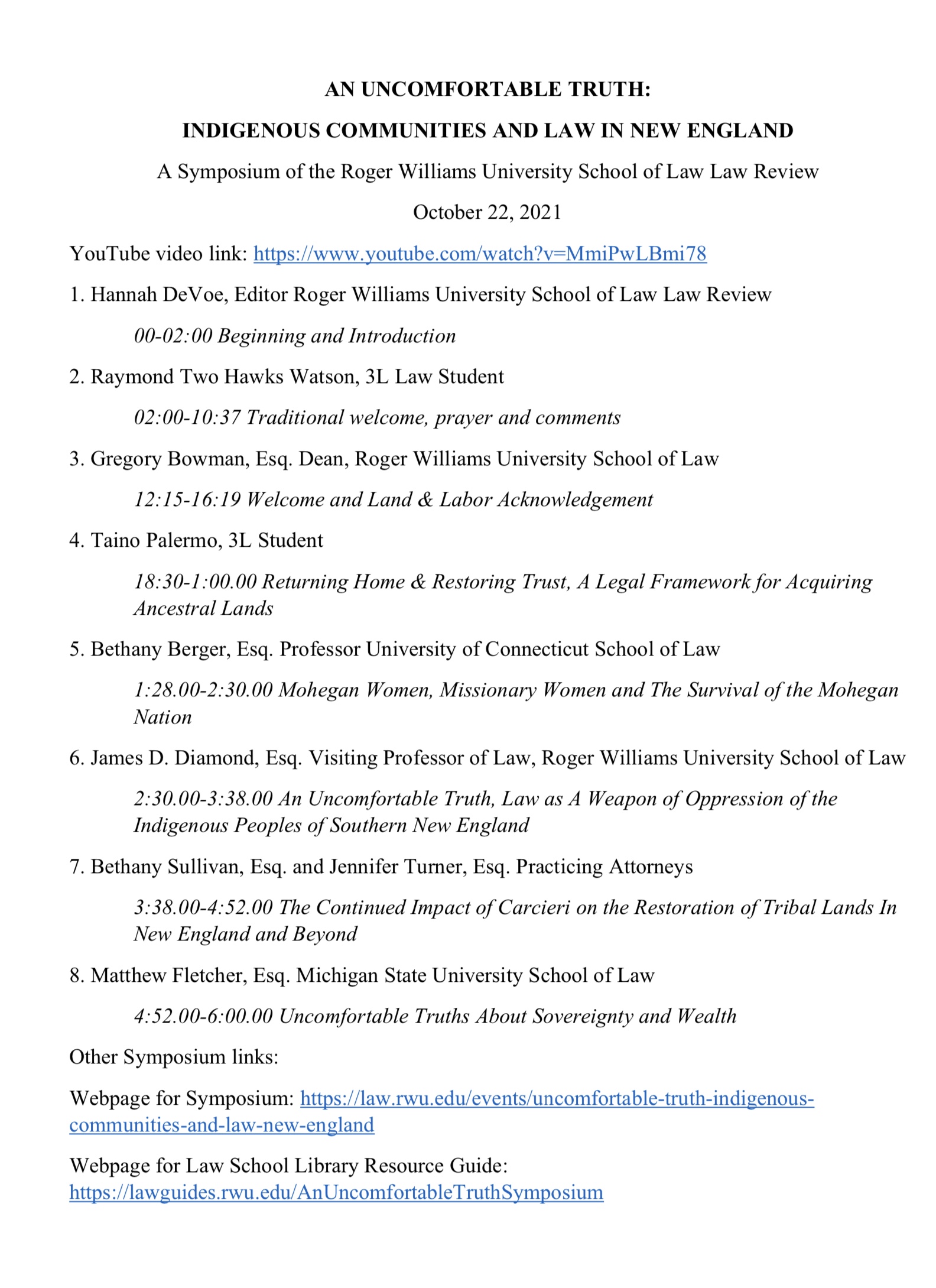
Jim Diamond helpfully made a concordance of where the various talks appear during the symposium:
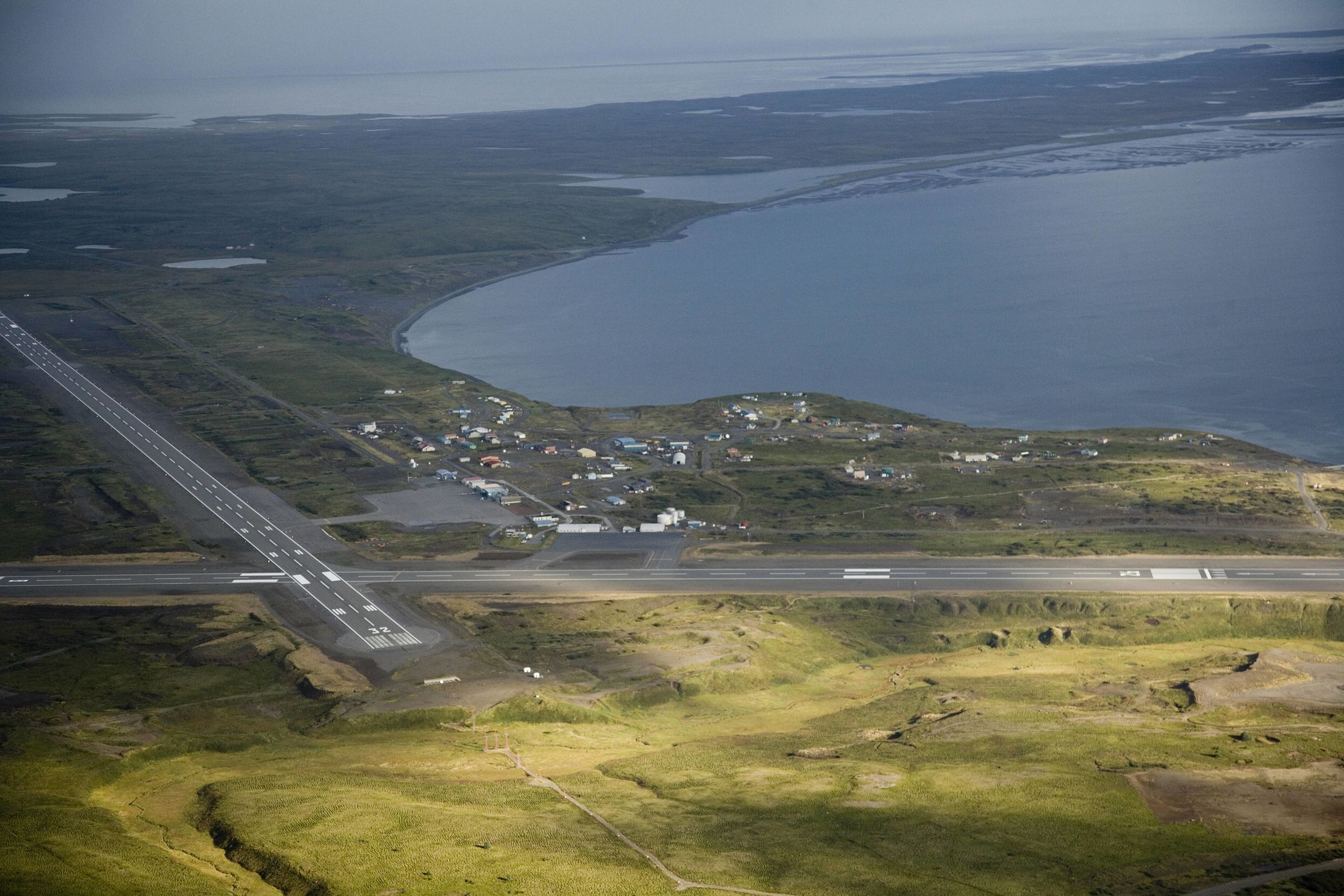
Here is the opinion in Friends of Alaska National Wildlife Refuges v. Haaland.
Anchorage Daily News coverage.
Briefs:
Here.
An excerpt:
Expanding special criminal jurisdiction of Tribal courts to cover non-Native perpetrators of sexual assault, child abuse, stalking, sex trafficking, and assaults on tribal law enforcement officers on tribal lands; and supporting the development of a pilot project to enhance access to safety for survivors in Alaska Native villages.
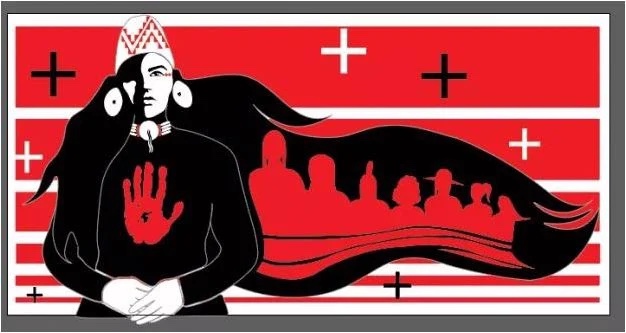
Section 903 of H.R. 1602 (which is what I assume Congress adopted) includes the additional crimes that Indian tribes may not prosecute against non-Indians:
Continue reading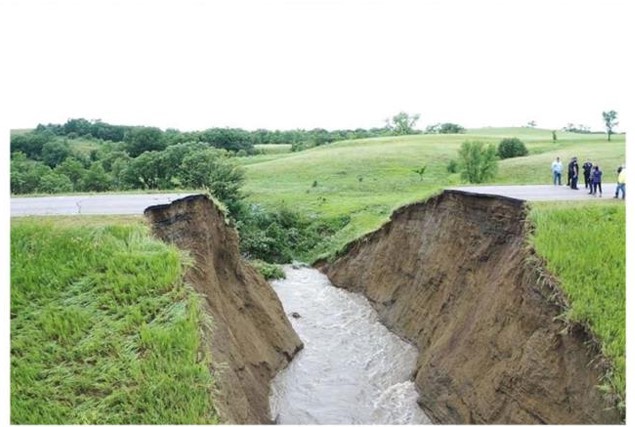
Here are the materials in Mound v. United States (D.N.D.):

 Turtle Talk
You must be logged in to post a comment.