Here:
Author: Matthew L.M. Fletcher
Blast from the Past: Mohawk Occupation of Lands at Eagle Bay
In honor of the land claims settlement at Akwesasne:

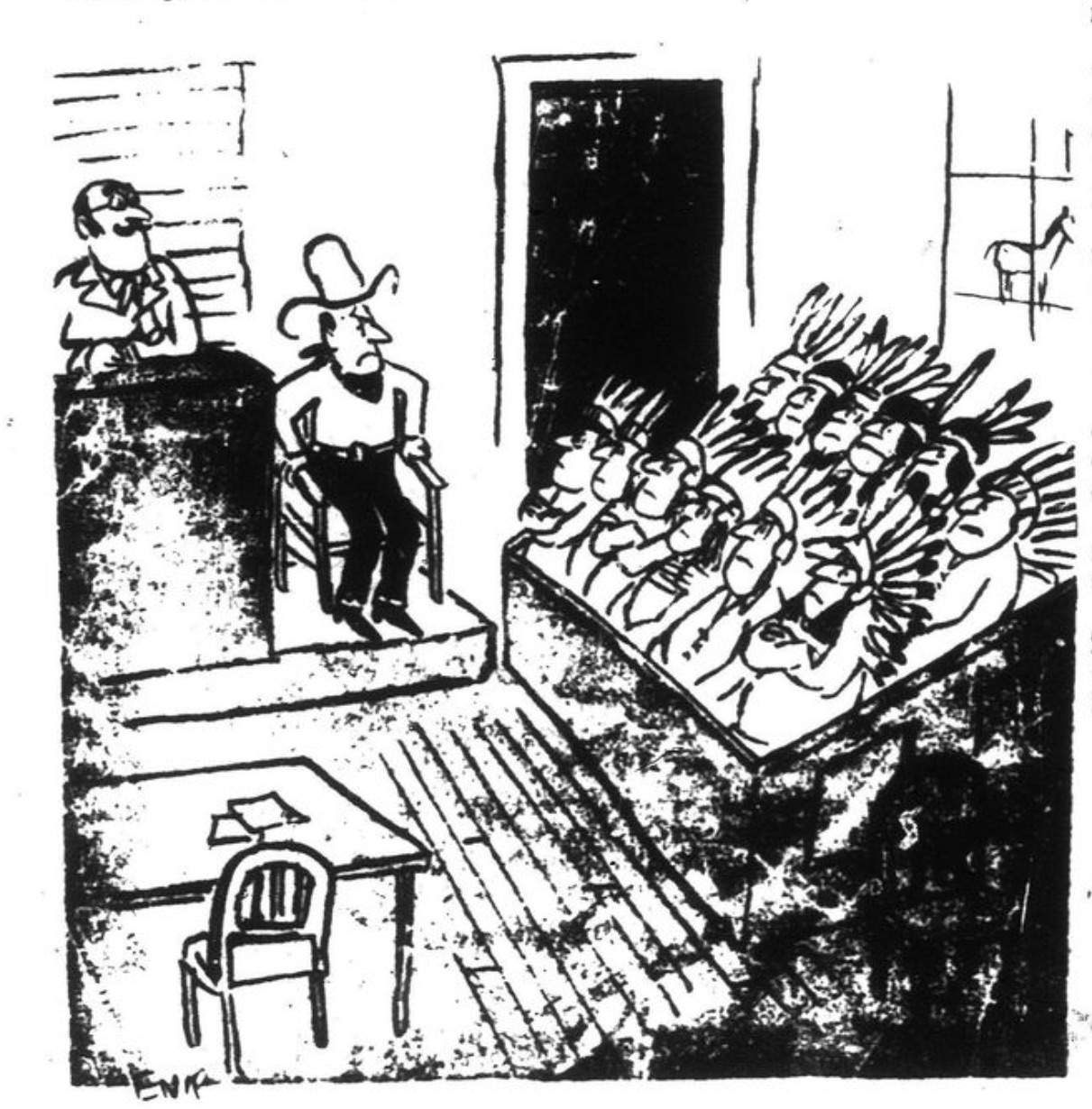
Blast from the Past: NDN Jury
Akwesasne Notes, 1971:
Furlong and Blumenthal on Tribal Authority over Nonmember Water Use
Wesley J. Furlong and Lori E. Blumenthal have published “Water Knows No Boundaries: Tribal Jurisdiction over Non-Indians’ Off-Reservation Conduct that Threatens On-Reservation Tribal Water Resources” in the Public Lands & Resources Law Review.
Here is the abstract:
This Article begins by discussing Manoomin and Sauk-Suiattle, orienting the reader to how these complicated jurisdictional issues have been addressed by Tribal courts. Next, this Article sets forth the current framework under Montana and Merrion for determining the extent of Tribal civil jurisdiction over non-Indians. Next, this Article examines the caselaw establishing Tribal Nations’ inherent sovereign authority to exercise civil jurisdiction over non-Indian activities and conduct occurring on-reservation that threaten or affect Tribal water resources and rights. Finally, this Article examines the caselaw that lays the groundwork for extending Tribal Nations’ civil jurisdiction over non-Indian activities and conduct occurring off-reservation that threaten or affect on-reservation Tribal water resources and rights.
Bryan on Restoring Tribal Land Use Authority in Indian Country
Micbelle Bryan has published “A Most Essential Power: The Case for Restoring Comprehensive Land Use Authority in Indian Country” in the Public Land & Resources L.Rev.
Here is the abstract:
Part I of this article provides a brief overview of allotment and its lingering jurisdictional quagmire on impacted reservations. Stepping outside of Indian Country, Part II then outlines the U.S. Supreme Court’s longstanding recognition of sweeping, area-wide government land use authority—authority it considers among the “most essential” and “least limitable.” The Court has never applied this established law when determining tribal sovereignty over land use. That application is long overdue.
Part III details how we arrived at this state of affairs—how tribes, despite starting with sovereign control over land use throughout their territories, experienced losses in that authority over time due to judicial error. This Part contrasts the Court’s double-speak regarding the “essentiality” of land use authority, depending on whether the case arises within or outside of an Indian reservation. Not surprisingly, this flawed jurisprudence has negatively impacted tribes’ welfare and undermined the current federal policy of tribal self-determination.
Part IV thus argues that the Court should restore tribes’ comprehensive land use authority, outlining three potential pathways of reasoning. While legal work-arounds also exist and should be explored— such as Congressional authorization or inter-governmental cooperative agreements—this article focuses on a judicial course correction in order to establish a more enduring baseline of sovereignty in federal Indian law. Finally, the article concludes that federal jurisprudence and policies should align in favor of comprehensive authority over land use in Indian Country, regardless of the ownership status of an individual parcel.

Tribal Amicus Brief in Prisoner Rights Suit
Here is the brief in Landor v. Louisiana Dept. of Corrections and Public Safety:

Picayune Rancheria Sues Union to Halt Demonstrations by Union Members
Here is the complaint in Picayune Rancheria of Chukchansi Indians v. Unite Here Local #19 (E.D. Cal.):

The Carrion Crawlers: “Land of Nothing”
Live from the Badlands:
Tenth Circuit Again Vacates Federal Conviction of Indian for Reliance on Unverified Tribal Documents to Prove Indian Status

Ninth Circuit Rejects Stillaguamish Effort to Expand U&A Territory [U.S. v. Washington Subproceeding 17-03]
Here is the unpublished opinion in Stillaguamish Indian Tribe v. Upper Skagit Indian Tribe.
Briefs here.

 Turtle Talk
You must be logged in to post a comment.