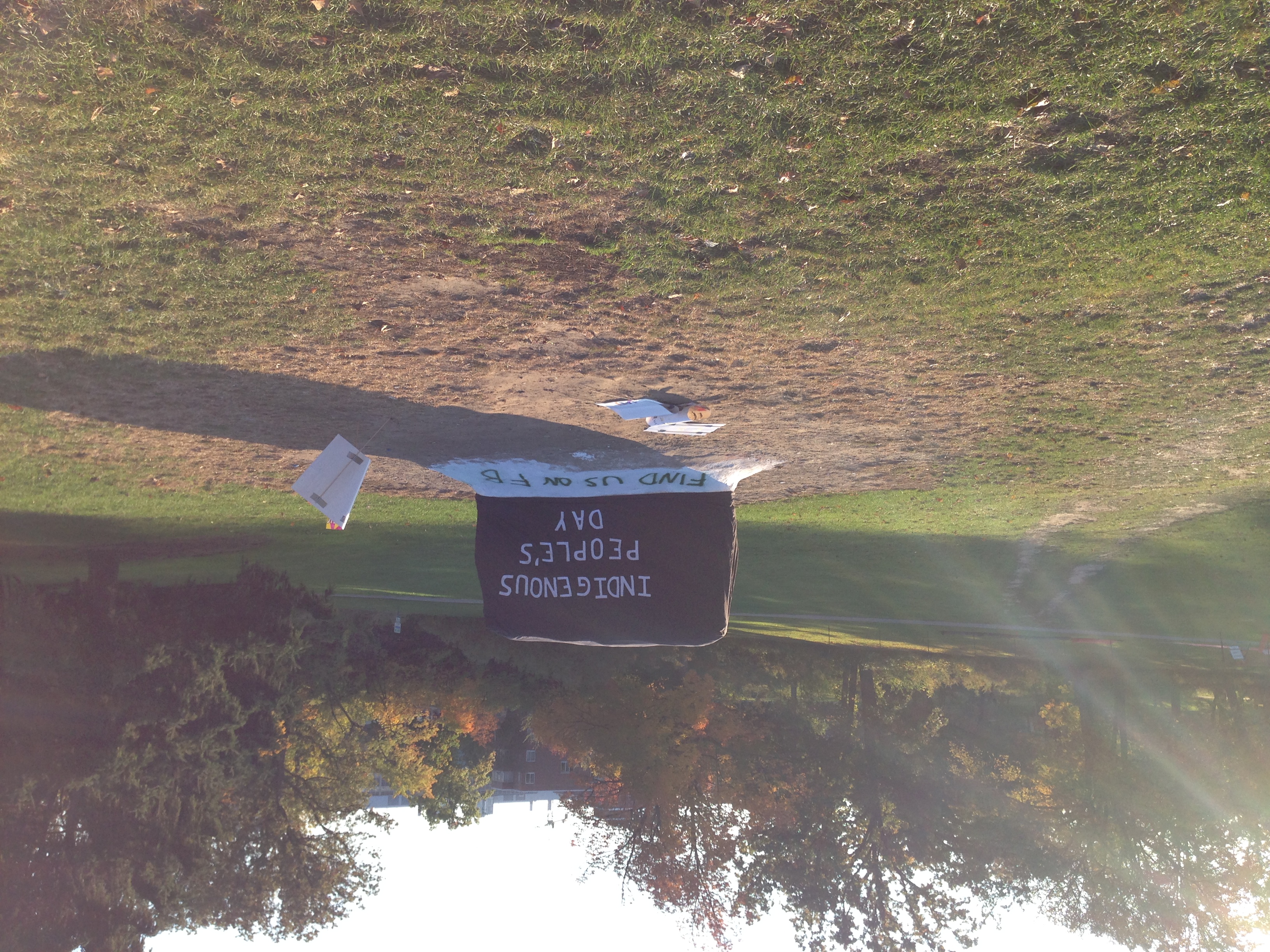
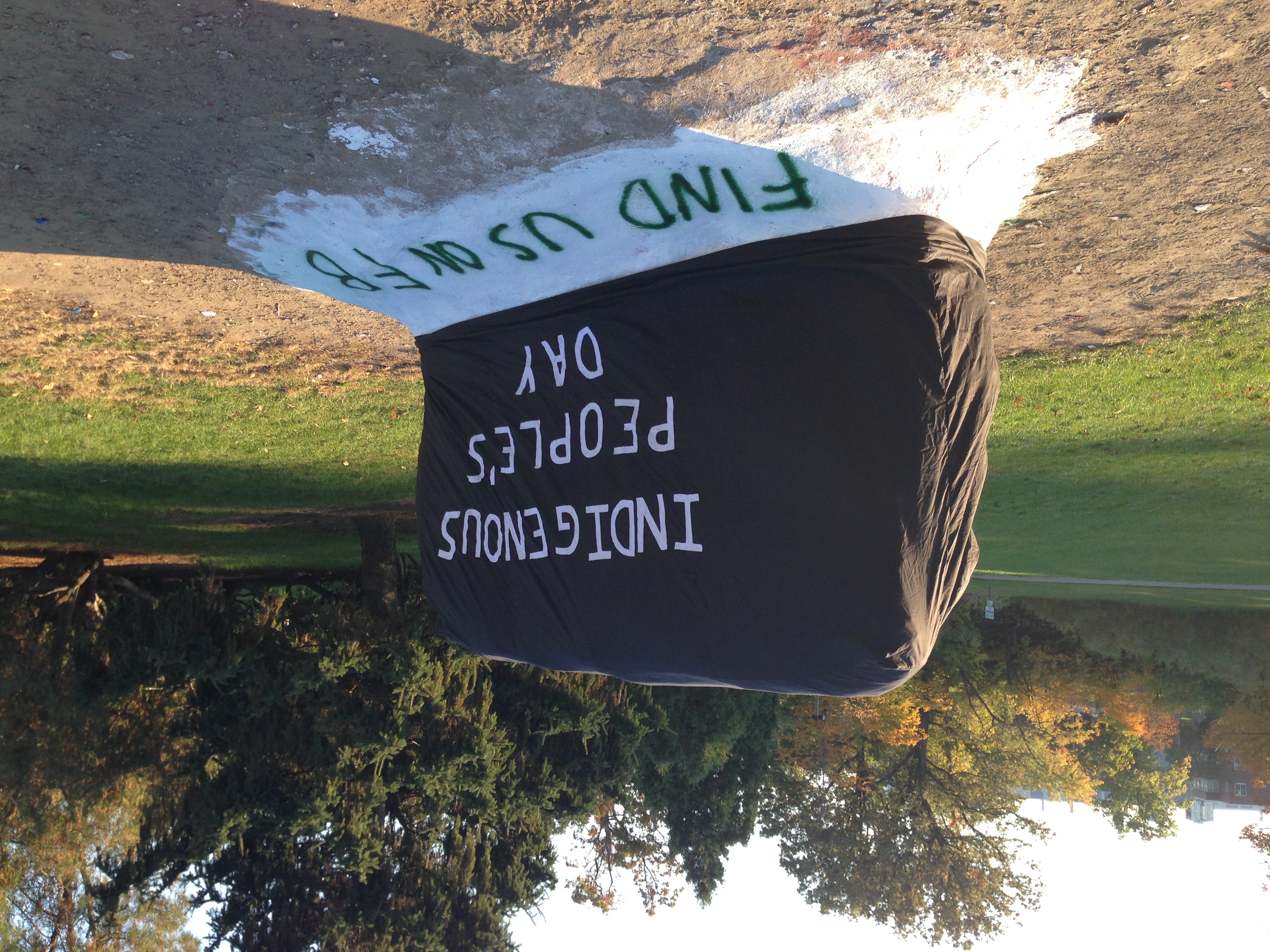
Indigenous Peoples Day 2015 @ MSU
Here are the briefs in Agua Caliente Band of Cahuilla Indians v. Coachella Valley Water District:
2016-02-18 – Dkt 036 – Brief of Amici Curiae Law Professors in Support of Appellee
Beth DiFelice has published “Indian Treaties: A Bibliography” (PDF) (SSRN) in the Law Library Journal.
Jasmine Abdel-Khalik has posted “Disparaging Trademarks: Who Matters,” published in the Michigan Journal of Race & Law. Here is the abstract:
For more than a century, non-majority groups have protested the use of trademarks comprised of or containing terms referencing the group — albeit for various reasons. For those trademarks that are offensive to targeted groups, some may argue that the market will solve. In other words, some may assume that purchasers in the marketplace will respect the objection, there will be insufficient purchases of the product under the mark, and the mark will disappear. However, objections raised by smaller populations in the United States often fall on deaf ears, and the marks continue to be used in the marketplace. The Washington NFL football team trademarks are an example.
Under the 1946 Lanham Act, Congress added a prohibition against registering disparaging trademarks, which could offer protection to non-majority groups targeted by the use of trademarks offensive to members of the group. The prohibition remained relatively unclear, however, and relatively rarely applied in that context until a group of Native Americans petitioned to cancel the Washington NFL team’s trademarks as either scandalous (meaning offensive to the general population) or disparaging (meaning offensive to the referenced group). In clarifying the appropriate test for disparaging, however, the decision makers have overly analogizing the two prohibitions, rendering the disparaging registration prohibition less effective in protecting non-majority groups from offensive trademarks.
This Article seeks to clarify the history, purpose, and utilization of the disparaging registration prohibition. In so doing, the Article also seeks to detangle the scandalous and disparaging registration prohibitions and refocus the disparaging registration prohibition on a broader and necessary purpose, which is to protect non-majority voices from the numerous harms caused by stereotyping and by rendering painful terms commonplace but no less painful.
Here:
The Ninth Circuit panel decided this one way back in 2013, but withdrew the opinion to await the en banc decision in United States v. Zepeda.
Here are the materials in Hammond v. Jewell (E.D. Cal.):

John Petoskey received the Tecumseh Award

Section officers Judge Tanya Wanageshik, Liz Cook, and Scott Ryder

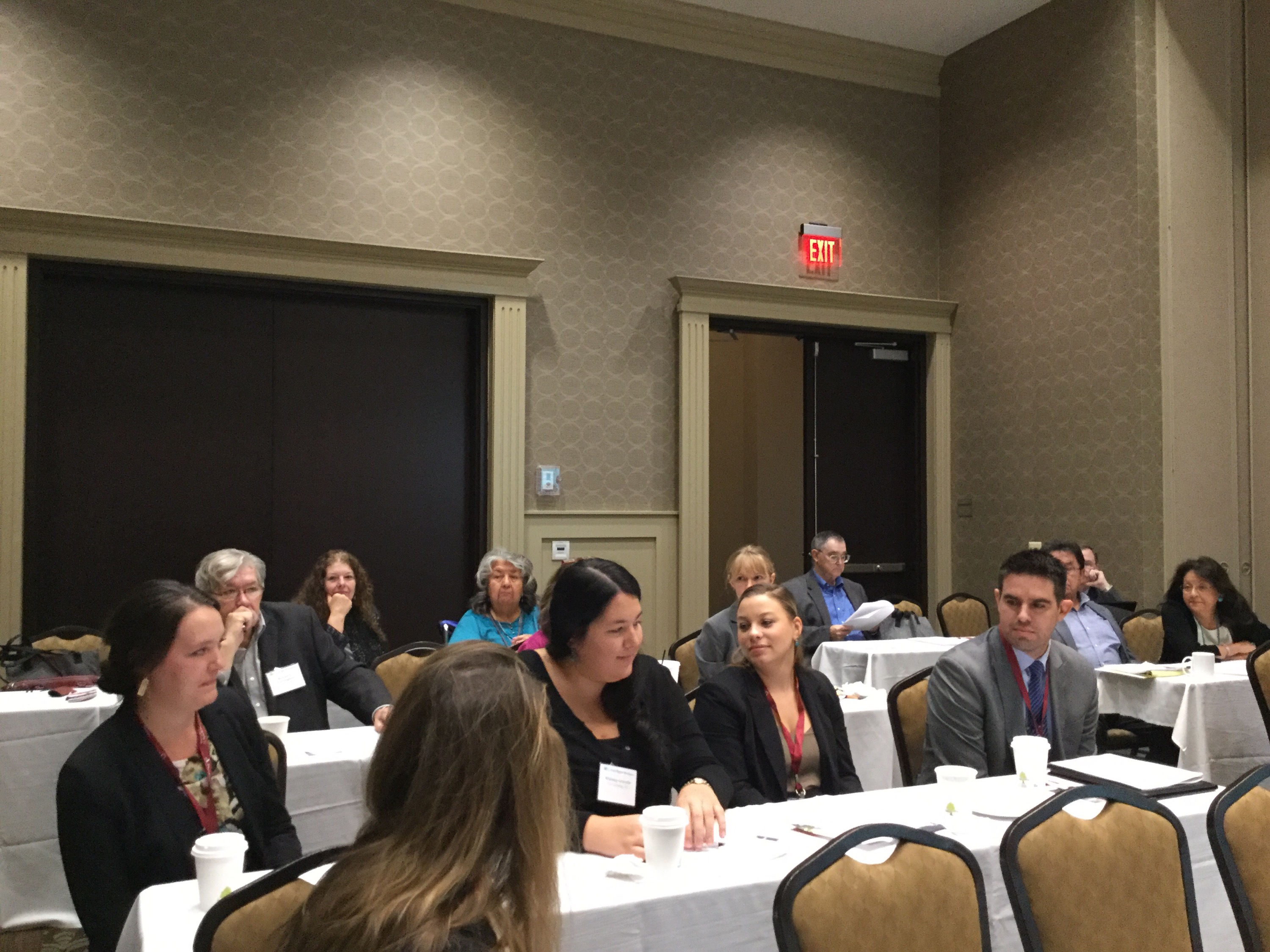
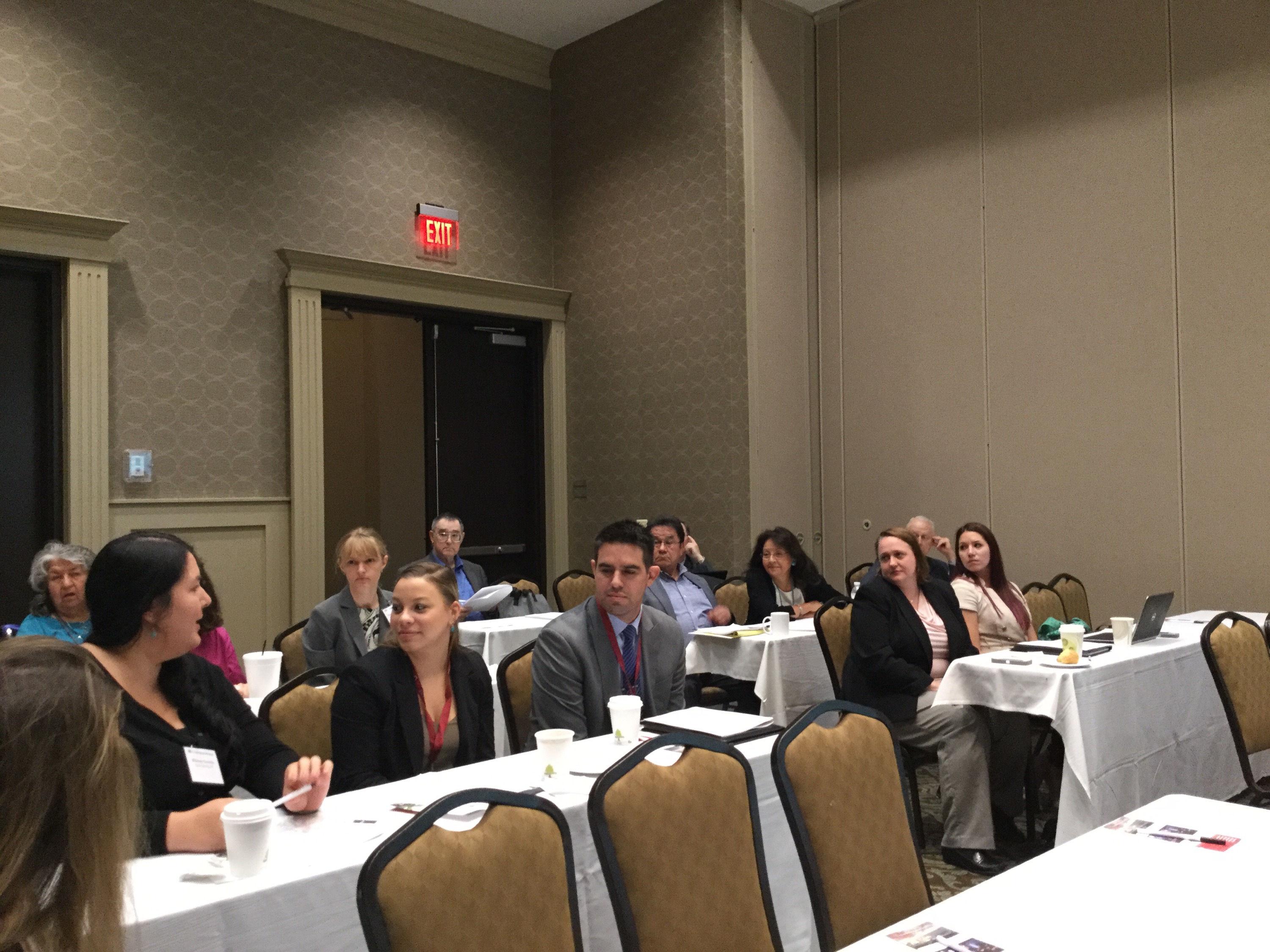
Meeting audience members included a significant Michigan State contingent


You must be logged in to post a comment.