NCAI: Feds to Pay Contract Support Costs

Here:

Contract Support Costs To Be Paid IN FULL By Federal Government

WASHINGTON, DC – For the first time in decades, tribal nations will receive full payment on contracts signed with the federal government. The Bureau of Indian Affairs (BIA) and the Indian Health Service (IHS) have submitted plans to pay their 2014 contracts with tribes in full.

Many issues face Indian Country but one of the most far-reaching is the fiduciary relationship between tribal nations and the federal government. In setting out plans to pay their contract support cost requirements in full, the federal government will begin to treat tribal nations with the respect and honor due to them.

Under the Indian Self-Determination Act, the United States enters into inter-governmental contracts with tribes under which tribes administer federal programs for the benefit of tribal members. The Indian Self-Determination Act represents the cornerstone of this nation’s federal policy toward tribes for more than a third of a century and represents one of the most successful policy eras for tribes in US history.

Yet, time and time again, BIA and IHS have failed to pay the contract support costs in full while expecting the programs to be fulfilled completely. This cycle of negotiating contracts and then refusing to pay the agreed upon amount has prevented tribes from achieving self-determination and progress towards self-sufficiency.  When Indian contract and self-governance compact contract support costs are short funded, tribes are actually penalized for exercising their self-determination rights, by being compelled to reduce program operations to cover these unavoidable costs.

While this recent development is a positive step for future contracts, federal agencies must also speed up the settlement of past claims. Agencies owe tribal nations millions of dollars in unpaid contract support costs – money that is critical for tribes to achieve full self-determination.

The National Congress of American Indians is committed to working with tribal nations and the federal government to ensure full payment of future contracts and to resolve the millions of dollars of debt owed to tribes.

For additional background information on Contract Support Costs, please read NCAI’s full report on Contract Support Costs or the summary briefing document.

Eighth Circuit Affirms Pine Ridge Man’s Drug Conviction, but Criticizes Harsh Sentence

Here is the opinion in Walking Eagle v. United States.

And footnote 2 (joined by two of the judges):

In affirming the denial of postconviction relief to Walking Eagle, we nevertheless observe that Walking Eagle’s 20-year mandatory minimum sentence is another example of a harsh sentence that is required for a non-violent crime in what now seems generally recognized as this country’s continuing but unsuccessful War on Drugs. On August 12, 2013, in a speech before the American Bar Association, United States Attorney General Eric Holder emphasized the need to “fundamentally rethink[] the notion of mandatory minimum sentences for drug-related crimes,” as these sentences “oftentimes generate unfairly long sentences” and, as a result, “breed disrespect for the system.” Eric Holder, Attorney General of the United States, United States Department of Justice, Remarks at the Annual Meeting of the American Bar Association’s House of Delegates (Aug. 12, 2013), available at http://www.justice.gov/iso/opa/ag/speeches/2013/ag-speech-130812.html.

Update on EPA’s Partial Stay of Wind River Decision

Here are materials :

2014.02.13 Press Release re EPA Issues Stay [Eastern Shoshone]

EPA Stay Letter – 2.13.14

Letter to Shaun McGrath 2.12.14

The EPA’s original decision is here.

News Coverage of DOJ Taskforce Hearing #2

Here. An excerpt:

Daniel Cauffman, 21, can speak candidly about the physical abuse he suffered at the hands of his stepmother when he was a child.

He knows his story of closed-fist punches coupled with other acts of physical violence speaks for hundreds – if not thousands – of children on Native American lands across the country.

“I hope it does help,” said Cauffman, a member of the Pokagon Band of Potawatomi, Mich.

He was one of several young people to give testimony Tuesday alongside regional experts at a public hearing for the advisory committee to the Attorney General’s Task Force on American Indian and Alaska Native Children Exposed to Violence.

“I’m glad they do stuff like this ’cause it does raise awareness,” Cauffman said. “As far as hopes goes, hopefully we can pull kids out of the situation.”

More detailed coverage here.

SCIA Hearing on the Indian Law and Order Commission Report

Link to video here.

Witness list:

Panel 1

The Honorable Kevin Washburn
Assistant Secretary-Indian Affairs-U.S. Department of the Interior, Washington, DC
The Honorable Timothy Q. Purdon
U.S. Attorney-District of North Dakota, U.S. Department of Justice, Fargo, ND

Panel 2

Mr. Troy Eid
Chairman-Indian Law and Order Commission, Denver, CO
Ms. Affie Ellis
Commissioner-Indian Law and Order Commission, Cheyenne, WY

Ms. Tamra Truett Jerue
Director-of Social Services and Tribal Administrator, Anvik Tribal Council, Anvik, AK

Additional Update in Luckerman v. Narragansett

Here are additional materials in Luckerman v. Narragansett Indian Tribe (D. R.I.):

29 Motion to Correct the Record

33-1 Response

34 DCT Order on Amending the Record

Meanwhile, the tribe has appealed the sovereign immunity issue here to the First Circuit.

Prior posts on this case are here and here.

Oregon School Mascots Issue Reaches Governor

Here. An excerpt:

Senators also heard testimony in favor of the bill from the Confederated Tribe of Siletz Indians. The Siletz Warrior mascot at the tribe’s charter school violates the current rule, but the bill would allow the tribe to keep it in place.

“A lot of the issue is we need Oregon-based curriculum in our schools,” said Robert Kentta, a member of the Siletz tribal council speaking in support of the bill. “Taking away mention of Indians in schools is not an approach that we think is productive toward that goal.”

Samuel Henry, chairman of the Oregon Board of Education, said the state needs to improve its Native American curriculum but he said the board fully vetted their ban.

Native American mascots provide no educational benefit, Henry said, and open the state up to potential lawsuits challenging the mascots.

“One question for state legislators is: Do you want to buy more kindergarten teachers or do you want to pay for attorney’s fees and staff time?” Henry said. “It’s that simple.”

Winslow Indian Health Care Center Inc. v. United States Complaint

Here:

01 Complaint

An excerpt:

This is a suit against the United States for breach of contract and statute by the Indian Health Service (“IHS”), an agency in the Department of Health and Human Services (“HHS”). Plaintiff, the Winslow Indian Health Care Center (“WIHCC”), seeks money damages under the Contract Disputes Act, 41 U.S.C. § 7101 et seq. (“CDA”), based on the Secretary’s repeated violations of WIHCC’s contractual and statutory right to the payment of full funding of contract support costs (“CSC”) for contracts entered under the Indian Self-Determination and Education Assistance Act (“ISDEAA”), Pub. L. No. 93-638, as amended, 25 U.S.C. § 450 et seq.

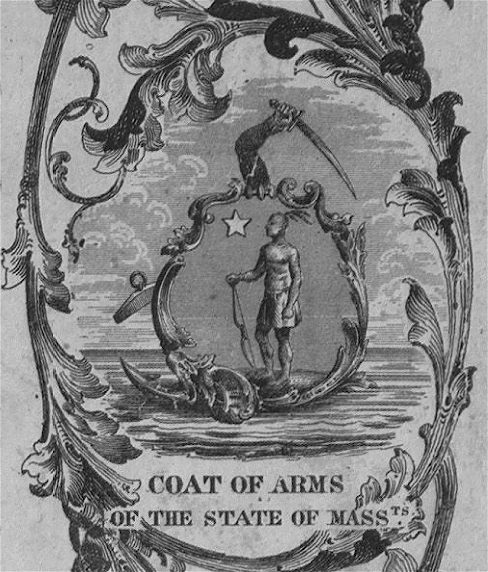
Mass. COA Dismisses Challenge to State Flag

Here is the unpublished opinion in DeGuglielmo v Governor.

And a series of images behind the claim:

1852_CoatOfArms_Massachusetts_map_BPL_12850
1852 Coat of Arms

Coat of Arms
Mass. Colony Coat of Arms
State Flag
State Flag

News Coverage of Boldt Decision’s 40th Anny

Here.