Here is “City Council votes to stop recognizing Columbus Day” from the Michigan Daily.
Author: Matthew L.M. Fletcher
Tenth Circuit Briefs in Amerind Risk Management v. Blackfeet Housing
Profile of Association of Village Council Presidents
Here is “AVCP aims to establish tribal court in every YK village” from Alaska Public Media.
The article features the great Monique Vondall-Rieke!
Wasatch County v. Ute Indian Tribe Cert Petition
Here:
Question presented:
In Hagen v. Utah, 510 U.S. 399, 409 (1994), this Court granted certiorari “to resolve the direct conflict between” the Tenth Circuit and the Utah Supreme Court over whether Congress has diminished the lands of the Uintah Valley and Uncompaghre Indian Reservation. This Court adopted the state court’s holding that the lands have been diminished, such that those lands are not Indian Country.
The Tenth Circuit is not giving up, however. It has held that its prior precedent justifies expressly refusing to follow Hagen,except to the limited extent absolutely compelled with respect to the precise facts of this Court’s ruling. In this case, the Tenth Circuit went substantially further still and held that its earlier (admittedly erroneous) holding that the reservation has not been diminished binds even petitioner Wasatch County, which was not a party to any of the prior litigation. Despite this Court’s determination to resolve the conflict between the federal and state courts in Hagen, that conflict continues to persist.The Question Presented is:
Did the court of appeals err in defying this Court’s decision in Hagen v. Utah and enjoining a proper state court prosecution of a tribal member on lands that this Court has held have been diminished by Congress?
Lower court materials here.
Tenth Circuit Affirms Sentence in Federal Conviction for Assaulting a BIA Officer
Here is the opinion in United States v. Quiver.
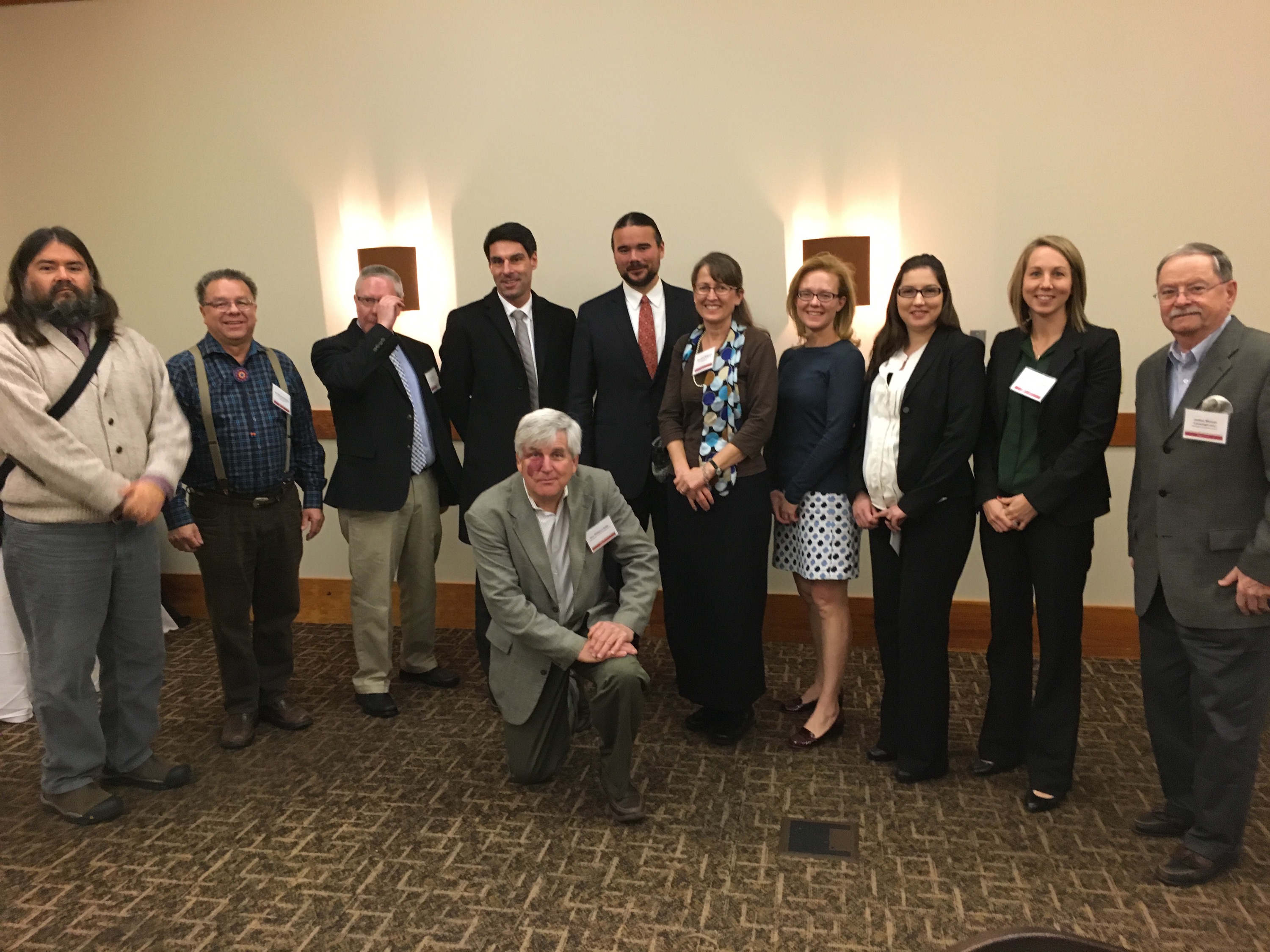
Michigan Tribal State Federal Judicial Forum
Spartans
Wolverines

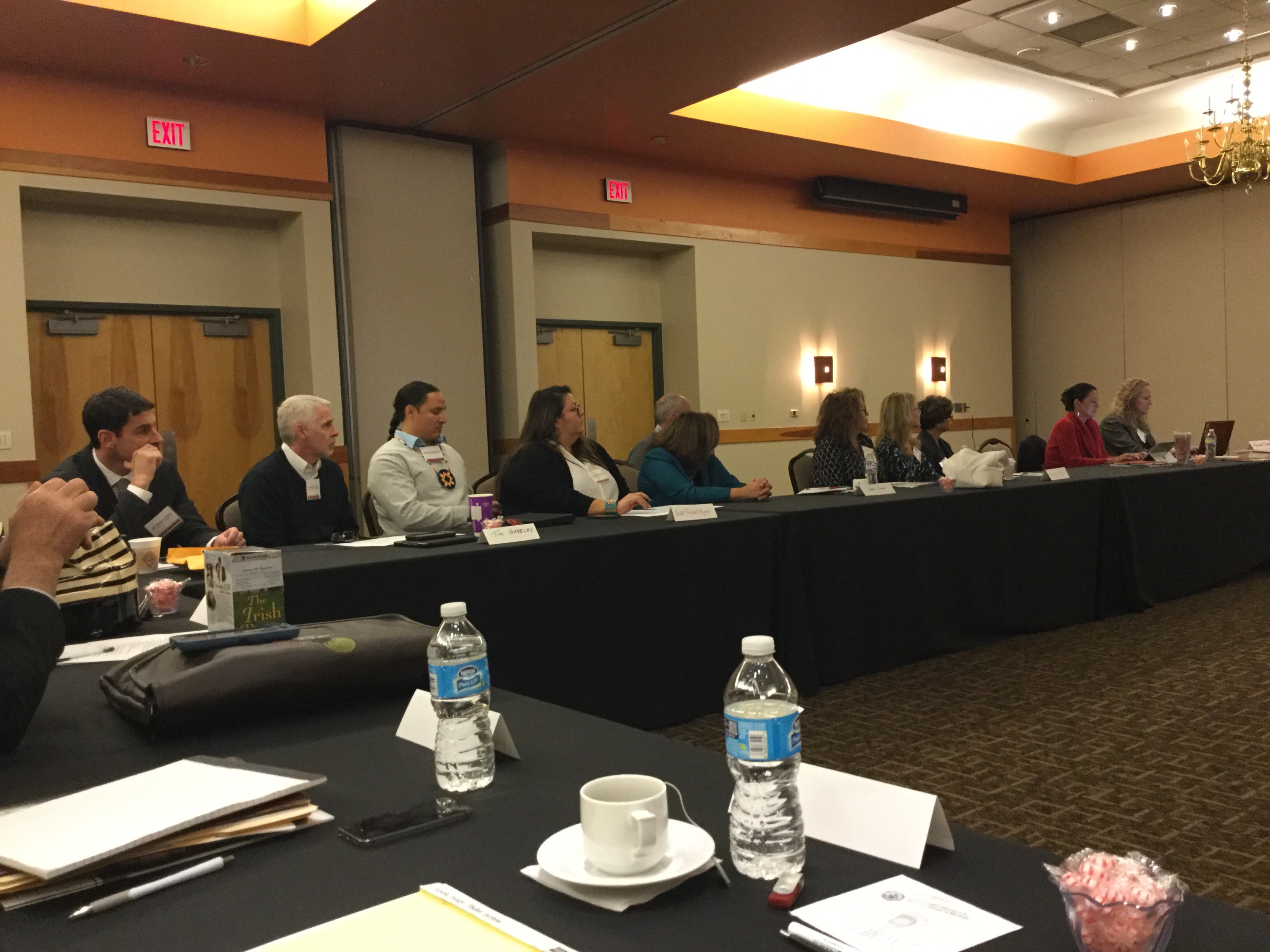
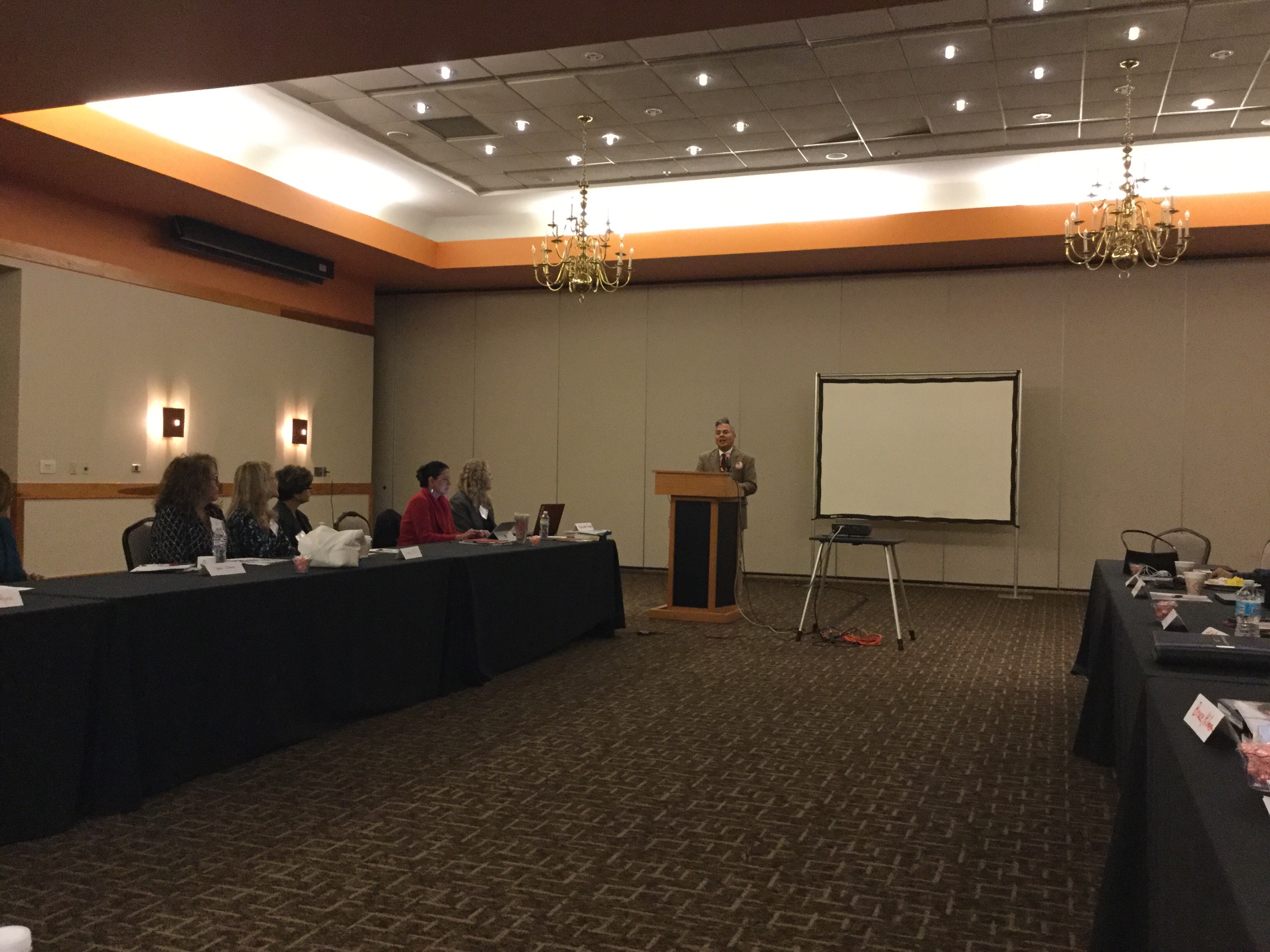
Michigan Tribal State Federal Judicial Forum Meeting
At Bahweting 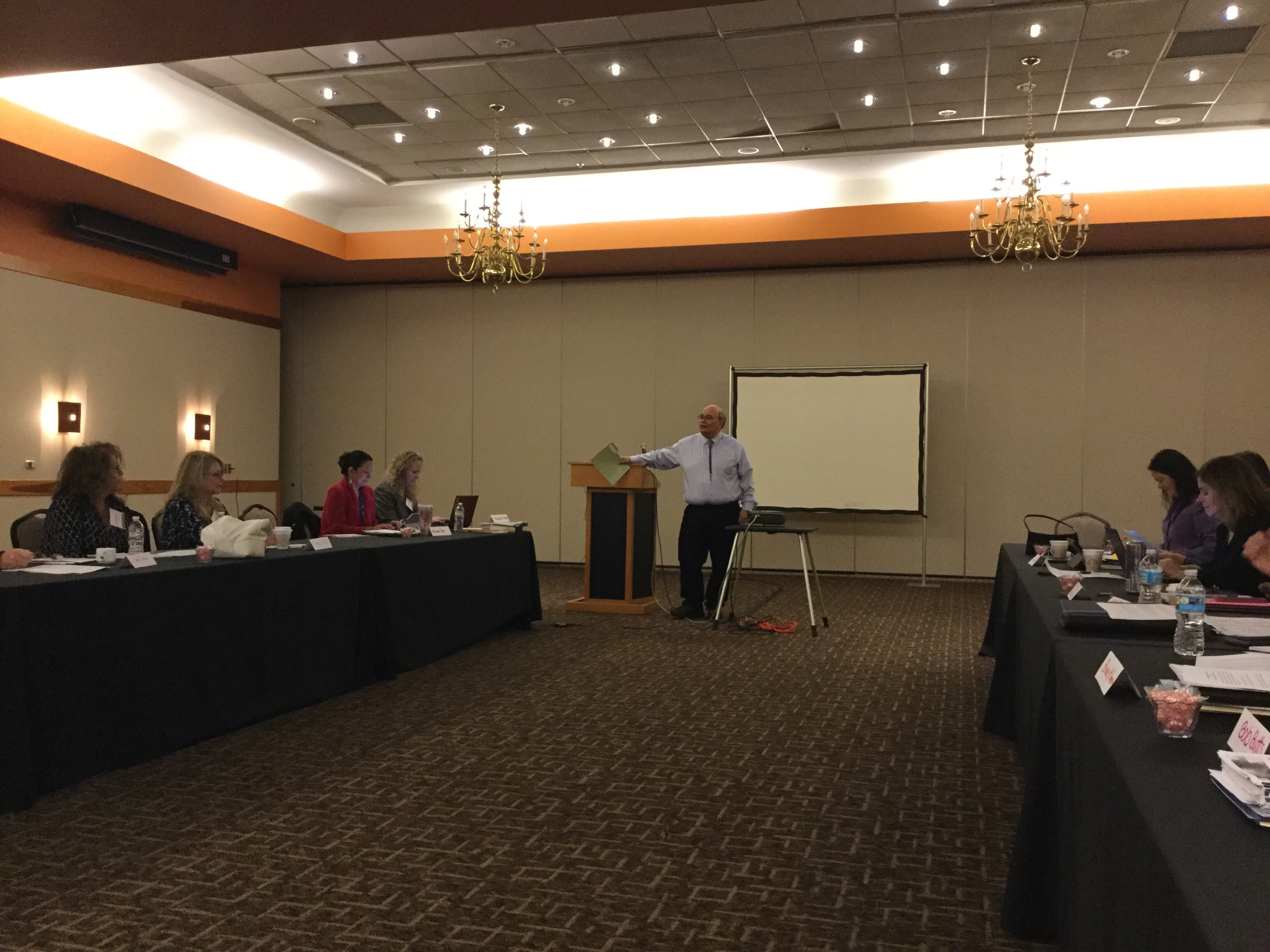

“Native American culture feels effects of boarding schools decades after system closed”
Here, from the Grand Traverse Record-Eagle.
Kristen Carpenter & Carla Fredericks: “Why use “r–skin” word at all?”
From the Denver Post, here.
California Court of Appeals Holds ICWA Doesn’t Apply Where Pala Band Member Child is Disenrolled During Adoption Proceedings
Here is the unpublished opinion in In re K.P.:
An excerpt:
Michelle T., a member of the Pala Band of Mission Indians, contends that the juvenile court violated the Indian Child Welfare Act (ICWA), title 25 United States Code section 1901 et seq. and Welfare and Institutions Code section 224 et seq. by terminating her parental rights to her children, K.P. and Kristopher P., under section 366.26.
Throughout most of their dependency cases, K.P. and Kristopher were eligible for membership, or were enrolled, in the Pala Band of Mission Indians (Pala Band). At the children’s first section 366.26 hearing, the Pala Band did not consent to the children’s adoption and the juvenile court ordered a plan of guardianship. Several years later, when the children’s cases proceeded to a second section 366.26 hearing, the juvenile court learned that the Pala Band of Mission Indians had disenrolled K.P. and Kristopher, and others, on the ground that they lacked the blood quantum necessary for membership.Michelle argues that in view of a pending appeal in the United States Court of Appeals for the Ninth Circuit challenging the validity of the Pala Band’s enrollment ordinance that resulted in the disenrollment of K.P. and Kristopher and the others, the juvenile court erred when it found that K.P. and Kristopher were not Indian children within the meaning of the ICWA and declined to apply ICWA’s substantive and procedural protections at the children’s second section 366.26 hearings. Michelle also argues that enrollment in a tribe is not required to be considered an Indian child, and that the Pala Band did not provide written confirmation that enrollment is a prerequisite for Pala Band membership.
We conclude that the juvenile court correctly ruled that the Indian tribe has the sole authority to determine its own membership and that the juvenile court must defer to the membership decisions of an Indian tribe. Under federal and state law, the Indian tribe’s membership determination is conclusive. The record shows that enrollment is a prerequisite for Pala Band membership, and that the Pala Band determined that K.P. and Kristopher are not members of its tribe. Therefore, the juvenile court did not err when it determined that K.P. and Kristopher are not Indian children within the meaning of the ICWA and terminated parental rights without applying ICWA’s heightened substantive and procedural protections. We affirm.
 Turtle Talk
You must be logged in to post a comment.