This is for Alex Pearl. Sorry you missed it:
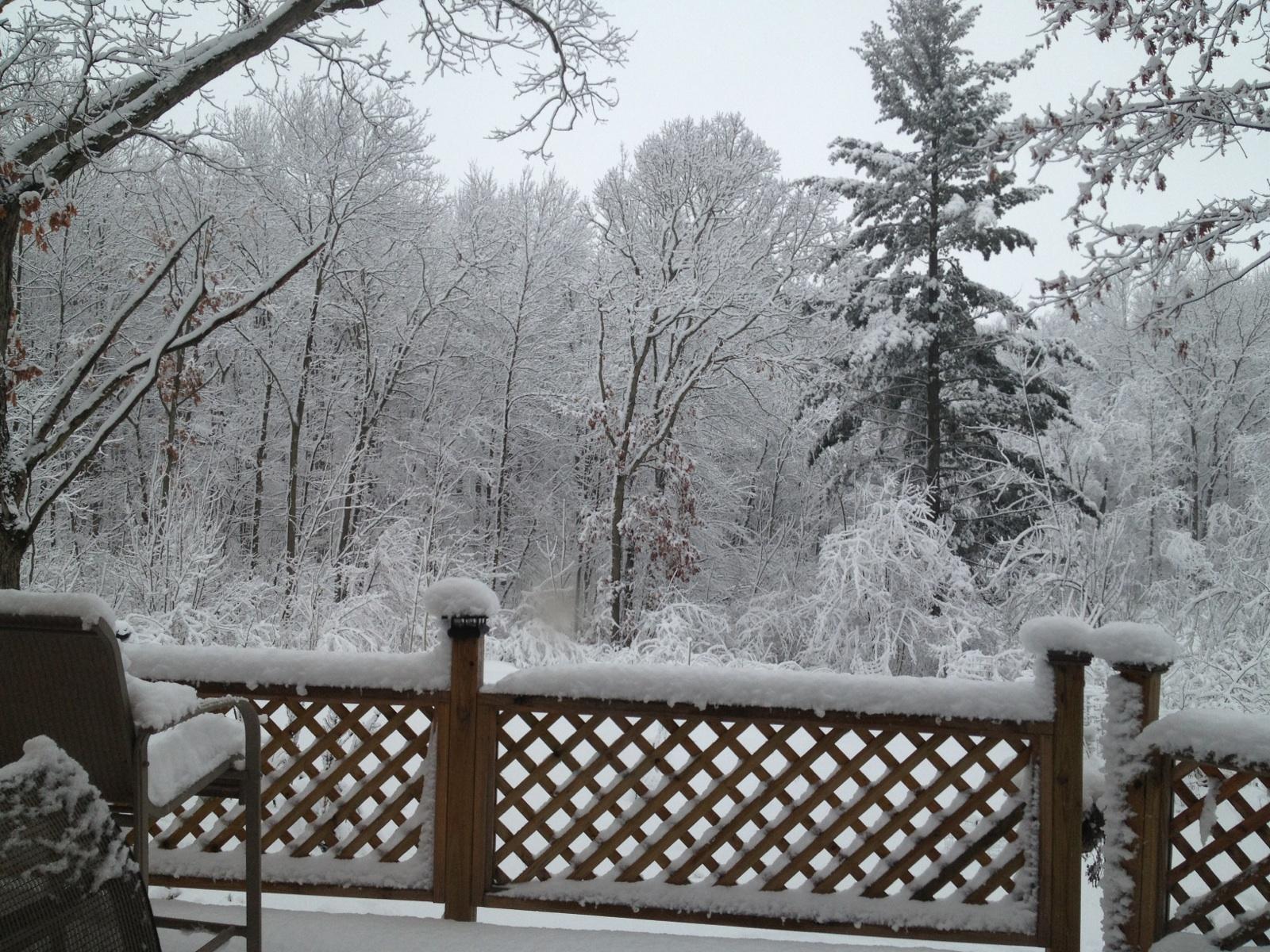
Miigwetch, Mom.
And this is an amazing natural occurrence at Sleeping Bear Dunes lake shore:

Thanks to A.K.
This is for Alex Pearl. Sorry you missed it:
Miigwetch, Mom.
And this is an amazing natural occurrence at Sleeping Bear Dunes lake shore:
Thanks to A.K.
Commentators (for example, here and here) have been noting in response to Grassley’s concern that white male perpetrators will not benefit from a jury of their peers in tribal courts that Indian defendants (almost) never stand trial before federal juries with American Indians in the jury box. Let us not forget ASIA Kevin Washburn’s Michigan Law Review article from a few years back that made that perfectly clear. He wrote:
Despite the normative principle of representativeness, Indians tend not to be well represented in federal juries in Indian country cases. Even in states with large Indian populations, Indians remain a very small fraction of the population. As a result, Indians would be expected to have minimal representation in the jury venire. However, the statistics indicate lower numbers than one would expect.
Here.
A excerpt:
What seems like dry legislation can leave Native women at the mercy of their predators or provide a slim margin of hope for justice. As a Cheyenne proverb goes, a nation is not conquered until the hearts of its women are on the ground.
If our hearts are on the ground, our country has failed us all. If we are safe, our country is safer. When the women in red shawls dance, they move with slow dignity, swaying gently, all ages, faces soft and eyes determined. Others join them, shaking hands to honor what they know, sharing it. We dance behind them and with them in the circle, often in tears, because at every gathering the red shawls increase, and the violence cuts deep.
Here is the website linking to the materials in State v. Delorme.
Here are the materials:
And a description of the issues from each party:
Appellant’s Statement of the Issues:
The district court erred when they denied the Appellant’s Motion to Dismiss due to lack of subject matter jurisdiction of the Court based on Appellant’s aboriginal usufructuary rights as guaranteed and preserved in the 1863 Treaty of Old Crossing.
The district court erred when they granted the State’s Motion in Limine concerning reference to any land in Eddy County where these offenses are alleged to have occurred as being part of an Indian reservation or Indian Country, that the Appellant was licensed by the tribe as a guide and outfitter.Appellee’s Statement of the Issues:
Issue 1 Whether an outfitting license issued by the Spirit Lake Sioux Tribe to one of its members, which is then transferred to a non-member, precludes state jurisdiction over the non-member’s off-reservation outfitting activities?
Issue 2 Whether an aboriginal right to hunt can be a defense to a non-hunting charge?
Issue 3 Whether North Dakota will be the only jurisdiction to expand aboriginal hunting rights to include “ancillary,” non-hunting activities?
Issue 4 Whether the land on which the violations occurred constitutes either aboriginal land or Indian country?
Issue 5 Whether an 1863 treaty, which conveyed “all” Indian interests, preserved a right to hunt?
Issue 6 Whether any right to hunt established by the 1863 treaty terminated as a result of Indian Claims Commission proceedings and, if not, is the right enforceable through an Indian group that has not maintained a political identity and is the right subject to state regulation?
Here. An excerpt:
First, let’s be clear: Senator Grassley’s bold assertion that Native Americans cannot serve as impartial jurors is simply racist. The Sixth Amendment’s right to jury grants you the right to have a jury selected from the community in which the crime took place. If a Native American committed an act of violence in Senator Grassley’s own Butler County, Iowa, chances are he’d face an all-White jury. That’s because Butler County is 98.95 percent White, and only 0.05 percent Native American. But I doubt Senator Grassley thinks that a Native American defendant couldn’t get a fair shake from his hometown Hawkeyes. And there’s no reason to think that Native American jurors would act differently.
The other purportedly constitutional objection to the tribal protection provision stems from a 1978 Supreme Court case that originated right here in Washington state: Oliphant v. Suquamish Indian Tribe. Suquamish tribal authorities arrested two men, Mark Oliphant and Daniel Belgarde, for crimes committed on Suquamish tribal lands. The defendants argued that the tribe could not charge them with any crime, no matter where it was committed, because they weren’t Indians. The Supreme Court agreed, but its reasoning is what’s most important: the Court never held that it was unconstitutional for tribal authorities to charge and try non-Indians, but rather that Congress’s “various actions and inactions in regulating criminal jurisdiction on Indian reservations demonstrated an intent to reserve jurisdiction over non-Indians for the federal courts.” Put differently, Congress just had to change its mind.
In a similar case about ten years later, Duro v. Reina, the Supreme Court determined that under existing federal law one tribe could not exercise criminal jurisdiction over an enrolled member of another tribe. So what happened? Congress simply changed its mind—and the law—to allow tribes to prosecute members of other tribes, explicitly overruling the Duro decision. Most recently, in 2004, the Supreme Court echoed this point by concluding, in United States v. Lara, that Congress has the power to “lift or relax” restrictions on tribal jurisdiction over criminal matters.
That’s what Congress is trying to do with these new VAWA provisions. It’s not a constitutional hurdle—it’s a legislative one. And the Senate just voted to remove that hurdle.
Profs. Watson, Seed, and Pearl:
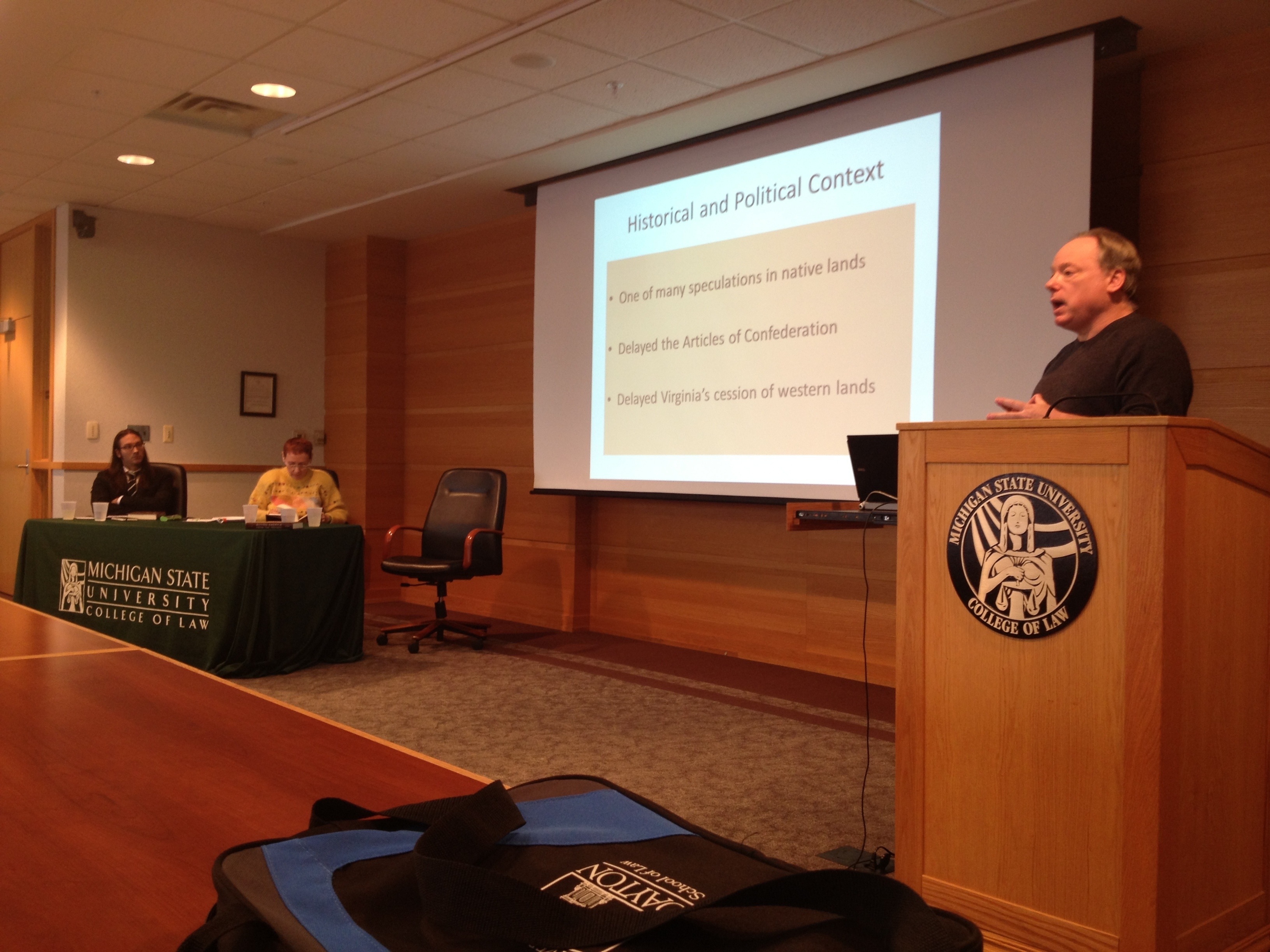
Here is the complaint in Quinault Indian Nation v. Lake Quinault School District (W.D. Wash.):
2013.02.21 QIN Complaint for Declaratory and Injunctive Relief
News coverage here.
Here.
Excerpt:
During a February 22 media conference call with legal experts, Laughlin McDonald, director of the ACLU Voting Rights Project, said he thinks it is the Supreme Court’s duty to reject the challenge of constitutionality of Section 5. “The Section 5 objections enforcement actions…show that the extension of Section 5 in 2006 was more than justified,” McDonald said. In his report, “Voting Rights in Indian Country,” McDonald lays out several discriminatory decisions, such as redistricting in South Dakota, which diluted the Indian vote.
However, Section 5 is not permanent and jurisdictions may terminate or “bail out” from coverage if they have not discriminated for at least 10 years. Nine states are currently covered as a whole: Alabama, Alaska, Arizona, Georgia, Louisiana, Mississippi, South Carolina, Texas, and Virginia.
According to Patricia Ferguson-Bohnee, law professor at Arizona State University and author of an amicus brief filed by the Navajo Nation, Section 5 has improved American Indian’s voting rights in Arizona. However, she said, voters are still facing challenges, such as distant poll locations, linguistic barriers, and restrictive ID requirements.
James Tucker, a voting rights of counsel with Wilson Elser Moskowitz Edelman & Dicker and a primary author of the amicus brief filed by the Alaska Federation of Natives, said Section 5 remains an appropriate measure to prevent the ongoing voting discrimination against Alaska Natives. Section 203 of the Act requires that minorities in certain designated jurisdictions are to be given assistance in voting in their native language.
Here.


You must be logged in to post a comment.