Here are the materials so far in United States v. Peterson (N.D. Cal.):
Criminal
Montana Federal Court Dismisses Native Inmates’ Suit over Jail Conditions that Allegedly Violate Hellsgate Treaty Because 11th Amendment Makes State Officials Immune (which a textualist would know says nothing like that whatsoever)

Here are the materials in Black Crow v. Lake County Jail, recaptioned In re Conditions at Lake County Jail (D. Mont.):
SCOTUS Denies Cert in Oklahoma Indian Status Case
Here is yesterday’s order list.
The Oklahoma case was Oklahoma v. Wadkins. Lower court materials here.
The Court also denied cert in the Clarkson case.
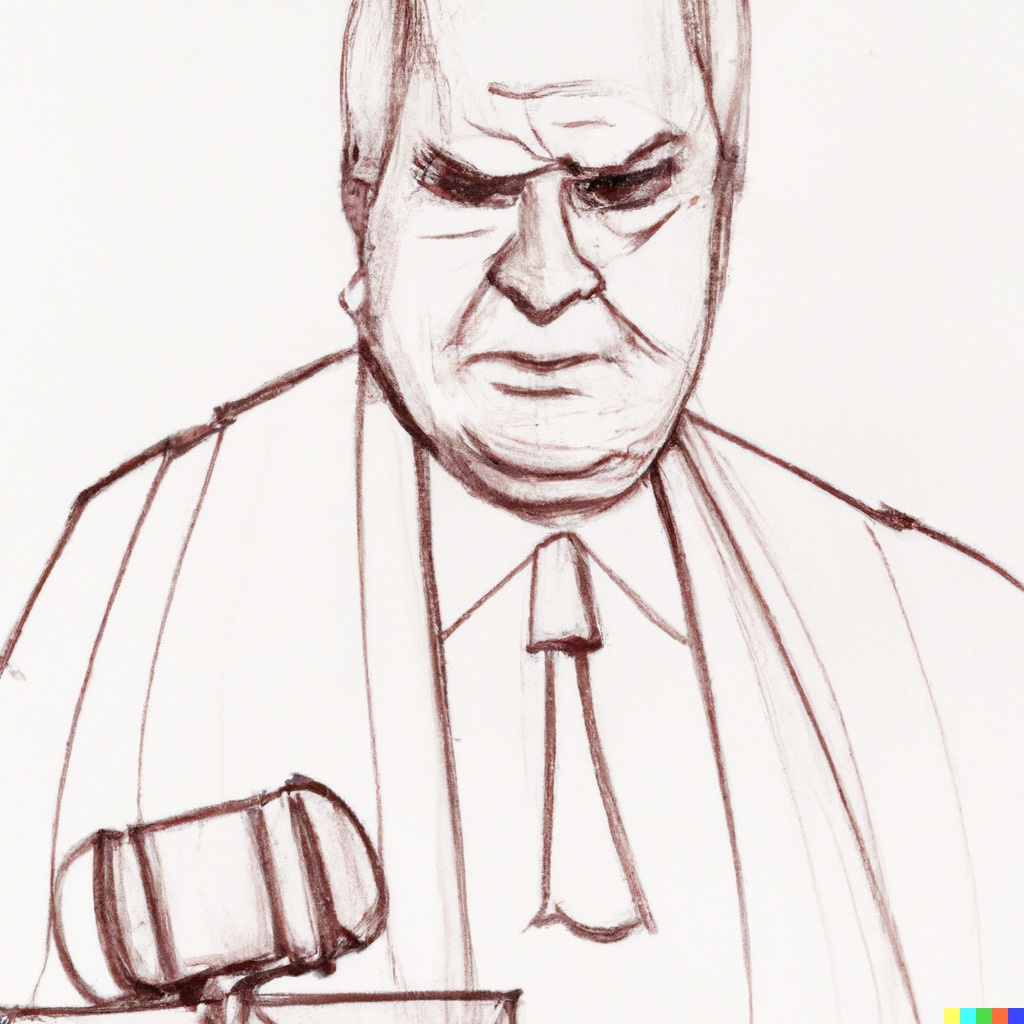
Michigan SCT Denies Leave to Review LTBB Reservation Boundaries Matter over Dissent
Here is the order in People v. Covey:

Can’t post briefs because Michigan’s courts do not make them available online.
Grant Christensen on Cooley and Tribal Law Enforcement
Grant Christensen has posted “Getting Cooley Right: The Inherent Criminal Powers of Tribal Law Enforcement,” forthcoming in the UC Davis Law Review, on SSRN.
Abstract:
While the Supreme Court regularly decides cases defining the limits of the criminal jurisdiction of tribal courts, when it heard United States v. Cooley in 2021 it had not decided a case about the procedural powers of tribal law enforcement in more than a century. Across more than five decades lower courts at all levels struggled to decide whether the inherent criminal powers of tribal law enforcement are coterminous with the jurisdiction of tribal courts or whether tribal officers may have their own set of inherent powers distinct from the power to prosecute. This Article examines the inconsistent split in authority that existed before Cooley and anticipates the future misreading of inherent criminal power by lower courts. It argues that now that the Court has divorced the inherent criminal power of tribal law enforcement from the criminal jurisdictional power of tribal courts, tribal officers may stop, detain, search, and investigate anyone whose criminal conduct poses a danger to the health and welfare of the tribal community. The Article bolsters its application by using the first cases decided by lower courts in the post-Cooley era as artifacts to examine the full implications of the recognition of inherent criminal power exercised by tribal law enforcement.
Grant Christensen on the Extradition Clause and Indian Country
Grand Christensen has posted “The Extradition Clause and Indian Country,” forthcoming in the North Dakota Law Review, on SSRN.
The abstract:
This article looks at the enforceability of the Extradition Clause in the federal courts of the United States. In 1861 the Supreme Court held in Dennison that the federal courts could not be used to enforce a request made by one state governor to another state governor for the extradition of a suspected criminal under Article IV Section 1. In 1987 the Supreme Court reversed the Dennison decision and for the first time since the Civil War held that the federal judicial power includes the power to enforce the Extradition Clause. This article takes the position that federal judicial power is limited to cases where the state governor has both territorial and personal jurisdiction over the accused. When an individual is on an Indian reservation, even Article IV does not authorize the governor of a state to enter the reservation and return the accused subject to an extradition request. Article IV’s Extradition Clause provides a constitutional duty for the executive of one state to remit to the power of a sister state someone located within its borders and subject to its jurisdiction. Critical to the exercise of this power is the dual understanding that the individual sought must be both within the state territory and subject to the state’s jurisdiction. Indian country lies outside the general jurisdictional power of the states. States may not enter Indian country and remove persons found there absent cooperation with or permission from the Tribe. Doing so infringes upon the Tribe’s right to make its own laws and be governed by them.

Grant Christensen on Using Consent to Expand Tribal Criminal Jurisdiction
Grand Christensen has posted “Using Consent to Expand Tribal Court Criminal Jurisdiction,” forthcoming in the California Law Review, on SSRN.

Here is the abstract:
In June of 2022 the Supreme Court reversed two-hundred years of precedent and held in a 5-4 opinion that states have concurrent criminal jurisdiction over crimes committed by non-Indians against Indians in Indian country. Oklahoma v. Castro-Huerta. In conducting the preemption analysis Justice Kavanaugh’s majority opinion reasoned that while states have a strong interest in prosecuting crimes in Indian country in order to keep the community safe, tribes had functionally no interest because they generally lack criminal jurisdiction over non-Indians. The court then reasoned that the lack of a tribal interest could not preempt the state interest. This article suggests, despite the general prohibition on tribes asserting criminal jurisdiction over non-Indians that was discovered by the Supreme Court in 1978’s Oliphant opinion, tribes can assert criminal jurisdiction over non-Indians who consent to the jurisdiction in tribal court. The argument extends to both affirmative and implied consent and draws its authority from both pre-Oliphant scholarship and precedent as well as from recent development by the Court, Congress, and dicta from the Ninth Circuit. If tribes are able to regularly assert some criminal jurisdiction over non-Indians, then when lower courts apply Castro-Huerta in the future there will be a strong tribal interest to preempt state criminal jurisdiction in Indian country.
Highly recommended.
Ninth Circuit Rejects Effort to Challenge Tribal-State Cross-Dep Agreement [Fort Peck]

Oregon COA Reverses State Criminal Conviction of Nez Percé Treaty Fishers
Here are the materials in State v. McCormack (Or. Ct. App.):

Muscogee (Creek) Nation SCT Orders Remand in Speedy Trial Appeal after Defendant Held for 248 Days
Here is the opinion in Vandecar v. Muscogee (Creek) Nation:

 Turtle Talk
You must be logged in to post a comment.