This Note argues for a change in the Supreme Court’s treatment of free exercise claims over Indigenous sacred sites. First, this Note reasons that, in Lyng v. Northwest Indian Cemetery Protective Association, the Court set an impossibly high standard for parties bringing sacred site free exercise claims against the government. This insurmountable standard, masking itself as strict scrutiny, implicitly precludes any claimant from prevailing against a government action designated for a sacred site. Further, statutes aimed at protecting religious liberty have resolved little, leaving no choice but to rework the standard.
Next, this Note delves into three pre-existing theories from like-minded critics of Lyng, analyzing the pros and cons of their proposed approaches to sacred site free exercise claims. Lastly, this Note sets forth a novel test which modifies the framework courts currently use in free exercise jurisprudence. Appreciating the fundamental distinctions between religious land and religious acts, this new test is uniquely tailored to address claims over sacred lands. This proposed test seeks to (1) give religious claimants a realistic opportunity to meet their initial burden in court, (2) put sacred site claims on equal footing with other free exercise claims, and (3) address the Supreme Court’s concerns with overexpanding free exercise doctrine.
KILLERS OF THE FLOWER MOON IS A STUDY IN GENOCIDAL VILLANY: THE UNITED STATES CONTEMPORARY WAR ON NATIVE AMERICAN SACRED SITES CONTINUES THE RAMPAGES OF THAT ERA.
By what imagined rights does the United States attempt to legitimize its original conquest of Indigenous Peoples and continue to obliterate Native Americans’ Holy Places? In the quest for mineral enrichments–be it oil, copper, lithium, or uranium– how long should we enable and benefit from the sort of genocidal dispossession depicted in Killers of the Flower Moon?
From first contact between Europeans and Indigenous Peoples, dehumanization of American Indians has been the invention necessary to Colonialism. To this end Spain’s monarchs solicited pontifical decrees, “Papal Bulls.” Popes blessed inherently non-Christian subjugations of “heathens, infidels, and savages,” birthing the Doctrine of Discovery, the notion that cross-Atlantic sea travel somehow conveyed title to “America” to European nations. Pope Francis repudiated this indefensible foundation for White Supremacy earlier this year (link), but its legal and cultural legacies live on, perpetuating the inhumane treatment of Indigenous Peoples so poignantly depicted in Killers.
Founding American myths of the righteousness of conquest and of Manifest Destiny both fed and were propagated by the Marshall Trilogy, the suite of Supreme Court opinions (1823 –1832) at the root of U. S. American Indian Law. The first chief justice, John Marshall, wrote that the courts of the conqueror would not apologize for bringing the benefits of “civilization” to America’s Native Nations. Marshall argued that leaving Native Peoples in possession of their lands and resources would condemn America to a forever wilderness and that solving the “Indian problem” required subordination of Native Americans as “wards of the state.”
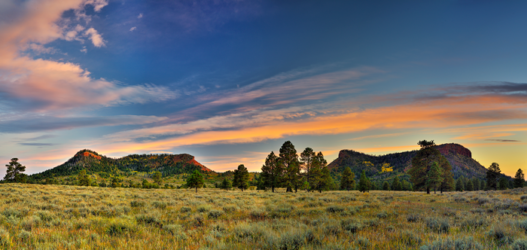
On Friday, August 11, 2023, United States District Judge David Nuffer of the United States District Court of the District of Utah granted motions to dismiss the cases challenging the Bears Ears National Monument designation.




 Turtle Talk
You must be logged in to post a comment.