The University of Michigan has a complicated history with Native American communities, which were vital to its very existence. Join us for a discussion with Bethany Hughes, assistant professor of American Culture, on the historic and ongoing activism of Native American students.
Can U-M Fulfill Its Promise to Native Americans? Fifty Years of Native American Student Activism Thursday, January 19, 20237:00 – 9:00 P.M. Guests may attend in-person at the Judy and Stanley Frankel Detroit Observatory or attend virtually.
The talk will examine the founding of the Native American Student Association, the work to compel the University to recognize the promise of education made to Native Americans in the 1817 Treaty of Fort Meigs (including a critical lawsuit brought by a U-M football player), and the decades-long work to bring to light the racial stereotyping and misuse of Native American symbols by the Michigamua student organization.
ABOUT THE SPEAKER: Bethany Hughes is an Assistant Professor in the Department of American Culture and a core faculty member in the Native American Studies Program. A performance scholar and cultural historian, her research focuses on theatre and performance in America, Indigenous performance, and the possibilities for making and remaking culturally legible categories through live performance. She teaches classes on Native American Studies, Indigeneity and Performance, Authenticity and Representation, American Performance, and Broadway and American Culture. An enrolled member of the Choctaw Nation of Oklahoma, her writing can be found in Theatre Journal, Theatre Survey, Theatre Topics, Mobilities and on HowlRound.com. Her current book project is an investigation of redface in 19th and 20th century American theatre and its implications for Indigenous identity and sovereignty.
The United States and every federally recognized tribal nation originally entered into a sovereign-to-sovereign relationship highlighted by the duty of protection, a doctrine under international customary law in which a larger, stronger sovereign agrees to “protect” the small, weaker sovereign. The larger sovereign agrees to this duty of protection, in the American case anyway, in exchange for massive, occasionally unquantifiable amounts of land and resources, as well as the power to control the external sovereign relations of the protected sovereign. The smaller sovereigns, in this case, tribal nations, typically received protected reservation lands, hunting and fishing rights, small cash infusions, and the vague promise of protection. What tribal nations have received so far in exchange for their lands and resources and sovereignty is a pittance compared to the value of that consideration. Justice Gorsuch noted in a recent case that tribal nations in Washington gave up millions of acres in exchange for “promises.” Those promises must mean something. I call those promises the dark matter of federal Indian law. The duty of protection owed by the United States to tribal nations is much like dark matter. The duty of protection was left undefined in Indian treaties. Yes, the treaties and other agreements that established a sovereign-to-sovereign relationship did provide for specific details about that relationship, most famously hunting and fishing rights or criminal jurisdiction. But most treaties and agreements are sparse, leaving open most of the details about that relationship. That’s the dark matter of Indian law. This essay argues that the duty of protection between tribal nations and the federal government is law and that the judiciary has an obligation to enforce aspects of the duty of protection as understood by both tribal nations and Congress. The essay begins by describing the duty of protection as understood by tribal nations at the time of the origination of the duty and now. The essay then turns to how Congress and the Department of the Interior understands the duty of protection, at least since the start of the tribal self-determination era in the 1970s, and how the Department of Justice often undermines that understanding. Then, the essay explains that the dark matter of federal Indian law is the duty of protection, that the federal obligations to tribal nations and individual Indians is real, and that the duty of protection is enforceable. Finally, the essay shows how the United Nations Declaration of the Rights of Indigenous Peoples is a useful tool judges can use in adjudicating the scope of the unstated parts of the duty of protection. This essay is an invited submission to the Maine Law Review Indian law symposium.
This paper was also the subject of the 2022 Rennard Strickland lecture at the University of Oregon Law School:
Gov. Whitmer Attends State-Tribal Summit in Sault Ste. Marie, Appoints First Tribal Citizen Ever to Michigan Court of Appeals
Governor meets leaders from every tribe to continue collaboration on shared priorities, makes historic appointment to second-highest court in Michigan
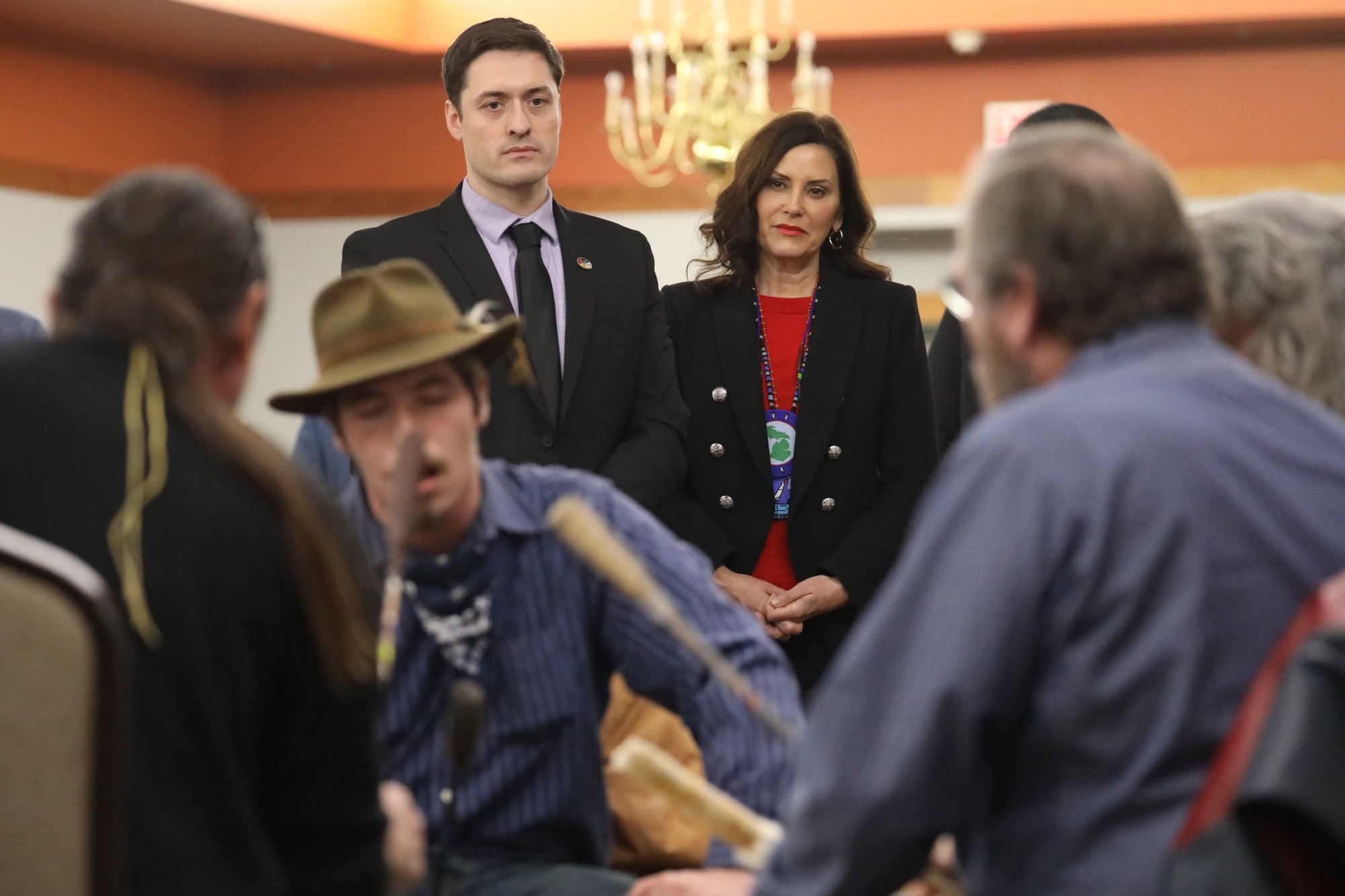
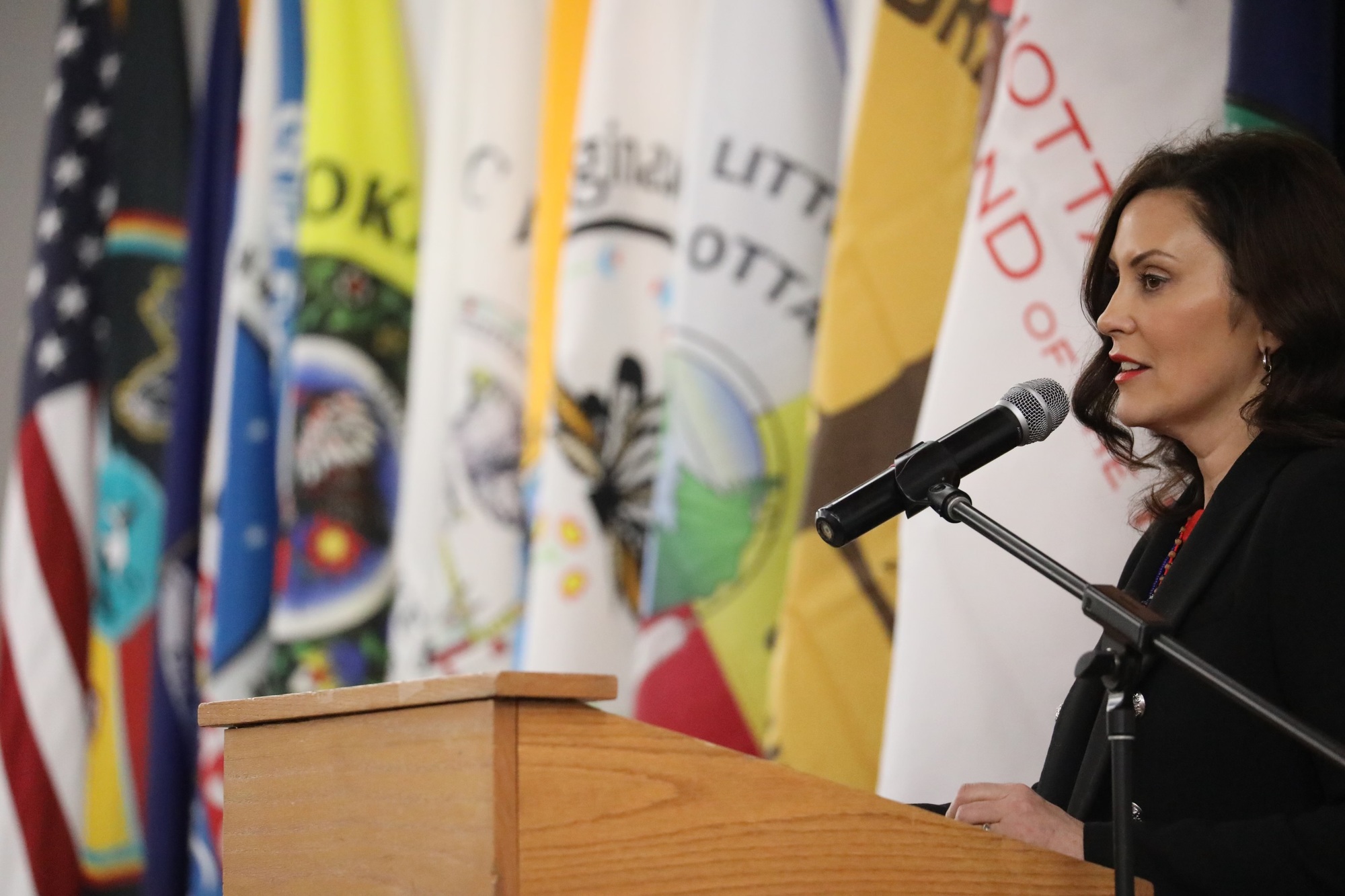
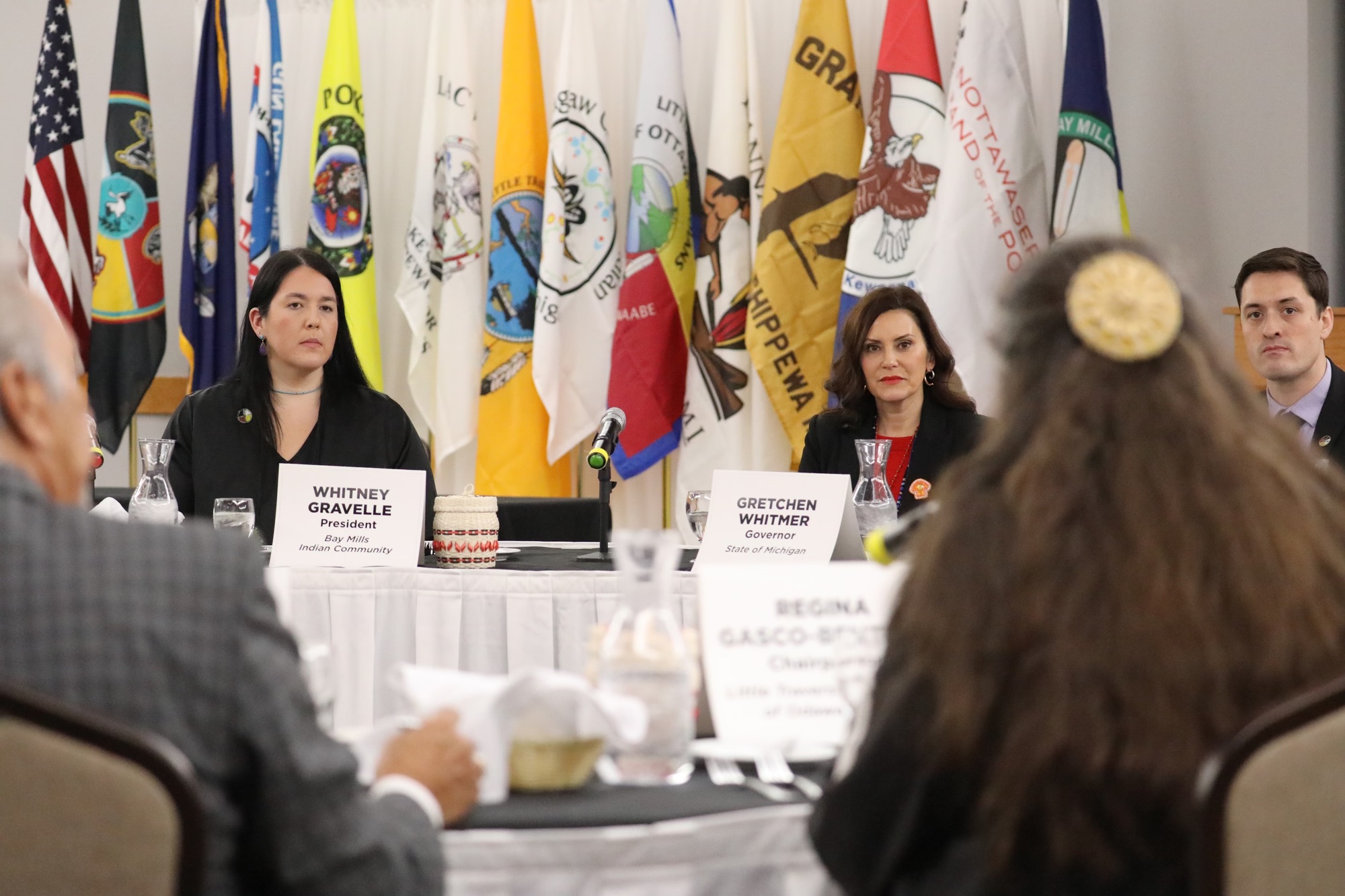
LANSING, Mich. – Today, Governor Gretchen Whitmer attended the Tribal Summit in Sault Ste. Marie. She met with Tribal leaders to address shared priorities and continue an open dialogue between the State of Michigan and sovereign tribal governments. She also announced her appointment of Judge Allie Greenleaf Maldonado to the Michigan Court of Appeals. Judge Maldonado will be the first Tribal citizen ever appointed to the Michigan Court of Appeals.
“It was an honor to attend the Tribal Summit in the Sault,” said Governor Whitmer. “The State of Michigan and sovereign tribal nations must continue working together on our shared priorities and maintain an open, productive dialogue to get things done on the kitchen-table issues. I am committed to working alongside Tribal leaders to make a real difference in people’s lives and continue growing our economies. Our fortunes are linked, and we must collaborate to move our nations forward.”
“We are pleased to host today’s summit between the state’s tribal communities and Gov. Whitmer,” said Austin Lowes, vice chairman of the Sault Ste. Marie Tribe of Chippewa Indians. “It is fitting we hold this meeting in Sault Ste. Marie, a major gathering place for tribes and their leaders for hundreds of years. Each tribe had an opportunity to discuss individual issues with the governor and her staff, and we expressed support for continued meeting, expanded consultation on key matters and a higher profile for tribal matters during our general session with the governor.”
In Governor Whitmer’s first year in office, she signed Executive Directive 2019-17, which reaffirms and extends Michigan’s commitment to recognize the sovereignty and right of self-governance of Michigan’s federally-recognized tribes and orders each state department and agency to adhere to these principles. It’s also the first executive directive in Michigan history to require training on tribal-state relations for all state department employees who work on matters that have direct implications for tribes, and also required each department and agency to adopt and implement a tribal consultation policy.
Governor Whitmer has shown a deep commitment to ensuring members of Michigan’s federally recognized tribes have a seat at the table in state government. She has appointed 44 Native Americans to judgeships, councils, boards, and commissions. One of those appointees, Bryan Newland, was sworn in as Assistant Secretary of the Interior for Indian Affairs last year, where he serves Native communities nationwide alongside Secretary Deb Haaland.
Judge Maldonado Appointment
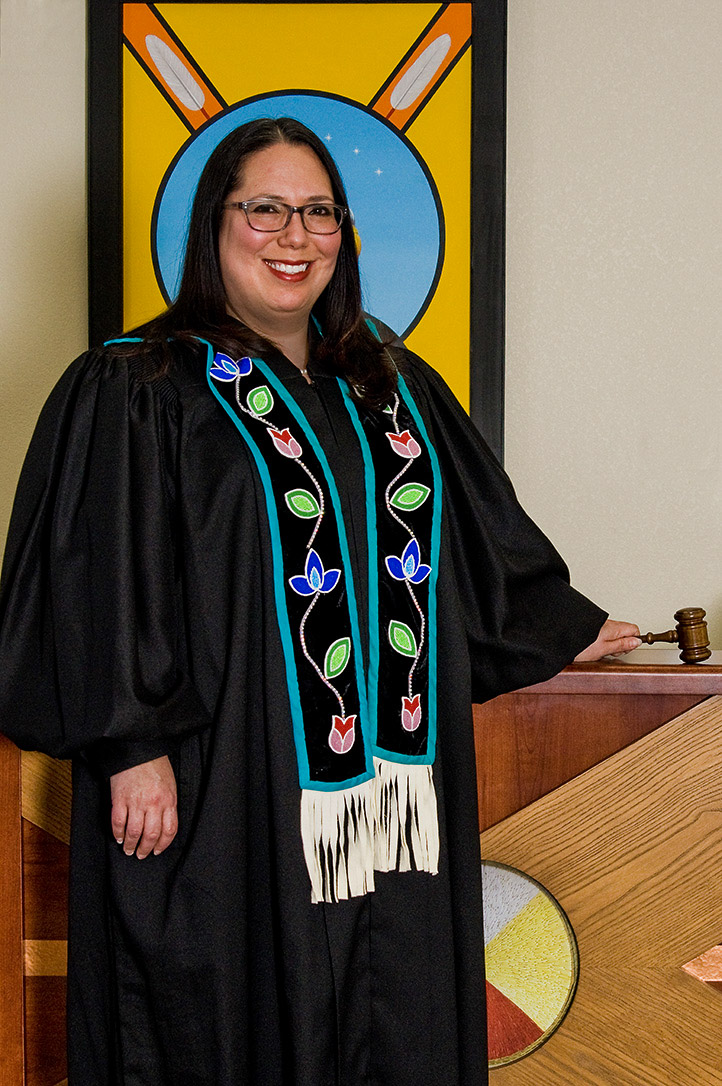
Governor Whitmer announced her appointment of Judge Allie Greenleaf Maldonado to the Michigan Court of Appeals, District 4. Judge Maldonado currently serves as the Chief Judge of the Little Traverse Bay Bands of Odawa Indians Trial Court. Judge Maldonado has also served as a pro tem judge for the Saginaw Chippewa Indian Tribe, Little River Band of Ottawa Indians, and the Sault Ste. Marie Tribe of Chippewa Indians. Prior to her appointment as Chief Judge, she served as assistant general counsel for the LTBB tribe from 2002-2012. Following her graduation from law school, Judge Maldonado was selected as only the 15th tribal citizen to enter the prestigious honors program at the United States Department of Justice (DOJ). There she became a litigator in the Indian Resources Section of the Environment and Natural Resources Division. She later worked as a staff attorney for Monteau & Peebles, LLP.
Maldonado earned her Juris Doctor degree from the University of Michigan Law School, and she holds a Bachelor of Science in Business from the City University of New York. Judge Maldonado is a nationally recognized expert on the Indian Child Welfare Act (ICWA) and the Michigan Indian Family Preservation Act (MIFPA). She is active in the legal community outside the court room and is a member of the Black Women Lawyer’s Association of Michigan, Anishinaabek Caucus of Michigan, Women Lawyer’s Association of Michigan, Michigan Committee on Juvenile Justice, and Michigan Justice for All Commission, and the treasurer for the National Association of Drug Court Professionals. Allie lives in Petoskey with her husband, Jay. She is a citizen of the Little Traverse Bay Bands of Odawa Indians and a member of the Turtle Clan.
“I am humbled and honored to be trusted by Governor Whitmer for this appointment to the Michigan Court of Appeals,” said Judge Maldonado. “I look forward to taking all of my professional experience and diligently applying it to the work ahead of me. This is a moment of importance not just for me, but for all of Indian Country as the Governor’s wisdom in this appointment sends a message about the critical importance of the work of tribal courts. I am grateful to the Governor and her team, and I look forward to giving all of Michigan my best.”
Frank Ettawageshik, executive director of United Tribes of Michigan and a member of the Little Traverse Band’s appellate court, called the appointment of Maldonado “an important step for Judge Maldonado, the court and Native Americans.”
“Allie is eminently qualified for this important position. She has a deep understanding of the law, including the sometimes misunderstood but vitally important role of Native American tribes as sovereign nations under our system of justice,” said Ettawageshik. “This will give her an opportunity to expand her constituency from our tribal members to the entire state. She is a worthy addition to the Michigan Court of Appeals.”
This appointment was made to fill a partial term following the retirement of Judge Amy Ronayne Krause effective December 13, 2022. Judge Maldonado’s term will commence on January 9, 2023 and expire at twelve o’clock noon on January 1, 2025. If Judge Maldonado wishes to serve the remainder of Judge Krause’s term, expiring January 1, 2027, she would be required to run for reelection in November of 2024.
Judicial appointments are not subject to the advice and consent of the Senate.
Judge Allie Greenleaf Maldonado will be the first Native person to serve on the Michigan Court of Appeals. The historic appointment was announced by Governor Gretchen Whitmer today during the annual Michigan Tribal Summit in Sault Ste. Marie. Congratulations to Judge Maldonado!!
Judge Maldonado currently serves as the Chief Judge of the Little Traverse Bay Bands of Odawa Indians Tribal Court. Prior to her service as Chief Judge, she served as assistant general counsel for LTBB from 2002-2012. Judge Maldonado also worked as a lawyer for the Indian Resources Section of the U.S. Department of Justice’s Environment and Natural Resources Division. Maldonado earned her JD from the University of Michigan Law School, and she holds a Bachelor of Science in Business from the City University of New York. She’s a nationally recognized expert on the Indian Child Welfare Act.
“I am humbled and honored to be trusted by Governor Whitmer for this appointment to the Michigan Court of Appeals,” Judge Maldonado said in a statement. “I look forward to taking all of my professional experience and diligently applying it to the work ahead of me. This is a moment of importance not just for me but for all of Indian Country, as the Governor’s wisdom in this appointment sends a message about the critical importance of the work of tribal courts. I am grateful to the Governor and her team, and I look forward to giving all of Michigan my best.”
Judge Maldonado’s appointment fills a partial term following the retirement of Judge Amy Ronayne Krause. Judge Maldonado’s term will begin January 9, 2023 and expire on January 1, 2025. If she wishes to continue to serve on the Michigan Court of Appeals after that date, she would be required to run for reelection in November of 2024.







 Turtle Talk
You must be logged in to post a comment.