Yesterday, we covered tribal constitutions. Today, the political and bureaucratic complexity of enrollment decisions in cartoon form (we will conclude tomorrow):
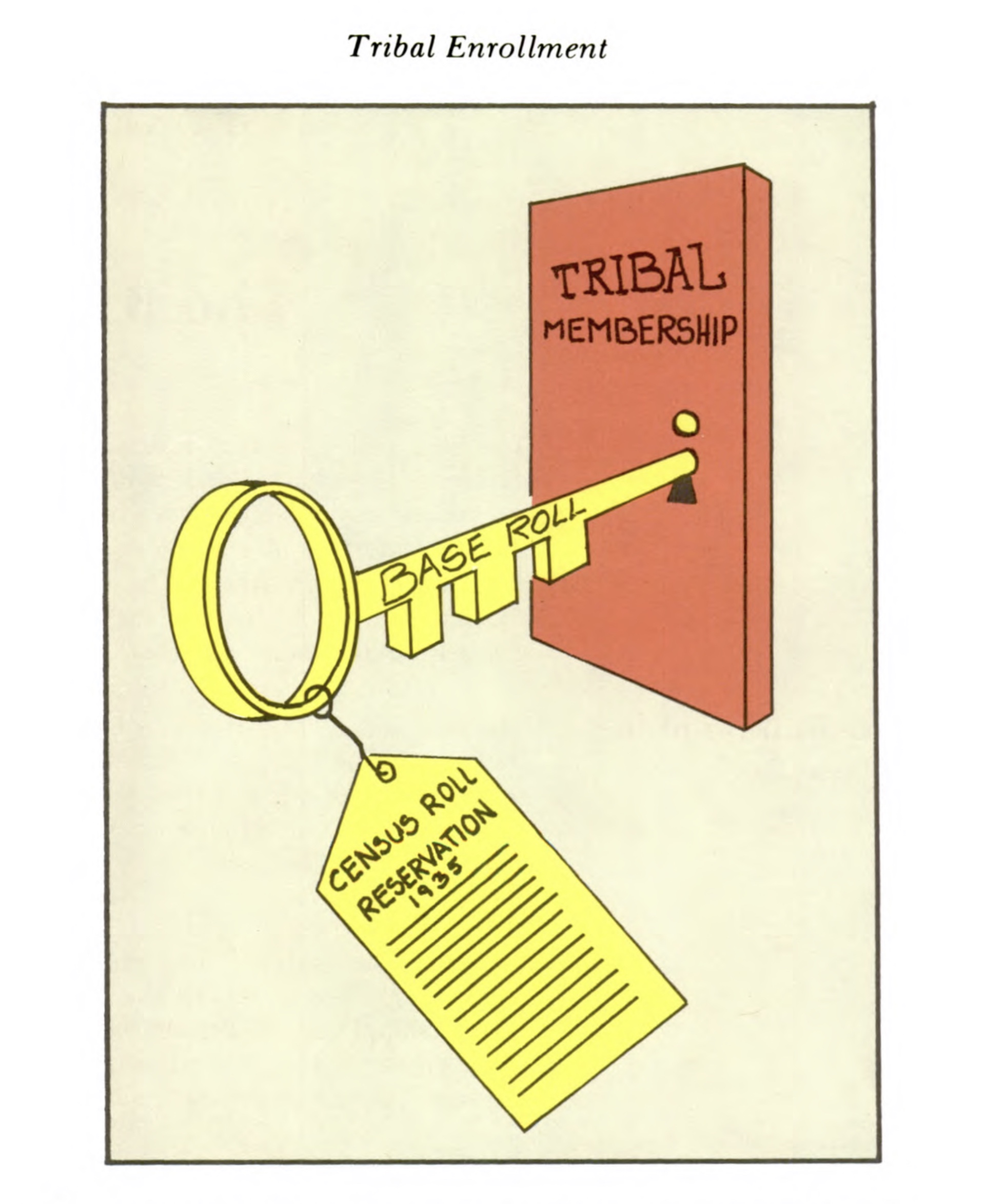

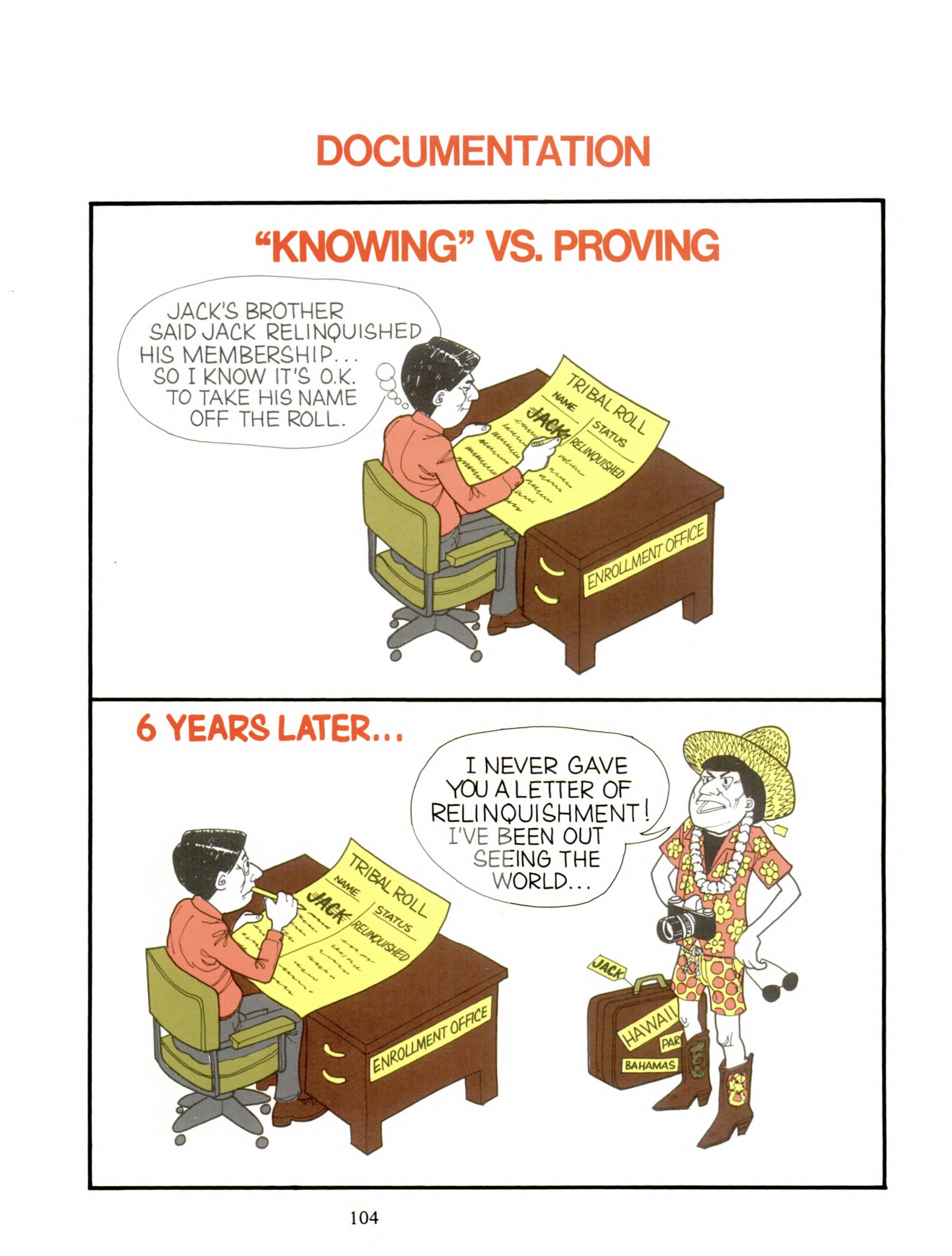
Yesterday, we covered tribal constitutions. Today, the political and bureaucratic complexity of enrollment decisions in cartoon form (we will conclude tomorrow):
Apparently, in 1977 or so, the Phoenix Area Office decided to write a lengthy manual for tribal governments, instructing them on how to make enrollment decisions that met tribal constitutional muster. Suffice it to say the text is TL:DR, but the illustrations are awesome — and by awesome, I mean crazy — and by crazy, I mean Indian country crazy.


Tomorrow, how tribal governments make membership decisions….
Here are the materials in Hudson v. Zinke (D.D.C.):
Call for Presentations_NAICJA-NationalConf_02-28-20_final
CALL FOR PRESENTATION PROPOSALS 2020
National Tribal Judicial and Court Personnel Conference Deadline:
Friday, April 10, 2020, 5:00 pm MST
Submission form: https://naicja.wufoo.com/forms/m10hpejn06xrvqf/
The National American Indian Court Judges Association (NAICJA) invites presentation proposals for the 51st Annual National Tribal Judicial and Court Personnel Conference to be held October 20-23, 2020, at the Radisson Hotel and Conference Center in Green Bay, Wisconsin. NAICJA’s Annual Conference offers innovative and timely tribal justice information through high quality presentations by national experts. This is your opportunity to share your expertise and display your creativity by developing an original program for presentation. Proposals specifically tailored to meet the needs of the 300-person NAICJA audience are strongly preferred.
Please check out my new paper, “The Rise and Fall of the Ogemakaan,” now available on SSRN. Here is the abstract:
Anishinaabe (Odawa, Bodewadmi, and Ojibwe) legal and political philosophy is buried under the infrastructure of modern self-determination law and policy. Modern Anishinaabe tribes are rough copies of American governments. The Anishinaabeg (people) usually choose their ogemaag (leaders) through an at-large election process that infects tribal politics with individualized self-interest. Those elected leaders, what I call ogemaakaan (artificial leaders) preside over modern governments that encourage hierarchy, political opportunism, and tyranny of the majority. While modern tribal governments are extraordinary successes compared to the era of total federal control, a significant number of tribes face intractable political disputes that can traced to the philosophical disconnect from culture and tradition.
Anishinaabe philosophy prioritizes ogemaag who are deferential and serve as leaders only for limited purposes and times. Ogemaag are true representatives who act only when and how instructed to do so by their constituents. Their decisions are rooted in cultural and traditional philosophies, including for example Mino-Bimaadiziwin (the act of living a good life), Inawendewin (relational accountability), Niizhwaaswii Mishomis/Nokomis Kinoomaagewinawaan (the Seven Gifts the Grandfathers or Grandmothers), and the Dodemaag (clans). I offer suggestions on how modern tribal government structures can be lightly modified to restore much of this philosophy.
Website here.
Kristen’s paper is here.
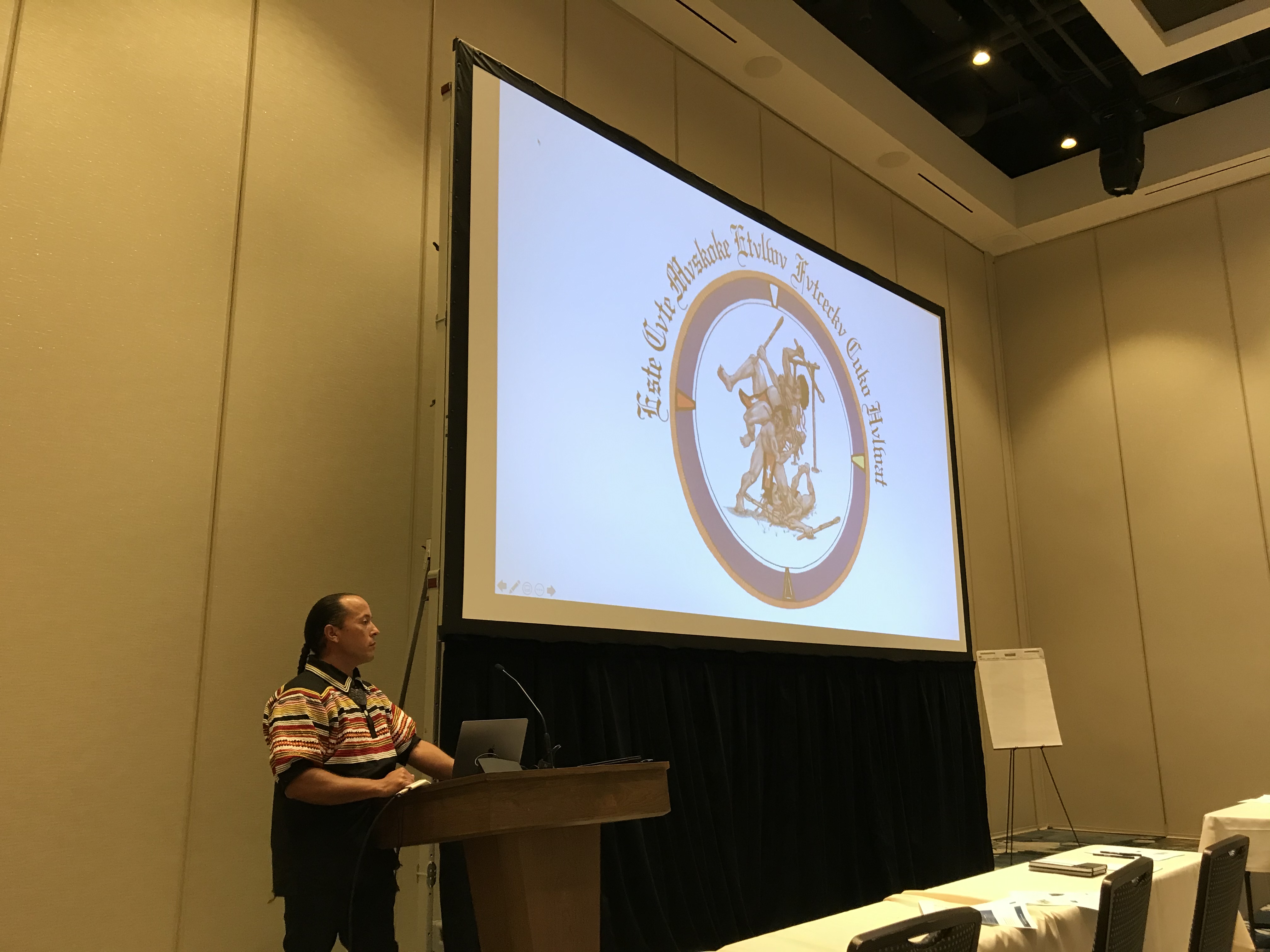
These are excerpts of Fletcher’s presentation:
Here is the opinion in In re Tiger (Muscogee (Creek) Supreme Court):
doc.-3-order-and-opinion-100219-2.pdf
News coverage here.
Alexander Tallchief Skibine has posted a very interesting paper, “Incorporation Without Assimilation: Legislating Tribal Civil Jurisdiction Over Non-Members,” on SSRN. It is forthcoming in the UCLA Law Review Discourse.
The abstract:
For the last 40 years the Supreme Court has been engaged in a measured attack on the sovereignty of Indian tribes when it comes to tribal court jurisdiction over people who are not members of the tribe asserting that jurisdiction. The Congress has already enacted legislation partially restoring some tribal courts’ criminal jurisdiction over non-members. This Essay proposes to legislatively reconfirm the civil jurisdiction of tribal courts over such non-members. After examining the Supreme Court’s jurisprudence in this area and summarizing the Court’s main concerns with such tribal jurisdiction, this Essay explores various legislative options before settling on a preferred course of action. The proposal set forth in the last part of this Essay would reconfirm tribal court civil jurisdiction over non-members provided the tribal courts has established personal jurisdiction over the parties. However, tribal courts’ determinations on this subject would be appealable to federal courts. Furthermore, the Essay proposes to allow non-members being sued in tribal courts the option of removing their cases to federal courts under certain conditions.
Here are the materials in Tribal Council of the Cheyenne and Arapaho Tribes of Oklahoma v. Foster (W.D. Okla.):
9 Notice of Voluntary Dismissal
13-5 Wilkinson v Hamilton Tribal Court Opinion
13-30 Hamilton v Election Commission Tribal Court Opinion
16 Notice of Voluntary Dismissal
 Turtle Talk
You must be logged in to post a comment.