Here is the complaint in Cavazos v. Bernhardt (D.D.C.):
An earlier suit was dismissed for failure to exhaust.
Here is the complaint in Cavazos v. Bernhardt (D.D.C.):
An earlier suit was dismissed for failure to exhaust.
Here:
Plaintiffs-Appellants’ Motion to Take Judicial Notice
Reply Brief of Plaintiffs-Appellants
Lower court materials here.
Here are the materials in Graham v. Muscogee (Creek) Nation Citizenship Committee (also here):
Doc.-4-Appellants-Brief-02242020
Doc.-14-Appellees-Response-Brief-06122020
Here are the new materials in Alegre v. United States (S.D. Cal.):
Prior post here.
Here are the materials in Reyes v. Dept. of the Interior (S.D. Cal.):
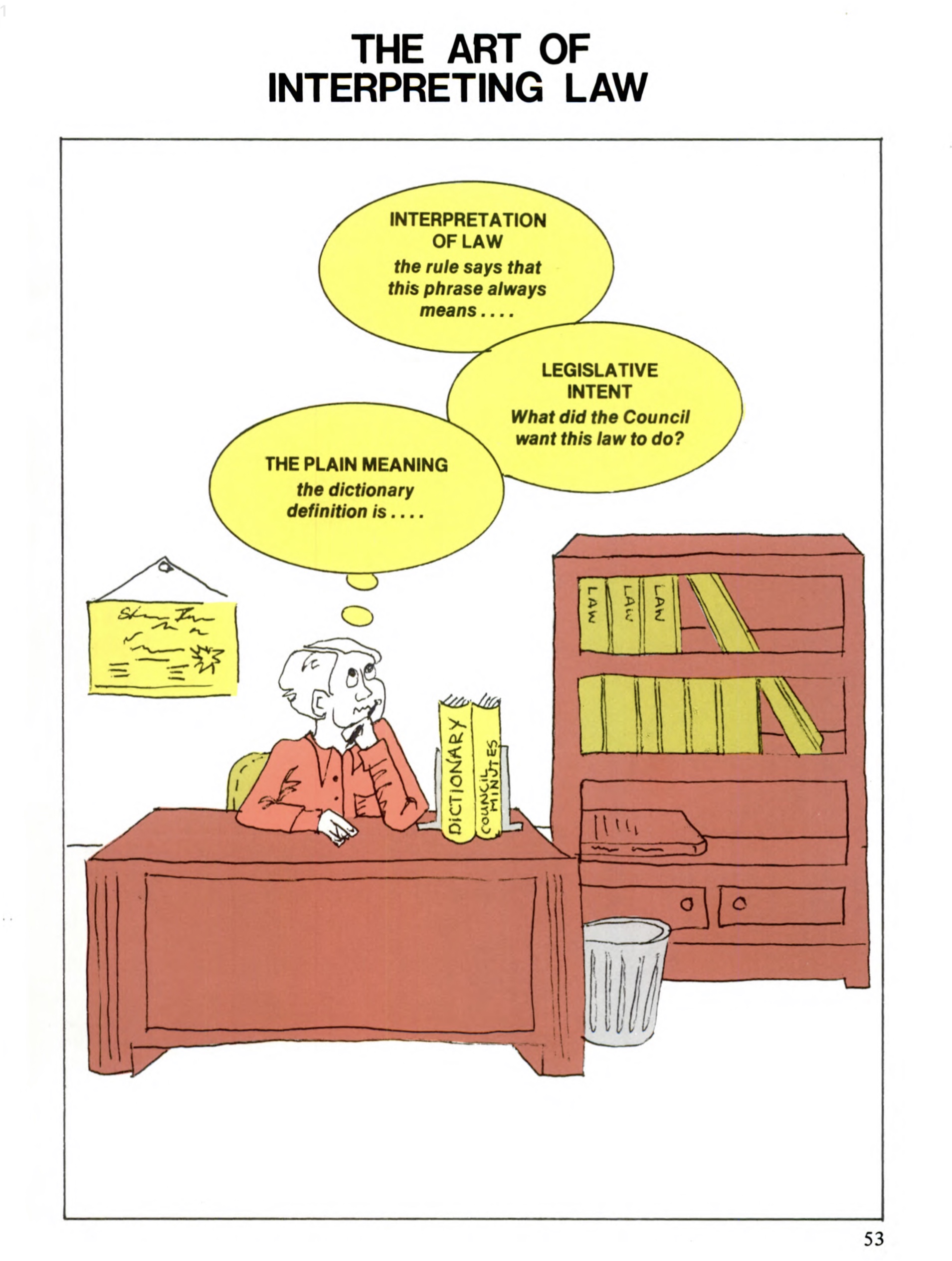
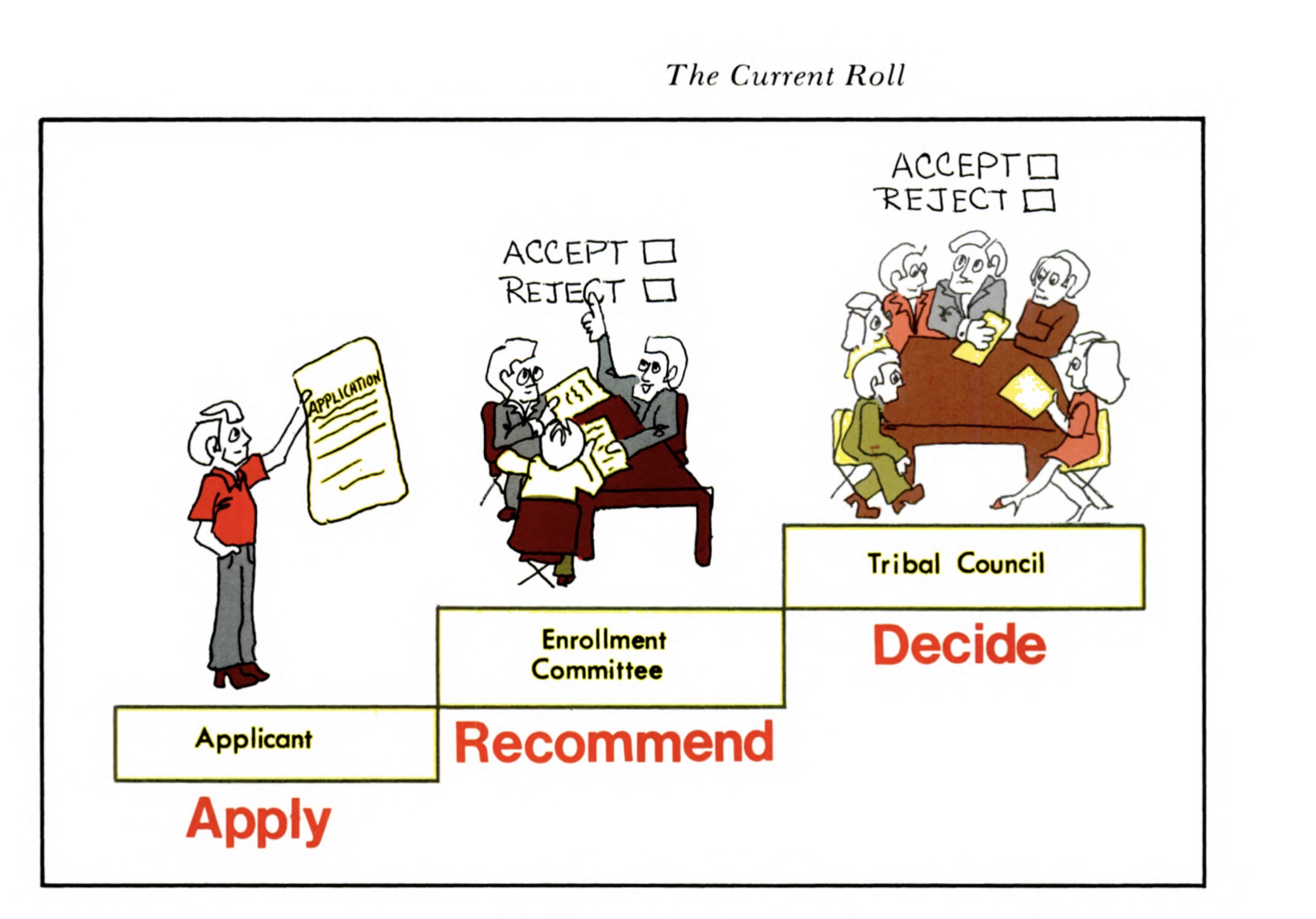
Yesterday, we covered tribal constitutions. Today, the political and bureaucratic complexity of enrollment decisions in cartoon form (we will conclude tomorrow):
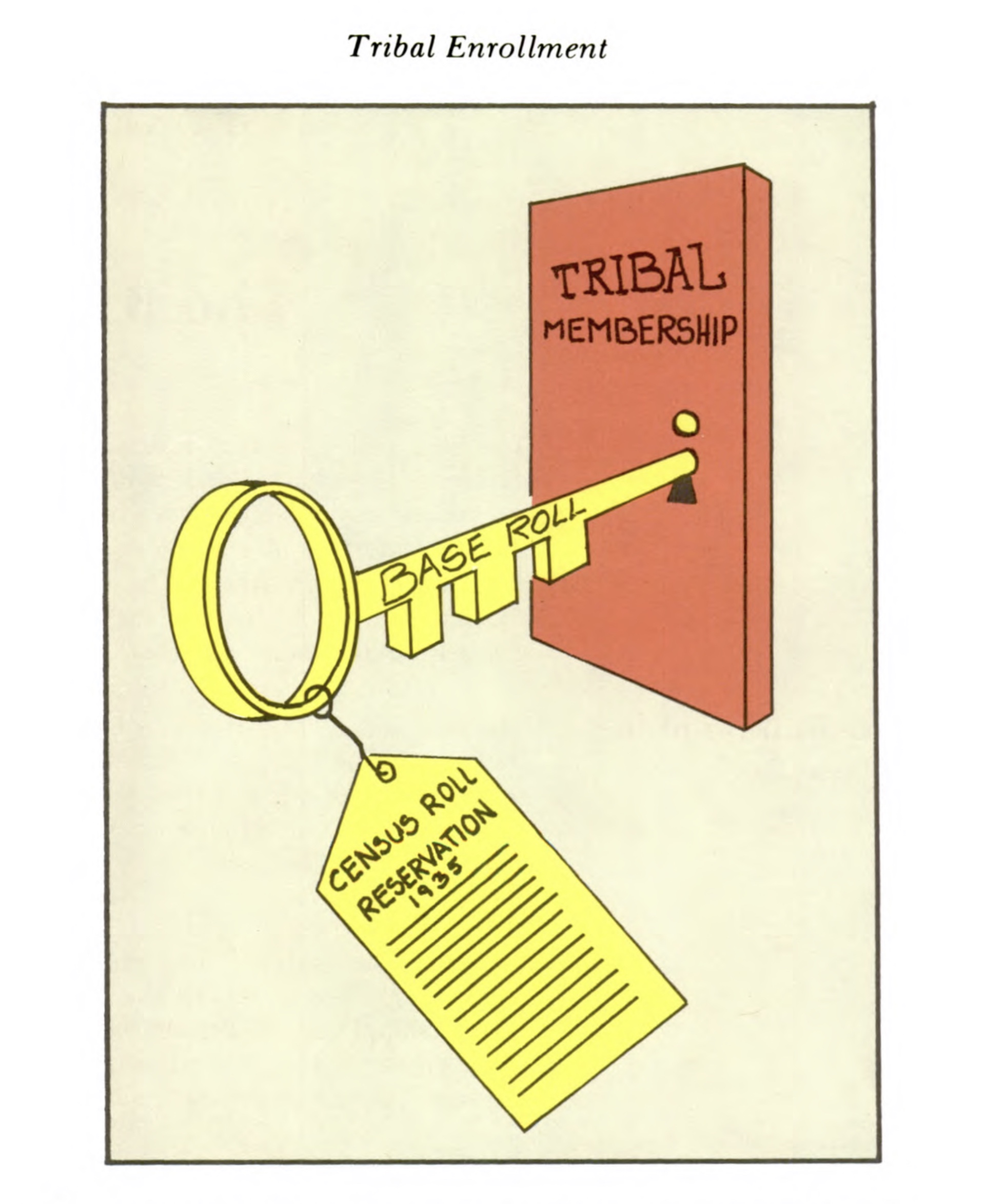

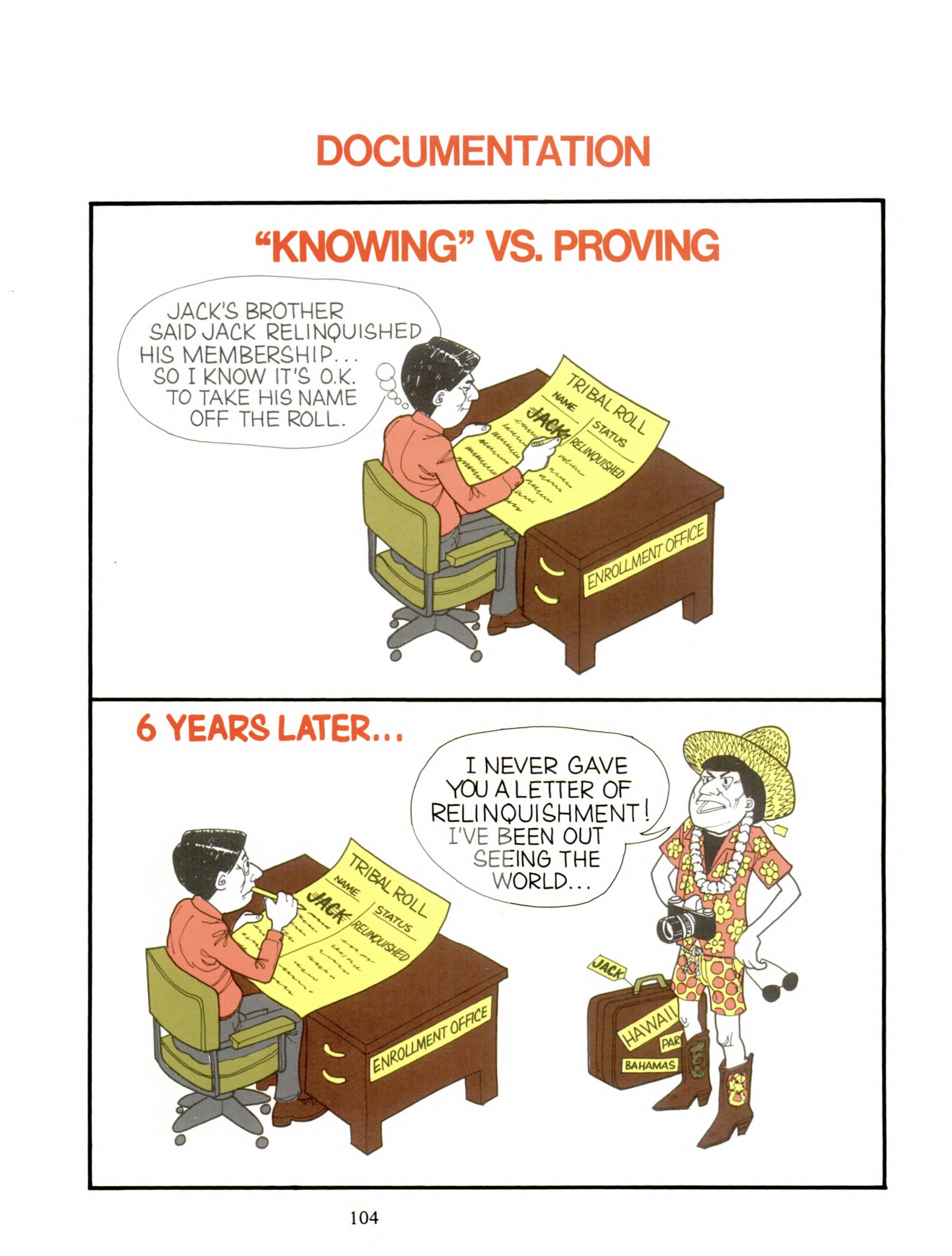
Apparently, in 1977 or so, the Phoenix Area Office decided to write a lengthy manual for tribal governments, instructing them on how to make enrollment decisions that met tribal constitutional muster. Suffice it to say the text is TL:DR, but the illustrations are awesome — and by awesome, I mean crazy — and by crazy, I mean Indian country crazy.


Tomorrow, how tribal governments make membership decisions….
Here are the papers in State v. Rabang (Whatcom Sup. Ct.), where, in companion cases, four Nooksack 306 disenrollees successfully asserted Treaty fishing rights under U.S. v. Washington:
Here are the latest papers in Doucette v. Bernhardt (W.D. Wash.), where the federal court denied Plaintiffs’ Rule 62.1 post-judgment motion; Plaintiffs have appealed to the Ninth Circuit:
Here are the latest papers in Adams v. Dodge (W.D. Wash.), where a Lummi citizen who relinquished her Nooksack membership is seeking a federal writ of habeas corpus in challenge to her detention by the Nooksack Tribal Court:
Please check out my new paper, “The Rise and Fall of the Ogemakaan,” now available on SSRN. Here is the abstract:
Anishinaabe (Odawa, Bodewadmi, and Ojibwe) legal and political philosophy is buried under the infrastructure of modern self-determination law and policy. Modern Anishinaabe tribes are rough copies of American governments. The Anishinaabeg (people) usually choose their ogemaag (leaders) through an at-large election process that infects tribal politics with individualized self-interest. Those elected leaders, what I call ogemaakaan (artificial leaders) preside over modern governments that encourage hierarchy, political opportunism, and tyranny of the majority. While modern tribal governments are extraordinary successes compared to the era of total federal control, a significant number of tribes face intractable political disputes that can traced to the philosophical disconnect from culture and tradition.
Anishinaabe philosophy prioritizes ogemaag who are deferential and serve as leaders only for limited purposes and times. Ogemaag are true representatives who act only when and how instructed to do so by their constituents. Their decisions are rooted in cultural and traditional philosophies, including for example Mino-Bimaadiziwin (the act of living a good life), Inawendewin (relational accountability), Niizhwaaswii Mishomis/Nokomis Kinoomaagewinawaan (the Seven Gifts the Grandfathers or Grandmothers), and the Dodemaag (clans). I offer suggestions on how modern tribal government structures can be lightly modified to restore much of this philosophy.


 Turtle Talk
You must be logged in to post a comment.