John Ragsdale on the Aboriginal Water Rights of the Jemez Pueblo

John W. Ragsdale has posted “The Aboriginal Land and Water Rights of the Jemez Pueblo,” forthcoming in the Denver University Water Law Review, on SSRN.

Here is the abstract:

Since time immemorial, the indigenous people of what became the Southwest United States have maintained sustainable, vibrant communities in the harshest of environments; one with generally arid climate, inconsistent precipitation, heat, wind, thin soil and erosion. These communities, on the razor’s edge, survived for eons because resilience and community, within and with the land, were at the center of their life, economy and order. Balance was not always perfect, but it was the target. The possibility of economic surplus and growth is perhaps a latent human instinct, but it until the fluorescence of Chaco Canyon in the eleventh century it remained subordinate. With the fall of Chaco and eventual restoration of decentralizations and the traditional aboriginal practices, balance returned.

The European invasion and the infusion of competitive individualism and economic growth changed all this. The movement west on the wings of the doctrine of discovery and the ensuing extinguishment of both aboriginal title and the stable-state economies proceeded across the Mississippi and the prairies and slammed the capitalistic wrecking ball into the most resilient of the aboriginal survivors – The Pueblo Indians of the Southwest.

The Jemez Pueblo of Central New Mexico has been one of the fiercest defenders of the traditional aboriginal community. Through the intrusion of Spain, Mexico and ultimately the United States, the Pueblo clung to its central land, its claims to aboriginal surroundings and water, and its sustainable orientation, this article traces the prehistoric courses of the Pueblo, and it centuries-long efforts to maintain both the focus and the legal existence of its aboriginal community. It has not been a complete victory in the dominant sovereigns’ courts, but the aboriginal heart of the people and possibilities for collaboration with other Tribes and, perhaps, with a more generous and enlightened dominant sovereign, remain strong.
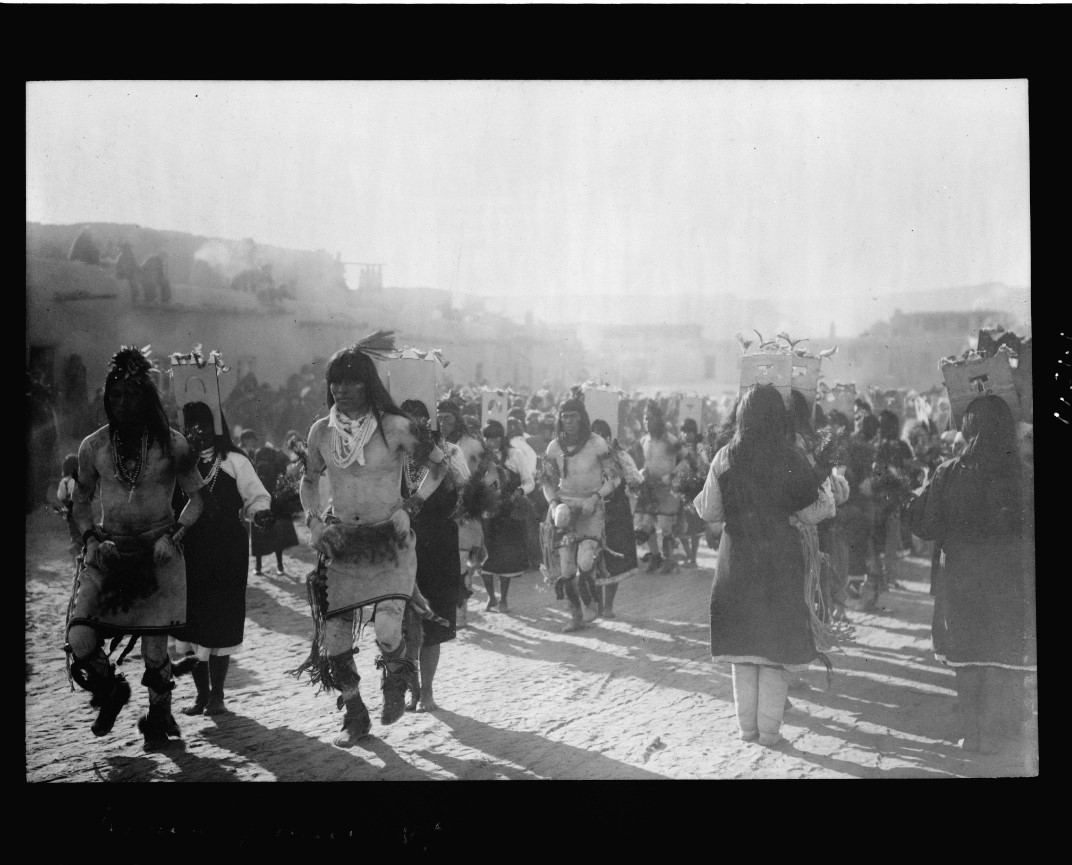
Jemez Pueblo Indians in a ceremonial dance, 1908

Ninth Circuit Denies Federal Government’s En Banc Petition in Navajo Water Rights Case

Here are the en banc stage materials in Navajo Nation v. Dept. of the Interior:

Amended Order + Denial of En Banc Petition

US En Banc Petition

Water District En Banc Petition

Navajo Response

Panel stage materials here.

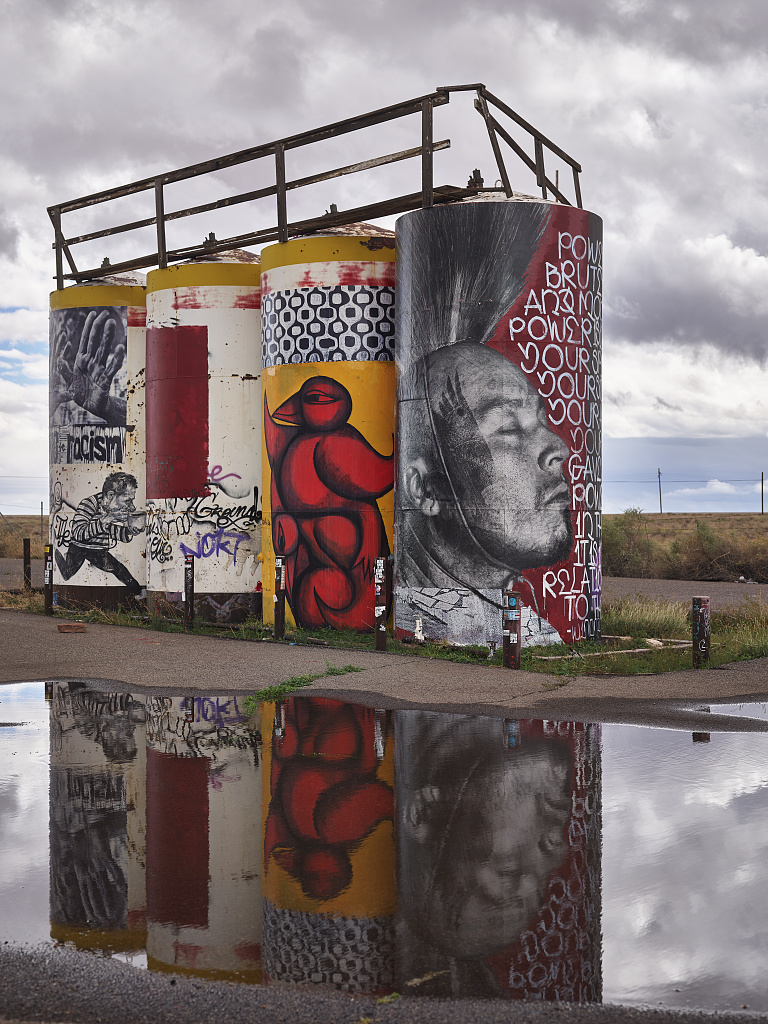
Artwork on water towers along a remote Arizona road leading to Monument Valley Navajo Tribal Park, a red-sand desert region on the Arizona-Utah border known for the towering sandstone buttes [LOC]

Hawkins v. Haaland Cert Petition [tribal management of Klamath River]

Here:

Cert Petition

Question presented:

Does the federal government possess final decision-making authority over the management of water rights held in trust for an Indian tribe?

Lower court materials here.

UPDATE:

Oregon Farm Bureau Amicus

Brief in Opposition

Cert stage Reply

Federal Court Rejects Water District’s Affirmative Defenses against US/Walker River Paiute Tribe Water Rights Claims

Here are the materials in United States v. Walker River Irrigation District (D. Nev.):

2638 Federal-Tribal Joint Motion for Summary J

2649 Principal Defendants’ Response

2659 Reply

2677 DCT Order

D.C. Federal Court Dismisses Ute Tribe’s Water Rights Suit, Transfer Some Claims to Utah Federal Court

Here are the materials in Ute Indian Tribe v. Dept. of the Interior (D.D.C.):

57 Second Amended Complaint

67 State Motion to Dismiss

68 US Motion to Dismiss

69 US Motion to Transfer

70-1 Water District Motion to District

75 Tribe Opposition to 69

77 US Reply in Support of 69

80 Tribe Opposition to 70

81 Tribe Opposition to 68

82 Tribe Opposition to 67

89 Water District Reply in Support of 70

90 State Reply in Support of 67

91 US Reply in Support of 69

114 DCT Order

Irrigation Districts Counterclaims against US & Ak-Chin Community Dismissed in Water Rights Suit

Here are the updated materials in Ak-Chin Indian Community v. Maricopa-Stanfield Irrigation & Drainage District (D. Ariz.):

56 US Motion to Dismiss Counterclaims

60 Second Amended Complaint

65 Irrigation Districts Response to 56

69 US Reply in Support of 56

73-1 Ak-Chin Motion to Dismiss Counterclaims

81 Irrigation Districts Response to 73

86 Ak-Chin Reply in Support of 73

112 DCT Order

Prior post here.

Ninth Circuit Restores Navajo Nation’s Water Rights Trust Breach Suit

Here is the opinion in Navajo Nation v. Dept. of the Interior. Briefs here.

An excerpt:

Moreover, neither Morongo nor Gros Ventre nor Jicarilla involved claims to vindicate Winters rights, which provide the foundation of the Nation’s claim here. Unlike the plaintiffs in those cases, the Nation, in pointing to its reserved water rights, has identified specific treaty, statutory, and regulatory provisions that impose fiduciary obligations on Federal Appellees—namely, those provisions of the Nation’s various treaties and related statutes and executive orders that establish the Navajo Reservation and, under the long-established Winters doctrine, give rise to implied water rights to make the reservation viable.

                      *. *  *

We hold in particular that, under Winters, Federal Appellees have a duty to protect the Nation’s water supply that arises, in part, from specific provisions in the 1868 Treaty that contemplated farming by the members of the Reservation.
D.C. Circuit Rejects Property Owners Challenge to Tribal Regulation of Tribal Water Rights on Klamath River — Incidentally, the First Case Caption with Secretary Haaland’s Name

Here is the opinion in Hawkins v. Haaland.

Briefs:

Opening Brief

Answer Brief

Reply

Lower court materials.

Oregon Court Affirms Klamath Tribes’ Water Rights

On Wednesday, February 24, 2021, in an order from Klamath County Circuit Court Judge Cameron F. Wogan, the Oregon court again affirmed the Klamath Tribes’ water and treaty rights. Wednesday’s order rejected attacks on the Tribes’ water rights determined by the Oregon Water Resources Department (OWRD) during the administrative phase of the Klamath Basin Adjudication (KBA), affirmed the senior priority date of the Klamath Tribes’ water rights in the Klamath Basin, and upheld the need to maintain a healthy and productive habitat to meet the Tribes’ treaty right to fish, hunt, trap, and gather.

Klamath Tribes Chairman Don Gentry responded to the order, “We are pleased that Judge Wogan upheld the rulings from the administrative phase of the KBA. He reaffirmed that the 1864 treaty entered into between the Klamath Tribes and the United States reserved to the Tribes sufficient water to keep our fisheries and other aquatic resources healthy so that we can protect our natural resources and cultural traditions.”

NARF Staff Attorney Sue Noe explained, “Judge Wogan correctly affirmed quantification of the Tribal water rights based on the habitat needs of the fish, wildlife, and plants. Although he ruled that opponents of the Tribal rights will have another chance to try to reduce the amounts by showing the Tribes don’t need all the water awarded by OWRD to meet their livelihood needs, Judge Wogan made clear in no uncertain terms that the amounts cannot be below what is necessary to provide healthy and productive habitat.”

Importantly, like all other courts that have considered the issue, Judge Wogan ruled that the Klamath Tribes’ water rights extend to Upper Klamath Lake. Upper Klamath Lake forms part of the border of the former Reservation and provides critical habitat for the endangered c’waam and koptu (Lost River and shortnose sucker fish), which are sacred fish species traditionally harvested by the Tribes.

Represented by NARF, the Klamath Tribes successfully achieved recognition of their treaty-reserved water rights in federal court litigation in the 1970s and 1980s in United States v. Adair, but the federal courts left quantification of the water rights to the state adjudication in the KBA. After the successful conclusion of the KBA’s 38-year administrative phase, the Tribes were able to begin enforcing their water rights for the first time in 2013. The administrative determinations are presently on review in the Klamath County Circuit Court and Judge Wogan’s ruling is the latest to come out of that process.

Federal Claims Court Dismiss Claims of Irrigators in Wapato Irrigation Project [near Yakama Nation]

Here are the materials in Olson v. United States (Fed. Cl.):

34 Amended Complaint

35 Motion to Dismiss

36 Response

40 Reply

46 US Supplemental Brief

47 Response

48 DCT Order