Here are the materials in Alturas Indian Rancheria v. Newsom (E.D. Cal.):
Prior post here on state law claims.

Here are the materials in Alturas Indian Rancheria v. Newsom (E.D. Cal.):
Prior post here on state law claims.
Here are the new materials in State of California v. del Rosa (E.D. Cal.):
50-1 California Motion for Order to Show Cause
53 Opposition to Show Cause Motion 50
Prior post with additional pleadings here.

Here is the opinion in New Mexico Environment Department Resource Protection Office v. HRV Hotel Partners LLC (N.M. Ct. App.):

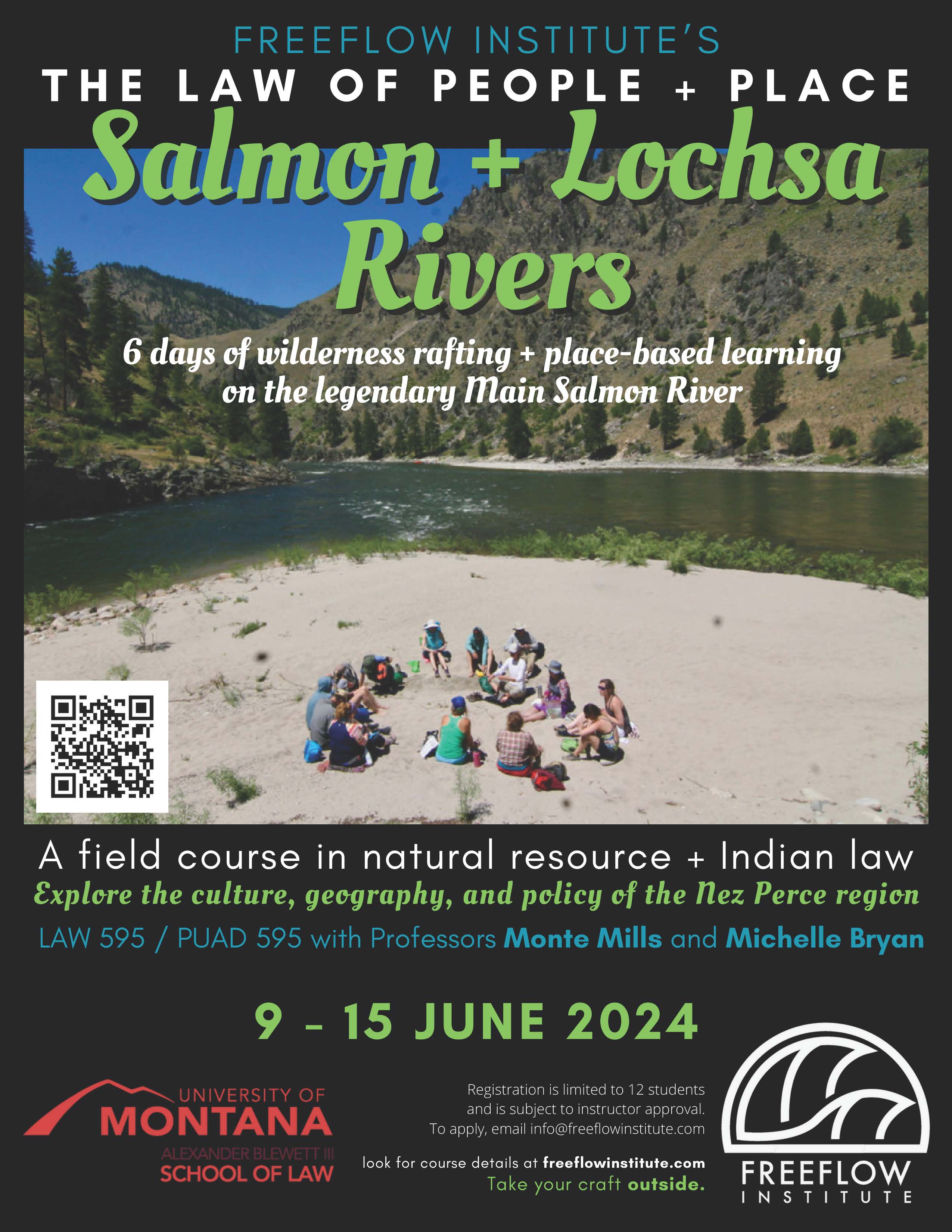
For the last four years, the University of Montana’s Summer Indian Law Program has collaborated with Freeflow Institute to offer an immersive field course focused on exploring the intersections of law, people, and places within iconic Western landscapes.
The course is designed with enrolled law students and working practitioners in mind, though the curriculum appeals to a range of interests and areas of graduate studies, including public administration, Native American studies, journalism, environmental studies, and social work. The Law of People and Place is accredited through the University of Montana’s School of Law, and is offered to students at a subsidized price. The course is also available for 12 CLE credits for practitioners.
This summer we are headed to the Main Salmon and Lochsa Rivers of Idaho!
More details for the course can be found on FreeFlow’s website.
For additional information, please feel free to contact Freeflow’s Director, Chandra Brown, at chandra@freeflowinstitute.com or at 206.707.2168 (cell) or 406.880.8025 (office).
PLSI is an intensive two-month program designed to prepare you for the rigors of law school by replicating the first semester. Often referred to as a “boot camp,” PLSI will challenge you to develop legal analysis and writing skills needed for law school success.
PLSI offers three substantive law courses, including Federal Indian Law, and a legal writing course. By the end of the summer, you will have prepared an appellate case including oral arguments, and completed a cycle of midterms and final exams. You will develop lifelong connections with professors, teaching assistants, speakers, and class colleagues.
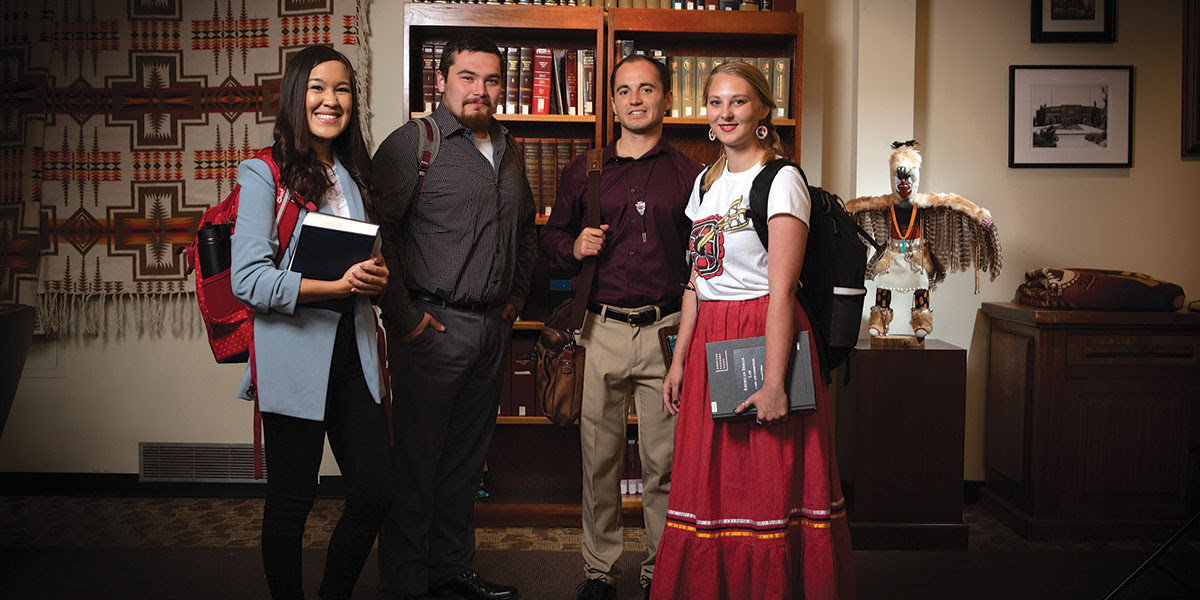
There is still time to apply for PLSI 2024! Deadline: March 15, 2024
Don’t wait to apply. It will take time to gather your application materials including your transcripts, LSAT scores, proof of tribal membership, proof of complete application to a law school, and letters of recommendation. The application link has a complete list of required documentation.
Application and Important Dates
Join future Native American lawyers and a network of Native American legal professionals at the oldest and most successful pre-law program for American Indians and Alaska Natives. Program completion also makes you eligible for scholarships, financial assistance, and bar exam support available only to PLSI alumni.

If you have questions regarding PLSI or the AILC, please contact Rodina Cave Parnall at caveparnall@law.unm.edu or AILCinfo@law.unm.edu.
Sincerely,
Rodina Cave Parnall
Executive Director

A new film, BAD RIVER, narrated by Quannah ChasingHorse with Edward Norton, and produced by Allison Abner (writer for Narcos/West Wing and descendant of the Stockbridge Munsee Band), Grant Hill (owner of the Atlanta Hawks) and award-winning filmmaker Mary Mazzio, opens in select AMC Theatres on MARCH 15-20.
Trailer: www.BadRiverFilm.com
About: BAD RIVER chronicles the Wisconsin-based Bad River Band and its ongoing fight for sovereignty, a story which unfolds in a groundbreaking way through a series of shocking revelations, devastating losses, and a powerful legacy of defiance. This project brings us into the present, with a David vs. Goliath battle to save Lake Superior, the largest freshwater resource in America. As Eldred Corbine, a Bad River Tribal Elder declares: “We gotta protect it… die for it, if we have to.” And as New Yorker writer and author, Bill McKibbon wrote about the film: “It’s a powerful chronicle of some of the saddest chapters in American history, and a hopeful picture of the emerging possibilities for power in the crucial fights of our time. And oh, what beautiful country is at stake!”
Opening Cities: New York, Los Angeles, Boston, Seattle, Washington DC, Chicago, Atlanta, Detroit, Madison WI, Minneapolis, Ashland WI (with additional cities likely being added.)
50% of all profits will be donated back to the Bad River Band.
Here are the materials in Red Lake Band of Chippewa Indians v. Dept. of Health and Human Services (D.D.C.):
13-1 federal Motion to Dismiss
14-1 Red Lake Motion for Summary J
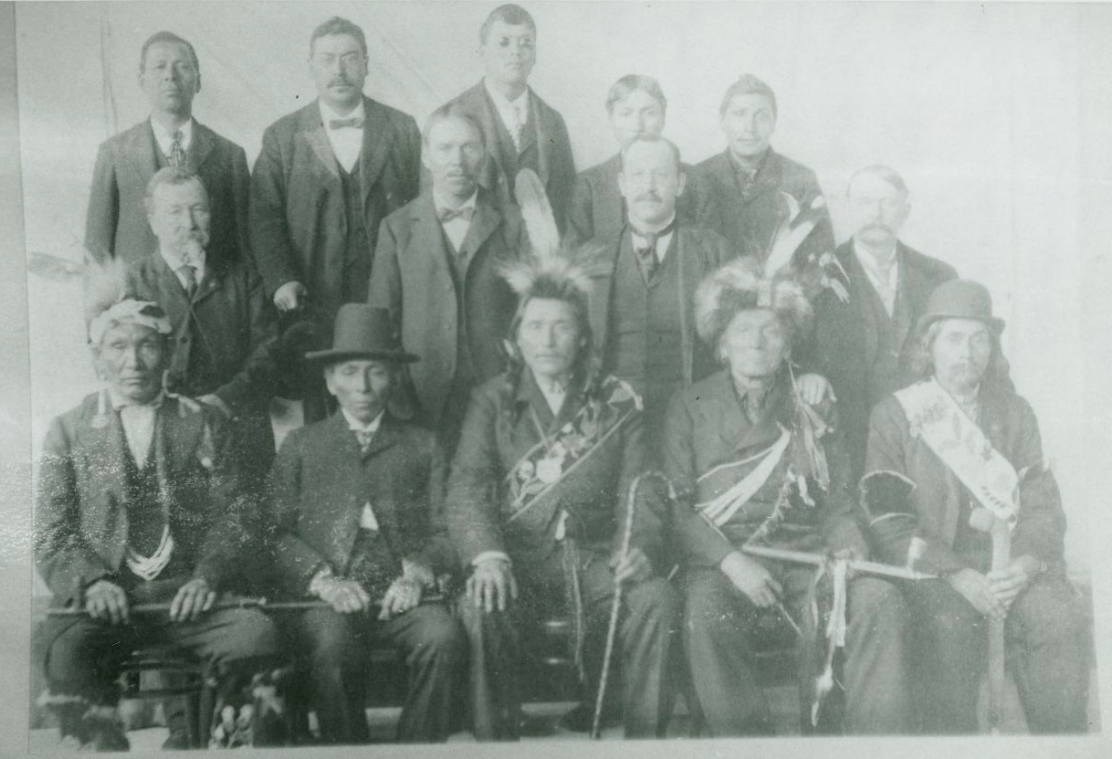
Daniel B. Rice has posted “Civil Duties and Public Change,” forthcoming in the California Law Review, on SSRN.
Here is the abstract:
What duties do Americans owe the state? Today, this question seems almost incomprehensible. Compulsions in the common interest are received coolly in our rights-obsessed culture, and the Supreme Court has never announced a framework for identifying the burdens of citizenship. Yet the concept of civic duty has played a central role in America’s constitutional tradition. From shoveling snow to repairing roads to fighting overseas, private individuals have long been forced to serve the public in ways menial and profound. Strangely, the discourse of obligation that legitimated numerous compulsions has largely faded from professional view. Judges’ mawkish tributes to liberty pay no heed to the magnitude of state-ordered servitude.
This collective forgetting has not eliminated the need to reason about civic duties, however. Courts continue to review compulsions grounded in contested visions of social obligation. In ruling on the Affordable Care Act’s individual mandate, for example, the Supreme Court seriously impeded Congress from implementing novel conceptions of civic duty. This hostility closely tracks a leading scholarly account of civic duties as fixed by historical tradition. According to this narrative, living Americans are powerless to alter the basic obligations of citizenship.
This Article corrects the historical record by documenting how civic duties have developed over time. The evidence reveals that these obligations are constantly in motion; society has constructed, reshaped, and discarded them in decades-long struggles over the meaning of freedom. Put simply, the duties of citizenship are not fixed features of our constitutional order. They are necessarily—and properly—responsive to moral and cultural change. These findings undercut the Court’s use of rigid historical methodologies for reviewing laws that tacitly presume the existence of duties owed to the public. Most prominently, abortion restrictions compel women to continue their pregnancies in service of state-defined goals. And a panoramic view of civic duties casts new light on congressional efforts to preserve Indian tribes as flourishing governments. The federal Indian Child Welfare Act draws conceptual support from compulsory education and military conscription, both of which have long prioritized communal survival over individual choice.
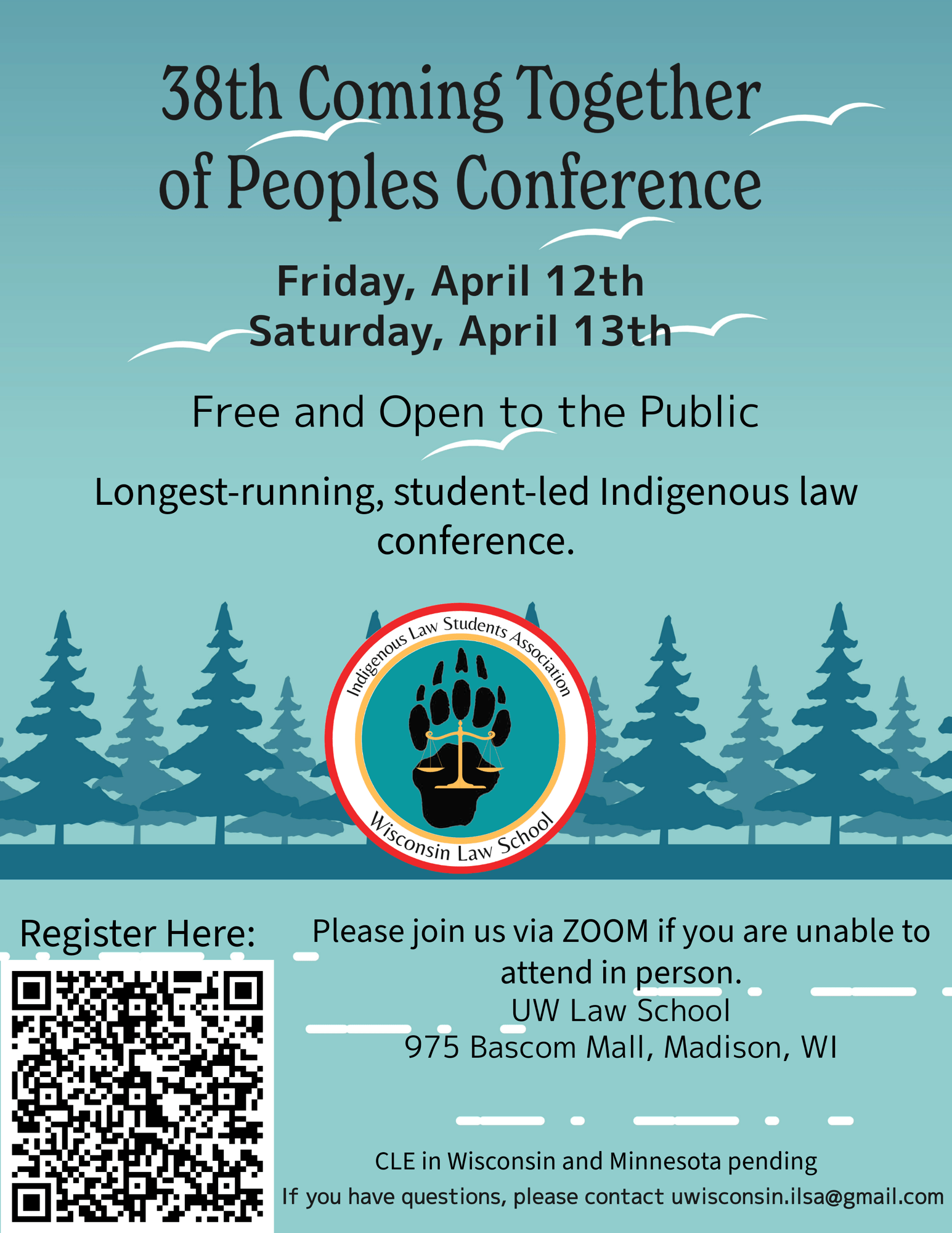
Attend the 38th Coming Together of Peoples Conference (CTOPC) on Friday, April 12th or Saturday, April 13th, 2024!
You can attend via Zoom or in-person at the UW Law School (975 Bascom Mall, Madison, WI 53706).
We will cover many Indigenous Law topics, including Tribal data sovereignty, publication of Tribal codes and cases, interdisciplinary research in Federal Indian Law, and much more! Be on the lookout for more information about the panels and our program release!
If you are interested, please fill out this registration form (full link below). Feel free to share this registration link and Info Poster with other attorneys, professionals, and students that may be interested.
REGISTRATION LINK: https://docs.google.com/forms/d/e/1FAIpQLSdCAOUKpW9N9NNCZdoXgQu_qqMM2AywvOxgPh4U4zD-6yNvwA/viewform?usp=sf_link
Yaw^ko,
The Indigenous Law Student Association at UW Law School
 Turtle Talk
You must be logged in to post a comment.