The rule removes fees and association requirements. It is Rule 39(a). This one took two tries to get adopted. The Arizona crew worked really hard to get this one done–congratulations!!
San Carlos Apache Contract Support Costs Suit Dismissed
Here are the materials in San Carlos Apache Tribe v. Azar (D. Ariz.):
Webinars on Indigenous Peoples & Intellectual Property for Indigenous Leaders, Lawyers, and Community Members
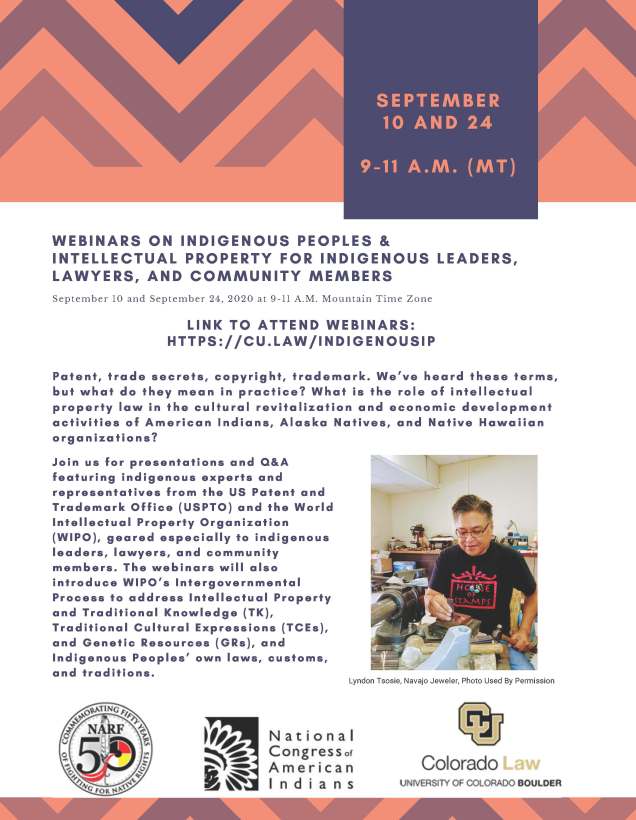
You can see the PDF here.
NIGC Settlement Materials re: St. Croix Chippewa
California SCT Decides United Auburn Community of the Auburn Rancheria v. Newsom
Here is the opinion:
An excerpt:
This is a case about how California law applies to the delicate juncture of executive power, federalism, and tribal sovereignty. Under the federal Indian Gaming Regulatory Act (IGRA; 25 U.S.C. § 2701 et seq.), the United States Secretary of the Interior (Interior Secretary) may permit casino-style gaming on certain land taken into federal trust for an Indian tribe, so long as the Governor of the state where the land is located concurs. But nowhere in the California Constitution is the Governor granted explicit authority to concur in this cooperative-federalism scheme. We must decide whether the
Governor nonetheless has the authority to concur in the Interior Secretary’s determination to allow gaming on tribal trust land in California.What we hold is that California law empowers the Governor to concur.
Briefs here.
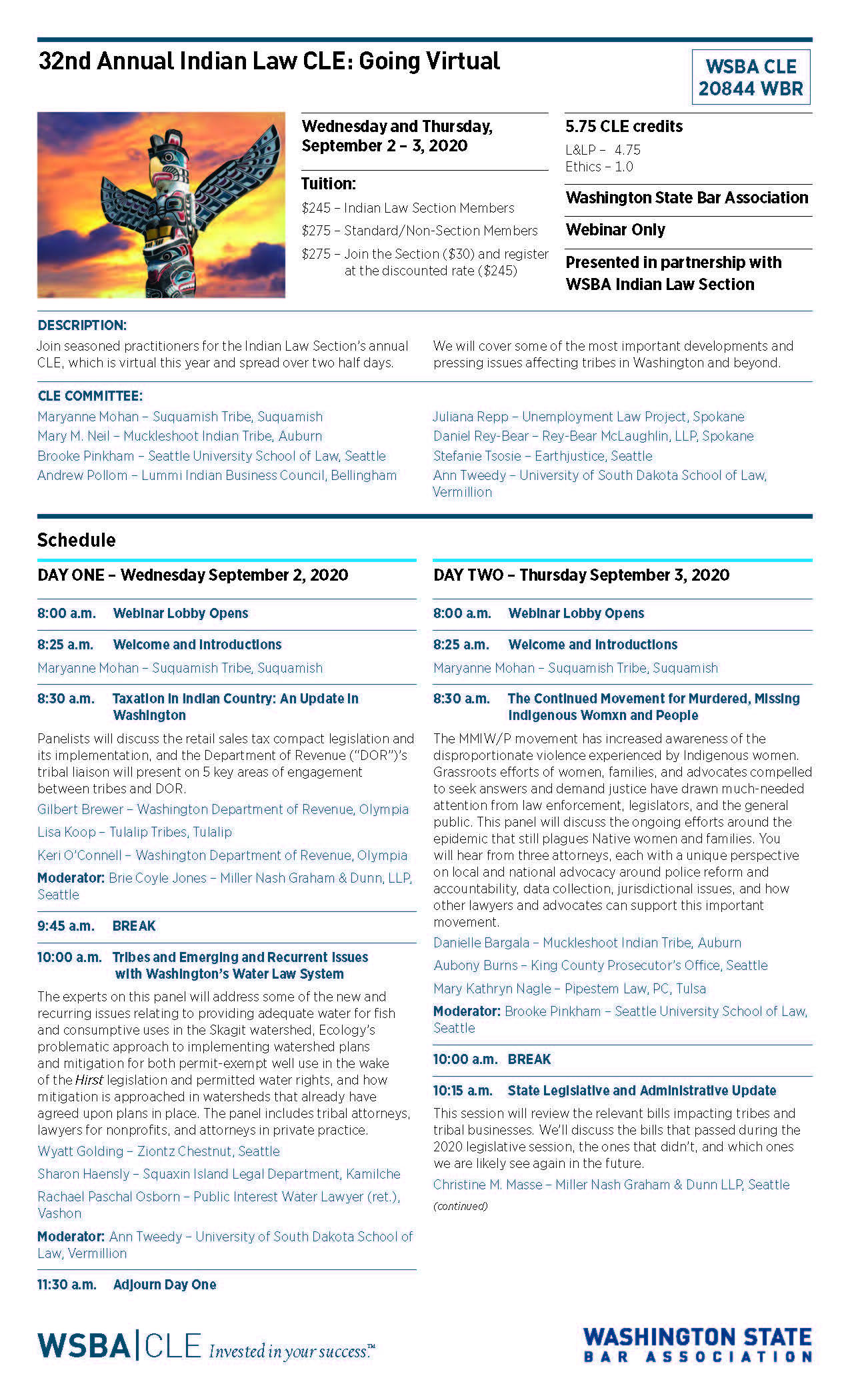
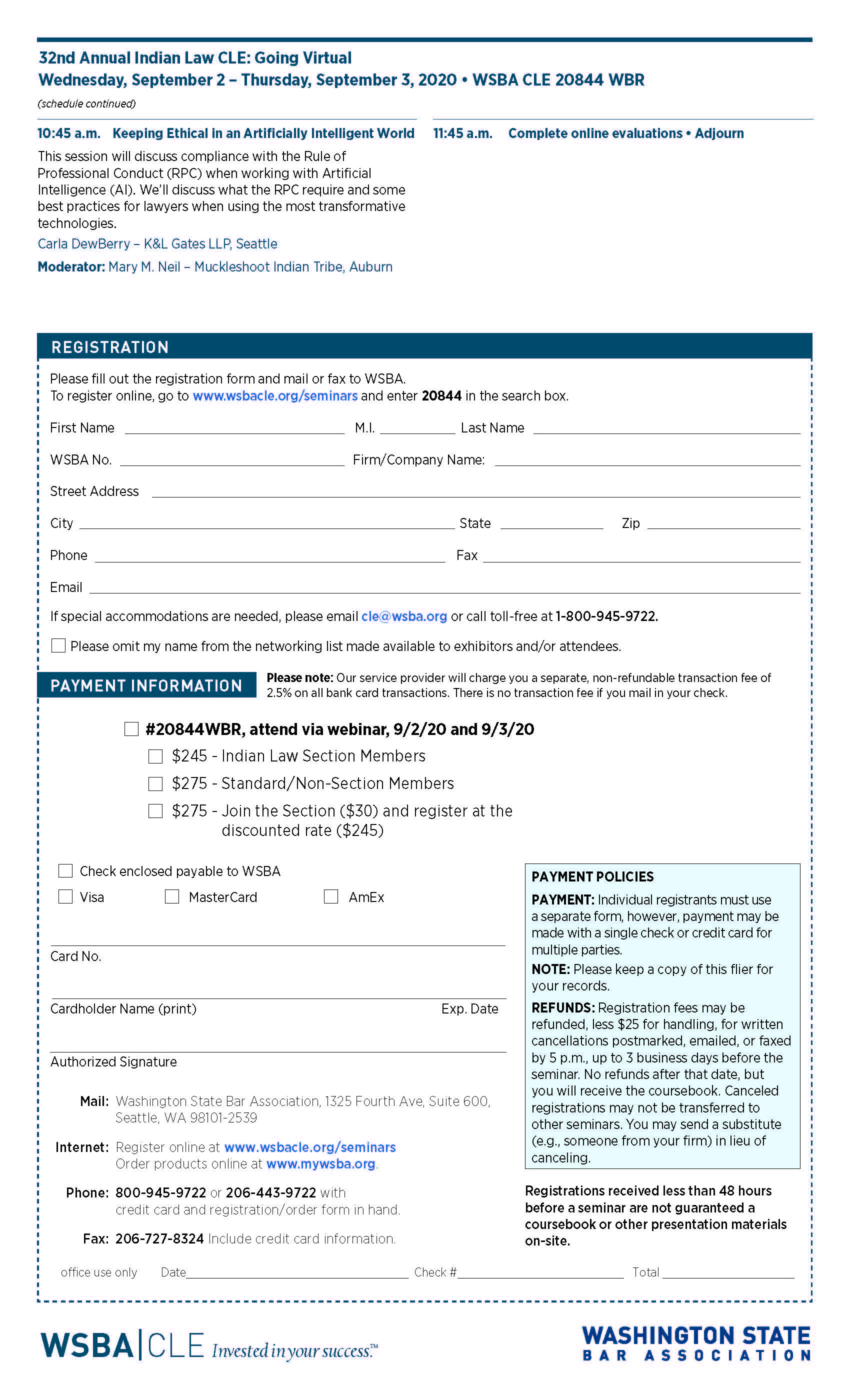
WSBA ILS CLE on 9/2-3
Here (PDF):
Washington COA Holds Samish Trust Land is “Reservation” under State Tax Law
Here is the opinion in Samish Indian Nation v. Department of Licensing:
2020-08-31 Opinion of Court of Appeals
Briefs here.
Cheyenne & Arapaho SCT Decision on Attorney Fees Dispute
Here are the opinions and orders in Fredericks Peebles & Morgan LLP v. Cheyenne & Arapaho Tribes:
DC Bar Indian Country Water Panel on 9/10
Folks can register here:
WEBCAST: Water Is Life: Inside the Struggle over Access to Water in Indian Country
Date(s):September 10, 2020
Event start time: 12:00 PM
Event end time: 2:00 PM
Credit: 0 Credit Hours
The coronavirus pandemic has focused public attention on water insecurity in Native American communities. On the Navajo Nation, for example, recent studies show that at least 15% of the population lacks access to running water. This event will feature elected officials, lawyers, and members of civil society who are working to protect and realize the right to safe, clean drinking water across Indian Country through litigation, advocacy, and infrastructure development.
Pre-registration for this program is required. As always, please feel free to share this invitation with colleagues. D.C. Bar membership is not required to attend.
Are you a current law student and looking to register for one of our programs? Learn about the D.C. Bar Law Student Community and attend most individual programs at a discounted rate. Find out more here.
Webinar registrants will receive access information by logging into the D.C. Bar website. You will need a headset or working computer speakers to hear the audio portion of the presentation.
Sponsored by: Indian Law Committee of the D.C. Bar Environment, Energy and Natural Resources Community
Related Community of Interest: D.C. Bar Law Student Community
Program Partner: American Bar Association, Section of Environment, Energy and Resources (ABA-SEER); Environmental Law Institute (ELI); Native American Bar Association D.C. (NABA-DC)
Speakers:
- Bryan Newland, Chairman, Bay Mills Indian Community
- Katie Brossy, Senior Counsel, Akin Gump Strauss Hauer & Feld LLP
- Emma Robbins, Navajo Water Project Director, DigDeep
- Rose Petoskey, President, Native American Bar Association of DC (Moderator)
Federal Court Refuses to Enforce Ute Tribal Court Order over Water Rights
Here are the materials in Ute Indian Tribe v. McKee (D. Utah):
55 Tribe Motion for Summary Judgment
Prior post here.
 Turtle Talk
You must be logged in to post a comment.